
Featured Biobased Substrates for Italy
Premium grade renewable polymers configured specifically for Italian luxury goods, fashion footwear, and interior architecture specifications.

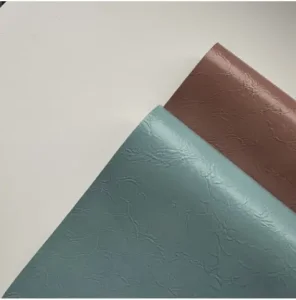
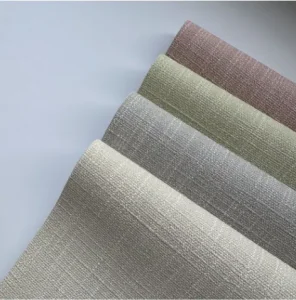
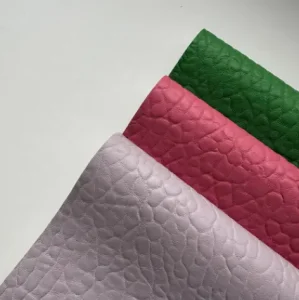
The Italian Bio-Economy: Transitioning Luxury and Manufacturing
A rigorous examination of legislative mandates, corporate ESG targets, and evolving consumer paradigms across Italy's foremost manufacturing clusters.
Strategic Drivers within Italian Luxury & Industrial Ecosystems
Italy occupies a preeminent position in the global design hierarchy. Regions such as Lombardy, Tuscany, Veneto, and Emilia-Romagna are world-renowned hubs for artisanal leathercraft, haute couture, luxury sports cars, and contract furniture. However, the commercial terrain in Italy is facing an unprecedented disruption driven by European Green Deal mandates, the EU Corporate Sustainability Due Diligence Directive (CSDDD), and stringent domestic circular economy targets.
High-end fashion Maisons in Milan and Florence, alongside premier yacht-interior designers in Genoa and luxury automotive coachbuilders in Turin, are systematically de-fossilizing their material portfolios. The reliance on purely petrochemical polyurethane (PU) and polyvinyl chloride (PVC) is rapidly diminishing. Brands require authentic, testable plant-derived renewable matrices that retain the tactile sensuality, patina potential, and structural tensile strength demanded by discerning master artisans while drastically curtailing cradle-to-gate carbon intensity.
Luxury Leather Goods (Pelletteria)
Tuscan ateliers in Santa Croce sull'Arno and Scandicci demand micro-porous, biobased synthetic hides with zero chemical emissions, exceptional edge-creasing capabilities, and identical drape to calfskin.
Automotive & Marine Upholstery
Italian performance auto builders and Riva-class yacht manufacturers enforce rigorous UV resistance, taber abrasion, and extreme flammability specifications under UNECE R118 and IMO standards.
High-End Furniture & Hospitality
Design ateliers participating in Salone del Mobile require high-yield, scratch-resistant biobased textiles for architectural seating, paneling, and commercial interior fit-outs throughout Milan.
Technological Roadmap: Molecular Synthesis & Future Outlook
Analyzing global scientific milestones in non-fossil carbon capture, agricultural residue upcycling, and cross-linked polymeric architectures.
Next-Generation Feedstocks: Replacing Petrochemical Polyols
The global biobased materials sector has transitioned away from first-generation starch derivatives toward advanced circular feedstocks. By utilizing non-food-chain agricultural byproducts—such as industrial corn residue, castor beans, hemp waste, and apple pomace—our R&D team synthesizes bio-polyols that match petrochemical equivalents down to the precise molecular weight and hydroxyl value.
Our technological roadmap leverages water-based dispersion (PUD) and 100% solvent-free hot-melt reaction systems. By eliminating traditional organic solvents like Dimethylformamide (DMFa), Toluene, and Methyl Ethyl Ketone (MEK), we ensure that the finished composite leather releases near-zero volatile organic compounds (VOCs), making it uniquely safe for workers in cut-and-sew facilities and premium for luxury interiors.
| Performance Parameter | Legacy Petrochemical PU | JX.ECO Biobased Solution | Test Standard / Compliance |
|---|---|---|---|
| Bio-Carbon Content | 0% | 30% – 75% (Customizable) | ASTM D6866 Radiocarbon Analysis |
| Hazardous Solvents (DMFa) | ≤ 500 ppm (Residual) | 0 ppm (Non-detectable) | EN 17111 / ISO 16189 |
| Tensile & Tear Strength | Standard | Reinforced (+25% yield) | ISO 1421 / ISO 4674-1 |
| Hydrolysis Resistance (Jungle) | 3 to 5 Years | 7 to 10+ Years | ISO 1419 Method C (Tropical Test) |
| Cold Crack Flexibility | -15°C | -30°C without crack | ISO 4676 (Bally Flexometer) |
Chinese Supply Chain Resilience & Cost Efficiency for Italian Brands
How JiangXin New Material (JX.ECO) bridges raw chemical synthesis, multi-stage processing, and global logistics into an unshakeable supply pipeline.
Vertical Integration: From Monomer Synthesis to Calendered Master Rolls
While European boutique compounders often struggle with high unit costs and limited batch volumes, our 135,733 m² mega-campus in Yingde, Guangdong delivers immense industrial scale. With an annual capacity surpassing 16 million linear meters, we manage every phase of manufacturing in-house: polyol blending, bio-substrate coating, high-definition laser grain embossing, vacuum surface treatment, and analytical QC testing.
This closed-loop manufacturing model shields our Italian wholesale partners from raw material fluctuations, provides unbeatable economies of scale, and reduces lab-to-production lead times to under 14 days. By consolidating production under an automated 4.68 MW solar photovoltaic array, we pass genuine carbon-reduction credits down the value chain, directly assisting Italian importers with Scope 3 emissions reporting under the EU CSRD.
Rapid Prototype Sampling
Bespoke lab dips, custom color matching (Pantone/RAL), and specialized grain replication delivered to Italian design studios in Milan or Florence within 7 business days via express air courier.
Direct Freight to Italian Ports
Optimized maritime freight routes connecting direct container hubs to the Ports of Genoa, La Spezia, and Trieste, ensuring uninterrupted supply runs for North Italian industrial assembly lines.
Audit-Proof Export Compliance
Every container lot is pre-tested by independent accredited laboratories (SGS, TÜV, Intertek) to ensure full conformance with EU REACH SVHC lists, RoHS, and Italian customs regulations.
Localization Support & Compliance Assurance for Italian Importers
Eliminating regulatory hurdles, streamlining customs documentation, and offering bilingual technical support for seamless factory-to-warehouse workflows.
Navigating REACH, CSDDD, and the USDA BioPreferred Framework
Entering the European common market demands transparent chain-of-custody validation. Our compliance team prepares complete technical dossiers including Bill of Substances, Safety Data Sheets (SDS) according to Regulation (EC) No 1907/2006, and ASTM D6866 certified radiocarbon reports. For recycled-substrate blends, we provide official Textile Exchange Transaction Certificates (TC) under the Recycled Claim Standard (RCS).
Italian brands no longer have to risk customs detentions or brand-damaging greenwashing allegations. We provide complete third-party verified evidence portfolios that satisfy both internal compliance auditors and demanding end-consumers across Europe.
Ready to Sample Our Biobased Synthetic Leather for Italy?
Get swatch books, technical data sheets, and competitive FOB/CIF quotation within 24 hours.
Biobased Material Catalog for Italian Manufacturing
Explore our extended series of certified bio-synthetics, engineered for leather goods, footwear uppers, upholstery, and performance apparel.
-
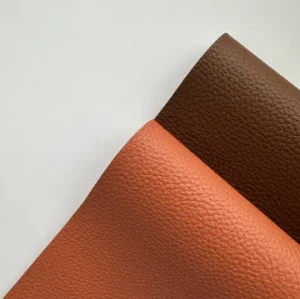
Custom Bio-Based Renewable Synthetic Leather-9109 Supplier, Factory
-
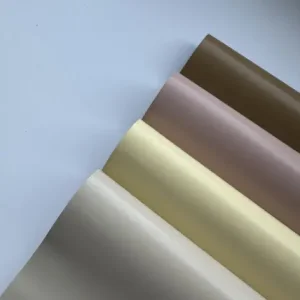
Custom Bio-Based Renewable Synthetic Leather-2056 Manufacturers, Manufacturer
-

OEM Plant-Derived Renewable Bio-Based Synthetic Leather-2071 Manufacturers, Factory
-
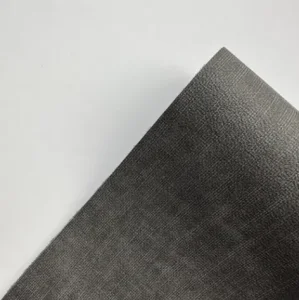
High-Quality Plant-Sourced Bio-Based Renewable Synthetic Leather-9103 Suppliers, Factories
-

Custom Plant-Derived Renewable Bio-Based Synthetic Leather-9081 Manufacturers, Factories
-

Wholesale Plant‑Origin Renewable Bio‑Based Synthetic Leather-9271 Manufacturer, Suppliers
-
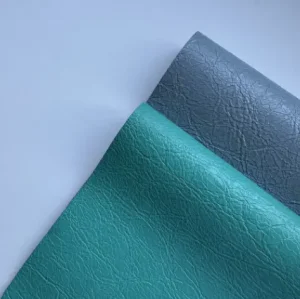
High-Quality Plant‑Derived Renewable Bio‑Based Synthetic Leather-9213 Supplier, Suppliers
-
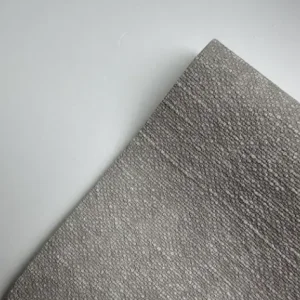
High-Quality Plant‑Derived Bio‑Based Synthetic Leather-9020 Manufacturer, Supplier
Frequently Asked Questions for Italian Buyers
In-depth responses regarding sampling, logistics to Italy, testing protocols, and compliance standards.