
High-Performance Eco-Conscious Materials (Part 1)
Direct from our 135,733 m² automated Guangdong manufacturing center. Engineered to comply with GRS, RCS, and ASTM D6866 international benchmarks.

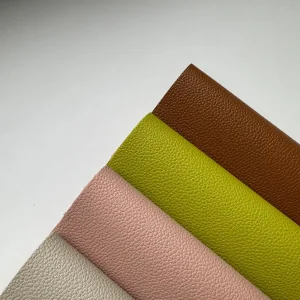
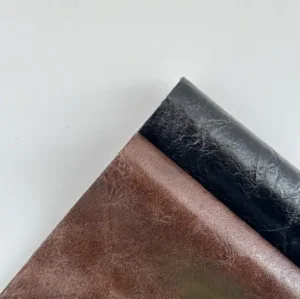
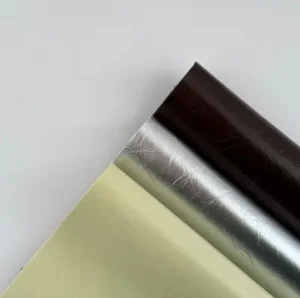
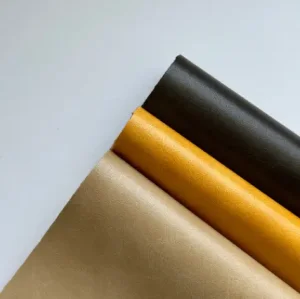
The Paradigm Shift in Eco-Friendly Synthetic Leather Manufacturing
Navigating circular chemistry, decarbonization protocols, and the technical transition from legacy PVC/DMF-PU to advanced biobased polyurethanes.
1. Overcoming the Fossil Dependency: Biobased & Recycled Content Integration
Historically, artificial leather production relied almost exclusively on petrochemically derived polymers—polyurethane (PU) and polyvinyl chloride (PVC)—dissolved in hazardous organic solvents like dimethylformamide (DMF) or toluene. The modern regulatory landscape, dictated by EU REACH SVHC restrictions, California Prop 65, and corporate Scope 3 emission targets, has accelerated an urgent transition. As a forward-thinking eco-friendly synthetic leather manufacturer, JiangXin (JX.ECO) integrates renewable agricultural feedstocks (non-food grade corn starch, castor bean oil, and agricultural biomass) to formulate biobased polyols that directly substitute petrochemical monomers.
Simultaneously, mechanical and chemical post-consumer recycling methods have matured. Our Recycled Claim Standard (RCS) certified synthetic leather lines utilize recycled polyethylene terephthalate (rPET) derived from discarded water bottles and textile scraps for substrate yarn weaving. By bridging biobased surface coatings with 100% recycled backings, total carbon footprints are reduced by up to 48.6% compared to traditional coagulated PU leathers.
| Material Architecture | Primary Chemical Composition | Solvent System / Emissions | Biobased/Recycled Share | Standard Hydrolysis Life |
|---|---|---|---|---|
| Conventional Wet-Coagulation PU | Fossil Polyether / Polyester Polyols | High DMF / Toluene VOC residue | 0% (100% Virgin Fossil) | 3 - 5 Years (Jungle Test) |
| Water-Based Eco PU (WPU) | Aqueous Polyurethane Dispersion | Zero DMF, Zero VOC, Water-dispersed | 0% - 20% | 5 - 8 Years (ISO 1419) |
| Biobased Synthetic Leather | Plant-derived Polyols + Bio-Coating | Low-VOC / Zero-Solvent Formulation | 30% - 75% (ASTM D6866) | 7 - 10 Years (Automotive Grade) |
| RCS-Certified Recycled Leather | Solvent-Free Topcoat + rPET Substrate | Zero Plasticizer / 6P-Free | Traceable Recycled Mass Balance | 5 - 7 Years Heavy Duty |
2. China's Integrated Supply Chain & Guangdong Factory Advantages
The production of sustainable man-made leather requires tight vertical cohesion between raw chemical synthesis, substrate knitting, ecological coating, and advanced embossed texturing. Located in Yingde City, Guangdong Province, JiangXin New Material operates an immense 135,733 m² campus that exemplifies China's industrial infrastructure edge.
Unlike fragmented assembly facilities, our campus integrates closed-loop energy management: a 4.68 MW rooftop photovoltaic array supplies clean electricity directly to the dry and solvent-free production lines, while our proprietary on-site heat dissipation and heat-recovery thermal oxidizers recover over 85% of latent thermal energy. With fully synchronized chemical blending, custom roll embossing, and real-time spectrophotometric quality tracking, the factory achieves an annual capacity exceeding 16 million linear meters. This comprehensive vertical synthesis yields unbeatable lead times, massive scale scalability, and uncompromising batch-to-batch consistency.
End-to-End Enterprise Material Frameworks
Meeting Tier-1 global procurement mandates requires more than raw rolls; it requires validated chemical data, robust mechanical properties, and friction-free compliance.
Green Chemical Formulations
Eliminating toxic DMF, phthalates, and organotins through next-generation waterborne polyurethane (WPU) dispersions and 100% solvent-free hot-melt reaction systems. Delivers exceptional soft-hand touch with zero off-gassing, ideal for strict indoor air quality (IAQ) and skin-contact compliance.
Tailored Functional Performance
Engineered cross-linking agents deliver custom physical thresholds: Martindale abrasion resistance up to 200,000 cycles, -30°C cold-flex endurance, ISO 22196 antimicrobial treatment, inherent fire retardancy (FMVSS 302, BS 5852 Crib 5), and stain-shield anti-fouling barriers.
Global Compliance Clearances
Every production batch is certified against rigorous worldwide statutory frameworks: complete documentation ready for EU REACH SVHC clearance, RoHS, 6P Phthalate-free mandates, USDA BioPreferred verification (ASTM D6866), OEKO-TEX Standard 100, and Higg FEM audit reports.
Localized Industry Scenarios & Global Procurement Trends
How Tier-1 brands in automotive, athletic footwear, consumer electronics, and luxury fashion execute sustainable material transitions.
Automotive Interior Architecture
Electric Vehicle (EV) pioneers demand high-grade vegan upholstery that passes extreme VOC and fogging requirements (DIN 75201). Our biobased and water-dispersed PU lines provide low odor, UV degradation resistance over 1,000 continuous hours, and supreme stitch tear strength for seating, door panels, and instrument console wrapping.
Performance Footwear & Athletics
Global sneaker brands require continuous flex fatigue resistance and light weight. Utilizing ultra-fine microfiber matrices combined with bio-resins, our technical synthetics withstand over 150,000 Bally flex cycles in sub-zero climates, offering seamless laser cutting, frequency welding, and unmatched tensile memory for high-intensity athletic uppers.
Luxury Handbags & Fashion Outerwear
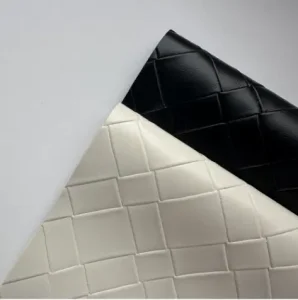
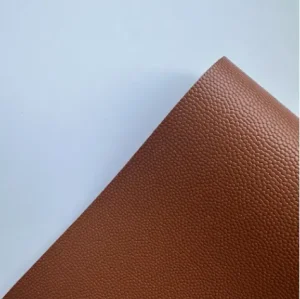
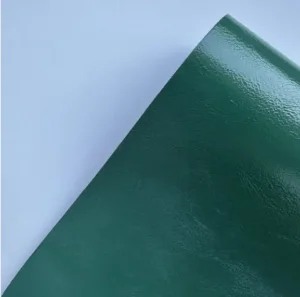
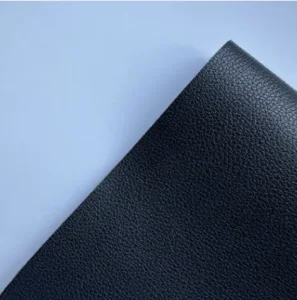
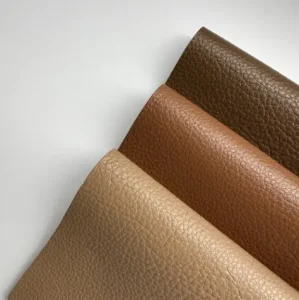
High fashion requires rich visual textures, fine grain depth (such as natural pebble, milled grain, or customized toothpick patterns), and authentic drape. Our eco-friendly faux leather gives accessories and apparel houses animal-free ethical validation without compromising on premium touch, edge-paint bonding, or tailoring ease.
High-Performance Eco-Conscious Materials (Part 2)
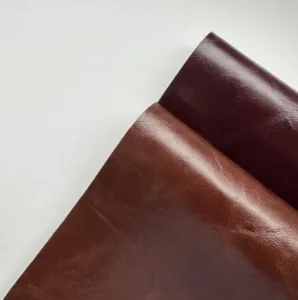
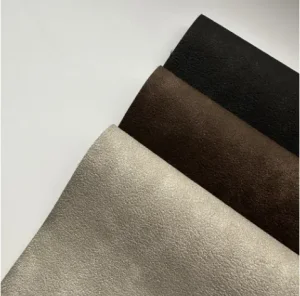
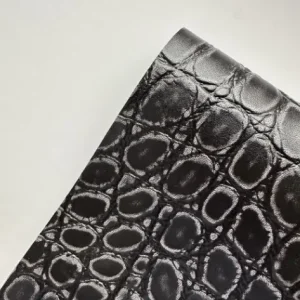
Explore custom weights (0.5mm – 2.2mm), tailored backings (microfiber, recycled fleece, twill), and exclusive tactile surface treatments.
Frequently Asked Questions for Brand Sourcing Directors
Comprehensive engineering insights addressing durability, certification pathways, minimum order quantities, and international testing protocols.
What precise technical difference separates Biobased PU from Recycled (RCS) Leather?
Biobased leather replaces virgin petroleum feedstocks within the chemical polyurethane matrix with plant-derived polyols (certified via ASTM D6866 radiocarbon testing for renewable carbon percentage). In contrast, Recycled Claim Standard (RCS) synthetic leather focuses on circular post-consumer and post-industrial recycling, transforming reclaimed PET bottles or leather scraps into the woven or non-woven structural backing fabric with strict chain-of-custody tracking. Both approaches drastically lower embodied carbon.
How does water-based or solvent-free PU perform against hydrolysis degradation?
Modern waterborne (WPU) and solvent-free synthetic leathers achieve parity or superiority over traditional DMF wet-coagulation materials. Through specialized polycarbonate and polyether molecular engineering, our formulations deliver standard 5-year to 10-year hydrolysis resistance (tested via tropical chamber testing at 70°C and 95% relative humidity under ISO 1419 protocols), completely eliminating surface flaking and peeling concerns.
What is the standard sampling lead time and production MOQ for custom OEM developments?
Standard sample lab-dips and A4 hand swatches are dispatched within 3 to 5 working days. For custom emboss rolling, physical color matching (Pantone/CSI), and specific backing lamination, pilot yardage (50-100m) is ready in 7-10 days. Commercial bulk production Minimum Order Quantities (MOQ) typically start at 500 linear meters per color/grain, backed by our continuous 16 million meter annual factory throughput.
Can JiangXin issue Transaction Certificates (TC) for brand sustainability audits?
Yes. Through our accredited third-party certification bodies, every commercial shipment under our RCS-certified and GRS-certified item lines is accompanied by official Transaction Certificates (TCs). These certificates authenticate the chain of custody from initial recycled polymer flake processing through final roll shipment, ensuring seamless clearance for corporate ESG reporting and consumer hangtag verifications.
How does your Guangdong factory guarantee compliance with EU REACH and RoHS?
Our manufacturing processes utilize closed-line automated chemical dosing that completely avoids substances of very high concern (SVHC). Materials are systematically screened by leading international laboratories (SGS, TÜV Rheinland, Intertek) to ensure zero presence of heavy metals (lead, cadmium, mercury), organotin compounds, DMF, and regulated plasticizers (6P / 16P phthalate-free), directly fulfilling EU REACH SVHC and US California Proposition 65 limits.
Which surface grains and functional finishes can be custom-compounded in-house?
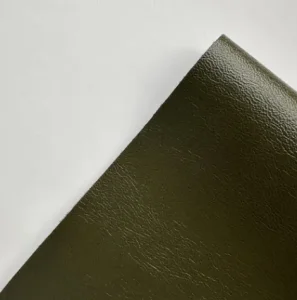
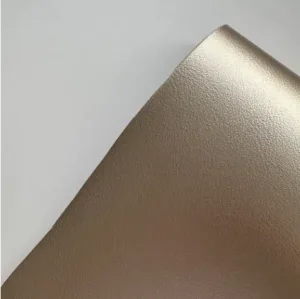
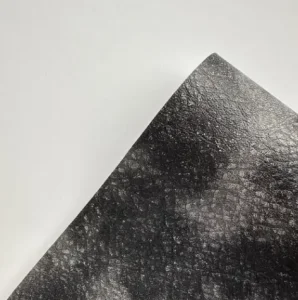
We operate over 300 proprietary steel embossing rollers ranging from fine Napa, calfskin, toothpick, and cross-hatch to dimensional geometric patterns. In addition, functional chemical surface treatments can be applied for stain resistance (anti-denim dye migration), dry-erase capabilities, flame retardancy (Crib 5, Cal 133, FMVSS 302), and hospital-grade antibacterial protection without compromising the material's eco-friendly integrity.