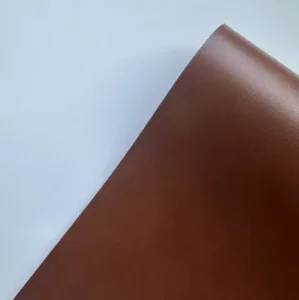
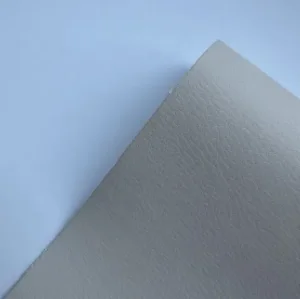
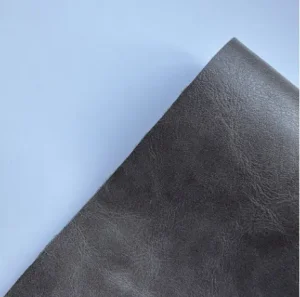
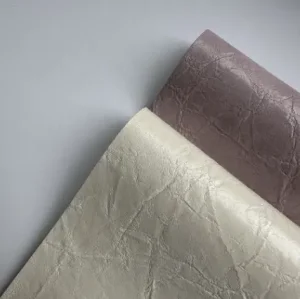
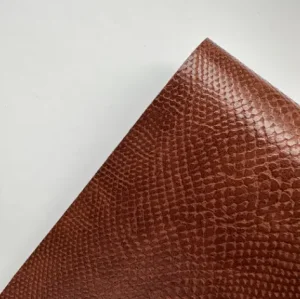
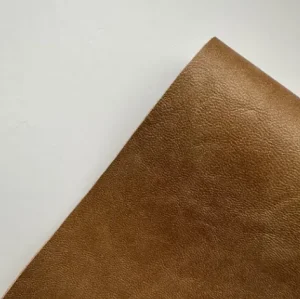
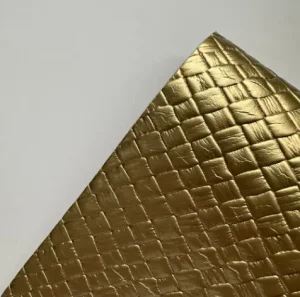
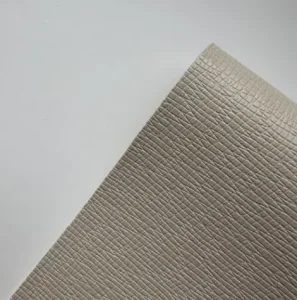
Flagship RCS-Certified Recycled Leather Formulations
Direct manufacturer references for tier-1 fashion, footwear, upholstery, and accessory brands requiring certified post-consumer & post-industrial recycled material input.
Global Market Dynamics & Regulatory Drivers for RCS Leather
A systemic shift from voluntary corporate sustainability to mandatory environmental compliance is radically transforming synthetic polymer procurement worldwide.
European Union ESPR & DPP Mandates
The EU Ecodesign for Sustainable Products Regulation (ESPR) and the upcoming Digital Product Passport (DPP) dictate complete material trace verification. Brands can no longer claim sustainability without third-party accredited chain-of-custody Transaction Certificates (TCs).
- Mandatory recycled content threshold tracking
- Anti-Greenwashing Directive enforcement
- Banned unsubstantiated virgin polymer claims
US Market Climate Disclosures
US public apparel, footwear, and automotive corporations face Scope 3 GHG accounting rules under California SB 253/261 and federal SEC guidance. Utilizing RCS-certified post-consumer rPET substrates directly diminishes lifecycle carbon footprints by up to 48% versus virgin petrochemical inputs.
- Documented cradle-to-gate LCA metrics
- ASTM D6866 and RCS cross-validation
- Substantiated corporate ESG report data
Circular Economy Infrastructure
Global brands require closed-loop raw material pipelines. RCS (Recycled Claim Standard), governed by Textile Exchange, establishes an unalterable chain-of-custody verifying that synthetic leather substrates originate from reclaimed polymer feeds, diverting plastic waste from oceans and landfills.
- Textile Exchange CCS custody protocols
- Post-consumer bottle flake verification
- Batch-level physical segregation audits
| Evaluation Parameter | Standard Virgin PU Leather | Conventional Uncertified "Recycled" | JiangXin (JX.ECO) RCS-Certified PU |
|---|---|---|---|
| Traceability Proof | Self-declared vendor documentation | Vendor invoice claims (Unverified) | Textile Exchange Transaction Certificate (TC) |
| Carbon Footprint (LCA) | Baseline benchmark (100% fossil) | Unquantified variable emissions | 38% - 52% reduction in cradle-to-gate GHG |
| Chemical Safety Control | Variable, often utilizes DMFa solvents | High contamination risk from raw scrap | Waterborne / Solvent-Free, REACH & RoHS Compliant |
| Audit Integrity | None / Basic factory tier-2 check | Vulnerable to Greenwashing fines | Annual third-party on-site audits + mass-balance logs |
| Export Risk Profile | High tariffs under carbon boundary tax | Customs seizure / regulatory scrutiny | Zero friction import clearances across EU, NA, APAC |
China Supply Chain Resilience & Clean-Tech Campus Capabilities
Operating from Yingde, Guangdong, Yingde City JiangXin New Material Co., Ltd. (JX.ECO) integrates sustainable chemical engineering with massive vertical manufacturing scalability.
Solar-Powered Mega Campus Infrastructure
Founded on June 2, 2017, JiangXin's modern manufacturing complex covers an expansive 135,733 m² in the Yinghong Industrial Park. Engineered in rigorous conformity with modern chemical and industrial building codes, the facility features floor-to-ceiling tempered-glass daylighting workshops that substantially curb lighting electricity usage while ensuring optimal micro-climate ergonomics for technicians.
A key pillar of our decarbonization advantage is our 4.68 MW rooftop photovoltaic solar farm, which supplies a substantial portion of daytime operational energy. Combined with in-house industrial wastewater treatment facilities and thermal heat-recovery ventilation, JiangXin ensures the embedded carbon within every roll of RCS synthetic leather is systematically minimized before it leaves the plant.
Verified Operational Scale
Annual output surpassing 16,000,000 meters of synthetic leather, servicing over 300 tier-1 brands across 50+ countries with annual turnover exceeding RMB 200 million.
Vertical Integration: Fiber to Finished Roll
Supply chain resilience is anchored in self-reliance. While secondary converters rely on third-party raw base fabrics that jeopardize recycled content integrity, JiangXin orchestrates fully integrated manufacturing:
1. Verified Recycled Feedstock Ingestion
Inspection and depolymerization verification of post-consumer rPET bottles and post-industrial polymeric waste streams accompanied by raw-material supplier Transaction Certificates.
2. Dedicated Substrate Weaving & Non-Woven Carding
Precision manufacturing of recycled microfiber substrates, knitted fabrics, and woven backings on dedicated, contamination-free production lines.
3. Clean-Chemistry Polyurethane Coating
Coating using dry and wet processing lines, incorporating waterborne PU systems, solvent-free coatings, and bio-based polyol blends without DMFa or toxic plasticizers.
4. Automated Surface Finishing & Spectrophotometer QC
Laser-engraved release paper embossing, custom tactile texturing, roll-by-roll thickness caliper profiling, and spectrophotometer color delta-E analysis below 0.5.
Material Engineering Roadmap & Sustainable Polymer Roadmap
How JiangXin transitions standard petrochemical polyurethane into next-generation circular, carbon-negative, and solvent-free composite matrices.
Pillar 1: Mechanical rPET Substrates
Direct mechanical recycling of post-consumer plastic bottles into high-tenacity yarns. Utilizing ultra-fine microfiber carding to simulate collagen dermal bundles, achieving mechanical tensile strength surpassing 400N across warp and weft.
- RCS 100 & RCS Blended configurations
- Isotropic elongation balance
- Zero virgin PET contamination
Pillar 2: Waterborne & Solvent-Free PU
Eliminating N,N-Dimethylformamide (DMFa), toluene, and methyl ethyl ketone (MEK) entirely. Our pure aqueous polyurethane dispersion (PUD) technology emits negligible VOCs, offering an odor-free, non-toxic environment for end consumers.
- Residual DMFa < 2 ppm (ZDHC Level 3)
- Extreme low-temperature flex resistance
- Enhanced skin-contact breathability
Pillar 3: Bio-Recycled Hybrids
Our research lab synthesizes renewable bio-polyols extracted from industrial non-edible corn, castor beans, and agricultural waste into the polymer skin, merged over RCS-certified rPET backing—delivering dual ASTM D6866 bio-content and RCS circular accreditation.
- 30% to 75% bio-based carbon index
- USDA BioPreferred certification ready
- Closed-loop post-industrial scrap recovery
Cross-Industry Engineering Applications & Performance Benchmarks
Formulated to satisfy stringent mechanical, chemical, and aesthetic demands across mission-critical commercial categories.
Athletic & Luxury Footwear Engineering
Footwear uppers demand high dynamic flexing durability, heel counter tear stability, and seam puncture security. JiangXin's RCS synthetic leather series undergoes Bally Flexometer testing exceeding 100,000 cycles without epidermal delamination, grain micro-cracking, or backing detachment under -10°C cold conditions.
| Dynamic Bally Flexing (SATRA TM55) | > 100,000 cycles dry / > 50,000 cycles at -10°C |
| Hydrolysis Resistance (Jungle Test) | No peeling or sticky degradation at 70°C, 95% RH for 5-10 weeks |
| Martindale Abrasion (ISO 5470-2) | Grade 4-5 dry at 25,600 revolutions |
Designer Handbags, Luggage & Small Leather Goods
For structured leather goods, edge-paint adhesion, skiving compatibility, and high stitch-tear resistance are mandatory. Our specialized toothpick grains, embossed box-calf finishes, and soft milled textures drape naturally over complex internal stiffeners and tolerate high-frequency ultrasonic welding.
| Stitch Tear Resistance (ISO 3377-1) | > 65 N minimal threshold |
| Color Fastness to Crocking (ISO 105-X12) | Dry: Grade 4.5 / Wet: Grade 4.0 |
| Edge Burnishing & Skiving | Zero fibrous fringe, clean blade split down to 0.45mm |
Automotive Interiors & Commercial Contract Seating
Automotive tier-suppliers mandate extreme UV color fastness, low cabin fogging values, and strict flame retardancy. Our RCS synthetic leather grades for mobility and contract hospitality are formulated with halogen-free flame inhibitors to suppress flame propagation without toxic smoke evolution.
| Flame Retardancy | FMVSS 302, BS 5852 Crib 5, CA TB 117-2013 |
| Xenon Arc UV Weathering (SAE J2412) | Delta-E < 1.5 after 1,200 kJ/m² exposure |
| Gravimetric Fogging (DIN 75201-B) | < 2.0 mg condensate deposit |
Apparel, Outerwear & Wearable Accessories
Leather jackets, performance outerwear, and watch bands necessitate an ultra-pliant, draping hand feel with breathable vapor permeability. Our waterborne coating techniques create an open microporous surface matrix that transports sweat vapor while preventing wind and precipitation intrusion.
| Water Vapor Permeability (ISO 14268) | > 2.5 mg/cm²·h breathable flow |
| Cold Crack Resistance | No fracturing at -25°C mandrel bend test |
| Skin Sensitization / Cytotoxicity | OEKO-TEX Standard 100 Class I (Infant contact certified) |
Localized Support & Compliance Assurance
How JiangXin mitigates supply chain risks, expedites certification clearance, and delivers reliable support for international procurement teams.
Direct TC Issuance
Direct application and expedited issuance of official Textile Exchange Transaction Certificates (TC) per commercial invoice lot through certified third-party audit bodies.
Chemical Safety Screening
Complete compliance with EU REACH SVHC lists (240+ substances), RoHS 2.0 heavy metals, and total absence of 6P/16P phthalates (DEHP, DBP, BBP, DINP, DIDP, DNOP).
Factory ESG Verification
Third-party social audits via amfori BSCI, ISO 9001 quality management, ISO 14001 environmental stewardship, and published annual Higg FEM sustainability facility scores.
Rapid Color & Grain Lab
Physical sample lab equipped for 3 to 5 day custom color matches, laser surface grain replication, customized backing composite formulation, and express courier swatch delivery worldwide.
Frequently Asked Questions on RCS-Certified Synthetic Leather
In-depth technical answers addressing compliance, physical properties, minimum order thresholds, and supply chain audit procedures.
What is the difference between RCS Blended and RCS 100 synthetic leather?
RCS 100: Guarantees that at least 95% up to 100% of the material's total fiber or polymer content is derived from verified recycled origin (post-consumer or post-industrial). In synthetic leather, this is generally achieved when both the backing textile substrate and the polyurethane coating layer incorporate recycled polyester and regenerated polyurethane polyols.
RCS Blended: Applies to products containing between 5% and 94% verified recycled content, with the remainder being virgin polymers, bio-based polyols, or natural fibers. This configuration is widely chosen for high-performance applications where the backing substrate is 100% recycled rPET microfiber, while the surface coating utilizes virgin solvent-free or waterborne polyurethane for specialized flex-durability or stain resistance.
How does JiangXin manage the Transaction Certificate (TC) process for brand partners?
1. We procure verified raw recycled materials accompanied by inbound TCs from certified domestic chemical and fiber suppliers.
2. During manufacturing in our Yingde facility, internal ERP systems tag lot numbers and track mass-balance calculations to ensure physical segregation.
3. Upon completion and export shipment clearance, our compliance team submits the bill of lading, commercial invoice, packing slip, and internal batch formulation logs to our authorized certification body (e.g., Intertek, Control Union, or SGS).
4. The certification body validates input-output mass balances and issues an official Textile Exchange TC explicitly naming the client, destination port, gross weight, and certified recycled percentage.
Can RCS-certified synthetic leather achieve the physical performance of traditional virgin leather?
Our formulations consistently exceed 100,000 Bally flex cycles (SATRA TM55), demonstrate hydrolysis resistance ranging from 5 to 10 years in simulated humid tropical environments (Jungle Test at 70°C and 95% RH), and achieve Martindale abrasion resistance exceeding 50,000 dry rubs. Full technical data sheets (TDS) are supplied alongside physical swatch kits for client laboratory validation.
What are JiangXin’s Minimum Order Quantities (MOQ) and production lead times?
Custom Formulations (Custom Color/Grain/Thickness): Standard MOQ is 500 to 1,000 linear meters per color and specification. This ensures stable thermodynamic conditions along the continuous coating lines.
Sampling & Prototyping: Dedicated pilot trial lines support strike-off swatches (A4 to 5 meters) within 3 to 5 working days for brand tech-pack approvals.
Bulk Production Lead Times: Standard production timelines range from 10 to 15 working days following sample approval. Intermodal container transport is routed seamlessly through Guangzhou or Shenzhen ports for ocean dispatch globally.
How does your material comply with international restricted substance lists (RSL)?
EU REACH: Free from Substances of Very High Concern (SVHC) above 0.1% w/w in accordance with ECHA regulation.
Solvent Emissions: Manufactured with advanced waterborne polyurethane dispersions or 100% solvent-free solids, keeping residual DMFa below 2 parts per million (far surpassing the 50 ppm threshold established by leading athletic brands).
Plasticizers & Heavy Metals: Certified 6P/16P phthalate-free, lead-free, cadmium-free, and organotin-free, fully compliant with California Proposition 65 and CPSIA guidelines.
Can biobased content and RCS recycled content be engineered into the same leather article?
Specialized Sustainable & Circular Leather Series
Explore customized textures, circular-focused formulations, and proven sustainable synthetic leathers manufactured to exact buyer specifications.