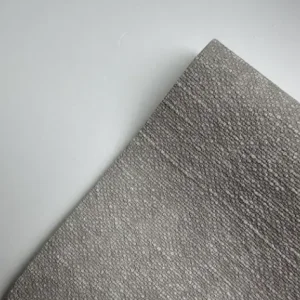
Commercial Biobased Material Grades Ready for Kenyan Import
Engineered for high UV tolerance, tropical moisture resistance, and strict compliance with the Kenya Bureau of Standards (KEBS) PVoC inspection framework.
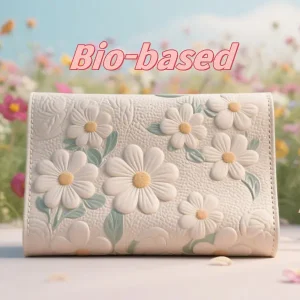
Wholesale Bio-Based Renewable Synthetic Leather for Kenyan Manufacturing
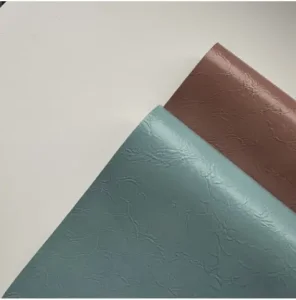
Bio-Based Renewable Synthetic Leather-0177 for Kenya Safari & Marine
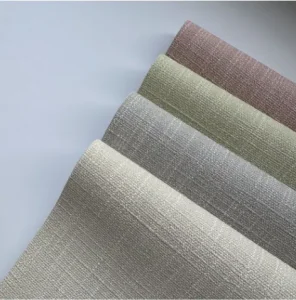
Bio-Based Renewable Synthetic Leather-9384 for Nairobi Coachbuilders
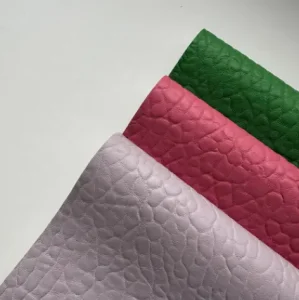
Bio-Based Renewable Synthetic Leather-9293 for Footwear & Luggage Exporters
Navigating Kenya's Industrial Transition: Sustainability, EPZs & Circular Economy Mandates
Kenya stands at the economic nucleus of the East African Community (EAC), functioning as the commercial crossroads for trade corridors stretching from the Port of Mombasa through Nairobi, Rift Valley, and across landlocked Great Lakes economies. Under Kenya Vision 2030 and the National Green Economy Strategy, local manufacturing is undergoing a profound structural metamorphosis. Industrialists, contract manufacturers within Export Processing Zones (EPZ) like Athi River and Sameer Industrial Park, and commercial convertors face twin imperatives: scaling physical throughput while satisfying stringent environmental regulatory baselines.
For decades, regional converters relied heavily on legacy chrome-tanned cattle hides or cheap imported petrochemical PVC fabrics. However, environmental bottlenecks around high effluent water treatments along the Nairobi River basin, coupled with escalating global restrictions against toxic biocides and heavy metals, have created urgent demand for non-fossil alternatives. Furthermore, Kenya's pioneering environmental legislation—exemplified by the strict enforcement of the Sustainable Waste Management Act 2022 and aggressive zero-single-use plastics directives—means commercial entities are mandated to systematically cut synthetic petrochemical footprints across their supply tiers.
JiangXin (JX.ECO) bridges this structural gap. As an established clean-technology biobased polyurethane manufacturer operating from a 135,733 m² solar-powered manufacturing campus, we provide Kenyan enterprises with direct wholesale mill access to plant-derived synthetic materials that lower greenhouse gas (GHG) life-cycle emissions without compromising on tensile strength, aesthetic grain, or high-humidity thermal stability.
Why Kenyan Converters Shift to JX.ECO Biobased Systems
Traditional synthetic leather relies entirely on petroleum fractions (petrochemical polyols and isocyanates). When exposed to East Africa's high UV index, variable equatorial humidity, and rigorous commercial use, legacy PU often undergoes premature micro-cracking and plasticizer migration. Our plant-derived matrices eliminate hazardous plasticizers and volatile organic solvents while introducing botanical bio-polyols that resist oxidative degradation.
- Rapid 20-30 day oceanic transit times to Kilindini Harbour, Mombasa
- Frictionless integration with Athi River EPZ bonded warehouse workflows
- Full documentation for duty-free preferential export schemes (AGOA / AfCFTA / EU EPA)
- Solvent-free formulations: Zero DMF, zero formaldehyde, and low VOCs
Global Bio-Economy Evolution: Replacing Fossil Hydrocarbons with Botanical Polymers
A technical overview of modern biobased polyurethane synthesis, verified radiocarbon testing protocols, and life-cycle greenhouse gas mitigation metrics.
Second-Generation Botanical Feedstocks
Rather than diverting food-chain agricultural crops, our bio-synthesis utilizes non-food grade industrial caster bean polyols, agricultural field residues, and bio-succinic acid derived via industrial fermentation. These renewable feedstocks synthesize functional polyester and polyether polyols indistinguishable in polymer molecular weight distribution from petrochemical precursors.
- Reduced non-renewable energy demand (NRED) by 45%
- Non-competing with human arable land cultivation
- Inherent botanical resistance to fungal growth
ASTM D6866 Radiocarbon Validation
We substantiate bio-content claims using carbon-14 (14C) isotope spectroscopy, the analytical foundation of the USDA BioPreferred® program. Unlike ambiguous "greenwashed" claims, radiocarbon testing accurately measures the ratio of contemporary carbon to fossil carbon, delivering verified third-party certificates of analysis (COA) for every export consignment delivered to Kenya.
- Standard verification: ASTM D6866 Method B (AMS)
- Verifiable biobased content tiers: 30%, 50%, and 75%
- USDA BioPreferred product label qualification ready
Clean-Tech Manufacturing Campus
Produced at our 135,733 m² mega-facility in Yingde, Guangdong, our synthetic leather lines operate under closed-loop thermal and solvent recycling architectures. Powered by an on-site 4.68 MW rooftop solar photovoltaic installation, JiangXin prevents over 3,800 metric tons of CO2 emissions annually, reinforcing your Scope 3 decarbonization trajectory.
- 16,000,000+ linear meters annual processing capacity
- Zero direct water-table discharge via closed-loop osmosis
- Audited under ISO 9001, ISO 14001, and Higg FEM index
| Material Engineering Parameter | Conventional Petrochemical PU | Standard PVC Leather | JiangXin Biobased Synthetic Leather | Kenyan Market Advantage |
|---|---|---|---|---|
| Renewable Bio-Carbon Content | 0% (Petroleum Only) | 0% (Petroleum + Cl) | 30% to 75% (ASTM D6866) | Direct alignment with Kenya National Green Economy Strategy |
| Harmful Plasticizers & Solvents | DMF, DMAC, Phthalates | DOP, DINP, Phthalates | Zero DMFa, Phthalate-Free (6P/16P) | Meets strict workplace safety and global export chemical RSLs |
| Hydrolysis Resistance (Jungle Test) | 1 to 3 Years (Degrades in humidity) | 3 to 5 Years (Cracks in UV) | 7 to 10+ Years Tested | Impervious to coastal Mombasa humidity & Lake Victoria climates |
| VOC Emissions & Odor Level | Grade 3.5 - 4.5 (Pungent chemical) | Grade 4.0 - 5.0 (Strong odor) | Grade ≤ 2.0 (Virtually odorless) | Essential for automotive cabin comfort and luxury hotel spaces |
| Surface Cutting & Yield Efficiency | Variable (65%–75% yield on hides) | Uniform (85%–90%) | Engineered Uniform (>98% Yield) | Saves 20-30% raw material cost over traditional bovine leather |
High-Impact Applications Across Kenya's Strategic Industries
Engineered formulations custom-tailored to solve operational and environmental bottlenecks for converters, assemblers, and institutions across Kenya.
Automotive Coachbuilding & Public Transport Seating
Kenya's public transport fleet (Matatus, regional long-distance coaches, and corporate bus assembly lines centered along Nairobi's Industrial Area and Mombasa Road) requires interior upholstery capable of sustaining punishing duty cycles. Standard synthetics quickly crack under high solar UV radiation and heavy friction.
JiangXin supplies heavy-duty biobased polyurethane configured with high Martindale abrasion resistance (>100,000 rubs), integrated flame-retardant (FMVSS 302 standard) chemistry, and stain-resistant finishes easily sanitized against heavy passenger turnover without discoloration.
- Heavy commercial bus fleet & matatu seat conversions
- Resistant to equatorial solar degradation and thermal hardening
- Sweat, oil, and disinfectant resistant surface coatings
Eco-Resorts, Safari Lodges & Coastal Hospitality
World-class eco-tourism retreats in the Maasai Mara, Samburu, Lake Naivasha, and Diani Beach require luxury interior aesthetics aligned with their pristine environmental commitments. Utilizing animal skins contradicts conservation mandates, while synthetic petroleum vinyl cheapens the guest experience.
Our biobased vegan synthetic leathers provide luxurious, warm, glove-soft tactile draping with natural full-grain embossing. Imbued with anti-mildew and antimicrobial properties, these articles resist high humidity, morning condensation, and saline sea breezes in coastal Mombasa and Kilifi.
- Safari luxury tent furnishings, banquettes, and bed heads
- Coastal outdoor marine and pool-side weather-resistant daybeds
- Low-odor formulation for enclosed five-star lodge guest suites
Export Footwear, Handbags & Accessories (Athi River EPZ)
Kenya's EPZ garment and accessory sectors represent the nation's primary industrial export engine under the African Growth and Opportunity Act (AGOA) and the emerging African Continental Free Trade Area (AfCFTA). Western retail buyers demand certified decarbonization and supply chain transparency.
JiangXin supplies export-grade biobased leather engineered specifically for shoe uppers, linings, premium luxury bags, and belts. We deliver roll-to-roll consistency with zero hide scarring, eliminating off-cut waste and accelerating computer-controlled CNC cutting speeds for local manufacturers.
- High flex endurance: >150,000 Bally flex cycles without cracking
- Certified RCS recycled polyester and GOTS organic cotton backings
- Full documentation for duty-free entry into USA and European Union
Seamless Importation: KEBS PVoC, CoC Documentation & Logistics Protocols
Importing industrial raw materials into the Republic of Kenya requires meticulous adherence to trade regulations administered by the Kenya Revenue Authority (KRA) and the Kenya Bureau of Standards (KEBS). Shipments lacking proper third-party pre-export testing encounter prohibitive port demurrage, physical quarantine, or mandatory re-exportation penalties at Kilindini Harbour.
JiangXin operates a dedicated export desk tailored for East African trade compliance. We work directly with licensed international inspection partners (including SGS, Intertek, Bureau Veritas, and CCIC) to facilitate the Pre-Export Verification of Conformity (PVoC) process, guaranteeing that the Certificate of Conformity (CoC) is issued prior to ocean bill of lading dispatch.
Our biobased formulations are certified free from chemicals listed under the EU REACH SVHC register, California Proposition 65, and RoHS directives, shielding Kenyan brands from brand-damaging compliance liabilities when marketing finished goods internationally.
Full Regulatory & Quality Audit Guarantee
Full laboratory batch test reports matched to relevant Kenya Standard specifications.
Independent radiocarbon analysis verifying plant-derived organic carbon content tiers.
DMFa content certified below 5 ppm; zero phthalates, heavy metals, or aryl amines.
Transaction Certificates (TC) provided for audited recycled polyester and cotton backings.
R&D Technology Roadmap: The Next Decade of Circular Materials in East Africa
How JiangXin is engineering next-generation polymer substrates to meet 2030 corporate sustainability benchmarks and regional African supply resilience.
Phase I (Current): High-Efficiency Bio-Polyols & Recycled Backings
Commercial deployment of 30% to 75% renewable biobased PU coatings bonded to GRS-certified post-consumer rPET and certified organic cotton textiles. Widespread adoption across Kenyan coachbuilding fleets and Athi River export assembly plants, delivering immediate Scope 3 emissions reductions.
Phase II (2026–2028): Agronomic Waste Valorization & African Sisal Substrates
Collaborative research initiatives exploring the incorporation of regional East African agricultural residues—including Kenyan sisal bast fibers from Machakos and Kilifi, coffee husk cellulosic micro-powders, and tea processing by-products—into non-woven substrate matrices. This creates hyper-local circularity and enhances cross-tensile mechanical strength.
Phase III (2029+): 100% Bio-Circularity & Closed-Loop Enzyme Depolymerization
Synthesis of 100% fully bio-derived aliphatic polyurethanes featuring enzyme-responsive cleavable bonds. At the end of commercial product life, the material can be depolymerized into constituent organic building blocks under controlled industrial composting conditions, completely eliminating landfill accumulation.
Frequently Asked Questions by Kenyan Sourcing Directors & Engineers
Direct answers from our senior chemical formulation team and international trade division on lead times, specifications, testing, and custom manufacturing.
What is the minimum order quantity (MOQ) for custom biobased leather orders shipped to Kenya?
How does biobased synthetic leather endure the tropical heat and humidity of coastal Kenya?
What is the typical shipping lead time from your factory to the Port of Mombasa and Nairobi ICD?
Can JiangXin guarantee KEBS PVoC compliance and supply the Certificate of Conformity (CoC)?
How does the cost of biobased synthetic leather compare to virgin petroleum PU and genuine leather?
Are your biobased leathers certified safe for infant footwear and skin-contact apparel?
Can we request specialized fire-retardant (FR) properties for public transport and commercial projects?
How does your team verify the exact bio-carbon content percentage for brand labeling?
Specialized Bio-Polymer Formulations for East African Manufacturers
Explore our complete range of certified plant-derived and high-performance synthetic materials available for prompt commercial container delivery.
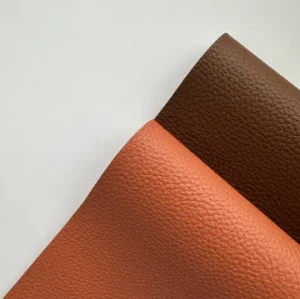
Custom Bio-Based Renewable Synthetic Leather-9109 for Kenyan Footwear
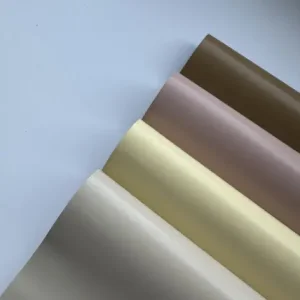
Custom Bio-Based Renewable Synthetic Leather-2056 for Hospitality

OEM Plant-Derived Bio-Based Synthetic Leather-2071 for Kenya EPZ Goods
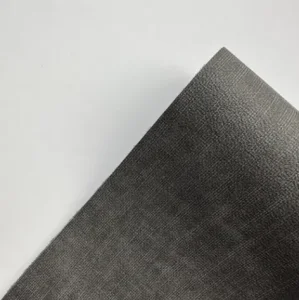
Plant-Sourced Bio-Based Renewable Synthetic Leather-9103 for Handbags

Custom Plant-Derived Bio-Based Synthetic Leather-9081 for Luxury Interiors
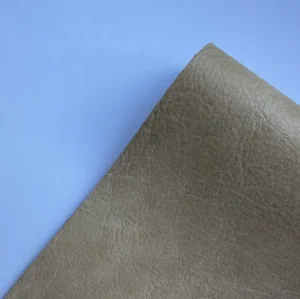
Wholesale Plant-Origin Bio-Based Synthetic Leather-9271 for Transit Cabinets
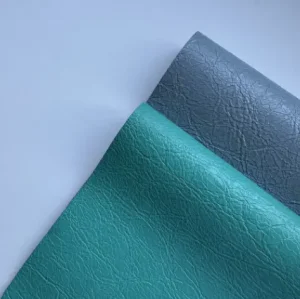
Plant-Derived Bio-Based Synthetic Leather-9213 for Heavy-Duty Workwear