
Engineered Biobased Substrates Serving Yaren Infrastructure
Engineered for high solar irradiation, tropical humidity, and saline resistance. Selected plant-derived synthetic leather articles tailored for municipal, fleet refit, and maritime logistics programs in Yaren.

Bio-Based Renewable Synthetic Leather — Yaren Maritime Standard
Ultra-low VOC bio-polyol matrix engineered to resist equatorial hydrolysis and premature delamination under Pacific solar exposure.
View Product Detail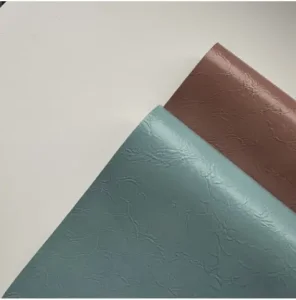
Bio-Based Renewable Synthetic Leather 0177 — High-Tensile Series
Formulated with agricultural-waste-derived chain extenders for reinforced tear strength in commercial transport seats.
View Product Detail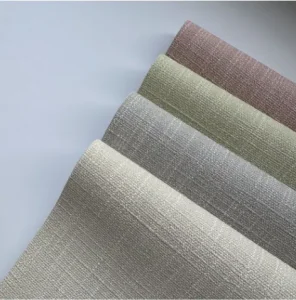
Bio-Based Renewable Synthetic Leather 9384 — Marine Anti-UV
Incorporates hindered amine light stabilizers (HALS) alongside USDA-verified biobased polyurethane layers.
View Product Detail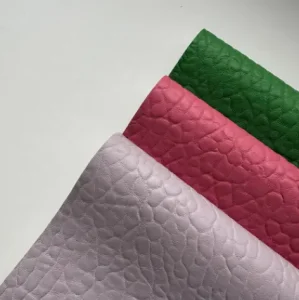
Bio-Based Renewable Synthetic Leather 9293 — Salt-Fog Shield
Surface micro-structure impervious to coastal salt crystallization, ideal for government vessel cabins and airport refits.
View Product DetailThe Commercial and Industrial Reality of Biobased Procurement in Yaren
A strategic analysis of ecological vulnerability, post-extractive transition, and sustainable material supply chains in the Republic of Nauru's administrative core.
Yaren, functioning as the primary administrative district and economic conduit of Nauru, occupies a uniquely demanding position within Micronesian and South Pacific trade networks. Unlike continental manufacturing hubs that benefit from sheltered temperate supply chains, businesses and public utilities operating within Yaren face aggressive oceanic microclimates: persistent high atmospheric salinity, relentless solar UV indices exceeding 11+ on a year-round basis, and ambient relative humidity consistently oscillating between 75% and 92%. In this hyper-saline, high-temperature environment, conventional petro-synthetic polymers—specifically legacy polyvinyl chloride (PVC) and standard ester-based polyurethane (PU)—degrade catastrophically within 18 to 24 months, exhibiting premature plasticizer migration, brittle micro-cracking, and hydrolytic peeling.
Concurrently, the micro-economy of Yaren is executing a crucial multi-decade pivot away from historic open-cast phosphate extraction toward sustainable infrastructure, regional fisheries surveillance, aviation support, and climate-resilient institutional modernization. As sovereign entities and private contractors in Yaren upgrade government ministries, offshore patrol vessels, hospitality lodging, and fleet transit, their procurement criteria have fundamentally shifted. Materials are no longer selected purely on initial landed cost; total lifecycle endurance, absence of carcinogenic off-gassing (such as toxic phthalates and halogenated fire retardants), and verifiably low embodied carbon are mandatory imperatives.
Hydrolytic & Saline Resistance
Pacific maritime environments accelerate polymer breakdown. Our polyether-polyol biobased formulations pass the stringent 10-week "Jungle Test" (70°C at 95% relative humidity) without surface chalking or delamination.
Equatorial Photostability
Yaren experiences sustained solar irradiance that degrades standard synthetic dyes. We integrate inorganic, non-leaching mineral colorants and multi-stage hindered amine UV blockers rated to ISO 105-B02 Grade 6+.
Zero-Plasticizer Leaching
Traditional vinyl relies on ortho-phthalate plasticizers that migrate rapidly in high heat, leaving surfaces brittle and emitting noxious odors. Our bio-resins are 100% plasticizer-free with permanent molecular flexibility.
Because Yaren lacks native industrial polymer synthesizing infrastructure, all architectural upholstery, protective transportation covers, footwear components, and leather-goods materials must be imported through transshipment routes originating in Asia-Pacific industrial epicenters. As an OEM manufacturer operating a dedicated 135,733 m² solar-powered production campus, our supply framework directly serves procurement managers, import houses, and institutional engineers targeting Yaren. We bypass third-party trading intermediaries, ensuring exact batch-to-batch consistency, full testing validation dossiers, and unbroken chain-of-custody documentation from raw bio-feedstock to containerized delivery.
Global Enterprise Sourcing Architecture: Mitigating Scope 3 Emissions
How multinational supply chains and Pacific regional distributors utilize certified bio-derived materials to de-risk environmental liabilities and satisfy international ESG directives.
In the contemporary global macroeconomic environment, OEM procurement has undergone a systemic paradigm shift. Tier-1 brands across automotive interior design, contract hospitality, luxury consumer accessories, and athletic footwear are subjected to stringent non-financial reporting regulations, including the European Union's Corporate Sustainability Due Diligence Directive (CSDDD), the Corporate Sustainability Reporting Directive (CSRD), and California’s Climate Corporate Data Accountability Act (SB 253). These legal frameworks penalize unverified green claims, mandating rigorous, auditable reductions in Scope 3 upstream emissions—which historically comprise over 70% of an enterprise’s total carbon footprint.
For organizations supplying products into Pacific jurisdictions like Yaren or using Pacific logistics corridors, the reliance on virgin, fossil-fuel-derived petrochemicals poses acute supply-chain risks. Volatile crude oil pricing directly destabilizes polyurethane raw material costs (MDI, TDI, and petrochemical adipic acids). By transitioning to agricultural plant-derived polyols—synthesized from non-food-grade industrial castor beans, agricultural starch, and sustainably cultivated seed oils—our OEM manufacturing operations decouple product economics from hydrocarbon fluctuations while reducing cradle-to-gate greenhouse gas emissions by up to 38% compared to standard PU leather.
| Performance & Carbon Metric | Conventional Solvent PVC | Standard Petro-PU | JiangXin OEM Biobased PU (30-78%) |
|---|---|---|---|
| Bio-Carbon Content (ASTM D6866) | 0% (Pure fossil fuel) | 0% (Pure fossil fuel) | 30% – 78% Verifiable C14 |
| Embodied Carbon (kg CO₂eq / lm) | ~5.8 – 7.2 | ~4.2 – 5.1 | ~2.1 – 3.2 (Solar campus offset) |
| Plasticizer Content (Phthalates) | High (25% – 35% by weight) | Trace / Formulation dependent | 0% (Inherently Flexible Matrix) |
| Hydrolysis Resistance (Jungle Test) | Prone to surface embrittlement | 3 to 5 Years equivalent | 7 to 10+ Years (Polyether grade) |
| VOC Emissions (Chamber Test) | Extremely High (Strong odor) | Moderate (DMF/toluene traces) | Near-Zero (Solvent-free system) |
| Chain of Custody Certification | Unverifiable origin | Generic mill standard | USDA BioPreferred & RCS Traced |
Furthermore, global brand partners sourcing through our facility receive full Lifecycle Assessment (LCA) data packages. Every production run is cross-referenced with energy inputs derived from our 4.68 MW rooftop photovoltaic solar array in Yingde, Guangdong. This verifiable transparency empowers corporate compliance officers to claim concrete, defensible carbon offsets on their annual environmental disclosures, directly shielding their brand equity from regulatory scrutiny and consumer litigation.
Macrochemical Engineering: Bio-Polyol Synthesis & Solvent-Free Coating
Deconstructing the molecular architecture, catalytic transesterification, and precision dry-extrusion manufacturing behind next-generation bio-synthetics.
The historical challenge of biobased synthetic leather has always centered on mechanical parity: early market iterations suffered from inferior tensile strength, low elongation recovery, and heightened susceptibility to micro-fungal colonization in damp tropical climates. Our engineering team has resolved these deficiencies through advanced polymer synthesis that replaces petroleum-derived polyether and polyester polyols with bio-based macrodiols derived from renewable plant oils, without compromising the hard-segment urethane linkages.
Castor-Derived Polyamide & Polyol
Non-edible castor oil undergoes epoxidation and ring-opening transesterification, resulting in hyper-branched polyols that deliver superior natural water-repellency and exceptional thermal stability up to 180°C.
100% Solvent-Free Hot-Melt Coating
Our production lines completely eradicate dimethylformamide (DMF), methyl ethyl ketone (MEK), and toluene. Resins are applied via high-precision thermal extrusion, preventing toxic volatile off-gassing.
Cross-Linked Bio-Topcoats
Water-borne bio-polyurethane micro-lacquers provide a durable barrier against micro-scratches, sunblock lotions, sanitizer alcohols, and salt stains, achieving over 100,000 cycles on Martindale test benches.
Central to this macromolecular architecture is the precise ratio of soft to hard segments within the cured polyurethane matrix. The hard segment, synthesized from 4,4'-methylene diphenyl diisocyanate (MDI) and bio-based 1,3-propanediol (Bio-PDO), acts as physical cross-links that impart dimensional stability, flex fatigue resistance, and structural elasticity. The soft segment, formed by our proprietary bio-polyether polyols, ensures supple hand feel and drape that rivals premium full-grain nappa leather while remaining entirely animal-free and cruelty-free.
Technology Roadmap (2026–2035): The Future of Circular Synthetics
Milestones in biocatalytic synthesis, enzymatically degradable backings, and fully closed-loop circularity serving isolated island economies and global industry alike.
Phase 1: 50%+ Mass Bio-Base
Standardizing baseline commercial rolls at >50% ASTM D6866 bio-carbon content. Integrating GRS/RCS-certified recycled post-consumer PET backings across 100% of footwear and marine lines.
Phase 2: Bio-Diisocyanate Transition
Replacing petrochemical isocyanates with emerging plant-derived diamine cross-linkers (e.g., pentamethylene diisocyanate, PDI), driving overall renewable bio-content past 85%.
Phase 3: Controlled Bioremediation
Engineered multi-layer materials featuring triggering biocatalysts that remain inert throughout product operating life, but initiate rapid organic decomposition in industrial composting environments.
Phase 4: Closed-Loop Molecular Circularity
Deployment of chemical depolymerization protocols allowing spent synthetic leather garments, upholstery, and scraps to be broken down into pristine monomeric polyols with zero quality loss.
This roadmap holds tremendous significance for oceanic communities such as Yaren. In isolated geographies where landfill acreage is severely constrained and municipal solid waste management represents a critical environmental challenge, the advent of materials engineered for either permanent extreme durability or circular reclamation eliminates the long-term ecological liabilities of micro-plastic contamination and unrecyclable vinyl dumping.
Localized Support, Pacific Logistics & Regulatory Assurance
Overcoming transshipment bottlenecks, high-humidity sea-freight packaging, and global compliance testing for shipments routed to Yaren and surrounding Pacific hubs.
Fulfilling OEM synthetic material contracts for destinations like Yaren requires an acute mastery of maritime logistics. Cargo destined for Nauru generally transits through intermediary ports in Brisbane, Australia, or Suva, Fiji, prior to final discharge at the Port of Nauru. This prolonged ocean transit exposes containerized rolls to severe thermal cycling—colloquially termed "container sweat"—where internal temperatures fluctuate between 20°C and 65°C alongside 100% condensing humidity. Without specialized export preparation, conventional rolls experience surface blocking, mold bloom, and backing delamination before clearing customs.
Our OEM operations mitigate these threats through strict tropicalized export standards:
Tri-Layer Hermetic Packaging
Every roll is wound under automated tension control onto heavy-duty PVC cores, enclosed within vacuum-sealed polyethylene barrier films with integrated active silica gel desiccant packs, and sheathed in tear-resistant woven poly-jackets.
Tropical Fungicidal Protection
Materials feature non-arsenic, eco-compliant anti-microbial treatments compliant with ASTM G21, providing permanent protection against mold spores, mildew growth, and bacterial degradation during shipping and long-term tropical service.
Audit-Ready Export Compliance
Shipments are accompanied by comprehensive analytical dossiers: ASTM D6866 radiocarbon bio-based test certificates, EU REACH SVHC clearance (240+ substances), RoHS hazardous substance passes, and OEKO-TEX Standard 100 Class I verification.
To support regional contractors, naval fleet maintenance teams, and commercial upholsterers operating within Yaren, we offer customized low-minimum order quantity (MOQ) consolidation programs. Instead of requiring standard mill-scale single-color runs of 1,000+ meters, our flexible manufacturing infrastructure enables multi-article container packing, allowing clients to balance grain embossings, colors, and functional specifications within single shipments.
Frequently Asked Questions: Biobased Materials Serving Yaren
Exhaustive technical, chemical, and procurement queries answered directly by our materials engineering laboratory and global export logistics specialists.
Biobased content is verified via Accelerator Mass Spectrometry (AMS) radiocarbon analysis following ASTM D6866 (or ISO 16620-2). This method differentiates modern biological carbon (which contains the natural radioactive isotope Carbon-14 absorbed from atmospheric CO₂ via photosynthesis) from fossil fuel carbon (which is millions of years old and completely devoid of Carbon-14). The resulting percentage indicates the exact proportion of renewable carbon relative to total organic carbon. Every commercial lot produced by JiangXin is linked to accredited third-party test reports (such as Beta Analytic or USDA BioPreferred program dossiers), providing irrefutable, legally defensible certification for all export documents.
Our materials designed for coastal and island climates utilize an aliphatic polyether-polyol backbone engineered without vulnerable ester linkages that are susceptible to moisture-induced scission. To counter Yaren’s intense solar exposure, our formulations integrate triazine UV absorbers alongside polymeric hindered amine light stabilizers (HALS), blocking ultraviolet degradation up to 380 nm. Furthermore, our surface coatings undergo ASTM B117 salt spray testing for over 1,000 continuous hours without surface blister formation, discoloration, or loss of adhesion to the base substrate.
Yes. We engineer customized functional coatings meeting major global fire performance standards without employing toxic halogenated compounds or polybrominated diphenyl ethers (PBDEs). We can formulate materials to pass IMO FTP Code 2010 Part 8 (for marine vessel seating), UK BS 5852 Crib 5, and California TB 117-2013 for institutional upholstery, using non-toxic mineral phosphorus-nitrogen synergists that do not migrate or emit corrosive hydrochloric gas during combustion.
For custom color, grain, and thickness matching, physical lab dip swatches are dispatched via international express courier within 3 to 5 business days. Once the tech pack is approved, standard bulk manufacturing is completed in our Guangdong facility within 14 to 20 days. Transit time via established ocean container routes (typically transshipping via Brisbane or Fiji to Nauru) ranges from 28 to 42 days depending on vessel scheduling. Standard production MOQ is 500 linear meters per color/grain, but consolidated multi-reference container options are available for institutional projects.
No. While the polyols are synthesized from plant sources, the agricultural oils have been chemically converted at the molecular level into fully cross-linked synthetic polyurethane polymers. The resulting plasticized structure contains no free carbohydrates, starches, or edible fats that could serve as a nutritional source for microorganisms or pests. In addition, our tropical-specification backings and polyurethane resins are formulated with broad-spectrum bio-static agents that achieve a Zero Growth rating under ASTM G21 fungal resistance testing.
Full Series: Plant-Derived & Bio-Based Synthetic Leather Articles
Complete certified catalog of high-durability, customizable synthetic leather substrates available for direct OEM contract manufacturing and Pacific export programs.
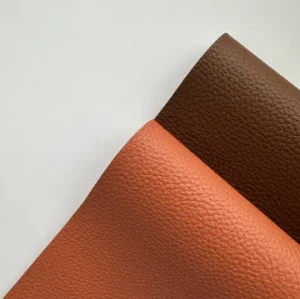
Custom Bio-Based Synthetic Leather 9109 — Pacific Edition
Embossed grain with ultra-matte protective topcoat engineered for footwear uppers and luxury accessories.
View Product Detail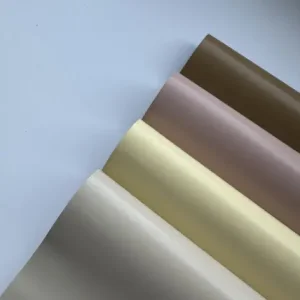
Custom Bio-Based Synthetic Leather 2056 — Architectural Grade
Heavy-gauge formulation designed for contract hospitality seating, airport lounges, and civic refit projects.
View Product Detail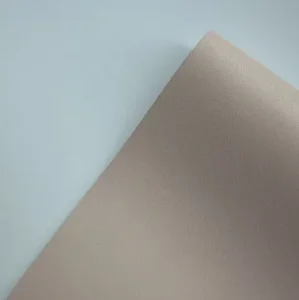
OEM Plant-Derived Synthetic Leather 2071 — Microfiber Backed
Combines high bio-carbon surface skin with recycled post-consumer PET nonwoven microfiber substrate.
View Product Detail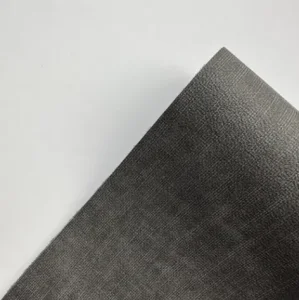
High-Quality Plant-Sourced Synthetic Leather 9103
Optimized cold-crack resistance down to -25°C, ensuring dynamic flex stability across varied operational zones.
View Product Detail
Custom Plant-Derived Synthetic Leather 9081 — High-Tear
Reinforced warp-knitted backing delivering exceptional seam strength for transport upholstery and luggage bags.
View Product Detail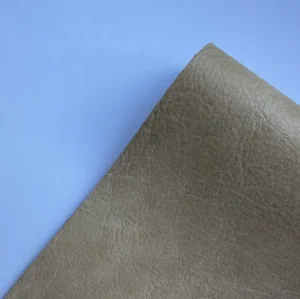
Wholesale Plant-Origin Synthetic Leather 9271 — Supple Feel
Micro-porous breathable intermediate foam layer providing premium drape and hand-feel for high-end fashion goods.
View Product Detail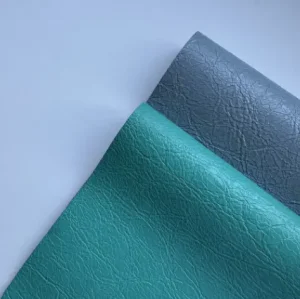
High-Quality Plant-Derived Synthetic Leather 9213
Stain-resistant fluorocarbon-free surface treatment repelling oils, coffee, ink, and tropical sea grime easily.
View Product Detail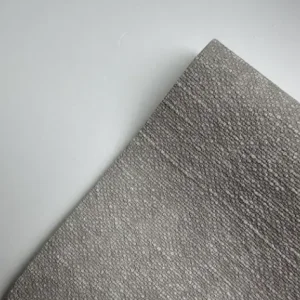
High-Quality Plant-Derived Synthetic Leather 9020 — Zero VOC
Solvent-free waterborne manufacturing process ensuring zero amine emissions and complete passenger safety.
View Product DetailInitiate Your Biobased Material Development Protocol
Connect directly with our senior polymer engineering division. Receive customized material swatch books, physical ASTM test plaques, and technical data sheets tailored to your commercial program in Yaren or global manufacturing hubs.
Send Inquiry Now