
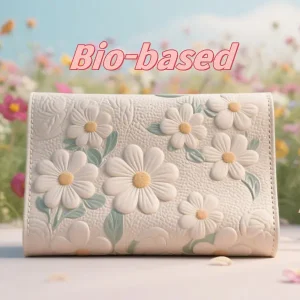
Series 1000: Ultra-durable renewable synthetic leather matrix formulated for Turkish commercial automotive and rail transport seat covers.
Wholesale Bio-Based Renewable Synthetic Leather Supplier, Factory
Engineered for immediate integration into high-throughput production lines across Istanbul, Bursa, and Izmir. Designed with bio-based polyols derived from non-food agricultural feedstock to satisfy rigorous EU CBAM and REACH standards.
Series 1000: Ultra-durable renewable synthetic leather matrix formulated for Turkish commercial automotive and rail transport seat covers.
Wholesale Bio-Based Renewable Synthetic Leather Supplier, Factory
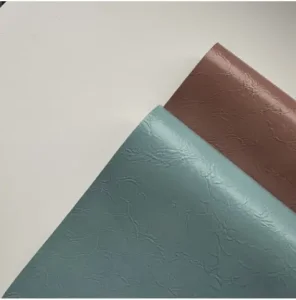
Series 0177: High-tensile, low-temperature flex compliant grain skin for premium athletic and orthopaedic footwear manufacturers in Izmir & Gaziantep.
Wholesale Bio-Based Renewable Synthetic Leather-0177 Manufacturers, Factories
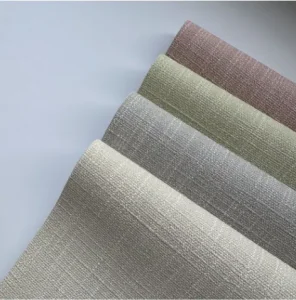
Series 9384: Breathable, hydrolysis-resistant bio-polymer composite engineered for contract furniture upholstery manufacturing clusters in Bursa and Kayseri.
Wholesale Bio-Based Renewable Synthetic Leather-9384 Manufacturer, Supplier
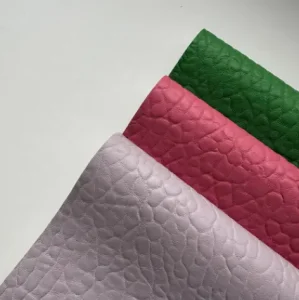
Series 9293: Soft-touch nappa finish with exceptional drape and stitch-holding integrity for Istanbul's export-oriented leather goods and apparel designers.
Wholesale Bio-Based Renewable Synthetic Leather-9293 Supplier, Factories
Evaluating the industrial transition across Turkey's major production corridors as European regulatory shifts accelerate the obsolescence of petrochemical PU/PVC substrates.
The Republic of Turkey occupies a distinct, high-leverage position in the global industrial manufacturing supply web. Ranked as Europe's leading textile and apparel producer and one of the world's most sophisticated Tier-1 automotive manufacturing powerhouses, Turkey's industrial hubs—spanning from the automotive assembly corridors in Bursa and Kocaeli to the footwear clusters in Izmir, Gaziantep, and Konya, and the furniture export regions in Kayseri and Inegöl—are undergoing an unprecedented raw material paradigm shift.
Historically reliant on conventional fossil-based Polyurethane (PU) and Polyvinyl Chloride (PVC) artificial leathers, Turkish OEMs are now facing structural disruptions. The prompt ratification of the European Green Deal, alongside the pending implementation of the Carbon Border Adjustment Mechanism (CBAM) and strict Scope 3 greenhouse gas reporting standards, means that Turkish converters who export upwards of 60% of finished goods into Germany, France, Italy, and the UK can no longer rely on petroleum-heavy synthetic leathers without facing severe customs penalties and brand delisting.
Strategic Imperative: The European Union–Turkey Customs Union grants frictionless transit for manufactured goods, provided industrial inputs meet stringent EU chemical safety frameworks (REACH SVHC, RoHS, POPs Regulation) and verifiably reduced Life Cycle Assessment (LCA) footprints. Our OEM biobased leathers replace petro-derived polyols with renewable plant carbons, reducing upstream Scope 3 cradle-to-gate emissions by 38% to 62%.
Moreover, local consumer awareness within domestic Turkish retail and hospitality sectors is gravitating rapidly toward vegan-certified, cruelty-free, and ethically sourced alternatives. Leading Turkish designers and contract furniture fabricators are demanding non-food-chain, non-GMO bio-based inputs that preserve the supple haptic response of aniline calfskin while exhibiting superior chemical resistance against the aggressive cleaning disinfectants widely utilized in healthcare and commercial transit environments.
We provide full container load (FCL) and consolidated freight directly dispatching to Ambarli Port (Istanbul), Gemlik Port (Bursa), and Alsancak/Aliaga (Izmir) with comprehensive customs clearance documentation including EUR.1 and A.TR movement certificates, preventing customs demurrage.
Global enterprise procurement teams have evolved beyond simple "eco-friendly" aesthetic marketing; today's procurement criteria demand rigorous empirical substantiation, certified mass balances, and molecular-level green synthesis.
Commercial buyers no longer accept ambiguous "bio" claims. Global OEMs mandate carbon-14 (14C) isotope testing via Accelerator Mass Spectrometry (AMS). Our products undergo quantitative ASTM D6866 biobased carbon testing, ensuring guaranteed 20% to 75% renewable carbon index verification transparently disclosed on every batch Certificate of Analysis (CoA).
Traditional synthetic leather relies heavily on N,N-Dimethylformamide (DMFa), Dimethylacetamide (DMAc), and Toluene. Stricter EU REACH Annex XVII thresholds cap DMFa at <5 mg/kg. Our proprietary 100% water-based dispersion (PUD) and solvent-free reactive hot-melt processing eradicate hazardous solvents entirely, creating clean production loops safe for factory technicians and end-users.
A bio-based coating is incomplete without an eco-engineered structural backing. We cross-engineer our bio-polyurethane films with GRS and RCS-certified 100% Post-Consumer Recycled (PCR) polyester fleece, circular microfiber, organic GOTS cotton, and renewable hemp textiles, delivering end-to-end circularity across both substrate and skin layers.
Configuring mechanical elasticity, hydrolytic stability, thermal tolerance, and grain aesthetics to match the technical specifications of Turkey's premier export sectors.
Engineered for seat bolsters, door trims, instrument panel wrapping, and steering wheel coverings. Tested against stringent automotive norms including DIN 75201 fogging, dry/wet Martindale abrasion (>100,000 rubs), and ISO 105-B06 Xenon arc lightfastness (Grade 4-5) without plasticizer migration.
Formulated for Izmir and Gaziantep sneaker and boot production. Provides extreme cold flex resistance (Bally flex >100,000 cycles at -20°C without micro-cracking), high tear propagation resistance, and breathable microporous open-cell cellular structures ensuring thermal moisture vapor equilibrium.
Tuned for high-frequency commercial usage in hotel resorts, corporate spaces, and luxury yachts across Antalya, Bodrum, and Istanbul. Enhanced with proprietary stain-shield bio-topcoats that resist hospital-grade ethanol, betadine, coffee, ink, and UV fading while satisfying IMO FTP and BS 5852 Crib 5 fire barriers.
Streamlining the bureaucratic path from raw chemical synthesis to customs clearance at Turkish customs posts, ensuring frictionless brand qualification.
| Standard / Regulation | Technical Scope & Target Limits | Turkish Regulatory Synergy | Audit Status & Deliverables |
|---|---|---|---|
| EU REACH (EC 1907/2006) | SVHC candidate list screening (<0.1% w/w); Annex XVII restrictions. Zero organotin, BPA, cadmium, lead. | Fully harmonized with Turkish KKDIK (Turkey REACH) administered by MoEUCC. | Passed (SGS / Intertek Certified) |
| ASTM D6866 (Method B) | Radiocarbon 14C analytical assay determining renewable agricultural carbon fraction versus fossil carbon. | Empirical verification accepted by Turkish exporters for EU hangtag eco-claims. | Certified (Beta Analytic CoAs) |
| OEKO-TEX Standard 100 | Strict testing for over 300 toxic chemicals; biological skin tolerance and allergen absence (Class 1 & 2). | Standard qualification criterion for Turkish apparel contract manufacturers (Hugo Boss, Inditex Tier-1). | Class 1 Ready (Zero Carcinogenic Azo Dyes) |
| Recycled Claim Standard (RCS) | Chain-of-custody verification tracking recycled post-consumer PET polyester backing and waste recovery. | Directly aligned with Turkish export targets under the EU Circular Economy Action Plan. | GRS / RCS (Full Transaction Certificates) |
| TSE Standards (Turkey) | TSE K 118 & TS EN ISO 1421 physical integrity: tensile break, elongation, tear, Martindale scratch testing. | Pre-validated to pass Turkish Standards Institution (Türk Standardları Enstitüsü) audits. | TSE Ready (In-house Accredited Physical Lab) |
Navigating HS Codes is vital to avoiding demurrage. Our export operations team formats Turkish customs declarations under optimized HS Code 5903.20 (PU-impregnated or coated textile fabrics) or HS Code 3921.13 (Cellular Polyurethanes) with precise chemical breakdown documentation, eliminating tariff reclassification delays at Istanbul or Mersin customs.
In anticipation of mandatory EU Ecodesign for Sustainable Products Regulation (ESPR), we provide comprehensive digital material cards detailing cradle-to-gate carbon footprints (ISO 14040/44 LCA), water consumption indices, and raw ingredient origins, empowering Turkish brands with seamless ESG compliance disclosures.
Pioneering continuous advancements in green chemistry to achieve completely petrochemical-free, closed-loop circular synthetic leathers.
Current industrial series utilize second-generation industrial castor bean derivatives, non-food corn starch polyols, and vegetable oils that never compete with human food resources or drive agricultural deforestation.
Deploying advanced isocyanate replacement chemistries (Non-Isocyanate Polyurethanes / NIPU) and bio-based aliphatic chain extenders, systematically raising the radiocarbon bio-content index past 75% without compromising mechanical tensile strength.
Active synthesis trials utilizing industrial apple pomace, olive oil pressing residues (widely available across the Aegean coastline), and brewing bagasse to formulate localized, regional biomass skins.
Targeting certified industrial compostability and enzymatic depolymerization capabilities by 2028, enabling synthetic leather garments and trims to break down organically within controlled anaerobic environments.
Factory Scalability: Our state-of-the-art campus spans 135,733 m² in Guangdong, China, powered by a 4.68 MW rooftop photovoltaic solar system and backed by proprietary heat-recovery engineering. This infrastructure guarantees uninterrupted delivery of millions of linear meters per month to Turkish industrial partners, completely immune to seasonal energy spikes or raw chemical supply shocks.
Direct technical answers addressing physical performance, sampling procedures, custom tooling, and Turkish customs import protocol.
Explore our full line of specialized plant-derived, renewable, and eco-certified artificial leathers, custom manufactured for commercial roll delivery across Turkish manufacturing centers.
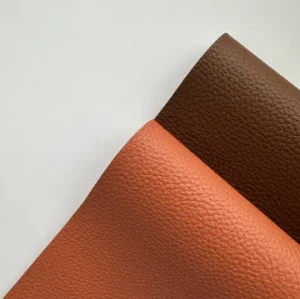
Series 9109: Micro-perforated bio-PU leather with enhanced breathability for Turkish luxury vehicle interior retrofitting and seating.
Custom Bio-Based Renewable Synthetic Leather-9109 Supplier, Factory
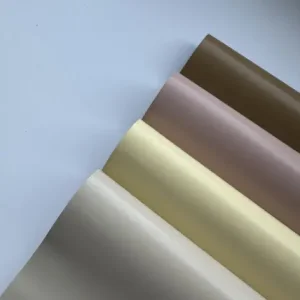
Series 2056: Enhanced chemical resistance, anti-discoloration formula for healthcare, hospital, and clinic seating fabrics in Ankara & Istanbul.
Custom Bio-Based Renewable Synthetic Leather-2056 Manufacturers, Manufacturer
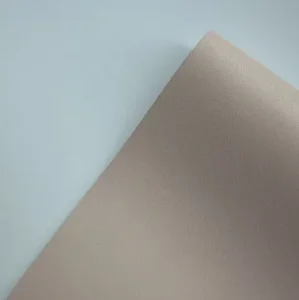
Series 2071: Supple haptic feel with rich milling pebble grain, optimized for Turkish handbag, belt, and luxury luggage manufacturing.
OEM Plant-Derived Renewable Bio-Based Synthetic Leather-2071 Manufacturers, Factory
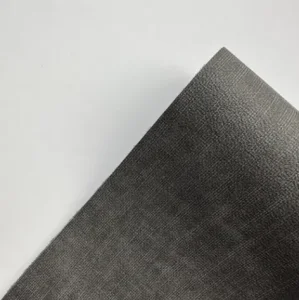
Series 9103: Heavy-duty scratch-proof finish engineered for high-traffic hospitality, airport terminals, and Turkish cruise ship interior design.
High-Quality Plant-Sourced Bio-Based Renewable Synthetic Leather-9103 Suppliers, Factories

Series 9081: Lightweight, supple polyurethane formulation specifically created for apparel, outerwear jackets, and fashion trimmings.
Custom Plant-Derived Renewable Bio-Based Synthetic Leather-9081 Manufacturers, Factories
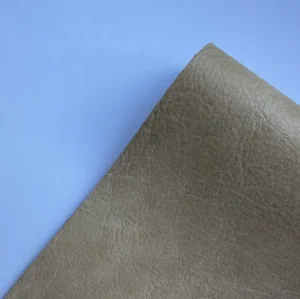
Series 9271: High-density micro-grain texture with water-repellent biological surface coating for outdoor and marine equipment.
Wholesale Plant‑Origin Renewable Bio‑Based Synthetic Leather-9271 Manufacturer, Suppliers
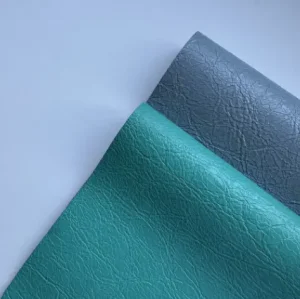
Series 9213: Balanced dynamic elasticity for athletic shoe uppers and sneakers, resistant to repetitive flex fatigue and stress-cracking.
High-Quality Plant‑Derived Renewable Bio‑Based Synthetic Leather-9213 Supplier, Suppliers
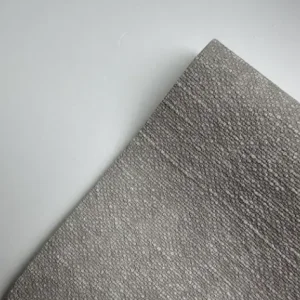
Series 9020: Ultra-matte fine calf grain finish engineered for corporate luxury giftware, cases, and premium tech accessory sleeves.
High-Quality Plant‑Derived Bio‑Based Synthetic Leather-9020 Manufacturer, Supplier
Partner with an audited OEM manufacturer capable of meeting your exact physical tech packs, strict EU/Turkish chemical compliance, and carbon footprint reduction targets.
Send Inquiry Now — Request Free Swatches & Tech Dossier