
South Africa Benchmark Biobased Materials
Engineered to withstand intense Southern African UV radiation, cyclic thermal stress, and stringent chemical safety benchmarks, these top-tier biobased references provide verified biocarbon content and low lifecycle carbon footprints.
-

Bio-Based Renewable Synthetic Leather (South Africa Automotive & Marine Spec)
-
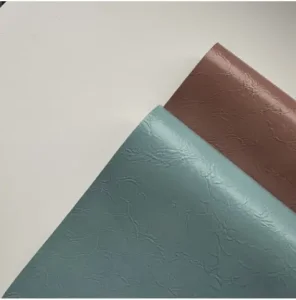
Bio-Based Renewable Leather-0177 (Gauteng Industrial & Safari Grade)
-
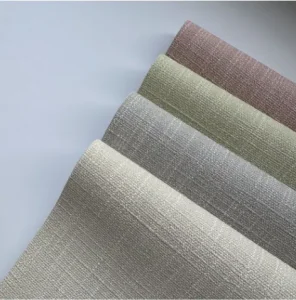
Bio-Based Renewable Synthetic Leather-9384 (Durban Footwear & Apparel Series)
-
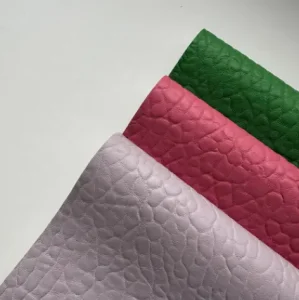
Bio-Based Renewable Synthetic Leather-9293 (SABS Compliant Protective Substrate)
Biobased Materials in South Africa: Decarbonization & Circular Industrial Realities
An in-depth analysis of South Africa's accelerating regulatory and commercial shift from petrochemical elastomers and legacy vinyls toward certified bio-based synthetic polymers.
South Africa’s Regulatory Drivers: The Carbon Tax Act & EPR Mandates
South Africa stands as the pioneering sovereign in sub-Saharan Africa to establish mandatory carbon pricing through the Carbon Tax Act (Act No. 15 of 2019). As national phase-ins escalate baseline tax rates per metric ton of CO2 equivalent, manufacturing conglomerates across Gauteng, KwaZulu-Natal, and the Eastern Cape face direct operational pressures to decarbonize their procurement frameworks. Concurrently, the Department of Forestry, Fisheries and the Environment (DFFE) has enacted comprehensive Extended Producer Responsibility (EPR) schemes across consumer goods, textiles, and packaging.
This legislative evolution is shifting tier-1 original equipment manufacturers (OEMs) away from virgin fossil-derived PVC and petrochemical polyurethanes. Sourcing certified biobased synthetic leathers containing USDA-certified non-fossil biocarbon enables South African converters, footwear mills, and trim integrators to dramatically reduce Scope 3 upstream emissions, circumvent escalating carbon liabilities, and comply with sovereign climate roadmaps.
Cross-Border Competitiveness: Navigating the EU CBAM from South Africa
South Africa’s commercial automotive corridor—anchored by major production plants in Gqeberha (Port Elizabeth), East London, and Pretoria—exports a massive portion of assembled vehicles and automotive components directly into the European Union and the United Kingdom. With the rollout of the EU’s Carbon Border Adjustment Mechanism (CBAM) and stringent Corporate Sustainability Due Diligence Directives (CSDDD), domestic automotive component manufacturers are urgently mandated to declare verified Product Carbon Footprints (PCF).
Importing cutting-edge biobased polyurethane solutions engineered by JiangXin allows South African tier-1 automotive suppliers to deliver cabin surfaces, seating upholstery, and shift-boot membranes that meet European end-market lifecycle benchmarks while remaining competitively priced against traditional leather hides and fossil-heavy synthetic substrates.
Global Chemical Transition: From Petrochemical Cracking to Bio-Polyol Monomers
The global polymer market is witnessing a fundamental transition. By substituting petroleum-derived polyols with renewable agricultural feedstocks, sustainable synthetic leather delivers uncompromised mechanical integrity with structural decarbonization.
Bio-Polyol Synthetics
Traditional polyurethanes depend on fossil ethylene oxide or propylene glycol derived from petroleum cracking. Our biobased PU polymers integrate plant-derived polyols derived from non-edible agricultural bio-feedstock, castor oil, and industrial starch derivatives, slashing initial energy consumption during synthesis by up to 38%.
ASTM D6866 Radiocarbon Traceability
To guard against greenwashing, our materials are quantified through Accelerator Mass Spectrometry (AMS) radiocarbon analysis in alignment with ASTM D6866 Method B. This laboratory protocol precisely calculates the ratio of modern bio-carbon (Carbon-14) versus fossil carbon (Carbon-12), giving buyers auditable verification metrics.
Solvent-Free & Zero-DMFa Systems
Unlike older synthetic leather factories relying on hazardous dimethylformamide (DMFa) solvent baths, JiangXin operates clean dry-process and 100% solvent-free hot-melt extrusion lines. This protects processing personnel, avoids chemical discharge, and produces zero hazardous volatile organic compound (VOC) emissions during bulk lamination.
| Material Property Benchmark | Traditional Fossil PVC Vinyl | Standard Petrochemical PU | JiangXin Biobased High-Tech PU | Verification Standard |
|---|---|---|---|---|
| Bio-Carbon Fraction | 0% (100% Petrochemical) | 0% (Fossil Feedstocks) | 30% – 75%+ Plant-Derived | ASTM D6866 / USDA BioPreferred |
| Cradle-to-Gate Carbon Impact | High (~5.8 kg CO2e / m²) | Moderate (~4.2 kg CO2e / m²) | Low (~2.1 kg CO2e / m²) | ISO 14040/44 Lifecycle Assessment |
| High-Veld UV Durability | Prone to plasticizer migration | Degrades under intense solar heat | Weathering Grade 6+ (Anti-UV) | ISO 105-B02 Xenon Arc Test |
| Hydrolysis Resistance (Jungle Test) | Prone to surface cracking | 3 to 5 weeks max before peel | 7 to 10+ Weeks (Zero Hydrolysis) | 70°C, 95% Relative Humidity |
| Tear & Tensile Resistance | Rigid, tears once punctured | Moderate flex tolerance | >100,000 Bally Flexes (-15°C) | ISO 5402 / DIN 53351 |
| VOC & Chemical Toxicity | High Phthalates, heavy plasticizers | Trace DMFa / Solvent residues | Zero DMFa, REACH & RoHS Clean | OEKO-TEX Std 100 / EU REACH |
Engineered for South Africa: Key Industry Application Scenarios
South Africa’s geographic, climatic, and industrial conditions require specialized material resilience. Our biobased product lines are formulated to thrive in extreme sub-Saharan environments.
1. Automotive OEM Interiors: Gqeberha & Pretoria Automotive Corridors
South Africa’s commercial automotive assembly hubs in Rosslyn (Pretoria), Silverton, Kariega (Uitenhage), and East London produce vehicles for both domestic routes and export to Germany, the UK, and across Africa. Automobile interiors face extreme cabin temperatures when parked under the high solar irradiance of the Karoo or Highveld, easily exceeding 70°C behind windshield glass.
Our automotive-grade biobased synthetic leathers utilize thermo-stable crosslinking agents and thermal-oxidative stabilizers. They fulfill standard OEM automotive test protocols: low fogging (DIN 75201 Method B), flame retardancy (FMVSS 302), and strict anti-abrasion requirements (>100,000 Martindale cycles). They give tier-1 automotive interior trimmers an easy drop-in replacement for door cards, headliners, center consoles, and luxury seat coverings.
2. Safari Lodges & Eco-Hospitality: Western Cape & Greater Kruger
South Africa’s premier eco-tourism estates, private game reserves (Sabi Sand, Madikwe, Tswalu), and boutique wine estate lodges in Stellenbosch and Franschhoek demand materials that communicate luxury while adhering to strict environmental ethics. Guests expect authentic sustainability that aligns with the wild biodiversity of the African continent.
Our biobased synthetic leather offers a rich, buttery, full-grain hand-feel without using animal hides. Crucially for semi-outdoor verandas and game-drive vehicle upholstery, it incorporates anti-mildew, anti-bacterial (ISO 22196), and waterproof breathable PU barrier membranes that resist dust, humidity, spilled beverages, and solar fading over years of heavy tourist turnover.
3. Heavy-Duty Industrial Footwear & Mining Gear: Gauteng & Mpumalanga
South Africa’s platinum, gold, and coal mining belts—spanning Mpumalanga, Limpopo, and the North West—operate under demanding physical conditions. Workers' personal protective equipment (PPE) and safety boots must meet stringent safety certifications under SANS 20345 (ISO 20345) standards, demanding high puncture resistance, oil/acid durability, and flex resistance.
Engineered with microfiber reinforced backings and high-durability plant-derived polyurethane topcoats, JiangXin biobased materials provide exceptional tear resistance (>80 N) and crack resistance down to -20°C. South African safety footwear manufacturers in Durban and Johannesburg can configure sustainable boot uppers that exceed sovereign safety requirements while delivering extended wear life in harsh underground shafts.
4. Designer Retail Footwear & Luggage: Durban & Cape Town Creative Hubs
The South African retail apparel and accessory market, centered around major design studios in Cape Town and footwear assembly corridors in Pinetown/Durban, is experiencing a decisive consumer shift toward vegan and cruelty-free fashion. South African consumers actively reward local brands that publish transparent supply chains.
JiangXin supplies fashion designers with customizable bio-based collections spanning deep pull-up finishes, authentic pebble grains, and smooth nappa textures. Backed by organic cotton, bamboo fibers, or recycled post-consumer PET (RCS certified), these products allow fashion entrepreneurs to create durable backpacks, sneakers, belts, and luxury luggage with certified green credibility.
Engineering Horizons: The 2026–2035 Circular Polymer Architecture
The progression of sustainable material science demands continuous polymer evolution. Our long-range R&D pipeline targets the complete elimination of fossil feedstocks through three strategic technological phases.
First-Gen Agricultural Bio-Polyols
Current industrial mass-production focuses on commercial bio-polyols synthesized from renewable castor seeds, industrial non-food corn starch, and plant-derived triglycerides. This platform achieves 30% to 65% ASTM D6866 verified biocarbon content, successfully replacing conventional polyether polyols in both wet-coagulation and solvent-free transfer coating lines.
Agricultural Waste & Lignocellulosic Valorization
In development for advanced rollouts, our second-generation polymer synthesis utilizes secondary agricultural byproducts, including sugarcane bagasse cellulose, citrus processing pulp, and forestry lignocellulose. This pathway avoids all primary agricultural land-use conflicts and captures carbon from domestic organic residue streams.
Non-Isocyanate Polyurethanes (NIPU)
The ultimate frontier in clean polymer synthesis: eliminating isocyanate precursors entirely by reacting cyclic carbonates with bio-based diamines. Coupled with chemically depolymerizable backings, this enables true closed-loop circularity, allowing end-of-life synthetic leather to be re-granulated into fresh resin without downcycling.
End-to-End Macro Supply Chain Architecture for South African Converters
Reliable international material sourcing requires more than chemistry; it requires predictable transit schedules, rigorous quality assurance, and complete regulatory paperwork.
Full Compliance Dossiers
Every shipment bound for South African destinations is accompanied by third-party chemical safety reports: full EU REACH SVHC declarations, RoHS test results, 6P Phthalate-Free documentation, and OEKO-TEX Standard 100 verification. Sourcing teams clear South African Revenue Service (SARS) customs inspections without regulatory delays.
Custom Grain & Backing Engineering
No two industrial applications share the same mechanical requirements. We custom-tune surface chemistry: thickness from 0.5 mm to 2.2 mm, grain embossing (over 200+ distinct texture plates), and backings ranging from recycled woven fabrics and needle-punched microfibers to stretch jersey and fire-retardant aramid fleeces.
Dedicated Durban & Cape Town Direct Shipping
We manage direct sea-freight container consolidations from South China deep-water export ports straight into the Port of Durban (South Africa’s premier logistics hub) and the Cape Town Container Terminal. Sourcing managers benefit from stable FCL/LCL ocean schedules, moisture-barrier roll wrapping, and dedicated container dispatch tracking.
Frequently Asked Questions: Technical Sourcing for South African Buyers
Direct answers from our senior materials engineers regarding chemical verification, physical durability, local environmental standards, and shipping procedures.
What precisely defines "biobased" synthetic leather compared to conventional PU or recycled leather?
How can South African buyers audit and legally verify the renewable content in imported rolls?
Does biobased polyurethane break down prematurely under South Africa's intense UV and high temperatures?
Can these materials meet the automotive interior testing specifications of South African vehicle assemblers?
How does switching to biobased synthetic leather help South African companies mitigate Carbon Tax liabilities?
Are your biobased product lines completely 100% animal-free and certified vegan?
What are the typical lead times and freight routing options to Durban and Cape Town?
What is the minimum order quantity (MOQ) for custom-engineered colors, grains, and thicknesses?
Can these biobased synthetic leathers be processed with standard South African sewing and die-cutting machinery?
What quality control documentation travels with each production roll?
Advanced Biobased & Renewable Surface Catalog
Explore our comprehensive industrial range of plant-derived synthetic leathers, formulated for diverse fabrication applications from heavy-duty commercial seating to delicate luxury leather goods.
-
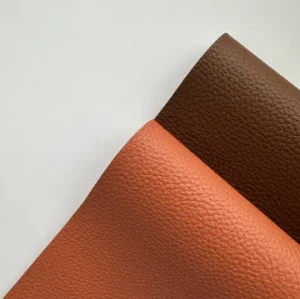
Custom Bio-Based Renewable Synthetic Leather-9109 (Western Cape Winelands Series)
-

Custom Bio-Based Renewable Synthetic Leather-2056 (Johannesburg Executive Contract Grade)
-

OEM Plant-Derived Renewable Leather-2071 (Durban Footwear Manufacturing Line)
-
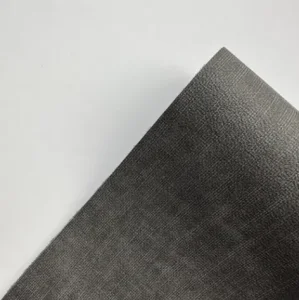
Plant-Sourced Bio-Based Synthetic Leather-9103 (Eastern Cape Automotive Trim Edition)
-

Custom Plant-Derived Bio-Based Leather-9081 (Cape Town Designer Handbag Fabric)
-

Plant-Origin Renewable Biobased Leather-9271 (Safari Open-Vehicle Weatherproof Spec)
-
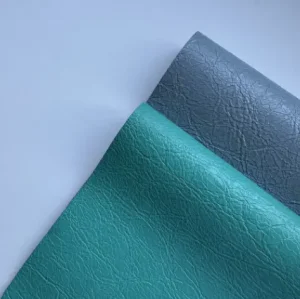
Plant-Derived Renewable Bio-Based Leather-9213 (Gauteng Tech & Aviation Lining)
-
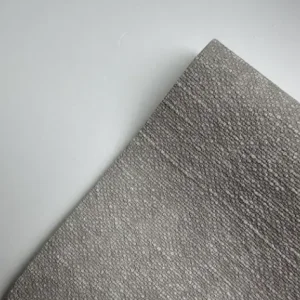
Plant-Derived Bio-Based Synthetic Leather-9020 (Mining High-Abrasion Anti-Slip Series)
Partner with an Established Biobased Leather Manufacturer
Request customized material swatches, direct technical data sheets, and comprehensive ASTM D6866 certification dossiers tailored to your South African manufacturing specs.