
High-Spec Biobased Synthetic Formulations for New Zealand Importers
Pre-engineered rolls with carbon-tested organic polyols optimized for ocean freight stabilization, intense Australasian UV indexes, and rapid upholstery fabrication.
-
 New Zealand Architecture Grade
Wholesale Bio-Based Renewable Synthetic Leather (New Zealand High-Traffic Line)
-
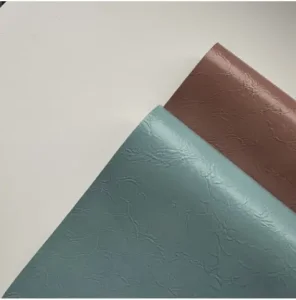 USDA Certified Organic Feedstock
Wholesale Bio-Based Renewable Synthetic Leather-0177 (NZ Commercial Interiors)
-
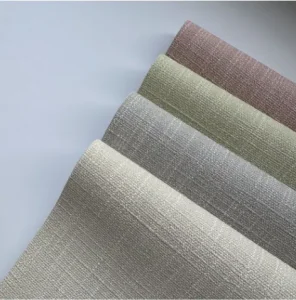 UV Stabilized · Zero Solvents
Wholesale Bio-Based Renewable Synthetic Leather-9384 (NZ Automotive & Marine)
-
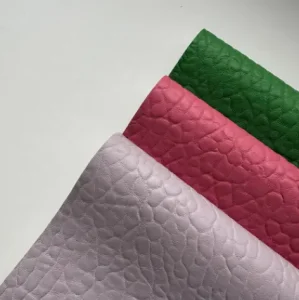 Circular Ready Material
Wholesale Bio-Based Renewable Synthetic Leather-9293 (Auckland Eco-Footwear)
The New Zealand Commercial & Industrial Bio-Revolution
A comprehensive examination of how Aotearoa's Zero Carbon Act, strict regional council environmental guidelines, and shifting consumer demographics demand non-petrochemical performance materials.
Aotearoa's Policy Push: Climate Change Response (Zero Carbon) Act
New Zealand stands at the forefront of international environmental governance. Under the legally binding framework of the Climate Change Response (Zero Carbon) Amendment Act, domestic manufacturing sectors, infrastructure constructors, and commercial furnishers face steep emissions scrutiny. Traditional synthetic leather relying on virgin petrochemical plasticizers and solvent-heavy dimethylformamide (DMF) processes creates significant Scope 3 emissions liabilities for local brands.
Our biobased synthetic leather directly counters this barrier. By replacing petro-polyols with rapidly renewable agricultural derivatives (derived from industrial dent corn, non-food starch crops, and vegetable oils), our production cuts carbon footprints by up to 48% at the resin phase. This allows New Zealand specifiers to lower embodied carbon in architectural interiors, commercial aviation, and luxury furniture fit-outs throughout Auckland, Wellington, and Christchurch.
- Supports domestic Net-Zero 2050 targets by reducing Scope 3 supply chain footprint
- Fully exempt from impending virgin polymer excise penalties and environmental tariffs
- Complete carbon lifecycle accounting (LCA) documentation provided for green building compliance
Severe Oceanic Climates & Australasian UV Degradation
Material failure in New Zealand operates under a distinct physical reality. Due to the Southern Hemisphere's high ambient UV indexes, elevated oceanic salinity, and dramatic seasonal humidity swings, standard artificial leathers (PVC and cheap petroleum PU) rapidly suffer from catastrophic micro-cracking, plasticizer migration, peeling, and hydrolysis within 24 to 36 months of field deployment.
JiangXin's engineering unit formulates tailored polycarbonate-biobased polyurethane hybrid matrix systems. These composites incorporate hindered amine light stabilizers (HALS), nano-silica dispersion, and inherent anti-fungal barrier chemistry. The resulting textiles withstand both the harsh exterior marine environments of the Hauraki Gulf and high-sunlight residential solariums across the South Island.
- Passes 10+ weeks Tropical Jungle Hydrolysis tests (equivalent to 10+ years real wear)
- Superior UV resistance meeting ASTM G154 standards for high radiation exposures
- Salt-fog resistance exceeding 1,000 continuous hours without micro-pore delamination
Ethical Consumer Shifts
Kiwi consumers demand verified vegan ethics without environmental greenwashing. Our animal-free, PETA-friendly bio-leather eliminates livestock dependency while avoiding petroleum hazards.
Green Star Building Credits
Specified by commercial architects seeking NZGBC (New Zealand Green Building Council) Green Star ratings, delivering points for sustainable sourcing, low VOCs, and clean chemistry.
Supply Chain Resilience
Direct factory partnership with 16M+ meters output buffers New Zealand manufacturers against local supply deficits, high freight-forwarding markups, and extended lead times.
Clean-Tech Manufacturing Architecture: The JiangXin Advantage
Combining circular economy engineering, waterless solvent-free coagulation, and 4.68 MW rooftop photovoltaic power to produce low-carbon synthetic materials at scale.
ASTM D6866 Radiocarbon Proof
We eliminate ambiguous marketing claims through standardized, verifiable science. Every batch of our plant-derived polyurethane is calibrated via carbon-14 isotope tracing. Independent laboratory analyses conform strictly to ASTM D6866 and USDA BioPreferred standards, confirming 30% to 75% renewable biobased organic content within our outer coatings and foam matrices.
100% Solvent-Free Reactive Systems
Unlike antiquated production facilities utilizing toxic N,N-Dimethylformamide (DMF) or volatile organic solvents, JiangXin utilizes state-of-the-art 100% solid reactive polyurethane systems and water-based dispersion polymers. This guarantees zero VOC off-gassing, total safety during mechanical laser-cutting, and ultra-low air emissions across vehicle cabins and enclosed interior zones.
4.68 MW Solar-Powered Plant
Situated on our 135,733 m² campus in Yingde, Guangdong, our factory operates an expansive rooftop photovoltaic solar energy generation station. This 4.68 MW grid offsets more than 4,200 tons of CO2 annually, providing our global customers with demonstrable Scope 1 and Scope 2 emission reductions on their material procurement balance sheets.
Strict Local Compliance & Friction-Free NZ Entry
Ensuring end-to-end alignment with New Zealand's unique regulatory ecosystem, hazardous substance controls, and biosecurity import mandates.
Ministry for Primary Industries (MPI) Biosecurity Conformity
Importing organic or biobased goods into New Zealand requires adherence to strict biosecurity protocols governed by the Ministry for Primary Industries (MPI). Uncertified natural materials frequently face intensive quayside inspection holds, fumigation hazards, or outright destruction due to pest or microbial contamination.
JiangXin solves this through industrial synthetic refinement: all bio-content is processed into sterile, refined chemical polyols before molecular polymerization. No unprocessed biological agricultural waste or unsterilized plant matter enters the shipping container. All goods are packed with moisture-barrier wrapping, non-timber synthetic dunnage, and certified desiccants, enabling immediate release at Ports of Auckland, Tauranga, and Lyttelton.
- Zero organic plant matter or agricultural vectors; sterile polyol synthesis
- Export packaging complies with NZ biosecurity import health standards (IHS)
- Pre-cleared electronic manifests and chemical composition sheets supplied
EPA Hazardous Substances & AS/NZS Fire Standards
The New Zealand Environmental Protection Authority (EPA) enforces rigorous controls on persistent organic pollutants, short-chain chlorinated paraffins (SCCPs), organotin compounds, and banned plasticizers under the Hazardous Substances and New Organisms (HSNO) Act.
Our biobased series completely bypasses hazardous classifications. Formulations are fully compliant with EU REACH SVHC, RoHS, and OEKO-TEX Standard 100 Class I. In addition, our architectural and transport fabrics can be customized with halogen-free flame retardants to pass AS/NZS 1530.3 (Simultaneous Determination of Ignitability, Flame Propagation, Heat Release and Smoke Release) and AS/NZS 3837 flammability ratings.
- Guaranteed 6P/8P phthalate-free, antimony-free, and lead-free compliance
- Customized flame retardancy engineering meeting AS/NZS 1530.3 requirements
- Zero off-gassing: compliant with New Zealand Ministry of Health indoor air targets
High-Value New Zealand Market Applications
Engineered to solve real-world performance problems across key New Zealand commercial sectors, from rugged outdoor equipment to superyacht fitouts.
Luxury Marine & Superyacht Interiors
Serving New Zealand's globally recognized yacht building hubs in Auckland (Wynyard Quarter) and Whangarei. Our marine-grade bio-synthetic offers high mildew resistance (ASTM G21), anti-pink stain resistance, and impervious barrier qualities against saltwater spray, keeping luxury boat cockpits and flybridges pristine.
Commercial Architecture & Workspace Furniture
Designed for high-traffic corporate headquarters, healthcare clinics, and tertiary education projects across Wellington and Christchurch. Boasts Martindale abrasion resistance exceeding 150,000 cycles, hospital-grade disinfectant cleanability, and sophisticated matte calfskin grain textures.
Electric Mobility & Transit Systems
New Zealand's public transport electrifications and bespoke EV bus/fleet conversions demand lightweight, non-toxic, and fire-retardant seat upholstery. Our biobased PU saves up to 25% weight compared to heavy split cowhide, extending vehicle range while drastically curbing cabin VOC levels.
Partner with a Direct Biobased Synthetic Factory
Request customized sample swatches, ASTM D6866 bio-carbon certificates, and competitive CIF delivery quotes direct to Auckland, Tauranga, or Lyttelton ports.
R&D Technology Roadmap (2026–2030)
Continuous green-chemistry evolution engineered to provide New Zealand manufacturers with carbon-negative, closed-loop polymer materials.
First-Generation Plant Polyols (30%-50%)
Industrial deployment of non-food starch and corn dextrose-derived polyols. Completely replaces petro-based PPG (polypropylene glycol) polyethers, slashing base-material emissions.
- Commercialized across all standard articles
- USDA BioPreferred & OEKO-TEX verified
- Zero plasticizer migration guaranteed
Second-Generation Agricultural Waste Matrices
Integrating cellulosic and lignin extracts from forestry by-products and winery marc residue. Upgrades total renewable bio-content to 70%+ while utilizing post-consumer recycled (RCS) backing textiles.
- Zero competition with arable agricultural land
- RCS certified recycled backing substrates
- Hydrolysis longevity rated at 15+ years
Enzymatic Closed-Loop Circularity
Development of chemically recyclable bio-polyurethane that can be de-polymerized back to original bio-monomers at end-of-life, creating zero-landfill textiles tailored for New Zealand's circular future.
- True Cradle-to-Cradle circularity potential
- Biological compostability in industrial facilities
- Net-Negative cradle-to-gate carbon target
Frequently Asked Questions: Sourcing for New Zealand
Expert technical answers covering shipping lead times, customs documentation, testing protocols, and minimum orders for New Zealand enterprises.
How does biobased synthetic leather compare to genuine bovine leather in the New Zealand climate?
What documentation is supplied to verify bio-content and clear New Zealand Customs?
What are the standard production lead times and ocean shipping durations to New Zealand ports?
Can JiangXin formulate flame retardancy compliant with AS/NZS 1530.3 and AS/NZS 3837?
What is the Minimum Order Quantity (MOQ) for custom colors, grains, and calipers?
Comprehensive Biobased & Renewable Synthetic Leather Line
Explore our complete catalog of certified plant-derived, custom-embossed, and high-tensile sustainable faux leather articles ready for immediate export to New Zealand.
-
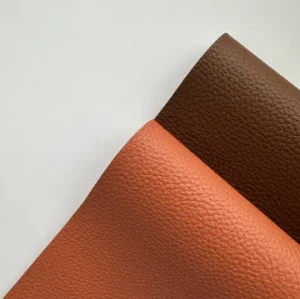 Custom Caliper 0.8mm-1.6mm
Custom Bio-Based Renewable Synthetic Leather-9109 (NZ Commercial Grade)
-
 High Scratch Resistance
Custom Bio-Based Renewable Synthetic Leather-2056 (NZ Furniture Series)
-
 Pure Plant Derivation
OEM Plant-Derived Renewable Bio-Based Synthetic Leather-2071 (NZ Bags & Luggage)
-
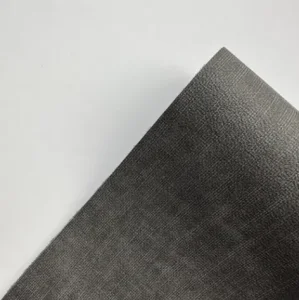 Soft Hand Feel Calf Grain
High-Quality Plant-Sourced Bio-Based Synthetic Leather-9103 (NZ Luxury Apparel)
-
 Anti-Bacterial · Sanitizable
Custom Plant-Derived Renewable Bio-Based Synthetic Leather-9081 (NZ Healthcare)
-
 Tear Strength >45N
Wholesale Plant-Origin Renewable Bio-Based Synthetic Leather-9271 (NZ Outdoor Gear)
-
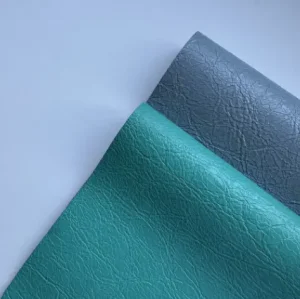 Automotive Grade Flame Resistance
High-Quality Plant-Derived Bio-Based Synthetic Leather-9213 (NZ EV Trims)
-
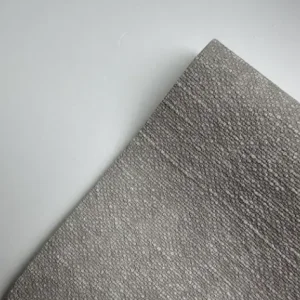 Hydrolysis Resistance 10+ Yrs
High-Quality Plant-Derived Bio-Based Synthetic Leather-9020 (NZ Marine Grade)
Initiate Your Biobased Material Sourcing Today
Connect directly with JiangXin's dedicated export engineering division. Receive full 2026 material swatches, customized formulation data, and direct CIF shipping quotes for Auckland, Wellington, Tauranga, and Christchurch ports.