
Featured Bio-Based Synthetic Leather for Industrial Sourcing
Direct factory configurations calibrated to EU-harmonized automotive, footwear, and consumer goods standards for procurement divisions operating within the Republic of Serbia.

Serbia as an Emerging Nearshoring Hub for Sustainable Polymer Manufacturing
Serbia's manufacturing economy has undergone an assertive reorientation toward high-value industrial sectors, underpinned by massive foreign direct investment (FDI) across automotive components, footwear, railway rolling stock, and export furniture clusters. Positioned geographically adjacent to the European Union and benefiting from deep free-trade agreements, industrial plants in Free Zones such as Subotica, Novi Sad, Zrenjanin, and Kragujevac are increasingly mandated by Western European parent conglomerates to decouple their material inputs from virgin petrochemical feedstocks.
Under the European Green Deal and the looming enforcement milestones of the Corporate Sustainability Due Diligence Directive (CSDDD) and Ecodesign for Sustainable Products Regulation (ESPR), Tier-1 automotive and lifestyle suppliers in Serbia cannot rely on traditional DMF-based polyurethanes or plasticized PVC leathers. The regional industrial transformation requires direct, factory-level partnerships with certified bio-based polymer innovators who can provide verified biogenic carbon content, full transparency through Digital Product Passports (DPP), and scalable container shipments from dedicated clean-tech manufacturing bases.
- Direct alignment with Serbian customs clearance protocols and preferential export routes to DACH and CEE zones.
- Elimination of hazardous solvents (DMF, DMAC, NMP) to meet stringent Tier-1 automotive VOC standards (VDA 270/278).
- Customized technical backings utilizing organic cotton, post-consumer rPET, and closed-loop bio-polyamides.
CBAM & ESG Resiliency for Serbian Exporters
Serbian fabricators exporting into Germany, Austria, and Italy must document product carbon footprints (PCF). JX.ECO biobased synthetics utilize renewable plant polyols synthesized from non-food agricultural biomass, displacing 30% to 75% of fossil-based hydrocarbons and slashing upstream Scope 3 emissions by up to 48% per square meter.
Engineered Solutions for Modern Industrial Procurement
Balancing technical specifications, tensile longevity, and environmental integrity through multi-layer bio-polyurethane technology.
Custom High-Solids & Waterborne Coatings
Our chemical synthesis pipelines replace traditional solvent-heavy reactions with state-of-the-art waterborne polyurethanes (WPU) and 100% solvent-free bio-resins. This guarantees zero emissions of dimethylformamide (DMFa), toluene, and methyl ethyl ketone (MEK), protecting workers and passing all OEM indoor air quality protocols.
Strict Mechanical Resilience
Engineered for rigorous high-friction environments. Formulations achieve Martindale abrasion resistance exceeding 100,000 cycles, Bally flex testing over 150,000 cycles at room temperature (-20°C cold-crack resistance), and hydrolytic degradation stability under jungle test conditions (70°C, 95% RH) for up to 10 weeks.
Substrate Circularity & Hybrid Backings
Technical backings represent more than 50% of finished composite mass. We engineer proprietary structural foundations utilizing GRS/RCS-certified recycled polyester microfibers, organic biological cotton, and natural viscose substrates, delivering tensile strength and high seam tear resistance for precision stitching.
Next-Generation Bio-Polymer Roadmap (2025–2030)
Transitioning from partial plant-oil polyols to 100% circular, microbial, and enzymatic synthesis architectures.
Phase 1: Advanced Plant Polyols (Current)
Current industrial mass production leverages bio-succinic acid, sebacic acid, and functional polyols extracted from non-food industrial castor crops and agricultural residue. Materials achieve 30% to 50% biogenic carbon scores certified under USDA BioPreferred and DIN CERTCO testing routines.
Phase 2: Closed-Loop Recycled Backings (2025-2027)
Integration of mono-material constructions where both top-skin bio-PU and microfiber substrate share chemical compatibility, allowing mechanical and chemical depolymerization at end-of-life. Full implementation of automated roll-by-roll QR Digital Product Passports.
Phase 3: Carbon-Capture & Mycelium Composites (2028+)
Scaling pilot-scale polyols derived directly from point-source carbon capture (CO₂-based polyols) and mycelium cellular network scaffolds, achieving carbon-negative leather alternatives designed for next-generation European electric vehicle interiors.
Compliance Matrix: Export Protocols for the Serbian Market
Our manufacturing infrastructure in Yingde guarantees complete chemical, physical, and ESG documentation to pass independent customs and buyer audits.
| Regulation / Certification | Governing Body / Standard | Validation Scope | Serbian & EU Industrial Relevance |
|---|---|---|---|
| USDA BioPreferred® | ASTM D6866 Method B | Quantifies ratio of modern 14C carbon vs. fossil carbon | Crucial for Tier-1 brands exporting to North America and Western Europe with eco-labels. |
| EU REACH Compliance | ECHA (EC 1907/2006) | Zero SVHC substances >0.1% w/w (DMFa, phthalates, BPA free) | Mandatory clearance criterion for finished goods entering the EU Single Market from Serbia. |
| RCS / GRS Chain of Custody | Textile Exchange | Transaction Certificates (TC) tracking recycled polymer input | Guarantees proof of post-consumer or post-industrial waste diversion for corporate ESG balance sheets. |
| ISO 9001 / 14001 / 45001 | SGS / International Standards | Quality control, environmental stewardship, occupational safety | Baseline qualification needed during vendor onboarding by European enterprise purchasing departments. |
| Automotive VOC / Fogging | VDA 270, VDA 277, DIN 75201 | Odor rating, total hydrocarbon emission, interior window fogging | Indispensable for Serbian Tier-1 seat cover, door card, and instrument panel trim manufacturing. |
Efficient Logistics & Engineering Consultation for Serbian Assemblers
Supplying commercial manufacturing facilities across Belgrade, Novi Sad, Niš, and surrounding industrial economic zones demands dependable shipping timelines and agile technical coordination. We offer custom containerized freight forwarding via Mediterranean maritime shipping hubs (Piraeus, Rijeka, Bar) straight into Serbian customs dry ports.
Our dedicated European export engineering desks coordinate directly with your CAD/CAM pattern designers, cutting specialists, and automated sewing units. We provide customized roll widths (1.37m to 1.52m), calibrated roll tensions to prevent elongation during automated nesting, and specialized topcoat finishes that resist color migration, UV yellowing (ISO 105-B02), and disinfectant degradation.
Comprehensive Factory Support Services
- Custom Lab Dips & Texture Rollers: Pantone/RAL color-matching within 5-7 working days; custom laser-engraved grain development.
- Complete Testing Dossiers: Full mechanical datasheets (tensile, tear strength, flexing endurance, peeling adhesion) provided with pre-production swatches.
- Flexible Minimum Order Quantities: Scaled batch flexibility for pilot sampling runs preceding full 20ft/40ft container dispatch.
- In-House QA Inspection: 4-point visual roll inspection with 100% flaw tagging and continuous thickness monitoring.
Frequently Asked Technical Questions
Direct answers to the most common queries raised by procurement managers, materials engineers, and QA directors sourcing biobased leather materials.
What defines "biobased synthetic leather" compared to standard PU or PVC leather?
How is the bio-based content percentage verified and audited?
Does your biobased material contain hazardous solvents like DMFa?
Can biobased synthetic leather withstand high-stress automotive or contract furniture use?
What lead times and shipping routes apply to orders bound for Serbia?
Can you support custom grain engraving and specific brand color palettes?
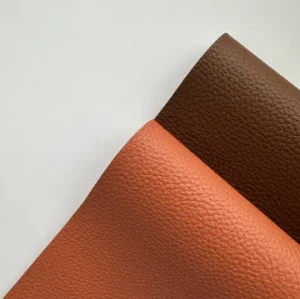
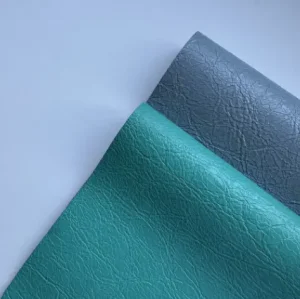
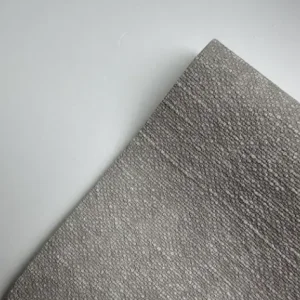
Extended Biobased Synthetic Leather Reference Specifications
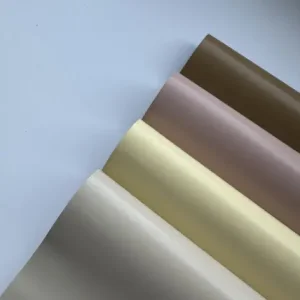
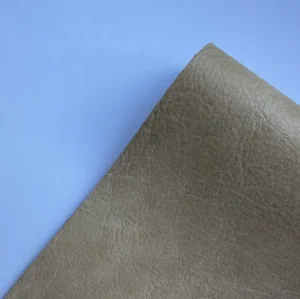
All references feature plant-derived formulations, customizable backing layers, and complete compliance documentation for Balkan and European manufacturing operations.

Partner with an Audited Biobased Material Manufacturer
Whether you require sample swatch cards for product development, ASTM D6866 radiocarbon testing certificates, or scheduled bulk container deliveries to Serbia, our direct engineering team is ready to support your technical specifications.
Send Inquiry Now