
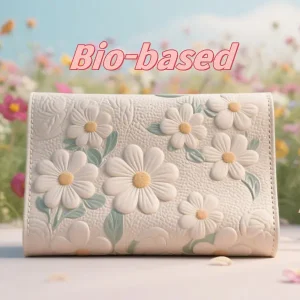
Primary Commercial Specifications
Direct-to-Australia Biobased Materials Series
Engineered for high UV resistance, marine humidity, and demanding Australian standards. Retaining verified plant carbon polyols and solvent-free backing.
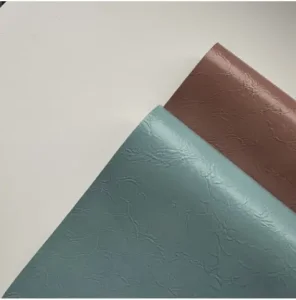
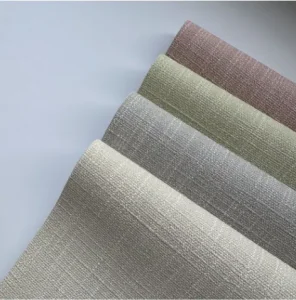
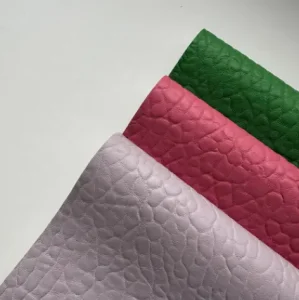
Macro Economic & Regulatory Deep Dive
The Commercial Dynamics of Biobased Materials in the Australian Market
The Australian industrial and commercial landscape is undergoing a systemic structural transformation in sustainable material procurement. Driven by the Commonwealth Government's decarbonization goals, tightening corporate Environmental, Social, and Governance (ESG) frameworks, and consumer demand across Melbourne, Sydney, Brisbane, and Perth, legacy petroleum-derived plastics and traditional solvent-based Polyvinyl Chloride (PVC) and Polyurethane (PU) are facing rapid phase-outs. However, Australian tier-1 manufacturers, architectural specifiers, and consumer lifestyle labels face a fundamental domestic bottleneck: Australia possesses high agricultural feedstock potential but practically negligible downstream polymer synthesis and industrial coating capacity. The high capital expenditure of building continuous polyol formulation reactors and wet/dry process coating lines within Australia makes domestic synthetic leather production economically unviable.
Consequently, the Australian commercial market relies heavily on certified, vertically integrated overseas manufacturing partners capable of delivering verified low-carbon synthetic polymers at industrial scale. The demand is not merely for "green aesthetics," but for verifiable scientific compliance. Importers and commercial specifiers across New South Wales and Victoria increasingly mandate third-party radiocarbon validation via ASTM D6866, Recycled Claim Standard (RCS) chain-of-custody credentials, and strict zero-solvent formulations that emit negligible Volatile Organic Compounds (VOCs) under the Green Building Council of Australia (GBCA) Green Star rating tool.
Globally, this aligns with the European Union’s Corporate Sustainability Due Diligence Directive (CSDDD) and CBAM carbon accounting, forcing multinational brands trading into Australia to align their supply chains. The convergence of biobased polyols derived from non-food agricultural biomass (such as industrial corn starch, castor bean oil, and agricultural cellulose) with high-efficiency polyurethane elastomer synthesis represents the new benchmark for modern B2B manufacturing.
65%
Max Tested Bio-Carbon Content (ASTM D6866)
16M+
Annual Metres Production Capacity
0%
Solvents / Zero DMF, NMP & Phthalates
4.68 MW
Factory Rooftop Photovoltaic Solar Array
The Chinese Advanced Manufacturing Advantage: Precision Polymer Engineering at Scale
As the primary manufacturing engine for global technical textiles, Chinese chemical engineering facilities—exemplified by Yingde City JiangXin New Material Co., Ltd. (JX.ECO)—have evolved beyond basic commoditized manufacturing into high-precision clean-tech synthesis centers. Operating from a modern 135,733 m² mega-campus in Guangdong, JiangXin integrates the entire value chain under one roof: from biobased polyol formulation and aqueous polymer reaction to precision dry-process coating, custom embossing, and strict post-treatment inspection.
Why is this vertical integration critical for Australian B2B purchasers? In decentralized supply models, variations in bio-resin quality across third-party compounders cause severe lot-to-lot inconsistencies in elongation, tensile strength, and skin-peel resistance. JiangXin eliminates these vulnerabilities by locking the formulation directly on automated reactors, delivering unmatched lab-to-line repeatability. Furthermore, our Guangdong production facility utilizes an on-site 4.68 MW rooftop photovoltaic solar farm, reducing grid dependency and lowering the Scope 2 embodied carbon of every running metre imported into Australia.
Zero-Solvent Environmental Purity
100% water-based and solvent-free PU technology. Totally free of Dimethylformamide (DMF), Toluene, and toxic plasticizers. Surpasses Australian skin-contact safety regulations and WorkSafe ambient air protocols.
High Economic Efficiency & Parity
Our scaled output of over 16 million metres per annum breaks the historic "green premium." Australian clients receive premium biobased technical leather at price levels directly competitive with legacy fossil-fuel PVC/PU.
Direct Freight Corridors to Australia
Strategic logistics routing out of Pearl River Delta deep-water terminals (Shenzhen/Guangzhou) directly into Port Botany (Sydney), Port of Melbourne, and Brisbane, offering rapid 12–16 day maritime transit times.
Technical Versatility
Engineered for Demanding Australian Operating Environments
Australia’s unique environmental footprint—extreme UV radiation indices, coastal salinity, and arid interior conditions—demands material durability far exceeding standard European or North American specifications.
| Target Australian Industry | Specific Challenge | Material Engineering Solution | Testing & Verification Standard | Status |
|---|---|---|---|---|
| Commercial & Institutional Fitouts (Sydney/Melbourne) | High footfall wear, heavy sanitization, strict Green Star VOC limits. | Water-based bio-PU on GRS recycled interlock backing; zero VOC degassing. | Martindale > 100,000 revs (ISO 12947); AS 1530 Flammability | GBCA Ready |
| Automotive & Public Transport (VIC / QLD Fleets) | Thermal expansion in hot Australian sun, premature crack failure. | Biobased aliphatic polyurethanes with hindered amine light stabilizers (HALS). | QUV Accelerated Weathering > 1,000 hrs; Bally Flex > 100,000 cycles | Tier-1 Spec |
| Marine & Luxury Yachting (Gold Coast / WA Coastal) | Saltwater degradation, tropical humidity, pink mold mildew. | Hydrolysis-resistant bio-polyether elastomer system with antimicrobial topcoat. | Jungle Test (70°C, 95% RH) > 8–10 weeks; Anti-Mildew ASTM G21 | Passed Level 0 |
| Footwear, Outdoor Lifestyle & Workwear | Intense cyclic flexing, abrasive red-dirt soils, wet-to-dry flex strain. | Solvent-free micro-cellular bio-structure with high tear & split resistance. | Tear Strength > 45 N/mm (ISO 3377-2); Cold Crack at -25°C | Industrial Grade |
| Luxury Eco-Packaging & Consumer Tech | Precision folding radius, premium tactile touch, foil embossability. | Ultra-thin toothpick & nappa grain bio-synthetics with biobased backer. | ASTM D6866 Radiocarbon; REACH Annex XVII SVHC Free | Certified 58% Bio |
Technical Validation: Decoding the Chemistry of ASTM D6866
In the procurement lexicon of Australian materials science, ambiguity is unacceptable. When sourcing biobased products, enterprise buyers must distinguish between surface greenwashing and true biogenic carbon. JiangXin’s materials are certified via ASTM D6866 radiocarbon dating (Carbon-14 analysis). While legacy polyurethane relies 100% on petrochemical crude oil feedstocks (infinite fossil age with zero C14 activity), our biobased synthetic leather incorporates contemporary renewable plant carbons containing precise biological C14 ratios. This provides Australian customs auditors, environmental certifiers, and corporate buyers with an unalterable, scientifically verified percentage of renewable content in every production batch.
Procurement Protocol
Enterprise Supply Chain Playbook for Australian Importers
A systematic technical guide for materials managers, product design heads, and commercial sourcing teams across Australasia.
1. Tech-Pack Parameter Locking
Australian buyers specify total thickness (0.5mm – 2.2mm), backing base (woven, non-woven microfiber, circular knitted recycled cotton/RPET), targeted bio-carbon content, and grain emboss code.
2. Lab Matching & Rapid Swatch Dispatch
JiangXin formulates color match (Pantone/physical master sample) within 72 hours. Certified A4 physical swatches and miniature rolls are dispatched via direct air express to Sydney/Melbourne for prototyping.
3. Full Roll Inspection & Compliance Dossier
Every bulk roll undergoes automated optical flaw detection and calibrated mechanical stress tests. Full compliance dossiers (ASTM D6866 test reports, REACH SVHC declarations) accompany sea cargo.
Complete Catalog Integration
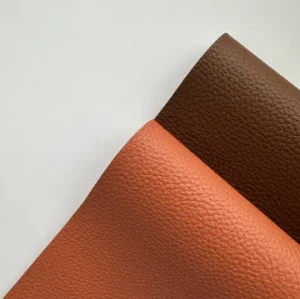
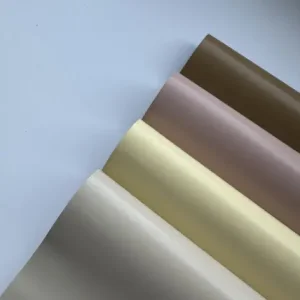
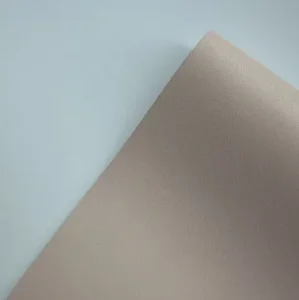
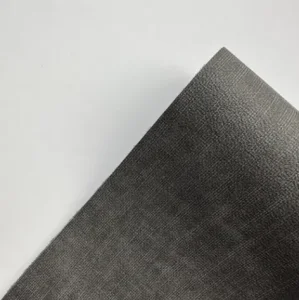
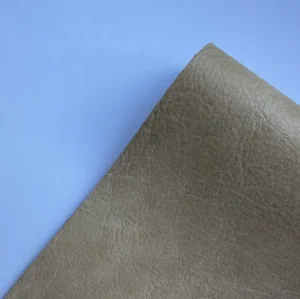
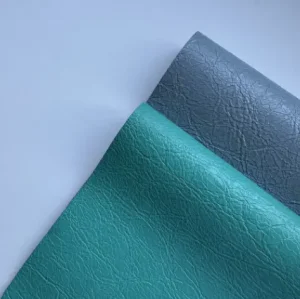
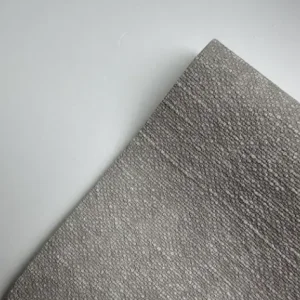
High-Performance Plant-Derived Leather Portfolio
Full manufacturing line catalog for OEM footwear, luxury travel bags, automotive components, and sustainable architectural design.

Future Forecast (2025–2035)
The Evolution of Circular Polymers: Beyond Drop-In Replacement
The first generation of biobased synthetic leathers focused strictly on drop-in polyol substitution—replacing standard petrochemical propylene oxide with polyols synthesized from castor oil or corn starch. While this reduced cradle-to-gate carbon footprints by 20% to 35%, the future decade demands true molecular circularity.
At JiangXin, our R&D roadmap focuses on two transformative frontiers: Reactive Hot-Melt Solvent-Free Chemistry and Mono-Material Recyclability. Traditional synthetic leather pairs a polyurethane skin with a polyester or mixed-fiber substrate, creating an inseparable multi-layer composite that is impossible to mechanically recycle at the product’s end of life. By pairing biobased aliphatic PU coatings with chemically identical 100% bio-derived polyester or circular rPET backings, our next-generation materials allow closed-loop mechanical shredding and chemical depolymerization, directly anticipating Australia's National Waste Policy Action Plan targets.
Furthermore, the integration of advanced blockchain-enabled transaction certificates via the Recycled Claim Standard (RCS) and Global Recycled Standard (GRS) ensures that Australian brands can publish verified Digital Product Passports (DPP), bulletproofing their consumer sustainability claims against Australian Competition and Consumer Commission (ACCC) greenwashing crackdowns.
Technical & Procurement FAQ
Frequently Asked Questions by Australian Sourcing Directors
Direct answers from our technical export team on compliance, customs tariffs, testing standards, and logistics to Australian ports.
How does biobased synthetic leather differ fundamentally from conventional fossil PU and PVC?
Conventional synthetic leather relies entirely on crude oil refining, where polyurethane or PVC resins are synthesized from petrochemical building blocks with significant cradle-to-gate carbon footprints and persistent environmental toxicity (especially chlorine and plasticizer migration in PVC). Biobased synthetic leather replaces a certified portion of fossil-derived polyols (typically 30% to 65%+) with polyols synthesized from renewable agricultural biomass (e.g., castor oil, industrial non-food corn starch). In JiangXin’s solvent-free system, biobased PU also completely eliminates toxic carrier solvents like Dimethylformamide (DMFa), delivering lower carbon emissions, zero toxic degassing, and superior breathability.
How can Australian importers verify the true bio-carbon content for ACCC and ESG compliance?
Genuine verification requires certified radiocarbon testing in accordance with ASTM D6866. This analytical method measures the ratio of Carbon-14 isotope in the finished material relative to a modern biological reference standard. Petrochemical carbon contains zero C14 isotopes, whereas modern plant matter contains a constant atmospheric equilibrium of C14. JiangXin provides comprehensive ASTM D6866 third-party test reports for every product batch, providing indisputable scientific proof to satisfy corporate ESG disclosures, the ACCC's Green Marketing Guidelines, and the USDA BioPreferred label program.
Does biobased leather withstand the high UV and heat conditions of the Australian climate?
Yes. A common misconception is that "plant-derived" implies premature biological breakdown. The polyols in our biobased PU undergo identical chemical polymerization into robust polyurethane cross-linked elastomer matrices. For the Australian market, we formulate our resins using premium aliphatic isocyanates and integrate advanced Hindered Amine Light Stabilizers (HALS). This allows our biobased leather to endure over 1,000 continuous hours of QUV accelerated weathering and pass 10-year accelerated jungle hydrolysis testing (70°C at 95% relative humidity) without surface tackiness, delamination, or embrittlement.
What are the minimum order quantities (MOQ), custom color lead times, and freight terms for Australia?
For in-stock catalog articles, our minimum order quantity starts as low as 300 to 500 running metres. For fully bespoke custom articles (custom thickness, specific grain emboss, customized bio-carbon ratio, and exact Pantone color formulation), standard production MOQ is typically 1,000 running metres per color. Color lab-dips and swatch development take 3–5 working days. Full container loads (20GP / 40HQ) typically ship under FOB Shenzhen/Guangzhou or CIF Sydney, Melbourne, and Brisbane, with ocean transit times averaging 12 to 16 calendar days.
Does JiangXin provide Transaction Certificates (TC) under the Recycled Claim Standard (RCS)?
Yes. Our facility is fully certified by authorized certification bodies under the Textile Exchange’s Recycled Claim Standard (RCS) and Global Recycled Standard (GRS). When an Australian client orders our recycled backing or recycled-resin composite lines, we manage the complete chain-of-custody documentation, and official Transaction Certificates (TC) are generated per shipment to verify that recycled post-consumer PET bottles or pre-consumer inputs are mathematically accounted for in your customs clearance.
Can your biobased materials meet the flame retardancy standards required for Australian commercial architecture?
Absolutely. For contract furniture, commercial hospitality, and institutional seating, our biobased synthetic leather can be engineered with non-halogenated, eco-friendly flame-retardant chemistry. The materials can be calibrated to comply with Australian Standard AS 1530.3 (simultaneous determination of ignitability, flame propagation, heat release, and smoke release) as well as international benchmarks such as British Standard BS 5852 Crib 5 and California TB 117-2013, ensuring smooth sign-off by Australian fire engineers.