
Engineered Biobased Substrates for the Netherlands
Premium plant-derived composite leathers manufactured under Industry 4.0 automation, offering verifiable bio-carbon mass fractions from 30% to 78% for Dutch footwear, luxury interior upholstery, and maritime design.

Navigating the Dutch Biobased & Circular Economy Transition
The Netherlands occupies a pioneering position in European climate legislation, spearheaded by the Dutch Government's ambitious objective: achieving a 100% circular economy by 2050 with an interim target of 50% reduced virgin abiotic resource consumption. As host to Europe's largest petrochemical and logistics crossroads—the Port of Rotterdam and Amsterdam Airport Schiphol—Dutch industrial stakeholders are rapidly transitioning away from fossil-dependent polymers toward biologically sourced macromolecular alternatives.
For industrial design collectives in Eindhoven, sustainable maritime interior decorators in North Holland, and fashion houses in Amsterdam, sourcing biobased artificial leathers is no longer an optional marketing differentiator; it is an existential regulatory demand driven by the Corporate Sustainability Reporting Directive (CSRD) and stringent Extended Producer Responsibility (EPR) requirements for textiles and synthetic membranes.
Yingde City JiangXin New Material Co., Ltd. bridges this systemic supply gap. By providing large-scale precision synthesis of bio-polyols extracted from non-food agricultural feedstocks (corn glucose derivatives, castor seed oil, and plant starch fractions), we deliver polymer matrices that integrate seamlessly into Dutch circular supply chains while meeting stringent Dutch Building Decree standards and European chemical non-toxicity mandates.
- Port of Rotterdam Logistics Integration: Expedited multimodal transit options routing directly to deep-water berths at Rotterdam Maasvlakte, ensuring continuous bulk material replenishment for European assembly plants.
- Full Conformity with Dutch Green Deal: Supporting circular procurement initiatives across Dutch national and municipal infrastructure tenders.
- Substantiated Life Cycle Assessments (LCA): Cradle-to-gate transparency empowering Dutch ESG directors to meet Scope 3 carbon reduction metrics with audited emissions accounting.
Global Procurement Realities & The Shift to Renewable Macromolecules
The global synthetic substrate marketplace is undergoing a structural paradigm shift. International consumer brands and contract manufacturers are abandoning first-generation PVC and solvent-borne polyurethanes due to regulatory toxicity crackdowns and aggressive institutional carbon quotas.
CSRD & Digital Product Passport (DPP)
Under the EU Ecodesign for Sustainable Products Regulation (ESPR), manufacturers exporting to the Netherlands must provide uncompromised material traceability. Our materials feature fully verifiable botanical lineage, facilitating flawless Digital Product Passport deployment for downstream brands.
REACH SVHC & DMFa Elimination
The European Chemicals Agency (ECHA) has tightened threshold limits on Dimethylformamide (DMFa) and organotin compounds. JiangXin's 100% solvent-free dry process and aqueous dispersion coating eliminate toxic solvent emissions entirely, ensuring 0% hazardous residues.
Scope 3 Supply Chain Decarbonization
Global procurement teams across Germany, the Netherlands, and Scandinavia face mandatory corporate audits on Scope 3 greenhouse gas inventories. Replacing petroleum polyurethane with biobased polyols cuts up to 3.2 kg CO₂-eq per square meter of finished leather fabric.
China Factory 4.0: Resilient Scale Meets Clean-Tech Precision
Yingde City JiangXin New Material Co., Ltd. (JX.ECO) represents the apex of modern Chinese advanced green manufacturing. Operating from a unified 135,733 square meter campus in Yinghong Industrial Park, Yingde City, Guangdong, our facility integrates fully automated reaction kettles, precision thermal calenders, and continuous atmospheric monitoring systems that operate with millimetric accuracy.
Unlike fragmented sourcing models that rely on third-party chemical compounding and outsourced backing laminations, JiangXin controls the entire vertical synthesis value chain. From proprietary biological polyol cross-linking to custom woven and non-woven substrate bonding (including GRS/RCS recycled polyester and organic cotton fibers), our Industry 4.0 smart factory ensures batch-to-batch physical and aesthetic homogeneity.
Energy resilience is engineered into our manufacturing baseline. JiangXin operates an enterprise-grade 4.68 MW rooftop photovoltaic power generation system, offsetting over 30% of daytime manufacturing energy requirements with clean solar generation. Our closed-loop water treatment facility and advanced heat recovery networks reclaim process thermal energy, lowering our base carbon footprint well below traditional Western European and Southeast Asian synthetic manufacturing hubs.
Localized Applications Across Dutch Key Industries
Our biobased polyurethanes and plant-derived technical skins are engineered to satisfy the rigorous technical, environmental, and aesthetic performance standards demanded by Dutch industries.
Circular Contract Furniture
Engineered for corporate headquarters and public institutions in Amsterdam and Utrecht. Passes 100,000+ Martindale abrasion cycles, EN 1021 Part 1 & 2 flammability tests, and retains suppleness across multi-year commercial usage cycles.
Superyacht & Maritime Fitting
Formulated for Dutch luxury yacht shipyards (Friesland, Zeeland). Enhanced UV resistance (QUV 1,000 hours), saltwater spray resistance, anti-mildew antimicrobial passivation, and hydrolytic stability under demanding marine conditions.
Dutch Sustainable Footwear
Supplying progressive sneaker studios in Eindhoven and Tilburg. Features superior Bally dynamic flexing resistance (>150,000 cold flex cycles at -10°C), micro-porous breathability, and authentic full-grain or smooth matte finishes.
Electric Vehicle Upholstery
Tuned to the rapid EV transition across the Benelux region. Low-fogging, low-odor (VDA 270 score ≤ 3.0), non-flammable, and resistant to sustained solar UV radiation for automotive interior seatings and door panels.
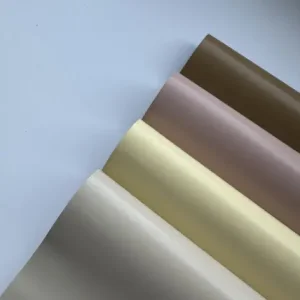
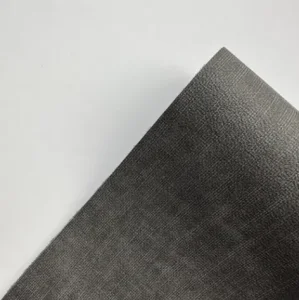
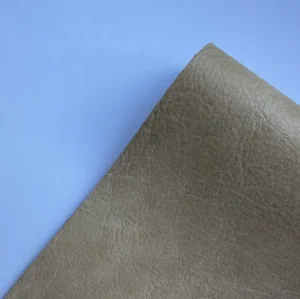
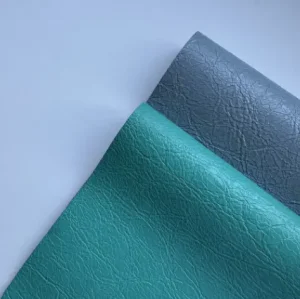
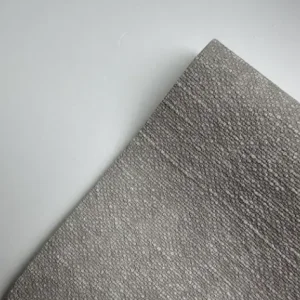
Biobased & Plant-Derived Synthetic Leather Catalog for the Netherlands
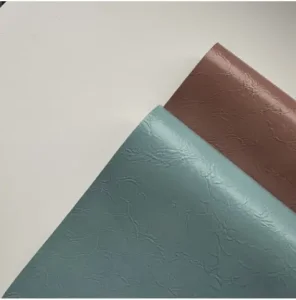
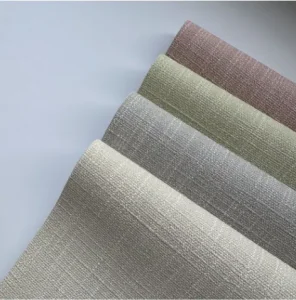
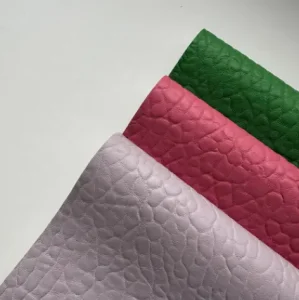
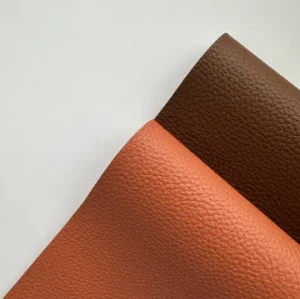
Explore our audited range of plant-origin biobased artificial leathers. All articles can be tailored to custom gauge thicknesses (0.5mm – 2.2mm), bespoke grain embossings, Pantone shades, and specific backing scrims.


Biobased Leather Sourcing for the Dutch & European Markets
Comprehensive technical guidance addressing chemical composition, analytical testing methods, regulatory compliance, and logistics protocols for European enterprise buyers.
How is the biobased carbon content in JiangXin materials analytically verified for EU/Dutch compliance?
Does JiangXin biobased synthetic leather comply with the EU REACH Regulation and the Dutch RIVM substance lists?
What is the mechanical durability and hydrolysis lifespan compared to conventional solvent PVC and PU?
What are the minimum order quantities (MOQ), custom color matching capabilities, and sample turnaround times?
What maritime freight and customs clearance pathways exist between Guangdong and the Port of Rotterdam?
Collaborate with an Audited Leader in Biobased Materials
Accelerate your brand's transition to certified plant-based polyurethanes with China's premier clean-tech factory. Request sample sets, technical datasheets, or a detailed commercial quotation tailored to Dutch and European destinations.
Send Inquiry Now