
Flagship Biobased Synthetic Series for Kuwait
Standardized plant-origin surfaces engineered with plant-derived polyols, designed to withstand desert heat and UV indices exceeding 11+ in Kuwait City, Shuwaikh, and Al Ahmadi.
Kuwait Industrial & Commercial Landscape: The Transition to Biobased Synthetics
Driven by the ambitious sustainability mandates of "New Kuwait" Vision 2035 and the Kuwait National Adaptation Plan (NAP), the State of Kuwait is transitioning its material procurement framework toward zero-petroleum-footprint alternatives.
Kuwait Vision 2035 ESG Alignments
Public infrastructure projects, institutional fit-outs, and hospitality giants in Salmiya and Kuwait City are actively adopting strict green building protocols. Incorporating plant-derived leather alternatives provides real, measurable carbon reductions that support K-companies in fulfilling Scope 3 decarbonization metrics.
KUCAS & PAI Regulatory Compliance
Importing synthetic polymers and faux leather into Kuwait requires conformity with the Public Authority for Industry (PAI) and the Kuwait Conformity Assurance Scheme (KUCAS). Our factory batches come certified free from regulated phthalates, lead, and volatile amines, ensuring rapid customs processing via Technical Inspection Reports (TIR).
Extreme Hydrolysis & Thermal Stability
The Arabian Gulf environment presents extreme engineering challenges: blistering exterior temperatures, intense solar UV radiation, and high coastal humidity. Our biobased polyurethane matrix undergoes Jungle Test protocols (70°C, 95% RH for 10-14 weeks) to guarantee that surfaces will not peel, crack, or delaminate under Gulf operational conditions.
Upstream Polymer Engineering: The Chinese Manufacturing Advantage
Deploying advanced biotechnology at scale requires deep chemical vertical integration. We bridge Chinese synthetic leather synthesis with direct, efficient container logistics to Kuwait's Shuwaikh Port.
Precision Molecular Synthesis
By replacing petroleum-based polyols with monomers derived from industrial corn, sugarcane, castor, and non-edible agricultural waste, our manufacturing infrastructure produces biobased resins that deliver identical tensile strength and flexural resilience to conventional polyurethane while lowering the embodied carbon footprint by up to 45%.
Scalable Clean-Tech Campus
Operating from our 135,733 m² solar-equipped manufacturing plant in Guangdong, China, we operate solvent-free dry-process lines, waterborne coagulation setups, and advanced micro-gravure finishing machines. High automation guarantees consistent roll tension, uniform grain definition, and zero shade variation across 10,000-meter production runs.
Audited International Verifications
Every commercial invoice is backed by verifiable documentation: USDA BioPreferred third-party testing (ASTM D6866 carbon fingerprinting), EU REACH, OEKO-TEX Standard 100, and ISO 9001/14001 certification. Our production lots ensure full chain-of-custody transparency for brand marketing claims.
| Performance Characteristic | JX.ECO Biobased PU Formulation | Traditional Fossil-Based PU | Standard PVC Faux Leather | Kuwait Environmental Challenge |
|---|---|---|---|---|
| Biobased Carbon Share | 35% - 75% (ASTM D6866) | 0% (100% Petroleum Derived) | 0% (Petroleum & Chlorine Based) | Aligns with Vision 2035 ESG Targets |
| Hydrolysis Resistance (Jungle Test) | Grade 4-5 (Up to 10-14 Weeks) | Grade 3-4 (5-8 Weeks) | Susceptible to plasticizer bleed | Withstands Coastal Arabian Gulf Humidity |
| Thermal Stability Window | -25°C to 110°C Continuous | -10°C to 80°C | Hardens at <0°C, Leaches at >45°C | Withstands Kuwait Vehicle Interior Heat |
| Solvent & Chemical Profile | 100% Solvent-Free / Zero DMFa | Often contains trace DMFa/Toluene | Phthalate plasticizers required | Complies with KUCAS & PAI Standards |
| UV Degradation Resistance | UV Class 4.5+ (ISO 105 B02) | UV Class 3.5 | Rapid discoloration & brittleness | Withstands Kuwait Solar Radiation |
High-Value Biobased Industrial Applications Across Kuwait
Our bio-engineered synthetic leather catalog supports high-wear, high-prestige sectors across the State of Kuwait that demand durability without sacrificing sustainability.
Automotive Interiors & Custom Upholstery
Kuwait's automotive customization culture demands materials that survive trapped cabin heat that can exceed 70°C during summer months. Our biobased PU formulations use non-migrating biological stabilizers that prevent window fogging (low VOC) and resist surface cracking under intense UV exposure.
Luxury Hospitality & Commercial Fit-Outs
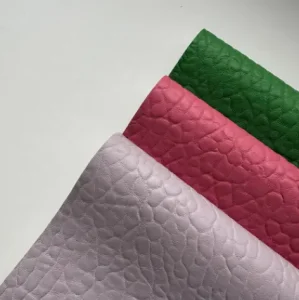
Supplying 5-star hotel chains, fine dining establishments, and corporate headquarters along the Arabian Gulf Street. Our biobased leathers offer rich tactile grains, including nappa, nubuck, and textured geometric embossings, with integrated anti-stain and hospital-grade sanitization resistance.
Footwear, Luxury Goods & Leather Accessories
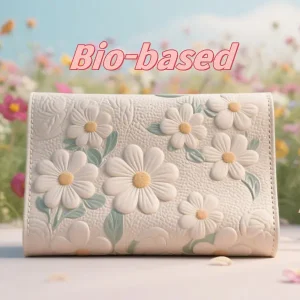
Local Kuwaiti brands and design houses sourcing sustainable leather alternatives for high-end sandals, structured handbags, executive luggage, and accessories benefit from consistent skiving, clean die-cutting, and predictable tensile yield that surpasses genuine animal hides.
Complete Bio-Renewable Synthetic Leather Portfolio
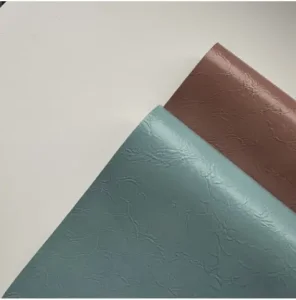
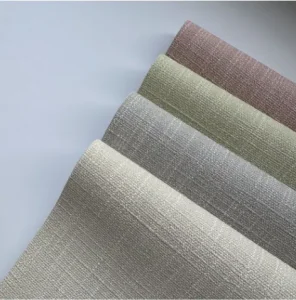
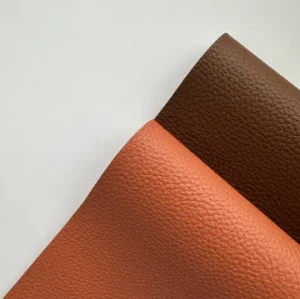
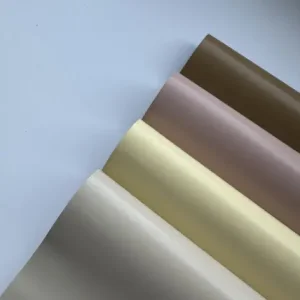
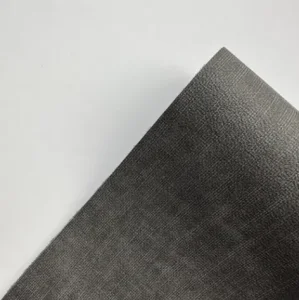
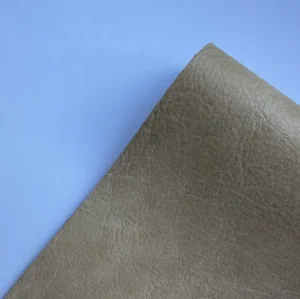
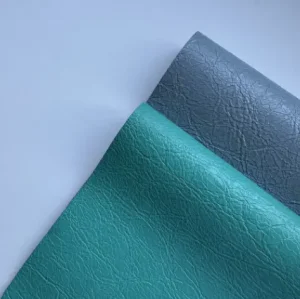
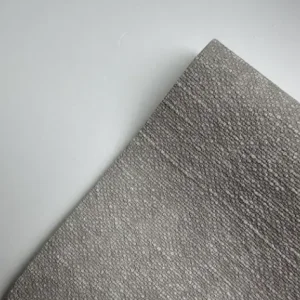
Review our full range of certified biobased synthetic leather variants. Every lot can be customized by backing fabric (RPET, organic cotton, TENCEL™), color match, and grain structure.

Frequently Asked Questions: Biobased Sourcing for Kuwait
Detailed technical answers for procurement directors, product developers, and supply chain managers sourcing biobased materials for GCC operations.