
Engineered Plant-Origin Surfaces for Polish Manufacturing
Direct factory-sourced bio-polyurethane composites formulated with renewable plant polyols to drastically curb Scope 3 emissions without sacrificing tear strength or tactile luxury.

Renewable Bio-Polymer Synthetic Leather (Industrial Supply)
- Bio-Carbon Content: 32% – 50% (ASTM D6866)
- Applications: Polish contract upholstery & interior panels
- Solvent-Free Aqueous Coagulation
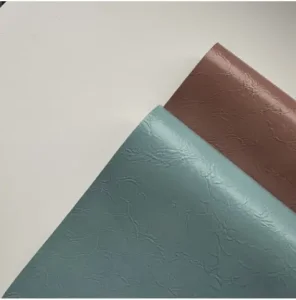
Bio-Based Renewable Leather-0177 Spec Formulation
- Martindale Abrasion: >100,000 cycles
- Low VOC, compliant with Polish OEM interior RSL
- Hydrolysis Resistance: 5-8 years Jungle Test
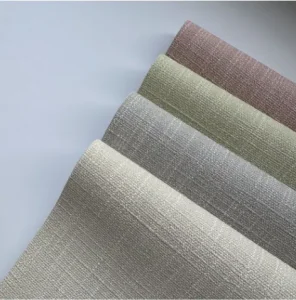
Bio-Renewable High-Flexion Leather-9384 Compound
- Flex Resistance: Bally test >150,000 cycles
- Calibrated for Radom footwear & accessory export
- Breathable microporous microfibre backing
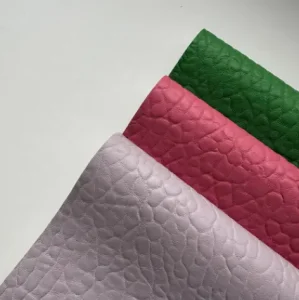
Bio-Engineered Upholstery Leather-9293 Fabric
- Flame Retardancy: EN 1021 Part 1 & 2 / BS 5852
- Soft matte nappa finish with anti-fouling topcoat
- Bio-based polyol carbon ratio: up to 60%
Poland's Industrial Shift: Decarbonization Across Furniture, Automotive, and Technical Consumer Sectors
The Republic of Poland represents one of Europe's premier industrial manufacturing engines. Holding an undisputed position as the European Union’s leading furniture exporter and maintaining robust industrial clusters across Greater Poland (Wielkopolska), Warmia-Masuria, and Lower Silesia, Polish production lines process millions of square meters of technical textiles and synthetic polymers monthly. Simultaneously, the southern automotive belt spanning Katowice, Gliwice, Tychy, and Bielsko-Biała positions Poland as a core tier-1 and tier-2 manufacturing hub for global vehicle brands transitioning toward electric vehicle (EV) architectures.
However, Polish manufacturers face unprecedented regulatory and supply chain pressures. The European Green Deal, alongside the Corporate Sustainability Due Diligence Directive (CSDDD) and escalating Corporate Sustainability Reporting Directive (CSRD) mandates, has accelerated corporate decarbonization schedules across Warsaw, Poznań, and Wrocław. Traditional fossil-based polyurethane (PU) and polyvinyl chloride (PVC) artificial leathers, historically reliant on crude petrochemical feedstocks, are encountering strict customer restrictions, impending carbon penalties under the Carbon Border Adjustment Mechanism (CBAM), and rigorous end-consumer brand audits.
The Strategic Imperative: Switching to direct factory-manufactured biobased synthetic leathers enables Polish OEMs and fabric converters to slash product carbon footprints (PCF) by up to 45% compared to conventional petrochemical PU, achieving seamless compliance with EU REACH SVHC lists while preserving mechanical tensile, tear, and hydrolysis thresholds.
As a specialized high-capacity manufacturer, Yingde City JiangXin New Material Co., Ltd. (JX.ECO) bridges the gap between next-generation green polymer chemistry and the commercial realities of Polish manufacturing. Operating a 135,733 m² solar-energized manufacturing campus, our technical export operations provide factory-direct supply, tailored batch compounding, and standardized compliance protocols custom-tailored for Poland’s furniture ateliers, automotive sub-assembly plants, and performance footwear manufacturers.
Comprehensive Green Engineering for Industrial Converters
Engineered to eliminate fossil dependence across every layer: surface finish, non-isocyanate bio-polyols, and circular microfibre carrier substrates.
Plant-Derived Bio-Polyol Chemistry
Replacing standard petroleum-derived polyesters and polyethers with high-purity polyols derived from non-food agricultural biomass (castor bean oil derivatives, starch syntheses, and technical vegetable oils). By integrating up to 75% renewable biological carbon in our PU formulations, we ensure physical equivalence to virgin polymers while meeting ASTM D6866 radiocarbon testing standards.
Zero DMFa & Solvent-Free Coagulation
Eliminating dimethylformamide (DMFa), toluene, and toxic solvents entirely through advanced 100% solid, waterborne, or hot-melt polyurethane coating lines. Our production processes ensure Polish assemblers and end consumers encounter near-zero VOC emissions (<50 µg/m³), protecting workshop operators and easily surpassing the stringent limits imposed by OEKO-TEX® Eco-Passport.
Circular & Recycled Base Substrates
A truly sustainable biobased article requires a low-impact substrate. We engineer backing structures composed of GRS and RCS-certified post-consumer recycled PET (rPET), biobased lyocell, organic cotton twills, and recycled leather fiber waste matrixes, delivering structural dimensionality, high stitch-tear resistance, and uniform grain retention across high-speed cutting lines.
Localized Supply Chains, Transit Lanes & Polish Regulatory Defense
Procuring engineered synthetic leathers across international borders requires absolute logistics dependability and comprehensive compliance integrity. For Polish supply chain directors managing just-in-time (JIT) production facilities in Greater Poland or Silesia, inventory downtime is not an option. JX.ECO has structured optimized freight and documentation frameworks specifically aligned with Central and Eastern European trade lanes.
| Engineering Property | Standard Testing Protocol | JiangXin Biobased Performance | Commercial Benefit for Poland |
|---|---|---|---|
| Bio-Carbon Content | ASTM D6866 (AMS Radiocarbon) | 30% – 75% Custom Bio-Carbon Ratio | Verifiable CSRD Scope 3 reduction hangtags |
| Chemical Restrictive List | EU REACH Regulation (EC) 1907/2006 | Zero SVHC list (>0.1% w/w), DMFa Free | Unrestricted customs clearance into Gdynia/Gdańsk |
| Surface Wear Durability | ISO 12947-2 (Martindale Method) | >50,000 to >150,000 Dry Rub Rubs | Meets severe contract furniture & automotive specs |
| Hydrolysis Resistance | ISO 1419 Method C (Tropical Chamber) | 5 to 10+ Years Equivalent Durability | Guaranteed resistance against peel, stickiness & crack |
| Flame Retardancy | EN 1021-1/2, BS 5852 Crib 5, FMVSS 302 | Classified Self-Extinguishing / FR Treated | Certified for public interiors & transportation OEM |
| Flex Crack Resistance | ISO 5402-1 (Bally Flexometer) | No cracking at 150,000 cycles (Room Temp) | Ideal for high-stress footwear vamp flexing in cold climates |
Strategic Transit Hubs Serving the Polish Hinterland
To ensure reliable lead times, we coordinate multi-modal freight routes utilizing deep-sea container services calling at the Port of Gdańsk (Baltic Hub) and Gdynia, alongside expedited transit options transiting via Hamburg and Rotterdam directly connected to Poland’s A2 and A4 motorway corridors. For high-priority production runs, seasonal prototypes, or sampling approvals, intermodal rail freight traversing the New Silk Road via the Małaszewicze dry port terminal allows raw material delivery to Warsaw or Poznań in as few as 14 to 18 days.
Every shipment dispatched to our Polish partners is accompanied by roll-level traceability dossiers, including Certificate of Analysis (CoA), material safety data sheets (MSDS), REACH declaration of conformity, and ASTM D6866 radiocarbon third-party test verification. This transparency equips your regulatory, purchasing, and ESG teams with rock-solid audit defense.
The Future of Circular Biomaterials (2026–2030)
Pioneering next-generation polymer innovations that push beyond transitional bio-hybrids into fully circular, closed-loop material cycles.
Non-Food 2nd Gen Feedstock
Transitioning polyol synthesis toward non-food agricultural residues, industrial forestry byproducts, and industrial hemp waste. This eliminates competition with agricultural food supply chains while achieving negative cradle-to-gate carbon metrics for raw polyurethane precursors.
Enzymatic Chemical De-Polymerization
Co-developing post-industrial de-coating systems tailored for high-volume furniture and footwear cut-waste. By breaking down polyurethane surface matrices into constituent monomers, we enable true circular recycling back into raw virgin-equivalent bio-polyurethane resin systems.
PFAS-Free Hydrophobic Topcoats
Anticipating imminent EU-wide restrictions on per- and polyfluoroalkyl substances (PFAS), our laboratories have engineered biomimetic nanostructured surface finishes providing stain resistance, alcohol cleanability, and water repellency with 0% fluorinated chemicals.
Essential Answers for Polish Industrial Sourcing
Direct answers addressing technical parameters, test protocols, shipping terms, and supply consistency.
How is biobased renewable content quantitatively verified for our technical specs?
Can JiangXin formulate biobased PU leather that passes Polish and EU contract flame-retardant standards?
What are the minimum order quantities (MOQ) and lead times for shipping to Poland?
Are your synthetic leathers fully compliant with the EU REACH candidate list and free of DMFa?
How does the durability of biobased PU compare to traditional solvent-borne PU leather?
Accelerate Your Decarbonization With High-Volume Biobased Leather
Partner directly with Yingde City JiangXin New Material Co., Ltd. Request physical swatch folders, technical data sheets, and custom quotation support for your manufacturing facilities in Poland.
Extended Technical Series & OEM Plant-Derived Solutions
Explore 8 precision-engineered articles optimized for footwear uppers, premium automotive cabins, and structural luxury luggage export.
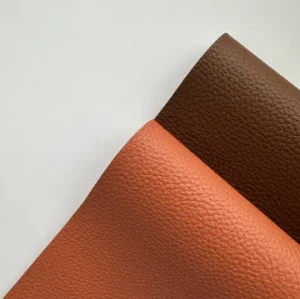
Engineered Biobased Vegan Synthetic Leather-9109
- Thickness: 0.9mm – 1.4mm customizable
- Plant Carbon Proportion: 40% (USDA Tested)
- Backing: Recycled poly-cotton micro-weave
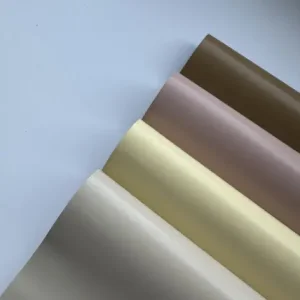
Supple Bio-Derived Handbag Leather-2056
- Handfeel: Ultra-soft nappa pebble emboss
- Tensile Strength: >350 N/5cm (ISO 1421)
- Non-toxic aqueous formulation

OEM Plant-Origin Synthetic Material-2071
- VDA 270 Odor Rating: <3.0 Grade
- Taber Abrasion: CS-10, 1kg, 1,000 revs
- Engineered for steering wraps & dash trims
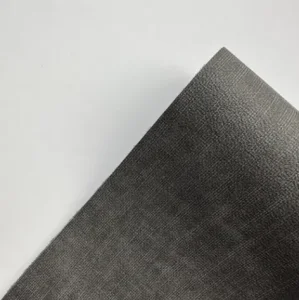
Plant-Sourced Bio-Renewable Leather-9103
- Cold Crack Resistance: -25°C flex pass
- Hydrolysis Guarantee: 8 Years ASTM D3690
- Breathable microporous layer technology

Custom Plant-Origin Synthetic Material-9081
- Stitch-Tear Resistance: >60 N (ISO 3377-2)
- Anti-Scratch ceramic polyurethane topcoat
- Formulated for commercial contract desks & seats
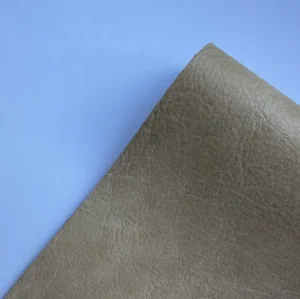
Plant-Origin Renewable Bio-Polymer-9271
- Solvent-free waterborne manufacturing route
- Color Fastness to Light: Xenon Arc Grade 5+
- Zero plasticizer migration guarantee
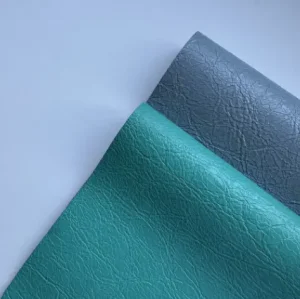
Plant-Derived Technical Bio-Leather-9213
- Thickness Range: 1.1mm ± 0.05mm calibrated
- High peel adhesion strength >4.0 kg/3cm
- Resistant to hospital-grade disinfection wipes
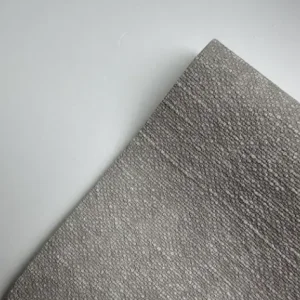
High-Performance Plant-Polymer Leather-9020
- Bio-Content: 50% authenticated bio-carbon
- Flame retardancy: Passes BS 5852 Crib 5
- Silicone-free, fluorochemical-free topcoat