
High-Performance Biobased Synthetic Leather Formulations
Engineered to satisfy demanding OEM criteria in Aichi Prefecture: zero DMF, low VOC emissions, hydrolytic stability, and verified bio-carbon content.


Nagoya: The Manufacturing Heart of Japan’s Bio-Economy Transition
Analyzing procurement transformations across Aichi Prefecture, the Tokai industrial belt, and the high-volume demand for sustainable polymers.
The Chubu Industrial Powerhouse & Decarbonization Pressures
The Greater Nagoya metropolitan area, anchoring Aichi Prefecture, stands as Japan's undisputed manufacturing engine, responsible for more than 40 consecutive years of leading the nation in manufactured goods shipment values. With major concentrations of automotive OEMs (such as Toyota, Denso, Aisin), aerospace components (Mitsubishi Heavy Industries, Subaru Aerospace), precision machinery, and a rich historical textile backbone (Bishu textile cluster), Nagoya’s manufacturing framework is undergoing an unprecedented paradigm shift toward carbon-neutral materials.
Japanese original equipment manufacturers (OEMs) and Tier-1 suppliers located throughout Toyota City, Kariya, and the Nagoya Port industrial corridor operate under stringent national guidelines formulated by Japan’s Ministry of Economy, Trade and Industry (METI). The national “Circular Economy Vision 2030” and Japan’s commitment to achieving net-zero greenhouse gas emissions by 2050 require tier-level suppliers to drastically cut Scope 3 upstream emissions. Petroleum-derived polyvinyl chloride (PVC) and conventional solvent-based polyurethane (PU) leathers, which carry high carbon footprints and generate volatile organic compounds (VOCs) like DMF (dimethylformamide), toluene, and MEK, are being systematically phased out.
Strategic Sourcing Shift in Aichi: In response to rigorous OEM sustainability scorecards, Nagoya procurement directors are no longer treating biobased leather as an experimental novelty. Instead, it has become a non-negotiable compliance requirement for new interior programs spanning 2026 through 2032 vehicle and consumer tech platforms.
However, Japanese domestic chemical synthesis plants face prohibitive land, energy, and labor overheads, limiting local biobased synthetic leather production capacity. Nagoya-based product developers and supply chain leaders are consequently establishing robust, long-term procurement corridors with certified, high-volume advanced manufacturing facilities capable of delivering predictable quality, certified bio-carbon ratios, and guaranteed compliance with Japanese Industrial Standards (JIS).
Automotive Interior Tier-1 Demand
Seating covers, steering wheel wraps, instrument panels, and door cards requiring strict compliance with JIS D 0205 weathering, zero fogging (DIN 75201), and ultra-low VOC emissions to preserve cabin air quality.
High-End Consumer Electronics & Optics
Protective housings, wearable bands, and optical equipment grip covers produced in Nagoya’s technology corridors requiring anti-fingerprint coatings, skin-contact biocompatibility, and refined haptic softness.
Shinkansen & Transit Interior Overhauls
Heavy-duty mass transit applications engineered to pass rigorous flame retardancy tests (JIS E 1201 / FAR 25.853) while reducing aggregate cabin weight through cellular bio-PU constructions.
Engineered Application Scenarios in Greater Nagoya
Bridging traditional Japanese craftsmanship with next-generation clean-tech synthetic polymers across diverse industrial use cases.
1. Automotive OEM Seating & Cockpit Architecture
In the Tokai region, automotive interior engineering teams demand materials that reconcile contradictory requirements: extreme durability against abrasion and hydrolysis, tactile warmth, and verifiable biological carbon content. Our biobased synthetic leathers utilize non-food agricultural biomass (such as castor seed oil and corn polyols) to replace up to 78% of petrochemical carbon in the polyurethane matrix.
When deployed across vehicle seats, center consoles, and dashboard skins, our materials pass 10-week jungle tests (70°C, 95% RH) without peel-off or sticky tackiness. Furthermore, our waterborne and solvent-free PU lines eliminate hazardous amines and DMF, meeting Toyota BAP-2001 and Honda HES D 6500 emission thresholds without the odor penalties common to conventional artificial leathers.
2. Precision Robotics & Industrial Equipment Protective Covers
Nagoya hosts some of the world's most sophisticated mechatronics and industrial robotics factories. Factory automated cells require protective synthetic skins, bellows, and end-effector coverings that withstand exposure to industrial lubricants, continuous flex cycles, and electrostatic buildup. By compounding bio-polyols with specialty antistatic and oleophobic additives, we supply Nagoya robotics designers with biobased composite skins that deliver 200,000+ Martindale cycles while significantly reducing the embodied carbon of factory equipment installations.
3. Commercial Interiors & Luxury Retail Fit-Outs in Sakae & Meieki
Nagoya's commercial retail hubs, centered around Sakae and the Nagoya Station (Meieki) commercial complexes, are rapidly incorporating ESG mandates into architectural fit-outs. Biobased synthetic leather provides interior designers with architectural-grade upholstery that meets fire retardancy standards (JIS A 1322 / Class 1) while offering sophisticated grain aesthetics—from smooth Nappa and semi-aniline finishes to custom geometric micro-embossing that complements modern Japanese minimalist architecture.
Technical Roadmap & Biomass Synthesis Architecture
How JiangXin replaces petroleum-derived diols and isocyanates with non-food plant feedstocks without sacrificing polymer tensile strength.
The Chemical Synthesis of Plant-Derived Polyols
Traditional synthetic leather relies on polyether or polyester polyols derived directly from naphtha cracking. In our certified green manufacturing lines, these fossil resources are substituted with polyols synthesized from biological precursors, primarily ricinoleic acid extracted from non-edible castor seeds and industrial starch streams. Through catalytic epoxidation and transesterification, we produce functional biopolyols possessing optimal hydroxyl numbers (OHV 56–112 mg KOH/g) and molecular weights tailored for cross-linking with isocyanates.
The resulting polyurethane polymer features an alternating block copolymer architecture: soft segments derived from plant-based polyols confer low-temperature flex resistance and haptic suppleness, while hard crystalline urethane segments deliver exceptional tensile resilience, tear strength, and scratch resistance.
| Performance Metric | Testing Standard | Conventional Petroleum PU | JiangXin Biobased PU Series | Strategic Benefit for Nagoya OEM |
|---|---|---|---|---|
| Bio-Carbon Content | ASTM D6866 / Radiocarbon C14 | 0% | 30% – 78% (Configurable) | Immediate Scope 3 emission credit |
| Hydrolysis Resistance | Jungle Test (70°C, 95% RH) | 3 – 5 Weeks | 7 – 10 Weeks | Extended interior vehicle lifecycle |
| VOC Emissions (DMF, Toluene) | GC-MS / Headspace Method | > 50 ppm | Not Detectable (< 2 ppm) | Full alignment with Japanese OEM cabin specs |
| Taber Abrasion (H-18, 1000g) | JIS K 7204 / ISO 5470 | 500 Cycles | 1,500+ Cycles No Rupture | Resistant to high-wear seating abrasion |
| Flame Retardancy | FMVSS 302 / JIS D 1201 | Burn Rate > 100 mm/min | Self-Extinguishing (< 40 mm/min) | Meets automotive & mass transit standards |
Future Roadmap: Toward 100% Fully Circular Bio-Circularity
Our research roadmap for the 2026–2030 timeframe focuses on three core technological frontiers aligned with the demands of Japanese chemical integrators in Nagoya:
- Next-Gen Bio-Isocyanates: Transitioning from purely bio-polyol soft segments to bio-derived MDI/HDI hard segments, pushing total biological carbon content above 90% without compromising tensile elongation.
- Closed-Loop Recycled Backing Substrates: Integrating 100% Recycled Claim Standard (RCS) and GRS-certified post-consumer rPET knitted fabrics and circular microfibers, creating a fully unified mono-material composite facilitating end-of-life depolymerization.
- Photovoltaic Powered Zero-Carbon Synthesis: Utilizing our factory’s 4.68 MW rooftop solar installation to power extrusion, curing ovens, and solvent-free transfer coating lines, generating third-party audited Environmental Product Declarations (EPD).
China Mega-Plant Supply Chain Resilience for Nagoya Sourcing
Delivering high-capacity economies of scale, rapid prototype turnaround, and dependable maritime freight directly to the Port of Nagoya.
Unrivaled Capacity: The JiangXin 135,733 m² Clean-Tech Campus
Headquartered in Yingde, Guangdong, Yingde City JiangXin New Material Co., Ltd. (JX.ECO) represents the pinnacle of modern clean-tech synthetic leather engineering. Operating out of a state-of-the-art 135,733 m² industrial campus constructed under stringent chemical safety and ecological guidelines, our facility houses multi-tier automated dry and wet coating lines, solvent-free reactive extrusion systems, and specialized surface finishing suites.
With an annual production capacity exceeding 16 million linear meters, JiangXin offers Nagoya and Aichi Prefecture enterprise clients scale economies that domestic Japanese fabricators cannot match. Our campus features a 4.68 MW rooftop photovoltaic solar system and proprietary closed-loop thermal recuperators that recover 85%+ of curing heat, dramatically depressing product-level carbon footprints.
Direct Port-to-Port Logistics
Direct weekly sailings from Shenzhen (Yantian/Shekou) and Guangzhou (Nansha) to the Port of Nagoya (Kinjo/Tobishima piers) ensure transit times of just 5 to 7 days, guaranteeing just-in-time (JIT) replenishment for Tokai factory networks.
Rapid Lab-to-Sample Prototyping
Our dedicated colorimetric and haptic labs match customized Japanese automotive tech packs within 48 to 72 hours, dispatching A4 and 5-meter sample swatches via expedited air cargo to Nagoya within 4 business days.
Defensible 25–40% Cost Advantage
Vertical upstream integration into bio-polyol formulation, in-house base fabric backing, and extensive continuous automated curing deliver significant unit-cost savings compared to regional Japanese specialty converters.
Global Standards Alignment & Port of Nagoya Import Assurance
Harmonizing international environmental mandates with Japanese domestic regulatory expectations.
International Regulatory Frameworks vs. Japanese Market Norms
Global procurement teams face an intricate web of environmental regulations: the EU Corporate Sustainability Due Diligence Directive (CSDDD), the EU Deforestation Regulation (EUDR), and the United States USDA BioPreferred Program. Japanese manufacturers exporting vehicles, consumer goods, and precision tools from the Port of Nagoya must meet these international standards while strictly abiding by domestic Japanese laws.
Our biobased synthetic leather lines undergo rigorous third-party validation by accredited global testing bodies (SGS, TÜV Rheinland, and Beta Analytic). We supply fully documented testing dossiers with every commercial shipment entering Nagoya Port:
- ASTM D6866 Radiocarbon Analysis: Precise verification of biological vs. fossil carbon isotopes (C14 dating), enabling accurate hangtag claims and ESG corporate accounting.
- Japanese Industrial Standards (JIS) Correlation: Certified performance benchmarks covering JIS L 1096 (fabric tensile/tear strength), JIS K 6772 (synthetic leather adhesion and cold flex), and JIS D 0205 (accelerated weathering under xenon lamp irradiance).
- Chemical Safety & Non-Toxicity: 100% compliance with EU REACH SVHC (Substances of Very High Concern), RoHS Directive 2011/65/EU, OEKO-TEX Standard 100 Class I (baby skin contact safe), and 6P/16P phthalate-free thresholds.
- Port of Nagoya Custom Clearances: Full pre-shipment documentation sets, including Harmonized System (HS) code classification (Chapter 5903), Certificate of Origin under RCEP (Regional Comprehensive Economic Partnership) for preferential tariff benefits, and safety data sheets (SDS) prepared in Japanese.
Precision Biobased Material Solutions for Japanese Manufacturing
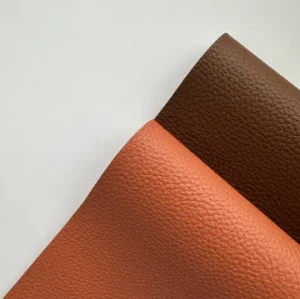
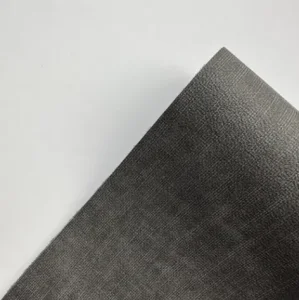
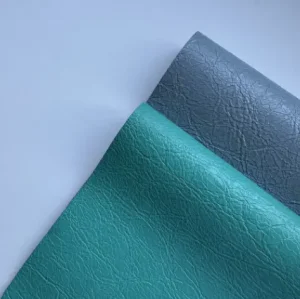
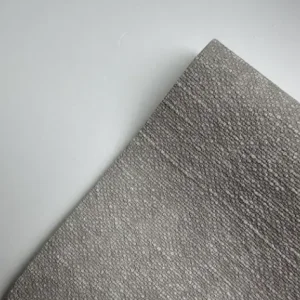
Explore customized textures, varied thickness specifications (0.6mm – 2.0mm), and high-durability surface coatings for your upcoming product launch.




Frequently Answered Questions for Sourcing Teams in Nagoya
Direct technical guidance on sampling, compliance, ASTM testing protocols, MOQ structures, and logistics management.
How does JiangXin substantiate the biological content in biobased synthetic leather?
Can JiangXin custom-engineer materials to meet specific Japanese Automotive Standards (JASO/JIS)?
What are the typical lead times and logistical corridors for shipments to Nagoya?
What are your Minimum Order Quantities (MOQs) for custom color and emboss developments?
How does biobased PU leather perform against DMF-based and solvent-free PU in terms of VOC emissions?
What backing textile substrates can be combined with JiangXin biobased surfaces?
Does JiangXin support RCEP preferential trade tariff documentation for Japanese imports?
Accelerate Your Bio-Material Transition in Nagoya
Request physical swatch binders, ASTM D6866 certification records, and direct factory container pricing customized for Tier-1 automotive and precision industrial programs across Aichi Prefecture.
Send Inquiry Now