
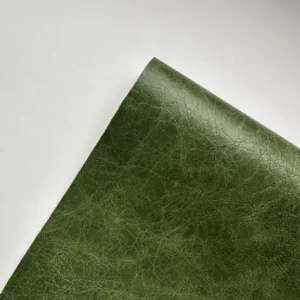
Featured Sustainable PU Series (Part I)
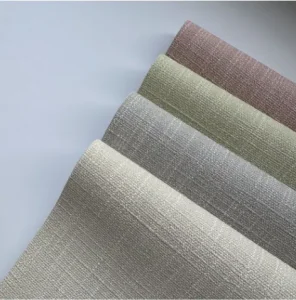
Direct factory procurement: ASTM D6866 biobased polymers, solvent-free synthetic skins, and RCS-traceable circular matrices engineered for footwear and luxury leather goods.
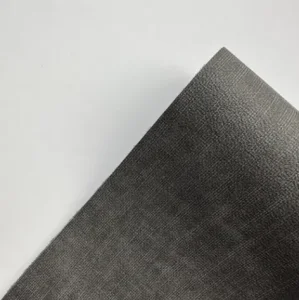
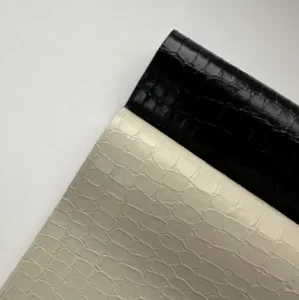

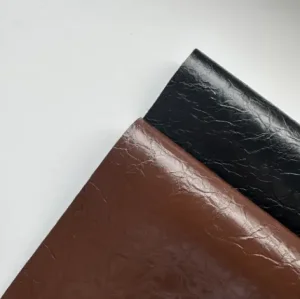

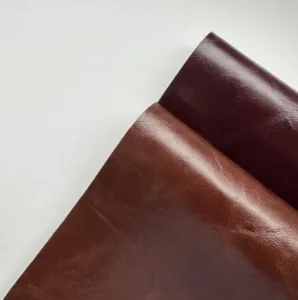
The Macro Shift: From Petrochemical Faux Skin to Next-Gen PU Chemistry
How tightening carbon accounting, European Union circular directives, and brand ESG mandates have dismantled legacy PVC/DMF supply lines in favor of traceable, bio-synthesized polyurethane.
Regulatory Disruption & Restricted Substances
The global synthetic leather market is undergoing a seismic regulatory consolidation. Historic dry and wet coagulation lines reliant on dimethylformamide (DMFa), toluene, and toxic plasticizers face outright import prohibitions under EU REACH Annex XVII and California Prop 65. Tier-1 brands now require guaranteed thresholds: DMFa content strictly below 5 ppm, total VOC emissions below 100 μg/m³, and zero detectable phthalates (6P/16P compliant).
- REACH Candidate List (SVHC) < 0.1% w/w
- DMFa Detection Limit < 5 ppm
- Formaldehyde Residual Non-Detectable
Scope 3 Decarbonization Pressures
Under the Corporate Sustainability Reporting Directive (CSRD) and the Science Based Targets initiative (SBTi), global fashion conglomerates and tier-1 athletic equipment manufacturers can no longer rely on fossil-derived virgin polyurethane. Upstream material selection accounts for 60% to 78% of a brand's Scope 3 footprint. Migrating to biobased feedstocks and post-consumer recycled substrates provides an instantaneous 30% to 55% reduction in Product Carbon Footprint (PCF).
- PCF Carbon Abatement 30% - 55% CO₂e
- ASTM D6866 Bio-Carbon 20% - 60%
- GRS / RCS Recycled Yarn Up to 100% rPET
Factory Consolidation & Verification Rigor
The era of disaggregated middleman sourcing has ended. Buyers demand audited traceability from molecular synthesis to the finished roll. Facilities lacking biological verification (such as USDA BioPreferred via ISO/IEC 17025 radiocarbon labs) or chain-of-custody Transaction Certificates (TC via Textile Exchange RCS/GRS) are excluded from primary brand vendor matrices. The market favors capital-intensive mega-sites with unified R&D and green energy infrastructure.
- Chain of Custody Textile Exchange TC
- Testing Integrity ISO 17025 Accredited
- Facility Verification Higg FEM / BSCI
Technical Architecture: Molecular Synthesis & Green Chemistry
Deconstructing the structural layers of high-performance vegan leather: from plant-derived polyols and solvent-free reactive coatings to circular textile reinforcers.
Bio-Polyol Synthesis
Replacing petroleum diols with polyols synthesized from non-food agricultural biomass (castor bean ricinoleic acid, industrial corn starch, and agricultural cellulosic residues). These renewable polyols undergo catalytic condensation polymerization with aliphatic or modified aromatic diisocyanates, fixing plant carbon into the polyurethane polymer backbone.
Solvent-Free Skin
Zero-solvent reactive hot-melt systems (100% solids) eliminate VOCs entirely. By utilizing two-component liquid reactive polyurethane systems that cure through thermal condensation directly on the release paper, the factory bypasses solvent extraction, drying tunnels, and condensation recovery cycles while eliminating pinholes.
Waterborne PUD Interlayer
A waterborne polyurethane dispersion (PUD) foam interlayer engineered with closed-cell micro-porous architecture. This layer delivers the plush compressibility, supple drape, and flex fatigue properties of natural full-grain calfskin, without relying on volatile chemical foaming blowing agents or toxic plasticizers.
Circular rPET Substrate
The structural load-bearing backing fabric utilizes 100% post-consumer recycled polyethylene terephthalate (rPET) derived from mechanically recycled bottle flakes, woven into ultra-fine microfibers or needle-punched non-woven felts. Each batch is paired with digital traceability under the Recycled Claim Standard (RCS).
| Performance / Composition Metric | Legacy Solvent PU (DMF-Based) | Standard PVC Faux Leather | JiangXin Eco Biobased PU | JiangXin Solvent-Free RCS PU |
|---|---|---|---|---|
| ASTM D6866 Bio-Carbon Share | 0% (Petrochemical) | 0% (Petrochemical) | 30% – 60% (Plant-Derived) | Customizable (10% - 40%) |
| Post-Consumer Recycled Content | 0% | 0% | Optional 30% - 100% rPET | 100% RCS Certified rPET |
| VOC & DMFa Content | High (> 30 - 150 ppm DMFa) | Phthalate & Chlorine Outgassing | < 5 ppm (Zero Solvent Line) | Non-Detectable (Zero VOC) |
| Hydrolysis Resistance (Jungle Test) | 3 - 5 Years (70°C, 95% RH, 5 wks) | Brittle upon plasticizer migration | 7 - 10 Years (7-10 Weeks) | 8 - 12 Years (10 Weeks) |
| Martindale Abrasion (12 kPa, Dry) | 30,000 – 50,000 Cycles | 40,000 Cycles | > 100,000 Cycles | > 150,000 Cycles |
| Cold Crack Resistance | -10°C to -15°C | -5°C (Cracks easily) | -25°C to -35°C | -30°C to -40°C |
Supply Chain Resilience: The Mega-Campus Manufacturing Engine
Inside Yingde City JiangXin New Material Co., Ltd. (JX.ECO): 135,733 m² of purpose-built, solar-powered synthetic leather production capacity in Guangdong, China.
Clean-Tech Campus Operations
Founded on June 2, 2017, the JiangXin industrial complex was architected from the ground up to surpass national clean-production mandates. Engineered with daylight-optimized tempered-glass ateliers, thermal energy regenerative oxidizers (RTO), and a dedicated closed-loop water treatment facility, the site mitigates operational downtime associated with municipal environmental curtailments.
- Rooftop Photovoltaics: 4.68 MW Array
- Campus Footprint: 135,733 m² Built Area
- Industrial Wastewater: On-Site Treatment / Recycle
Throughput & Lead-Time Velocity
Operating multi-head high-precision dry coating, waterborne PUD dipping lines, and advanced transfer paper embossing units, JiangXin maintains an annual finished leather capacity exceeding 16 million running meters. Upstream chemical synthesis integration ensures raw material price stability and protects global buyers against spot market polyol fluctuations.
- Annual Volume: 16,000,000+ Running Meters
- Active Export Markets: 50+ Countries
- Sampling Velocity: 3 – 5 Business Days
Vertical Quality System & Traceability
Every master roll produced at the Yingde campus receives an encoded tracking manifest registering line operating temperature, release paper batch, resin viscosity profile, and tensile elongation data. In-house physical testing laboratories execute ASTM, ISO, and DIN stress-testing regimes around the clock prior to issuing final Certificate of Analysis (CoA) records.
- Inspection Standard: 4-Point Roll System
- Yield Regularity: > 98.5% Cut Utilization
- Traceability: Barcode Batch Tracking
Application Engineering: Meeting Extreme Industry Thresholds
Formulating mechanical toughness, breathability, flammability, and tactile fidelity across disparate consumer and industrial applications.
Performance Footwear & Athletic Uppers
Engineered for high-frequency ballistic flex, heel counter wear, and dynamic toe-box creasing. Formulated with a specialized non-woven microfiber backing and high-elastic PUD resin to withstand extensive outdoor endurance.
- Bally Flex Resistance: > 150,000 Cycles (Dry)
- Cold Bally Flex: > 50,000 Cycles (-20°C)
- Hydrolysis Resistance: 8 - 10 Years Jungle Test
Luxury Handbags & Small Leather Goods
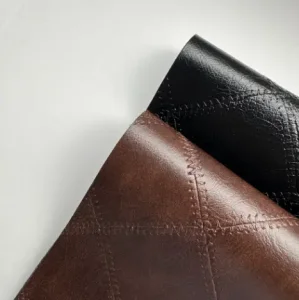
Focused on sensory hand feel, edge-paint bonding compatibility, precise skiving, and crease recovery. Available in classic toothpick grains, natural calf embossings, and dimensional stitched architectural panels.
- Color Fastness to Rubbing: Grade 4.5 (Wet/Dry)
- Taber Abrasion (CS-10): > 1,000 Revs (Zero Loss)
- Edge Oil Adhesion: Zero Delamination (48h)
Automotive Seating & Transit Interiors
Stringent thermal aging, UV color stability, and flame retardancy specifications. Formulated with UV stabilizers and reactive phosphorus-based flame-retardant polymers that emit non-toxic gases during combustion.
- Flammability: FMVSS 302 Compliant
- Xenon Arc UV Fastness: Blue Wool Scale > 6
- Fogging Characteristic: > 90% (DIN 75201-B)
Consumer Electronics & Wearables
Skin-contact safety, anti-yellowing, oleophobic oil-stain resistance, and alcohol wipe durability for mobile casing, headphones, and laptop sleeves. Fully certified against cosmetic migration and dermal sensitivity.
- Ethanol Wipe Resistance: > 2,000 Rubs (75% Alc)
- Skin Cytotoxicity: ISO 10993 Non-Irritant
- Stain Repellency: Class 5 (Coffee, Sebum, Ink)
Audited Compliance Framework & Export Verification
Eliminating border customs friction, customs hold-ups, and commercial risk with comprehensive chemical verification dossiers.
Textile Exchange RCS / GRS
JiangXin is fully certified under the Recycled Claim Standard (RCS). Every shipment containing recycled polyester yarn backings or recycled polyurethane resins can be paired with an official Transaction Certificate (TC) issued through an accredited third-party registrar, providing bulletproof evidence for sustainability marketing.
- Standard: RCS 2.0 / GRS 4.0
- Audit Scope: Chain of Custody Tracking
- Documentation: Transaction Certificate (TC)
USDA BioPreferred Program
Bio-content determinations are certified via high-precision accelerator mass spectrometry (AMS) radiocarbon analysis following ASTM D6866 standards. This independent verification guarantees that the biological carbon ratio asserted on spec sheets matches legal labeling criteria for global consumer markets.
- Method: ASTM D6866 Carbon-14
- Label Program: USDA BioPreferred
- Assurance: Non-Fossil Plant Origin
EU REACH & OEKO-TEX Standard 100
Our eco-engineered formulations undergo rigorous batch-wise testing against the latest Candidate List of Substances of Very High Concern (SVHC), RoHS regulations, and heavy metal extraction protocols. Fully compatible with strict brand Restricted Substance Lists (RSL) across North America, Europe, and Japan.
- SVHC Threshold: Pass (< 0.1% w/w)
- Phthalate Screening: 6P / 16P Free
- Toxics Safety: OEKO-TEX Class I / II
Featured Sustainable PU Series (Part II)
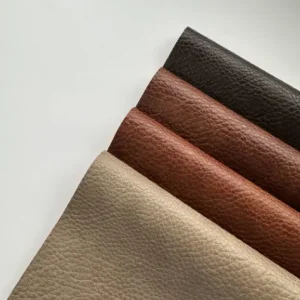
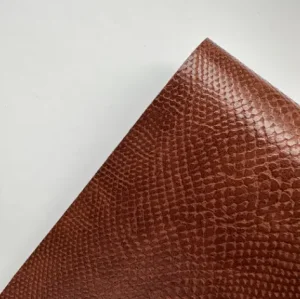
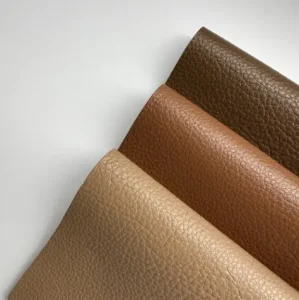
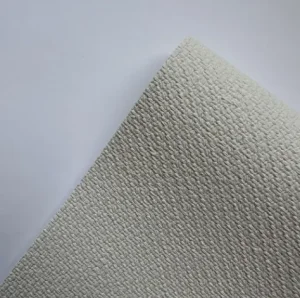
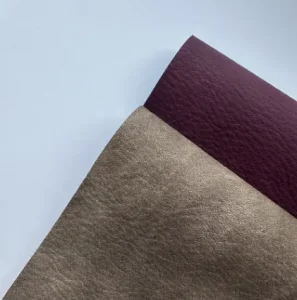
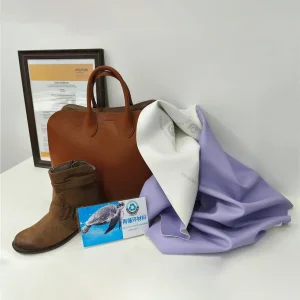
Engineered synthetic leather inventory ready for rapid lab dip matching, custom roller embossing, and global container-load shipping.

Frequently Asked Technical & Sourcing Questions
Direct, engineer-verified insights regarding minimum order quantities, biological verification methods, hydrolytic stability, and export customs compliance.