
Wholesale PU Leather Catalogs: Tier-1 Manufacturing Series (Volume I)
Direct factory-calibrated synthetic surfaces engineered across our 135,733 m² clean-tech production campus. Every article delivers traceable polymer consistency, certified tensile tolerance, and environmental clearance for footwear, apparel, and contract furnishings.
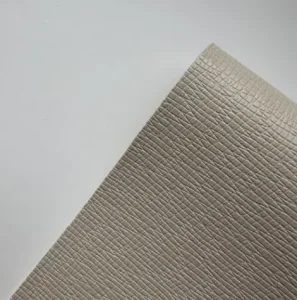
Custom RCS‑Verified Recycled‑Content Sustainable Synthetic Leather-9265
Inspect Specifications
Wholesale Bio-Based Renewable Synthetic Leather Supplier, Factory
Inspect Specifications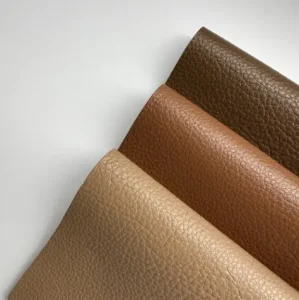
OEM Eco‑Friendly Sustainable Synthetic Leather-9078 Supplier, Suppliers
Inspect Specifications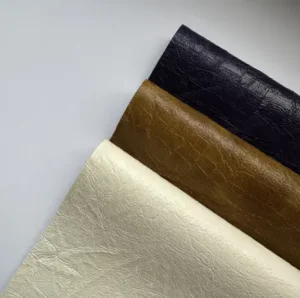
Wholesale Eco-Friendly Sustainable Synthetic Leather-9381 Factory, Factories
Inspect Specifications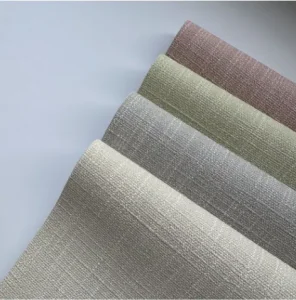
Wholesale Bio-Based Renewable Synthetic Leather-9384 Manufacturer, Supplier
Inspect Specifications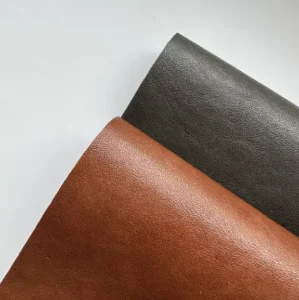
Wholesale Eco-Friendly Sustainable Synthetic Leather-9309 Manufacturers, Suppliers
Inspect Specifications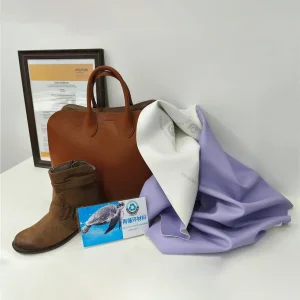
OEM RCS Certified Recycled Sustainable Synthetic Leather Supplier, Factory
Inspect Specifications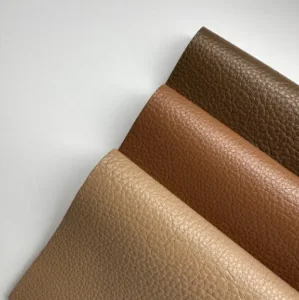
Custom RCS Recycled Synthetic Leather-9078 Manufacturer, Suppliers
Inspect SpecificationsWhat Does "PU Leather" Really Mean in Commercial Reality?
In contemporary industrial nomenclature, PU Leather (Polyurethane Leather) denotes a composite engineered material manufactured by depositing a synthetic elastomer film—synthesized through the step-growth addition polymerization of diisocyanates with polyols—onto an underlying structural fibrous substrate. Far beyond simple colloquial labels like "pleather" or generic "faux leather," commercial PU leather represents a multi-tiered polymeric matrix calibrated for anisotropic mechanical elasticity, vapor permeability, and long-term grain memory.
Topcoat & Polyurethane Skin Layer
The outermost barrier layer composed of 100% polyurethane resin crosslinked with aliphatic or aromatic isocyanates. It dictates haptic tactile feedback, grain depth retention, Martindale scratch resistance, UV stabilization, and chemical barrier properties against alcohol, hydrolysis, and sebum discoloration.
Microporous Cellular Interlayer
Formed via phase-inversion wet coagulation or micro-foaming blowing agents. This cellular sponge stratum functions as an acoustic and thermal buffer, creating breathability (vapor transpiration) while mimicking the collagen fibril compliance and supple hand-drape of prime full-grain animal hides.
Structural Base Scrim & Substrate
The foundational tensile carrier. Depending on physical targets, substrates range from spunlace nonwovens, circular knit jersey, microfiber sea-island polyamides, to GRS/RCS certified post-consumer recycled polyethylenes (rPET), imparting directional stability, tear propagation resistance, and stitch strength.
| Material Category | Chemical Composition | Tensile / Flex Fatigue | Environmental / VOC Profile | B2B Wholesale Application |
|---|---|---|---|---|
| Modern Eco PU Leather | Polyurethane elastomer + rPET/Microfiber scrim | High (>150,000 cycles at -20°C Bally Flex) | Low VOC / DMFa < 5ppm | Footwear uppers, premium automotive interiors, luxury bags |
| Legacy PVC Leather | Polyvinyl Chloride + Phthalate plasticizers | Moderate (Prone to plasticizer migration & embrittlement) | Contains Chlorine & Phthalates | Low-cost contract seating, budget marine covers, basic tarps |
| Split / Bicast Leather | Fibrous animal flesh split + PU/PVC top lamination | Low to Medium (Delamination risk along collagen interface) | Chromium tanning residues | Promotional commercial upholstery, promotional footwear |
| Bio-Based PU Leather | Bio-polyol (corn/castor derived) + Waterborne PU | Ultra-High (ASTM D6866 verified renewable content) | Zero Solvent / Low Carbon Footprint | ESG-aligned luxury luxury goods, tech wearables, tier-1 EV cabins |
Global Commercial Dynamics: Wholesale Sourcing & Manufacturing Hubs
The worldwide market for synthetic polyurethane leather has transitioned from basic cost arbitrage to high-spec technology manufacturing. Headquartered within the Yingde Qingyuan industrial corridor of Guangdong, China, modern integrated manufacturing enterprises like JiangXin New Material (JX.ECO) supply global brands across Europe, North America, Southeast Asia, and the Middle East, balancing multi-million-meter output with stringent restricted substance lists (RSL).
Consolidated Cluster Efficiency
Guangdong Province stands as the world's dense epicenter for synthetic polymer synthesis. By operating unified synthesis, dry coating, wet coagulation, vacuum embossing, and on-site wastewater plants within one continuous footprint, procurement lead times are cut from 45 days down to 12–18 business days.
Regulatory Border Protocols (CBAM & DPP)
Wholesale buyers across North America and the EU face unprecedented legislative scrutiny. Materials must align with the EU Corporate Sustainability Due Diligence Directive, upcoming Digital Product Passports (DPP), and the Carbon Border Adjustment Mechanism (CBAM), enforcing verified carbon accounting from cradle to factory gate.
Strict Solvent Clearance: Zero DMFa
Traditional wet-process PU relies on Dimethylformamide (DMF), now strictly capped under EU REACH Annex XVII (<5 mg/kg). Leading wholesale manufacturers deploy thermal regenerative incinerators, high-boiling solvent recovery loops, or eliminate organic solvents completely via waterborne PU dispersions (PUD).
Engineering Matrix: Localized Industrial Scenarios
Different end products present vastly disparate failure mechanisms. A high-fashion handbag suffers along flex joints and edge paint interfaces; automotive seating degrades via thermal oxidation and solar UV breakdown; athletic footwear fails from flex fatigue and wet hydrolysis. Here is how specialized wholesale PU leather is formulated for each domain:
Automotive & Commercial Mobility
Key Standard: DIN 75201 Fogging < 2mg, Martindale Abrasion > 100,000 cycles, OEM Odor Rating ≤ 3.0.
Formulated with aliphatic polycarbonate-polyurethane structures resistant to interior cabin heat traps reaching 85°C. Features low-emission flame retardants compliant with FMVSS 302 without generating toxic smoke.
High-Performance Footwear Uppers
Key Standard: Bally Flexometer > 150,000 cycles at -20°C, Jungle Test (70°C, 95% RH) > 10 weeks.
Features an anisotropic micro-fiber nonwoven backing with sea-island staple fibers that match natural leather's elongation curve, delivering stitch tear resistance > 80 N and superior dynamic bonding with EVA/rubber outsoles.
Luxury Handbags & Designer Accessories
Key Standard: Dry/Wet Veslic Rub > 1,000 cycles, Taber CS-10, Edge Paint Adhesion Grade 4.
Engineered with soft-touch haptic topcoats, replicating calfskin, pebble grain, saffiano, or toothpick linear textures. Provides dimensional stability during high-speed die cutting with zero edge fraying or oil absorption.
Contract Seating & Hospitality
Key Standard: California TB 117-2013, BS 5852 Crib 5, Bio-Cidal JIS Z 2801.
Treated with embedded silver-ion antimicrobial additives, resisting fungal mildew and harsh hospital-grade bleach disinfectants (10:1 ratio) without topcoat blistering, crazing, or loss of matte finish sheen.
Technical Roadmap: From Petrochemical Reliance to Closed-Loop Bio-Circularity
The wholesale PU leather industry is executing a profound technological pivot. Driven by brand Scope 3 emissions pledges and international bans on persistent organic pollutants, chemical manufacturers are re-engineering the polyurethane macromolecular backbone from the ground up.
Solvent-Free Hot Melt Extrusion
Completely eliminating DMF and MEK solvents. 100% solid PU prepolymers are thermomechanically melted and bonded to backings using micro-calendering rollers, reducing processing energy by up to 48%.
ASTM D6866 Bio-Polyols
Synthesizing polyester and polyether polyols from industrial corn starch, castor oil, and sugarcane bagasse. Substituting up to 75% of fossil-derived carbon while retaining identical tensile memory.
Post-Consumer Circular rPET
Integrating Textile Exchange RCS and GRS certified recycled polyester into knitted and micro-denier backing scrims, turning discarded coastal and landfill plastic bottles into luxury base materials.
Chemical Monomer Recycling
Developing catalytic glycolysis and chemolysis routes capable of depolymerizing discarded PU synthetic leather scrap back into pure polyols and diamines for infinite closed-loop remanufacturing.
The JiangXin (JX.ECO) Solution: Macro Clean-Tech Scale
Established on June 2, 2017 in Yingde, Guangdong, Yingde City JiangXin New Material Co., Ltd. demonstrates how large-scale enterprise manufacturing aligns with environmental responsibility. The 135,733 m² campus was engineered to redefine synthetic material manufacturing:
4.68 MW Photovoltaic Roof
Our full campus roof is blanketed by a high-efficiency solar photovoltaic generation array, feeding clean renewable electricity directly into continuous coating ovens, drastically lowering the Scope 2 carbon footprint per linear meter.
Dedicated Biochemical Water Station
An on-site multi-stage wastewater treatment facility featuring biological denitrification, advanced oxidation, and membrane filtration, ensuring process effluent surpasses national environmental discharge thresholds.
Digital Lab-to-Line Synchronization
Equipped with spectrophotometers, Bally flexometers, and climatic chambers. Formulations approved in sampling stages are digitally locked into automated dosing systems, eliminating batch-to-batch metamerism and delta-E color variance.
Wholesale PU Leather Catalogs: Tier-1 Manufacturing Series (Volume II)
Secondary production series engineered for specialized tactile textures, high-yield cutting efficiencies, and customizable backing substrates. Verified against ISO 9001, OEKO-TEX, Higg Index, and amfori BSCI standards.
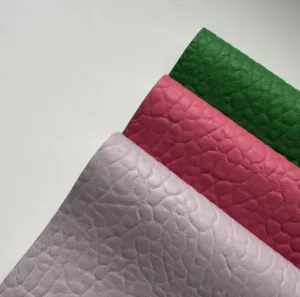
High-Quality Eco‑Friendly Sustainable Synthetic Leather-9239 Supplier, Suppliers
Inspect Specifications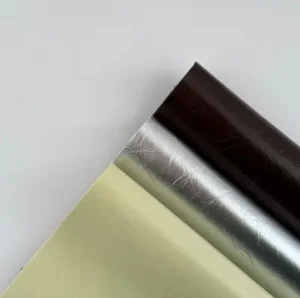
OEM Sustainable Eco-Friendly Faux Leather-0195 Manufacturers, Supplier
Inspect Specifications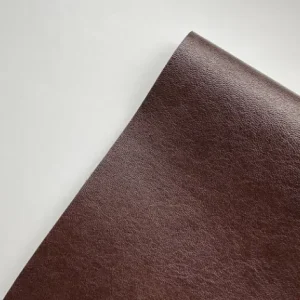
Custom RCS Verified Recycled Synthetic Leather Suppliers, Factories
Inspect Specifications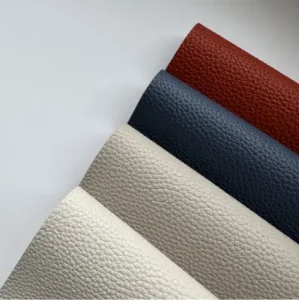
OEM RCS Certified Recycled Sustainable Synthetic Leather-9163 Suppliers, Factories
Inspect Specifications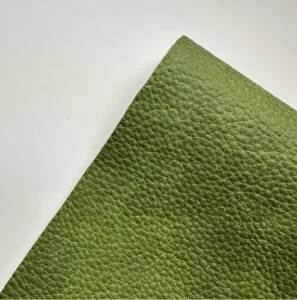
Custom Premium Sustainable Eco Synthetic Leather-9304 Supplier, Factory
Inspect Specifications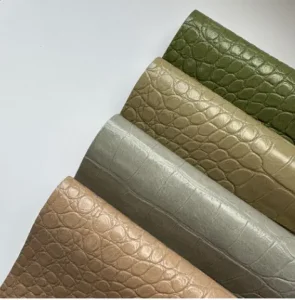
Wholesale Waste-Upcycled Recycled Synthetic Leather-9355 Manufacturers, Factories
Inspect Specifications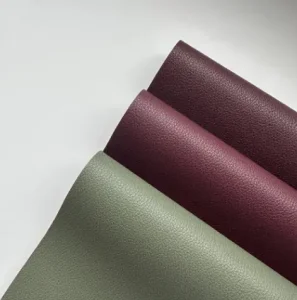
OEM Eco Plant-Based Renewable Synthetic Leather-9077 Manufacturers, Manufacturer
Inspect Specifications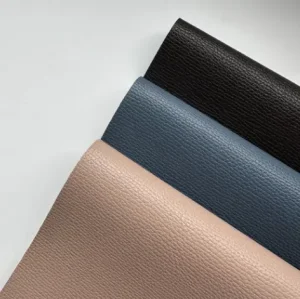
Wholesale Green Sustainable High-End Synthetic Leather-9264 Manufacturers, Manufacturer
Inspect SpecificationsWholesale PU Leather Engineering & Sourcing FAQ
Critical engineering criteria, chemical compliance standards, and commercial order terms clarified by JiangXin's chief material scientists and global export operations directors.