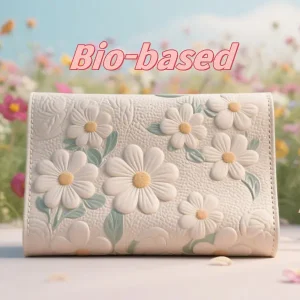
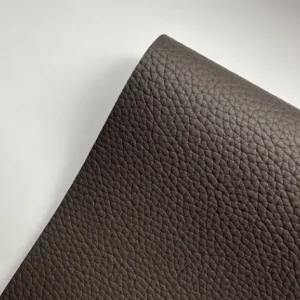
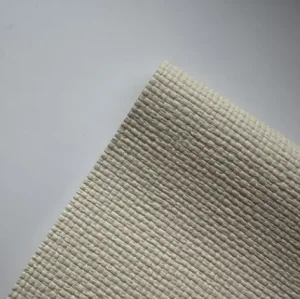
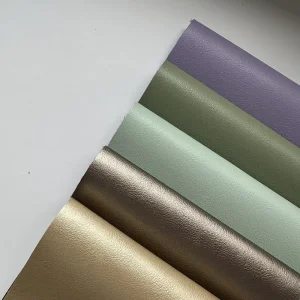
High-Performance Eco-Synthetic Articles: Batch 01
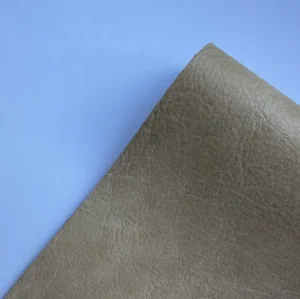
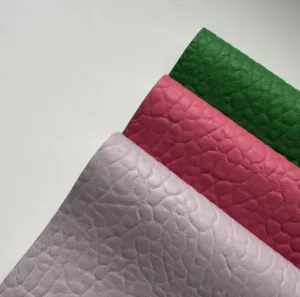
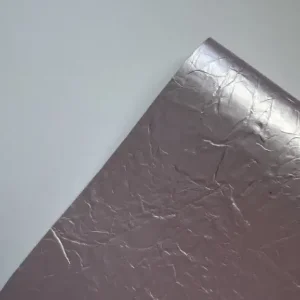
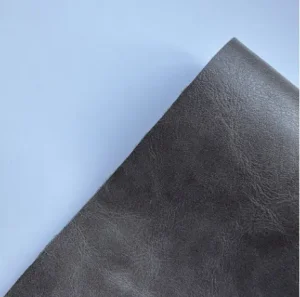
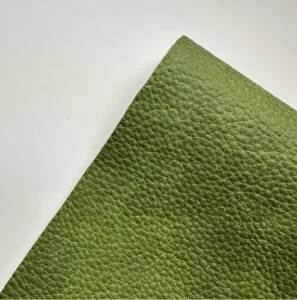
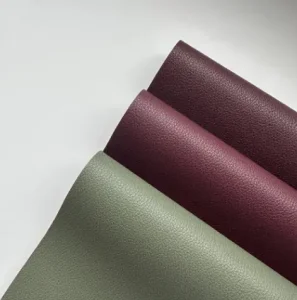
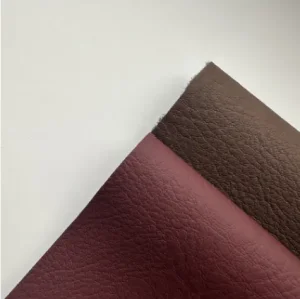
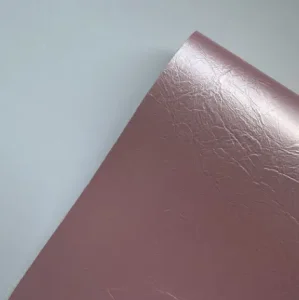
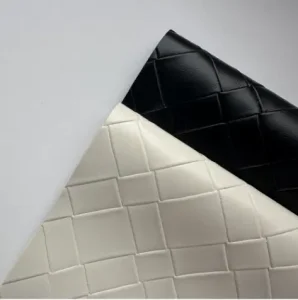
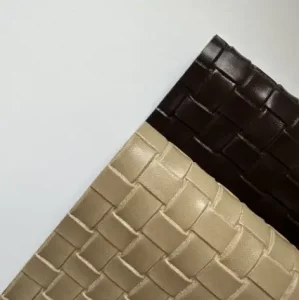
Explore initial technical references engineered at our Yingde smart facility. Each roll provides batch-to-batch colorimetric accuracy, precise tactile grain structure, and verified chemical compliance.


The Structural Transformation of Synthetic Leather Engineering
How green chemistry, volatile organic compound (VOC) elimination, and circular feedstock loops have redefined the benchmark for tier-1 industrial polymer membranes.
Solvent-Free & Water-Based Dispersions (PUD)
Traditional synthetic leather relied heavily on Dimethylformamide (DMF) and Methyl Ethyl Ketone (MEK) wet coagulation baths. The industry standard has shifted permanently toward 100% solid solvent-free PU and advanced Water-Based Polyurethane Dispersions (PUD).
Eliminating fugitive organic solvents during lamination achieves near-zero indoor VOC emissions, mitigating dermal toxicity and occupational hazards. This allows automotive and upholstery programs to satisfy stringent OEM fogging parameters (DIN 75201) and global green building certifications (LEED v4.1).
Bio-Based Carbon Feedstocks & ASTM D6866
Synthesizing polyurethane skins from renewable biomass—such as agricultural non-food corn starch, castor oil, and inedible industrial cane polyols—replaces fossil petrochemical chains with sequestered atmospheric carbon.
Using high-precision Accelerator Mass Spectrometry (AMS) according to ASTM D6866 Method B, our bio-based content is analytically verified from 25% up to 60%. This drop-in polymer structure delivers identical mechanical elasticity, micro-porous breathability, and flex-fatigue life without depleting petroleum reserves.
Closed-Loop Recycled Backing Substrates (RCS / GRS)
The structural tensile integrity of high-grade PU leather depends directly on its underlying textile matrix. Moving beyond virgin synthetic warp knits, enterprise supply agreements now prioritize post-consumer recycled polyethyleneterephthalate (rPET).
Mechanically processed from reclaimed ocean and land plastic bottles, our microfiber and woven backing textiles hold official Textile Exchange Recycled Claim Standard (RCS) and Global Recycled Standard (GRS) chain-of-custody verification, providing full batch traceability from fiber shredder to rolled fabric.
Macro-Industry Technical Solutions & Specification Thresholds
Sourcing managers face distinct regulatory hurdles across various target segments. Our specialized chemical formulations match the exact physical-chemical requirements of each category.
Automotive Cockpit & Seating Tier-1
Demands superior weatherability, anti-aging stability, and stringent flammability ratings. Articles undergo hydrolytic testing under harsh climates (Jungle Test: 70°C, 95% RH for 10–14 weeks) without micro-cracking or resin delamination.
Passing FMVSS 302 flammability and VDA 270 olfactory sensory appraisals ensures long-term seating stability across global climate zones.
High-Fashion, Handbags & Footwear
Requires balanced drape, grain elasticity, and sharp edge-fold paint retention. Our micro-buffed synthetic skins mimic genuine calfskin grain patterns, from linear toothpick patterns to heavy pebbled mill structures.
Tested to 150,000+ Martindale abrasion cycles (ISO 12947) and -25°C Bally dynamic cold flex tests, ensuring resistance to high strain during athletic manufacturing and daily flex wear.
Commercial Healthcare & Hospitality
Healthcare facilities and high-traffic hospitality environments require resistance to aggressive hospital-grade chemical disinfectants, isopropyl alcohol wipes, and bleach solutions.
Equipped with non-migratory antimicrobial treatments (ISO 22196 / JIS Z 2801) and meeting California TB 117-2013 and BS 5852 Crib 5 fire requirements, our technical skins resist premature stiffening and bacterial colonization.
| Performance Characteristic | Standard Test Method | JX.ECO Premium Solvent-Free / Bio | Traditional DMF-Based PU | Compliance Benefit |
|---|---|---|---|---|
| Total VOC & DMFa Content | EN ISO 18218-2 / GC-MS | < 5 ppm (ND / Non-Detectable) | 150 – 800 ppm | REACH SVHC Exempt |
| Hydrolysis Resistance (Jungle) | ASTM D3690 (70°C, 95% RH) | 8 to 12 Years Equivalent (No peel) | 3 to 5 Years Max | Extended Warranty Lifecycle |
| Abrasion Endurance (Dry/Wet) | ISO 12947-2 (Martindale) | > 100,000 to 200,000 Cycles | 30,000 to 50,000 Cycles | Extreme Duty Longevity |
| Carbon Footprint Index (LCA) | ISO 14040/44 Cradle-to-Gate | 40% – 65% Reduced CO2e/m² | Baseline Hydrocarbon Index | Scope 3 GHG Reductions |
| Cold Bally Flex Performance | ISO 5402-1 (-20°C to -30°C) | > 80,000 Flexes Without Crack | < 25,000 Flexes (Brittle) | Alpine Climate Ready |
Global Enterprise Compliance & Testing Protocols
We provide full audit readiness. Sourcing synthetic leather involves strict chemical due diligence to safeguard brands against recalls and customs penalties.
European Union: REACH & RoHS Assurances
All finished lots are formulated in strict adherence to EU Regulation (EC) No 1907/2006 (REACH), confirming complete absence of substances on the Candidate List of Substances of Very High Concern (SVHC).
Testing screens for over 230 restricted hazardous agents, guaranteeing zero prohibited alkylphenol ethoxylates (APEO), cadmium, lead, hexavalent chromium, organotin catalysts, or short-chain chlorinated paraffins (SCCP).
North America: Prop 65 & 6P Phthalate Controls
Complies with California Proposition 65 without requiring consumer warning labels. Formulations eliminate regulated ortho-phthalate plasticizers commonly found in lower-tier artificial vinyl or coated fabrics.
Certified free from DEHP, DBP, BBP, DINP, DIDP, and DnOP below 50 ppm detection levels, ensuring safe skin contact for juvenile apparel, footwear, and consumer wearables.
Environmental Facility Audits: Higg & ISO
Our 135,733 m² campus maintains continuous audited certification across ISO 9001 (Quality Management), ISO 14001 (Environmental Systems), and ISO 45001 (Occupational Safety).
We actively participate in the Higg Facility Environmental Module (Higg FEM) and amfori BSCI platform, ensuring documented energy metering, thermal recovery, closed-circuit industrial wastewater treatment, and ethical workforce conditions.
Technology Roadmap: The Future of Circular Polyurethane
Our material roadmap aligns your pipeline with forthcoming ESG directives, including the EU Ecodesign for Sustainable Products Regulation (ESPR) and global corporate Scope 3 requirements.
High Bio-Concentration PU Membranes
Scaling commercial synthesis of ASTM D6866 bio-based content past 55% through non-edible agricultural lignocellulose and fermented agricultural waste polyols, avoiding displacement of food crops.
CO2-Mineralized Polyol Incorporation
Integrating carbon capture and utilization (CCU) polyols directly into the polyurethane reaction matrix, capturing flue gas CO2 to create stable polyether carbonate polyols for seating skins.
Monomaterial Closed-Loop Circularity
Engineering 100% monomaterial circular PU solutions where both the top surface resin and backing textile use identical polyurethane chemistry, enabling clean mechanical and chemical recycling without delamination.
Enzymatic Depolymerization & Self-Repair
Formulating reversible covalent networks (vitrimers) that allow self-healing of micro-surface scuffs with mild thermal application, combined with programmed enzymatic end-of-life depolymerization.
Technical & Commercial Frequently Asked Questions (FAQ)
Specific, data-driven clarifications directly addressing polymer selection, testing validation, supply chain parameters, and custom factory formulations.
How does solvent-free PU structurally differ from water-based PU (PUD)?
Solvent-free PU uses 100% liquid prepolymer resins that react and cure directly onto the textile backing without liquid carrier solvents. Water-based PU (PUD) emulsifies polyurethane particles in water. Solvent-free yields thicker coatings, higher tear resistance, and zero solvent recovery requirements, while water-based PUD is ideal for ultra-thin, breathable, soft-drape apparel applications.
How is bio-based carbon verified versus misleading marketing claims?
Bio-based content must be validated via radiocarbon isotope dating according to ASTM D6866 or EN 16640. This analyzes the ratio of Carbon-14 (found in modern biomass) to Carbon-12 (found in fossil petrochemicals). We furnish third-party accredited laboratory test reports with every bio-formulation, establishing exact percentage claims for product hangtags.
Can you provide official RCS and GRS Transaction Certificates (TCs)?
Yes. Our manufacturing facilities are fully audited by Textile Exchange-accredited third-party registrars. Upon dispatch of bulk production lots using RCS-certified recycled polyester or nylon backings, we issue official Transaction Certificates (TCs) linking our facility directly to your manufacturing entity to ensure supply chain transparency.
What is the standard minimum order quantity (MOQ) and production turnaround?
For custom formulation matching (specific color pantones, custom roller grains, tailored backing weights, and performance additives), the standard pilot MOQ is 500 to 1,000 linear meters per color. Lab-dip and strike-off swatches are delivered within 5–7 business days, with full commercial container production dispatched within 15–20 days.
How does your synthetic leather perform against genuine leather in LCA?
Independent Life Cycle Assessments (LCA) conducted in line with ISO 14040/44 demonstrate that our solvent-free, bio-based PU materials reduce cradle-to-gate Global Warming Potential (GWP) by 60% to 75% compared to bovine leather. The process eliminates livestock methane emissions, toxic chromium tanning baths, and heavy water consumption.
Can you engineer specific tactile, haptic, and physical functional treatments?
Yes. Our in-house technical lab engineers surface characteristics, from dry buttery lambskin textures to wet-touch silicone finishes. Additive masterbatches include non-leaching antimicrobial coatings, stain-repellent fluorocarbon-free barriers, UV stabilizers, anti-scratch topcoats, and conductive anti-static properties.
High-Performance Eco-Synthetic Articles: Batch 02
Review additional certified bio-based, recycled, and low-impact solvent-free articles from our factory. Request cut swatches, custom master coils, or complete engineering spec sheets.