
Next-Gen Sustainable Leather Solutions
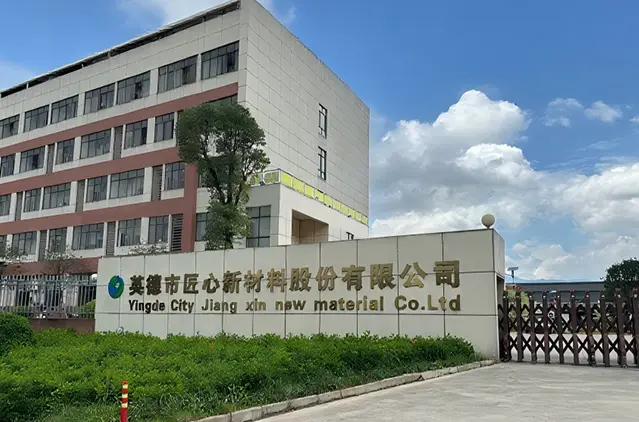
Engineered via advanced solvent-free reaction lines and plant-derived polymer substitution. Direct specification from our 135,733 m² clean manufacturing campus.
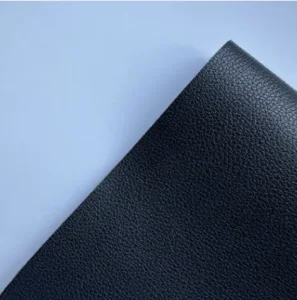
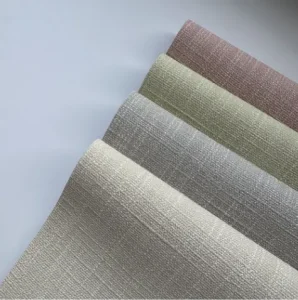
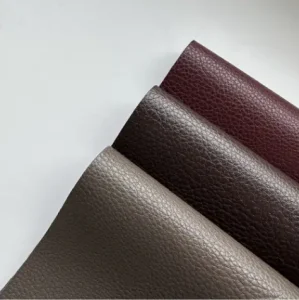
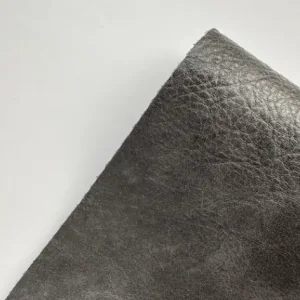
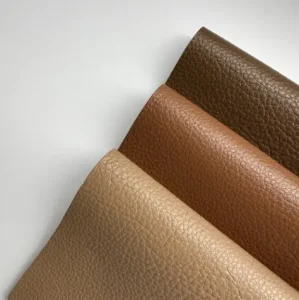
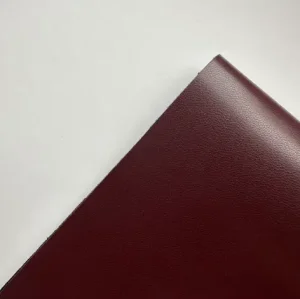
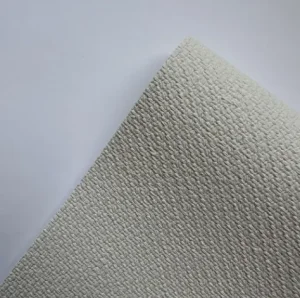
The Macro Paradigm Shift: Next-Generation Faux & PU Synthetics
Decarbonization mandates, extended producer responsibility (EPR), and corporate Scope 3 audits are systematically transforming global synthetic material procurement.
Fossil Carbon Substitution
Traditional petrochemical PU coatings rely heavily on fossil-derived polyols and isocyanates. Advanced chemical integration now utilizes USDA BioPreferred-certified renewable feedstocks (corn starch, castor oil, and agricultural biomass), replacing up to 60% of conventional organic carbon with non-food competing precursors.
Solvent Elimination & Zero-VOC
The elimination of Dimethylformamide (DMFa), toluene, and methyl ethyl ketone (MEK) has graduated from an optional premium to a legal baseline under EU REACH annexes. Water-based (WPU) dispersion systems and 100% solids solvent-free reactive extrusions guarantee zero workplace vapor risk and near-zero VOC emissions in enclosed end-use spaces.
Audited Chain-of-Custody
Greenwashing legislation across Europe and North America demands rigorous physical mass balancing. Modern leather manufacturing requires verifiable chain-of-custody tracking under the Recycled Claim Standard (RCS) and Global Recycled Standard (GRS), providing third-party Transaction Certificates (TC) down to yarn and pellet origin.
R&D Roadmap: Transitioning from Traditional PU to Circular Synthetics
Continuous evolution in chemical formulations and processing infrastructure drives our technical edge over conventional synthetic leather manufacturers.
Wet and dry process DMF-based PU. Known for soft drape and uniform grain, yet burdened by severe carbon intensity, high wastewater remediation expenses, and trace chemical residues.
Aqueous PUD coatings using zero toxic organic solvents. Delivers superior breathability, neutral skin-contact metrics, and compliance with the most stringent infant and apparel toxicology tests.
100% solid reactive coating without volatile carriers. Combined with plant-derived renewable polyols (20%–50% Biobased content) verified through ASTM D6866 radiocarbon analytical dating.
Cross-linked circular thermoplastic formulations pairing PU top-skins with 100% post-consumer rPET substrates. Designed specifically for single-stream mechanical and chemical textile recycling at garment end-of-life.
China Factory 4.0: Precision Process Controls & Infrastructure
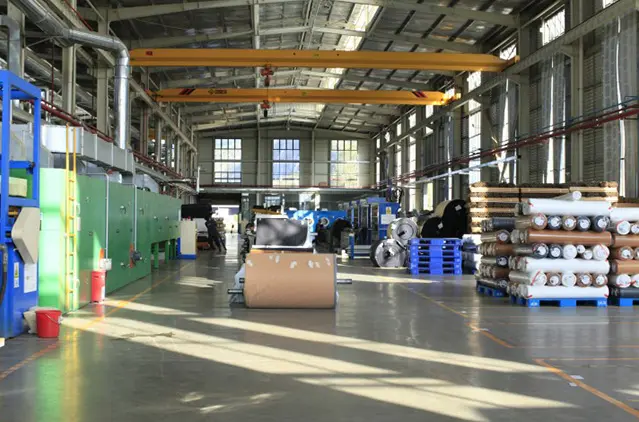
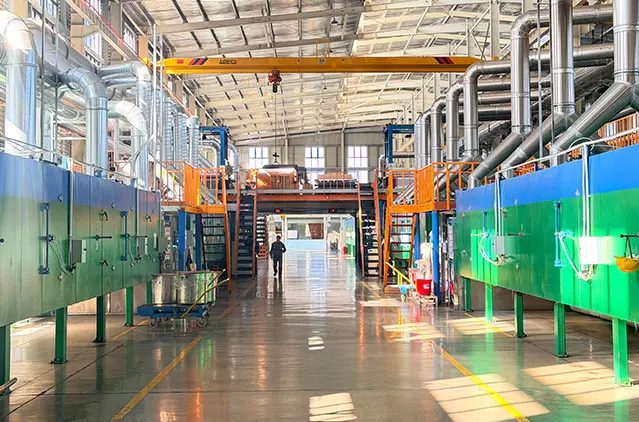
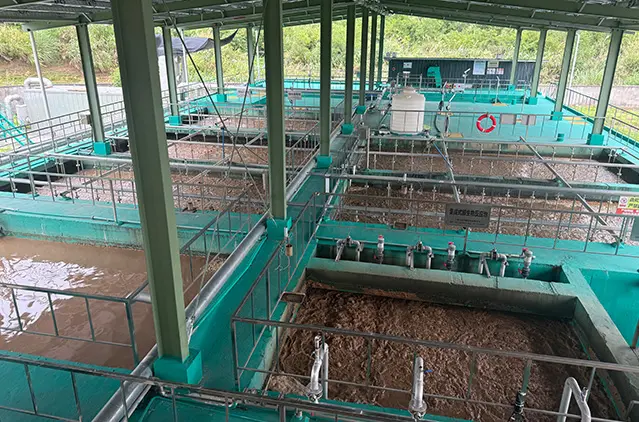
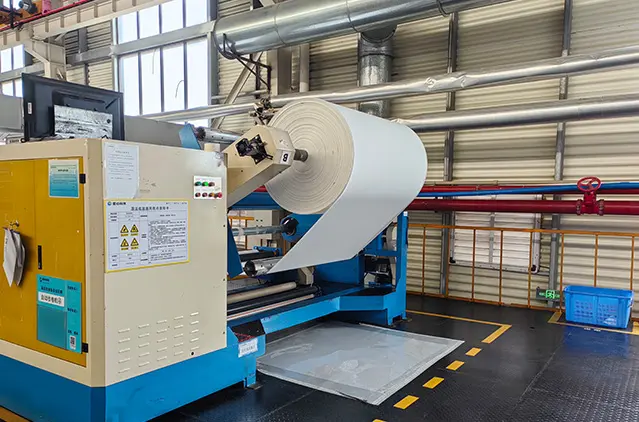
Located in Yingde, Guangdong, our facilities run fully integrated high-speed automated dry lines, solvent-free reactors, and centralized environmental treatment units.
Digital Color & Viscosity Tuning
Automated dosing carousels measure pigments, crosslinkers, and flame retardants within ±0.05% tolerance. Inline delta-E spectrophotometers eliminate lot-to-lot shade variation before master rolls are spun.
Closed-Loop Waste Heat Recovery
Thermal regenerative oxidizers (RTO) achieve 99.2% VOC destruction efficiency. Captured thermal energy is piped directly back into drying tunnels, reducing overall natural gas consumption by 38%.
End-to-End Substrate Traceability
Substrates ranging from recycled post-consumer PET canvas to biobased microfiber are tracked with scannable barcode tokens, logging mill origin, needle punching density, and tensile certifications per meter.
Engineered Sector Solutions: Stress Performance Tailoring
A single PU formulation cannot serve an athletic boot and a contract sofa. We engineer surface coatings to withstand precise mechanical stresses.
Athletic Footwear
Engineered for high flex-crack thresholds (-20°C cold-crack tests > 100,000 cycles). Extreme peel-strength bonding for bonded outsoles, puncture-resistant TPU skin options, and dynamic moisture wicking backings.
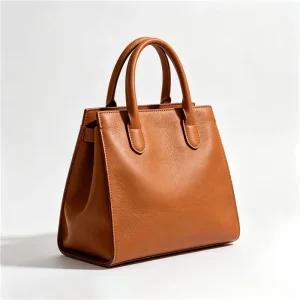
Luxury Handbags & Cases
Authentic tactile pebble grain, toothpick patterns, and split-look crusts. Formulated with color fastness against UV light exposure (Grade 4.5+), superior seam fatigue limits, and zero edge-paint migration risks.
Automotive Interiors
Hydrolysis-resistant polycarbonate PU surfaces exceeding Jungle Test requirements (10+ weeks at 70°C, 95% RH). Low-fogging chemistry (DIN 75201-B), flame retardancy (FMVSS 302), and ultra-low odor limits.
Apparel & Soft Accessories
Drape-friendly ultra-thin thicknesses (0.45mm – 0.70mm) matching lambskin softness. Machine-washable, perspiration-resistant, and free from volatile plasticizers that cause stiffness over extended wear cycles.
Technical Procurement Specification Reference
Comprehensive physical and chemical tolerances maintained across our OEM and custom contract production batches.
| Evaluation Parameter | Standard Test Protocol | Commercial PU Range | JX.ECO Certified Standard |
|---|---|---|---|
| Biobased Carbon Fraction | ASTM D6866-22 Method B | 0% (Standard Fossil) | 20% – 50% Measured Bio-Carbon |
| Post-Consumer Recycled Content | RCS / GRS Certification Scheme | Variable / Uncertified | 30% – 100% Traceable rPET Substrate |
| Accelerated Hydrolysis Resistance | Jungle Test (70°C, 95% RH) | 3 – 5 Weeks (Premature peeling) | 7 – 10+ Weeks (Polycarbonate systems) |
| Bally Flex Endurance | ISO 5402-1:2017 (Dry / -10°C) | 20,000 – 50,000 Flexes | 100,000+ Cycles (Zero Micro-Fissures) |
| Martindale Abrasion Resistance | ISO 12947-2 (12 kPa load) | 25,000 Rubs | 50,000 – 100,000+ Dry Rubs |
| Hazardous Solvent Residual (DMFa) | EN ISO 16189:2021 Extraction | Up to 500 ppm | < 5 ppm / Undetectable (Solvent-Free) |
| Phthalate Content (6P Screening) | CPSC-CH-C1001-09.4 | < 1000 ppm standard | Zero Detectable (ND) Phthalate Plasticizers |
Compliance Validation: Independent Testing & Auditing
Direct alignment with international Restricted Substance Lists (RSL), verified via annual multi-tier certification regimens.





EU REACH & RoHS Compliance
Every roll leaving our facility is certified free of candidate list Substances of Very High Concern (SVHC) exceeding 0.1% w/w. Heavy metals, chlorinated alkanes, and organotin compounds are excluded at compounding.
OEKO-TEX & 6P Phthalate Limits
Tested and audited under Standard 100 Class I/II criteria for direct skin exposure and sensitive consumer goods. Strict non-ortho-phthalate processing eliminates plasticizer leeching in extreme heat and humidity.
amfori BSCI & Social Governance
Beyond material composition, enterprise purchasers must audit factory working environments. JiangXin maintains accredited amfori BSCI scores, fair wage records, and ISO 14001 environmental management certifications.
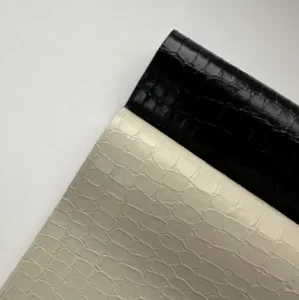
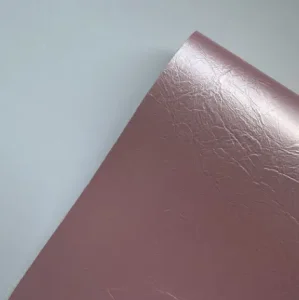
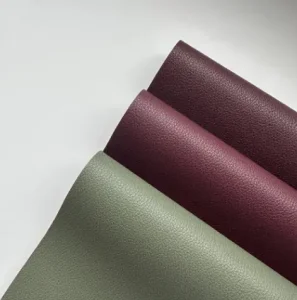
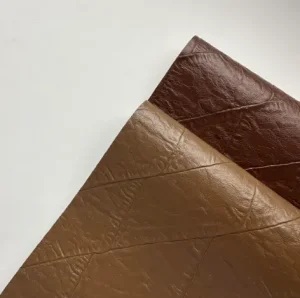
Advanced Texture & Specialized Custom Formulations
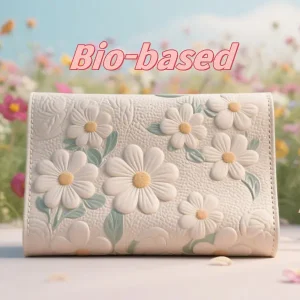
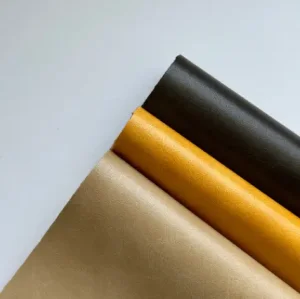
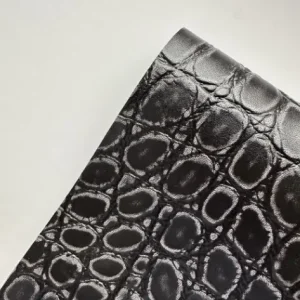
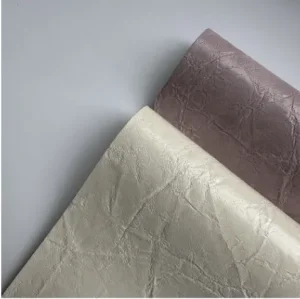
Explore references ready for custom caliper (0.5mm – 2.2mm), bespoke backing cloths, metallic finishes, and tailored grain embossings.
Technical & Sourcing FAQ: Procurement Intelligence
Direct technical answers addressing physical properties, certifications, MOQs, and lead-time guarantees.
We specialize in three technical categories: (1) Biobased synthetic leather integrating plant-derived polyols (USDA BioPreferred compliant), (2) RCS-certified circular leather featuring traceable recycled post-consumer rPET substrates, and (3) 100% solvent-free and aqueous water-based (WPU) polyurethanes delivering ultra-low VOC performance.
Biobased content is quantified via radiocarbon dating in accordance with ASTM D6866-22 Method B. This distinguishes renewable plant-derived modern carbon (C-14) from fossil hydrocarbon precursors. Individual batch test reports and USDA certification dossier certificates accompany every qualifying formulation.
Yes. Operating as an audited facility under the Textile Exchange Recycled Claim Standard (RCS), we initiate official transaction certificate (TC) filings through accredited inspection bodies (e.g., IDFL or Intertek) upon completion of designated production roll shipments.
Standard development swatches and hand-feel sample lengths (3–5 meters) are dispatched within 48 to 72 hours. Custom colorway lab-dips take 5 business days. Production runs require a baseline MOQ of 500 to 1,000 linear meters per color/grain combination, with typical container lead times of 12 to 18 calendar days.
For demanding footwear, transit, and automotive seating applications, we formulate polycarbonate (PC) and polycaprolactone-modified polyurethanes capable of withstanding 7- to 10-week Jungle Tests (70°C at 95% relative humidity), translating to 8 to 12 years of real-world operational service without surface flaking.
Conventional dry-process leather relies on dissolving PU resin in DMFa or MEK solvent systems, requiring intensive thermal evaporation ovens that inevitably leave chemical residues. Solvent-free PU utilizes two-component (100% solid) reactive polyurethane pre-polymers that cross-link directly onto the substrate, eliminating toxic carrier solvents entirely.