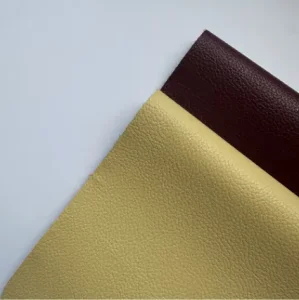
Direct-from-Factory Textured PU Leather Specifications
Explore our signature tactile embossings ranging from ultra-fine nappa and toothpick cross-hatch grains to botanical textures. Each reference maintains zero-solvent emissions, customized substrate tension, and lab-certified flex resistance.
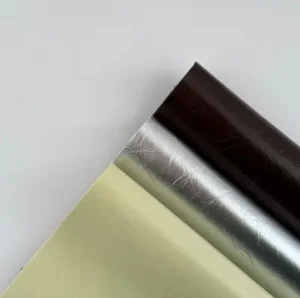
OEM Sustainable Eco-Friendly Faux Leather-0195 Manufacturers, Supplier
Inspect Batch Specs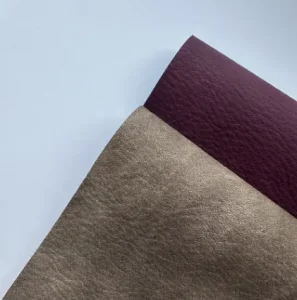
OEM Low Odor Bio-Based Vegan Leather-9237 Suppliers, Factory
Inspect Batch Specs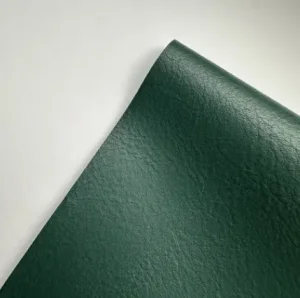
OEM Plant-Derived Bio-Based Synthetic Leather-9106 Manufacturer, Factory
Inspect Batch Specs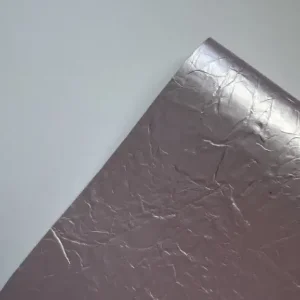
High-Quality Sustainable Eco-Conscious Synthetic Leather-0039 Supplier, Factories
Inspect Batch Specs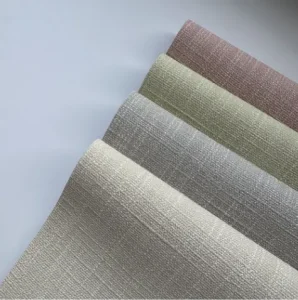
OEM RCS Verified Recycled Sustainable Synthetic Leather-9384 Manufacturer, Supplier
Inspect Batch Specs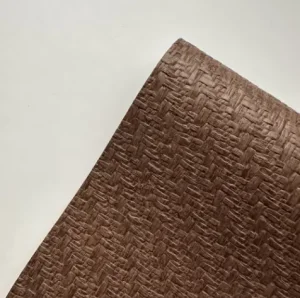
Wholesale Bio‑Based Renewable Synthetic Leather-9339 Manufacturers, Supplier
Inspect Batch Specs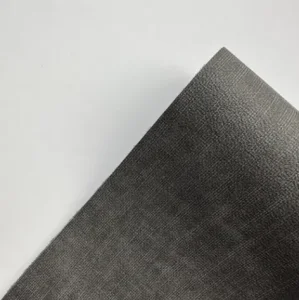
High-Quality Plant-Sourced Bio-Based Renewable Synthetic Leather-9103 Suppliers, Factories
Inspect Batch Specs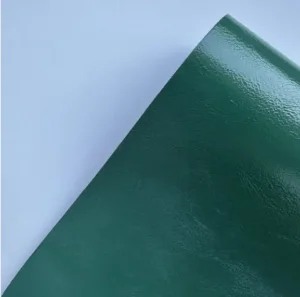
High-Quality Low‑Impact Green Sustainable Synthetic Leather-9333 Manufacturers, Factories
Inspect Batch SpecsEnterprise Sourcing Demands for Textured PU Leather
Global supply chain leaders no longer treat textured polyurethane leather as a mere cosmetic substitute for bovine hides. Modern procurement focuses on physical durability, tactile authenticity, zero VOC emissions, and strict chain-of-custody compliance.
The shift in industrial sourcing across Europe, North America, and East Asia reflects severe structural pressure on natural hide supply chains. Tanning tanneries face unprecedented regulatory scrutiny under EU Reach SVHC regulations and the Deforestation-Free Regulation (EUDR). Simultaneously, global brands are committed to ambitious Scope 3 greenhouse gas emissions reductions. Textured PU leather (polyurethane synthetic leather engineered with calibrated grain embossing) solves these dual challenges by matching the viscoelastic tactile profile of top-grain leather while cutting lifecycle carbon impacts by up to 68%.
However, enterprise-grade sourcing introduces complex technical metrics. Sourcing directors at major footwear conglomerates, luxury luggage houses, and Tier-1 automotive interior suppliers mandate verifiable grain retention over 100,000 Martindale rub cycles, zero delamination under accelerated hydrothermal testing (Jungle Test at 70°C and 95% relative humidity for 10 to 14 weeks), and utter absence of prohibited plasticizers such as ortho-phthalates.
Grain Fidelity & Memory Retention
Traditional PVC or low-density PU loses surface grain depth when stretched across shoemaking lasts or luggage corners. Our vacuum-calendered micro-embossing preserves texture geometry even under 35% multidirectional mechanical elongation.
Cutting Yield & Manufacturing Velocity
Natural bovine hides yield merely 60% to 72% usable surface area due to neck wrinkles, brand scars, and edge flaws. JiangXin continuous 54-inch (1.37m) rolls provide 98.5% automated CAD/CAM cutting yields, maximizing line efficiency.
Restricted Substance List (RSL) Immunity
Engineered with waterborne aliphatic PU dispersions and solvent-free reactive polyurethane hot-melts. 100% free of DMFa, DMFu, NMP, organotins, formaldehyde, and heavy metal colorants, easily surpassing strict brand onboarding thresholds.
Cross-Sector Engineering Deployments
Different industries present unique mechanical wear profiles, flammability standards, and tactile expectations. JiangXin engineers tailored grain matrices and backing substrates specifically optimized for each vertical sector.
| Vertical Industry | Grain Configuration | Physical / Chemical Target | Backing Substrate System | Standard Certifications |
|---|---|---|---|---|
| Athletic & Technical Footwear | Toothpick pattern, technical hexagonal grid, milled pebble grain | Bally Flexometer: >150,000 cycles at -10°C; High tear strength >3.5 kg/mm | High-density recycled microfiber, recycled circular knit (RCS certified) | ASTM D6866, RCS 2.0, SATRA TM25, GRS |
| Luxury Bags & Small Leather Goods | Fine nappa, classic saffiano, botanical foliage, alligator grain | Taber Abrasion (CS-10 wheel, 1kg): >3,000 cycles with no color bleed; anti-creasing | Solvent-free spunlace non-woven fleece, twill cotton, biobased viscose | REACH SVHC 235+, California Proposition 65, 6P Phthalate Free |
| Contract & Hospitality Upholstery | Heavy pebble, distressed pull-up, coarse saddle leather grain | Wyzenbeek: >100,000 double rubs; Antibacterial ISO 22196; Stain-proof top-coat | Flame-retardant brushed jersey, reinforced woven RPET | CAL 133, BS 5852 Crib 5, IMO FTP Code Part 8 |
| Consumer Tech & Smart Wearables | Micro-fine matte, optical frosted, fingerprint-resistant satin | Hydrolysis resistance (Jungle Test 10 weeks); Skin cytotoxicity pass ISO 10993 | Ultra-thin 0.4mm microfiber suede, stretch spandex matrix | RoHS 2.0, Halogen-Free IEC 61249-2-21, REACH |
In footwear manufacturing, our Toothpick Pattern Synthetic Leather eliminates traditional toe-puff collapsing during toe-lasting operations. The high-modulus backing matrix absorbs automated lasting tension without surface orange-peel artifacts. For luxury handbags, the embossed Saffiano and fine bovine textures utilize dual-tone cross-roller printing, capturing the optical depth and subtle gloss variance typical of hand-burnished aniline tanneries.
Technical Roadmap: Chemistry, Embossing & AI Quality Control
Achieving tactile authenticity without petroleum reliance demands clean molecular synthesis, laser-carved grain replication, and closed-loop thermodynamic manufacturing.
1. Bio-Polyol Synthesis
Substituting petroleum-derived polyols with non-food agricultural biomass (castor bean oil, agricultural seed waste). Carbon-14 radiocarbon measurement under ASTM D6866 confirms biobased carbon contents up to 50% without compromising tensile integrity.
2. Solvent-Free Coagulation
Transitioning completely away from Dimethylformamide (DMF) to 100% solids reactive polyurethane hot-melt or waterborne polyurethane dispersion (PUD). This eliminates hazardous VOC point-source emissions while preventing solvent retention in micro-crevices.
3. Laser-Etched Embossing
Embossing rollers are etched using 3D laser-ablation scanning taken directly from heritage bovine hides. Dynamic dual-temperature calendar rollers cure the skin layer under micro-controlled pressure to lock the grain at a molecular density of 1.18 g/cm³.
4. In-Line Computer Vision
Continuous 8K line-scan optical sensors inspect every linear meter during high-speed winding. The AI defect detection model flags grain distortion, pinhole voids, gloss inconsistency, and thickness variations beyond ±0.03mm in real-time.
Next-Generation Development: Circular Recycled Closed-Loop
JiangXin's engineering roadmap incorporates up to 100% recycled polyester (rPET) derived from post-consumer plastic beverage containers into our warp-knitted and non-woven backing matrices. Each linear meter of our RCS-certified synthetic leather diverts approximately 14 standard 500ml PET bottles from municipal landfill streams. Concurrently, our R&D division is scaling thermoplastic polyurethane (TPU) textured surfaces that allow true mono-material recycling at the end of product life.
JiangXin New Material: Modern Clean-Tech Infrastructure
Established on June 2, 2017, in Yingde City, Guangdong Province, Yingde City JiangXin New Material Co., Ltd. (JX.ECO) represents the gold standard of modern, sustainable synthetic leather manufacture.
Spanning an immense 135,733 m² campus, our facility was engineered from the foundation to comply with rigorous international chemical and environmental safety protocols. Our production floors feature expansive floor-to-ceiling tempered-glass architecture that maximizes ambient daylighting while maintaining hermetically sealed cleanroom conditions for coating and laminating lines.
Environmental responsibility is deeply integrated into operational economics:
- Clean Renewable Energy: A 4.68 MW rooftop photovoltaic solar farm powers substantial production daytime electrical loads, mitigating grid coal dependence.
- Thermodynamic Heat Recovery: Enclosed oven baking exhausts channel through regenerative thermal oxidizers (RTO) and plate heat exchangers to preheat incoming fresh air, cutting natural gas thermal requirements by 42%.
- Closed-Loop Wastewater Treatment: An on-site biological treatment facility recycles industrial process water through tertiary reverse osmosis filtration, ensuring zero unauthorized environmental discharge.
- Social & Operational Audits: Certified under amfori BSCI social audit frameworks and ISO 9001 / ISO 14001 management systems, providing corporate governance clarity for multinational procurement.
Regulatory Shield & Localized Technical Support
Importing engineered faux leather across global jurisdictions demands airtight laboratory verification and continuous transactional documentation to avoid port holdups or consumer compliance penalties.
Chain-of-Custody (RCS / GRS)
Every production lot certified under Recycled Claim Standard (RCS) is accompanied by formal Transaction Certificates (TCs) issued directly by third-party certification bodies (e.g., Control Union or Intertek), tracking raw rPET flakes from recycling plant to final master roll.
Radiocarbon Biobased Testing
Verification under ASTM D6866 via accelerator mass spectrometry (AMS) differentiates modern biological carbon from fossil hydrocarbon feedstocks. Our compliance dossier provides testing reports matching specific brand purchase orders.
Global RSL Pre-Clearance
Pre-cleared against European Union REACH Annex XVII (SVHC lists), RoHS Directive 2011/65/EU, California Proposition 65 limits for heavy metals and phthalates, and OEKO-TEX Standard 100 skin-contact parameters for uncompromised global retail distribution.
Frequently Asked Questions for Sourcing Directors
Direct engineering answers to clarify material specification, minimum order quantities, custom mold fabrication, and compliance certification workflows.
What distinguishes textured PU leather from traditional textured PVC leather?
Can custom texture patterns and grain depths be engraved for proprietary OEM brand programs?
How does JiangXin substantiate biobased content claims for USDA BioPreferred hangtags?
What are the typical Minimum Order Quantities (MOQs) and bulk production lead times?
How does textured PU leather withstand severe hydrolysis and sweat contact in warm climates?
Eco-Certified Textured PU Roll Catalog
Certified recycled-content materials, plant-sourced renewable vegan leathers, and low-impact synthetic articles ready for bulk commercial ordering and custom slitting.
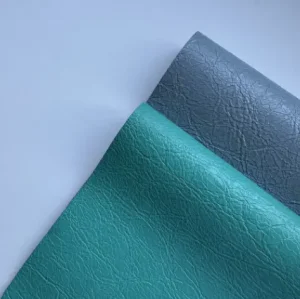
High-Quality Plant‑Derived Renewable Bio‑Based Synthetic Leather-9213 Supplier, Suppliers
Inspect Batch Specs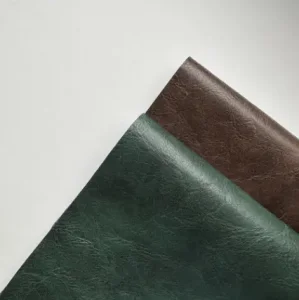
High-Quality Sustainable Recycled Synthetic Leather with Official RCS Certification-9240 Supplier, Suppliers
Inspect Batch Specs
High-Quality RCS Certified Recycled Sustainable Synthetic Leather-0138 Manufacturers, Factories
Inspect Batch Specs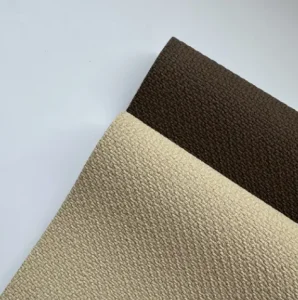
High-Quality RCS Qualified Recycled Green Synthetic Leather-9321 Suppliers, Factory
Inspect Batch Specs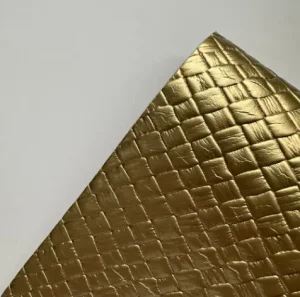
Custom RCS‑Verified Recycled‑Content Sustainable Synthetic Leather-9317 Manufacturers, Manufacturer
Inspect Batch Specs
Wholesale Bio-Based Renewable Synthetic Leather Supplier, Factory
Inspect Batch Specs
OEM Plant-Derived Renewable Bio-Based Synthetic Leather-2071 Manufacturers, Factory
Inspect Batch Specs