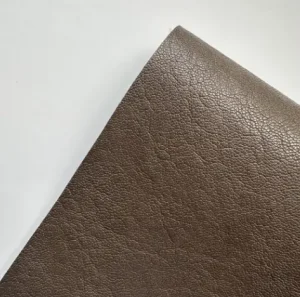
High-Performance Protective Synthetic Leather Materials
Explore our core volume-engineered materials featuring integrated hydrolysis barrier finishes, abrasion shielding, and verifiable carbon reduction.
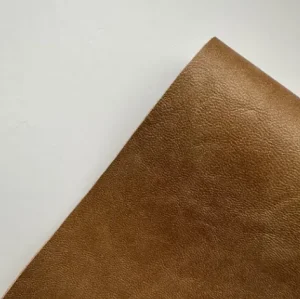
Custom Circular‑Focused RCS‑Verified Recycled Premium Synthetic Leather-0003
View Product Specs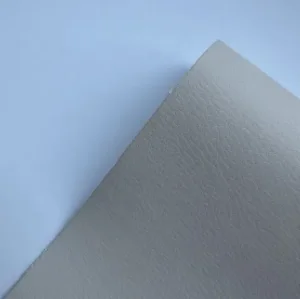
Wholesale RCS Verified Recycled Sustainable Synthetic Leather-2058
View Product Specs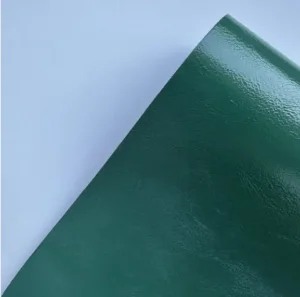
High-Quality Low‑Impact Green Sustainable Synthetic Leather-9333
View Product Specs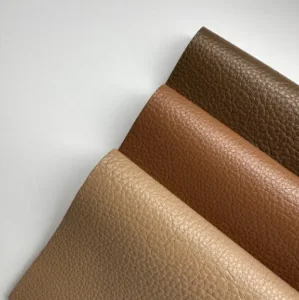
Custom RCS Recycled Synthetic Leather-9078 Manufacturer, Suppliers
View Product Specs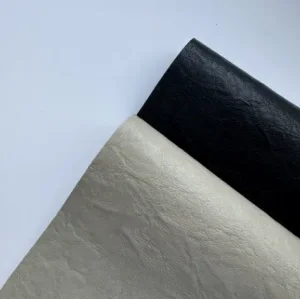
Custom RCS Recycled Substrate Synthetic Leather-9193 Supplier
View Product Specs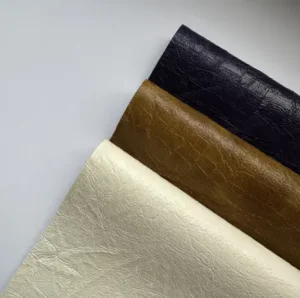
Wholesale Eco-Friendly Sustainable Synthetic Leather-9381
View Product Specs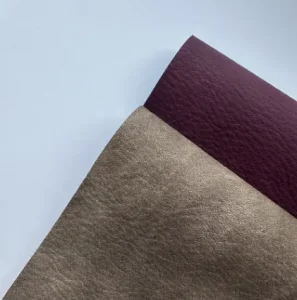
OEM Low Odor Bio-Based Vegan Leather-9237 Suppliers, Factory
View Product Specs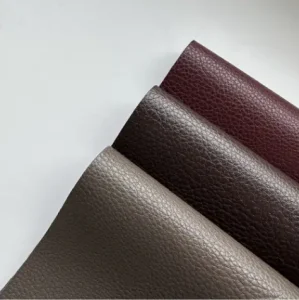
High-Quality Bio-Based Renewable Synthetic Leather-9078
View Product SpecsEvolution of Synthetic Leather Protectors & Engineered Barrier Topsheets
From petrochemical solvent-based lacquers to intelligent, solvent-free crosslinked nanostructures: how global manufacturing ecosystems are transitioning toward high-durability, eco-safe performance.
Phase 1: Solvent-Borne Chemistry
Traditional synthetic leather protection relied heavily on dimethylformamide (DMFa), methyl ethyl ketone (MEK), and toluene solvents to dissolve high-molecular-weight polyurethanes. While offering initial scratch resistance, these systems exhibited volatile organic compound (VOC) outgassing, skin irritation risks, and accelerated micro-cracking under prolonged thermal and UV stress.
- High residual DMFa toxicity (>50 ppm)
- Strict shipping & import RSL bans
- Rapid plasticizer migration & embrittlement
Phase 2: Waterborne & High-Solid PU
The second technological leap replaced organic evaporative solvents with aqueous dispersion polyurethane (PUD) systems and 100% solid reactive extrusion coatings. This development eliminated hazardous occupational exposure and sharply curtailed factory carbon emissions, satisfying mid-tier Tier-1 automotive and global athletic brand mandates.
- Zero detectable solvent emission (<5 ppm DMFa)
- Enhanced soft tactile recovery & flex fatigue
- REACH SVHC non-inclusion compliant
Phase 3: Circular Nanocomposites & Bio-Shields
Today's state-of-the-art protective top finishes synthesize renewable bio-polyols (derived from industrial non-food starch and plant oils) with covalently bonded silica/ceramic nano-matrices. These third-generation coatings provide impenetrable stain repellency, permanent flame resistance, and hydrolytic stability without toxic PFAS fluorochemicals.
- PFAS-Free C0 fluorocarbon-free surface repel
- ASTM D6866 verifiable bio-based content
- 10+ year jungle test anti-hydrolysis rating
Global B2B Sourcing Pain Points & Mitigation Strategies
Enterprise procurement directors in footwear, upholstery, aviation, and accessories face mounting regulatory bottlenecks, quality volatility, and supply chain disruptions.
1. Premature Surface Peeling & Hydrolysis
The Risk: Low-cost polyether or poorly crosslinked polyester PU degrade when exposed to humidity and human sweat, causing unrepairable flaking within 12–24 months in warm climates.
Factory Resolution: Yingde City JiangXin New Material Co., Ltd. (JX.ECO) integrates aliphatic polycarbonate-polyurethane topsheets capable of surpassing 10 weeks in rigorous Tropical Jungle Testing (70°C, 95% RH), equating to over 10 years of real-world endurance.
2. Customs Border Holds & RSL Non-Compliance
The Risk: Materials failing restricted substance lists (EU REACH SVHC, RoHS, California Prop 65, 6P Phthalates) trigger customs impounds, multimillion-dollar product recalls, and severe brand equity erosion.
Factory Resolution: Complete in-house analytical testing and locked formulation recipes ensure zero added phthalates, zero organotins, and total compliance with OEKO-TEX Eco-Passport guidelines before dispatch.
3. "Greenwashing" & Unverifiable Claims
The Risk: Brands claiming eco-leather face intense consumer and regulatory scrutiny without third-party traceability, leading to administrative fines under European Green Claims Directives.
Factory Resolution: Certified supply chains under the Textile Exchange Recycled Claim Standard (RCS) with official Transaction Certificates (TC) alongside ASTM D6866 radiocarbon validation for USDA BioPreferred listings.
Macro Industry Solutions: Multi-Tiered Performance Formulation
A breakdown of the precise chemical and physical engineering applied across JiangXin's 135,733 m² solar-powered production lines.
Molecular Hydrophobic Crosslinking
Traditional water-repellent coatings wear off under mechanical friction. JiangXin incorporates silane-modified waterborne aliphatic polyurethanes that build crosslinked silicon-oxygen covalent bonds right into the resin layer. This imparts permanent hydrophobic and oleophobic bead-repulsion properties without leach-prone topical sprays.
- Water contact angle exceeding 108°
- Zero chemical washing loss after 50 wash cycles
- Resistant to cosmetic sunscreen, denim transfer, and hot coffee
Thermoregulated Micro-Porous Backing
Protective synthetic leather must breathe to avoid moisture entrapment inside automotive cockpits or performance footwear. By leveraging coagulated micro-perforated microfiber and recycled polyester matrices, our materials offer moisture-vapor transmission rates (MVTR) that mimic genuine full-grain leather.
- Air permeability tuned up to 4.5 mg/cm²·h
- Supple drape and zero cold-cracking down to -30°C
- Optimized tensile strength for high-speed automated sewing
Low-Emission Clean Room Manufacturing
Manufactured within modern tempered-glass industrial buildings in Yingde, Guangdong. Utilizing closed-loop hot air recovery, catalytic thermal oxidizers, and an on-site wastewater biological processing facility, we eliminate upstream environmental liabilities for our global retail partners.
- Powered by 4.68 MW rooftop photovoltaic solar panels
- Amfori BSCI social audit compliant facility
- Audited annual capacity exceeding 16 million meters
Technical Specification & Performance Benchmark Matrix
Verified laboratory testing parameters illustrating the protective advantages of JiangXin engineered synthetic leather over conventional PVC and traditional solvent PU.
| Evaluation Parameter | Test Standard / Protocol | Standard Solvent PU | Conventional PVC Leather | JiangXin Engineered Shield (Eco PU / Bio) |
|---|---|---|---|---|
| Hydrolysis Resistance (Jungle Test) | 70°C, 95% Relative Humidity | 3 - 5 Weeks | 1 - 2 Weeks (Plasticizer Loss) | 8 - 12+ Weeks (Polycarbonate Matrix) |
| Martindale Abrasion Resistance | ISO 12947-2 (12 kPa load) | 30,000 - 50,000 Revs | 25,000 Revs (Cracks) | > 100,000 - 150,000 Revs (No Breakdown) |
| Taber Abrasion (Wear Cycles) | ASTM D3884 (CS-10 wheel, 1kg) | 1,000 Cycles | 800 Cycles | > 3,500 Cycles |
| Cold Flex Crack Resistance | ISO 5402 / Bally Flexometer | -15°C (30,000 flexes) | 0°C (Rigid / Fracture) | -30°C (> 100,000 flexes without crack) |
| Residual DMFa & VOC Levels | GC-MS Extraction | 30 - 100 ppm | High Phthalate Content | Non-Detectable (< 5 ppm / Zero Solvent) |
| Bio-Carbon Content Verification | ASTM D6866 Radiocarbon | 0% (Petroleum Only) | 0% (Petroleum Only) | 20% to 50%+ Verifiable Bio-Based Carbon |
| Flame Retardancy | FMVSS 302 / CAL TB 117-2013 | Requires Halogenated Additive | Self-Extinguishing (Releases HCl) | Eco Phosphorus-Nitrogen Self-Extinguishing |
Localized Support & International Compliance Assurance
Navigating global border controls with documented traceability, audit-ready facilities, and certified chemical safety profiles.
European Union: REACH & RoHS
Full conformance with Annex XVII SVHC lists, ensuring total exclusion of hazardous organotin compounds, short-chain chlorinated paraffins (SCCP), and polycyclic aromatic hydrocarbons (PAH).
North America: Prop 65 & EPA
Zero listed carcinogens or reproductive toxicants under California Proposition 65. Our protective finishes are free of orthophthalates (6P / 8P Free), lead, mercury, and toxic formaldehyde.
Textile Exchange: RCS Chain-of-Custody
Rigorous material tracking for GRS and RCS recycled products. Official Transaction Certificates (TC) issued at delivery to legitimize corporate environmental declarations.
Facility Audits: BSCI, Higg & ISO
ISO 9001 quality management, ISO 14001 environmental control, and Higg Index Facility Environmental Module (FEM) transparency to streamline Tier-1 supplier onboarding.
Synthetic Leather Protector Technology Roadmap (2025–2035)
Strategic R&D pathways established by JiangXin New Material to decouple surface performance from petrochemical dependency.
2025–2027: Carbon Capture Polymers
Commercialization of polyurethane polyols formulated utilizing captured industrial point-source carbon dioxide (CO2-based polyols). By substituting up to 30% of fossil feedstocks with sequestered carbon, this coating technology yields a net reduction of 1.2 kg CO2 equivalent per square meter of protective synthetic leather.
2028–2030: Self-Healing Vitrimer Surfaces
Development of dynamic covalent network polymers (vitrimers) that self-repair micro-scratches under gentle heat application or ambient UV rays. This technology extends luxury goods and automotive interior lifecycles by 300%, directly mitigating consumer waste.
2031–2035: Enzymatic Deconstruction Finishing
Pioneering fully circular protective barriers designed with chemical trigger points. At end-of-life, specialized natural biocatalytic enzymes break down the synthetic coating without compromising the underlying recycled textile substrates, enabling closed-loop roll-to-roll fiber recovery.
Technical Sourcing & Procurement FAQ
Direct engineering answers to the most common queries raised by material sourcing directors, QA inspectors, and ESG compliance leads.
Aftermarket aerosol sprays deposit a temporary topical fluoropolymer or silicone barrier that rubs off quickly under surface friction and washing. In contrast, factory-applied synthetic leather protective topcoats from JiangXin are crosslinked directly into the polyurethane resin matrix during the industrial heat-curing and coagulation phase, forming a permanent, molecularly integrated shield that resists decades of abrasion, solvent contact, and environmental weathering.
The Jungle Test is an accelerated aging benchmark conducted inside environmental chambers at 70°C and 95% relative humidity. One week inside this high-temperature, saturated-humidity environment mimics roughly one to two years of natural outdoor ambient aging in tropical territories. Standard PU leather delaminates around 3 weeks, whereas JiangXin polycarbonate-engineered barrier leathers survive 8 to 12 weeks with zero surface blistering or loss of tensile strength.
Yes. In response to global legislative bans targeting Per- and Polyfluoroalkyl Substances (PFAS) across the European Union and US states (such as California AB 1817 and Maine), JiangXin uses fluorine-free (C0) aqueous polymer chemistry. We leverage hybrid organosilicon and ceramic nanotechnology to achieve exceptional water beading, oil repellency, and denim dye-transfer defense without persistent halogenated compounds.
Bio-based claims are rigorously verified via isotope ratio mass spectrometry according to ASTM D6866. This test measures modern Carbon-14 originating from renewable agricultural feedstocks compared to fossil carbon. Our bio-based product references consistently test between 20% and 50%+ bio-carbon content, qualifying our partners for official USDA BioPreferred certification labeling.
Every export container leaves our Yingde factory with comprehensive documentation: a Certificate of Analysis (CoA) confirming tensile, tear, and abrasion specs; formal SGS or TÜV compliance test reports covering REACH SVHC and RoHS; safety data sheets (SDS); and official Textile Exchange Transaction Certificates (TC) for RCS-verified recycled deliveries.
Standard stock references and catalog swatches are dispatched within 24 to 48 hours for immediate design evaluation. For custom client tech packs requiring specific embossing grain matching, pantone colorways, thickness calibrations (0.6mm to 2.2mm), or specialized flame retardancy, our custom lab dips take 5–7 days, with bulk production MOQs starting at 500 to 1,000 running meters per color.
High-Spec Bio-Based, Plant-Derived & Eco-Conscious Materials
Explore custom-orderable protective references engineered with natural plant-derived polyols and circular substrate constructions.
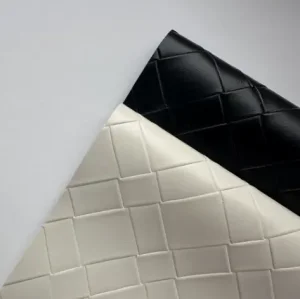
OEM Natural Plant-Derived Bio-Based Synthetic Leather-9338
View Product Specs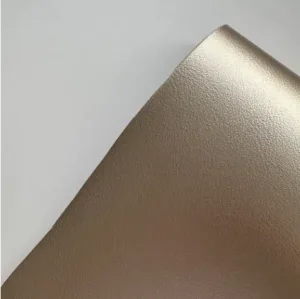
High-Quality Eco-Friendly Sustainable Synthetic Leather-9081
View Product Specs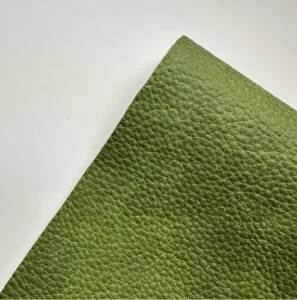
Custom Premium Sustainable Eco Synthetic Leather-9304
View Product Specs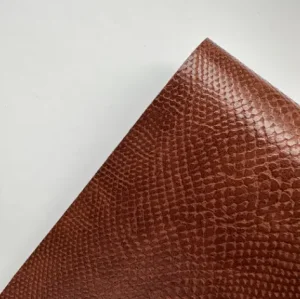
Custom RCS‑Verified Recycled Content Synthetic Leather-0041
View Product Specs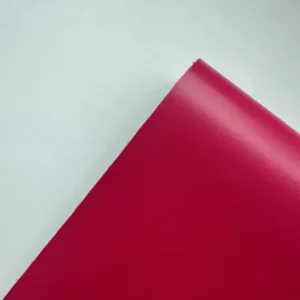
Wholesale Eco-Conscious High-Performance Synthetic Leather-0167
View Product Specs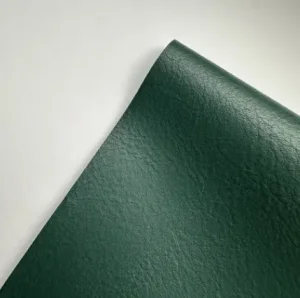
OEM Plant-Derived Bio-Based Synthetic Leather-9106 Manufacturer
View Product Specs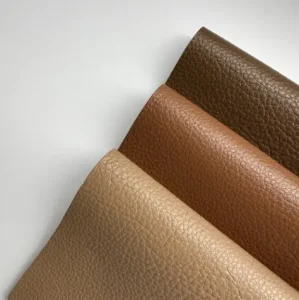
OEM Eco‑Friendly Sustainable Synthetic Leather-9078 Supplier
View Product Specs