
Certified Bio-Engineered & Recycled Leather References
Direct factory batch allocations featuring high-density microfibers, plant-derived carbons, and closed-loop coatings designed for international tier-1 fashion, automotive, and contract furniture programs.
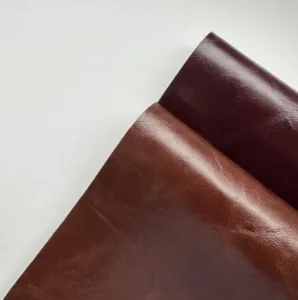
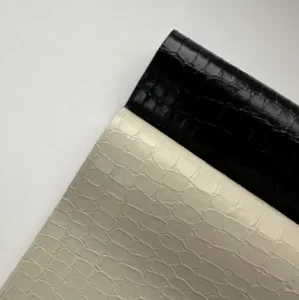
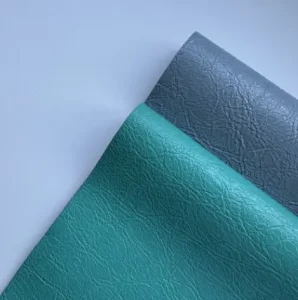
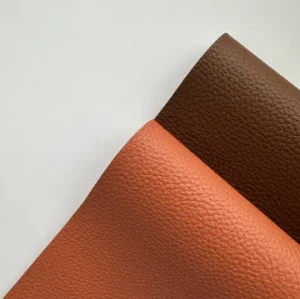

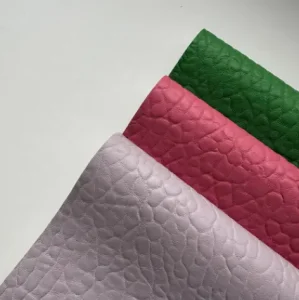
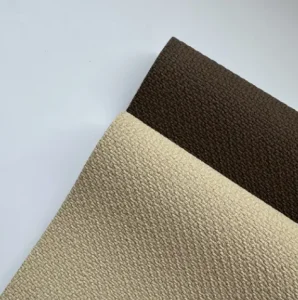
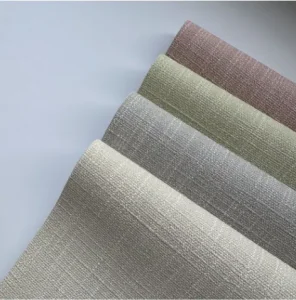
The Macro Paradigm Shift in Synthetic & Faux Leather Engineering
How regulatory pressures (EU CSRD, REACH SVHC, ESPR) and tier-1 ESG imperatives are rendering petroleum-derived legacy polymers obsolete in favor of bio-synthetics and certified post-consumer matrices.
The global faux leather and synthetic polymer landscape is navigating its most radical materials science disruption in five decades. Traditionally reliant on fossil-derived plasticizers and heavy solvent systems (such as wet-process N,N-Dimethylformamide or DMFa), international procurement executives now confront an aggressive regulatory horizon. The European Union's Ecodesign for Sustainable Products Regulation (ESPR), Corporate Sustainability Due Diligence Directive (CSDDD), and tightened Restricted Substance Lists (RSL) mandate that polymer substrates possess documented Life Cycle Assessments (LCAs), near-zero volatile organic chemical (VOC) profiles, and quantifiable circularity credentials.
As enterprise procurement shifts from superficial greenwashing to auditable chemical integrity, wholesale faux synthetic leather manufacturers must function not merely as raw material coaters, but as advanced materials research laboratories. The convergence of bio-based renewable polyols—synthesized from non-food agricultural waste, castor oil, and industrial starch—with post-consumer recycled (PCR) polyesters certified under the Recycled Claim Standard (RCS) provides brands with a mathematically defensible decarbonization roadmap without compromising tensile flexure, cold crack resistance, or hand-feel luxury.
Carbon Decarbonization Mandate
Global luxury holding groups and performance footwear conglomerates have established binding Scope 3 greenhouse gas reduction benchmarks for 2030. Bio-based synthetic leathers offer a 38% to 64% reduction in cradle-to-gate carbon footprints compared to petrochemical virgin PU and conventional chrome-tanned cattle hides.
Digital Product Passports (DPP)
Impending European customs protocols require roll-level material provenance. Our production lines integrate batch-coded isotopic markers and RCS Transaction Certificates (TCs), ensuring infallible transparency from raw pellet extraction to warehouse delivery.
Elimination of Solvent Hazards
The international market is rapidly transitioning toward 100% solvent-free polyurethane systems and waterborne dispersions, suppressing occupational exposure to dimethylformamide (DMFa) and toluene to non-detectable thresholds (< 2 ppm).
China Factory 4.0: Yingde Campus Engineering & Supply Chain Resilience
How JiangXin New Material Co., Ltd. (JX.ECO) pairs an expansive 135,733 m² solar-energized infrastructure with predictive automation to guarantee bulk delivery predictability and carbon accountability.
Clean-Tech Solarized Campus (4.68 MW Photovoltaic)
Established on June 2, 2017, in Yingde Industrial Park, Guangdong, the JX.ECO facility was engineered under rigorous clean-tech building safety codes. Featuring an expansive 4.68 MW distributed rooftop photovoltaic generation array, over 40% of baseline industrial heating, coating drive mechanisms, and ventilation draw clean renewable solar power directly on-site.
Floor-to-ceiling tempered glass workshops maximize passive ambient illumination while closed-loop exhaust gas condensing scrubbers collect and recycle 99.2% of airborne volatile organics, converting operational thermal energy back into heating cycles for dry-process coagulation lines.
Automated Tension, Coating & Thickness Control
Legacy synthetic leather frequently suffers from gauge variation across 1.37-meter widths. Our Industry 4.0 dry and solventless lines incorporate continuous beta-gauge radiometric sensors and closed-loop servomotor doctor blades that regulate film caliper variations within ±0.02 mm in real-time.
Multi-zone tension transducer control prevents structural grain distortion across circular knits, non-woven microfibers, and woven backing fabrics, delivering uniform elongation profiles indispensable for high-speed automated CNC shoe upper nesting and robotic cutting presses.
| Technical Performance Metric | Conventional Petroleum PU | Traditional PVC Faux Leather | JiangXin Bio-Based Polyurethane | JiangXin RCS Recycled Eco-Leather |
|---|---|---|---|---|
| Bio-Carbon Content (ASTM D6866) | 0% | 0% | 20% to 50%+ Plant-Derived | Configurable Bio-Hybrid |
| Post-Consumer Recycled Content | None (0%) | None (0%) | Up to 100% Recycled Backing | 30% – 100% Traceable RCS Base |
| Solvent Emissions (DMFa / Toluene) | Up to 500 ppm | Plasticizers & Chlorines | Zero / Non-Detectable (<2ppm) | Zero / Non-Detectable (<2ppm) |
| Hydrolysis Resistance (Jungle Test) | 3 to 5 Years | Brittle Cracking Risk | 7 to 10+ Years (Polycarbonate) | 5 to 8 Years Standard |
| Cold Flex Crack Resistance (-20°C) | 20,000 Cycles | Fails < 5,000 Cycles | > 80,000 Cycles | > 50,000 Cycles |
Cross-Sector Engineering: From Sneaker Vamps to Luxury Interiors
Tailoring molecular polymer weights, grain embossings, and backing substrates to withstand severe physical demands across diverse global commercial environments.
Athletic Footwear & Sneaker Vamps
Footwear demands extreme dynamic flex endurance and dynamic split tear strength. Formulated with high-rebound polycarbonate-polyether polyols, our bio-based footwear leathers exceed 100,000 flex cycles on Bally Flexometers at room temperature and over 30,000 cycles at -10°C, providing crease-free luxury vamps for trail runners and lifestyle sneakers.
Luxury Handbags & Small Leather Goods
Fashion goods demand dimensional drape, skiving compatibility, and high stitch-tear resistance. Micro-cellular coagulation techniques replicate the cross-sectional collagen bundles of calfskin, allowing brand patternmakers to achieve crisp edge-painting, clean creasing, and embossed grain fidelity across saffiano, pebble, or toothpick textures.
Apparel & Outerwear Fashion
Soft-touch, low-modulus synthetic leather engineered specifically for jackets, trench coats, skirts, and trim components. Formulated with breathable microporous surface finishes that facilitate micro-vapor diffusion while maintaining windproof and water-repellent protection that resists dry-cleaning solvents and machine laundering.
Commercial Hospitality & Contract Upholstery
High-traffic public seating, airport lounges, and hotel furnishings require extreme abrasion and flame retardancy. Our contract upholstery line integrates halogen-free fire retardants (complies with California TB 117-2013 and BS 5852 Crib 5) coupled with Martindale abrasion ratings surpassing 100,000 rubs without polyurethane breakdown.
Zero-Tolerance Compliance: Export Clearance Roadmaps
Navigating global border controls with verifiable testing protocols: REACH SVHC, RoHS, 6P Phthalate-Free, OEKO-TEX Standard 100, and Higg FEM validation.
Textile Exchange RCS Traceability
The Recycled Claim Standard (RCS) ensures verified tracking of recycled polyester (rPET) backings and recycled polyols from source shredding to delivered roll. Certified batch documentation guarantees that brand-side marketing claims remain legally robust against international greenwashing litigation.
USDA Certified Biobased Product Testing
Bio-carbon content is independently verified by accelerator mass spectrometry under ASTM D6866 standards. This measures the exact radiocarbon isotope (Carbon-14) ratio derived from modern organic feedstock versus fossil hydrocarbons, qualifying articles for USDA BioPreferred labeling.
EU REACH & 6P Phthalate-Free
Compliant with the latest Annex XVII restrictions of EU Regulation (EC) No 1907/2006. Formulations are verified free of toxic plasticizers including DEHP, DBP, BBP, DINP, DIDP, and DnOP, protecting infants and direct skin-contact applications across all export destinations.
Strategic Sourcing Directory: Technical QA for Tier-1 Buyers
In-depth answers addressing minimum order volumes, laboratory lead times, chemical formulations, colorimetric tolerance calibrations, and cross-border logistics.
What are the key chemical and structural differences between biobased PU, RCS recycled leather, and conventional synthetic leather?
How does JiangXin guarantee roll-to-roll color consistency and mechanical property tolerance in bulk wholesale production?
What is the standard Minimum Order Quantity (MOQ) and production turnaround timeline for custom-engineered specifications?
Can JiangXin supply official Transaction Certificates (TC) for brand programs requiring RCS chain-of-custody validation?
How does your synthetic leather perform under severe tropical humidity (Jungle Test) and cold climate conditions?
What export shipping options and roll packaging specifications do you support for containerized sea and air freight?
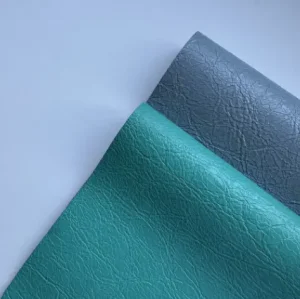
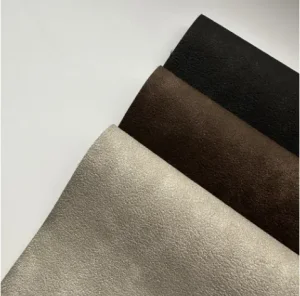
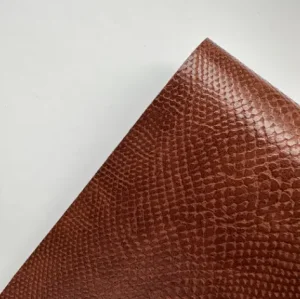
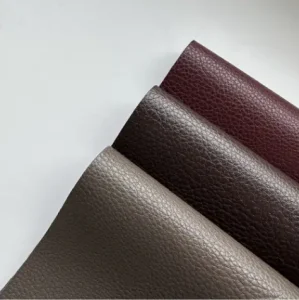
Advanced Wholesale Biobased & Recycled Formulations
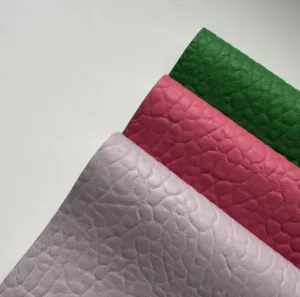
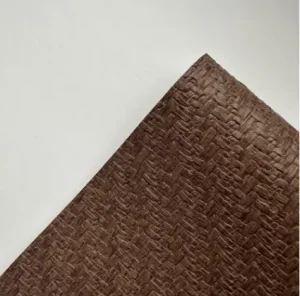
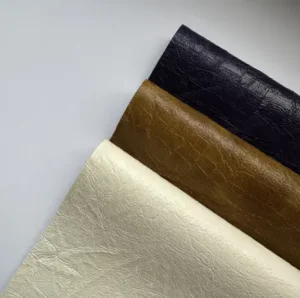
Complete your technical material bill-of-materials with our low-impact sustainable faux leathers, manufactured in accordance with strict physical test standards and clean chemical guidelines.

Technical Sourcing Workflow: From Concept Tech Pack to Container Delivery
A battle-tested 5-phase engineering protocol engineered to eliminate friction between brand design teams, compliance officers, and bulk production facilities.
01. Tech Pack & RSL Intake
Submission of physical target swatches, digital Pantone / RAL references, backing specifications, target thickness (0.6mm – 2.2mm), and chemical compliance requirements (REACH, USDA, RCS, California Proposition 65).
02. Laboratory Custom Strike-Off
Formulation of experimental resin slurries and doctor-blade trials in our Yingde lab. Physical A4 prototype swatches dispatched within 3 to 5 business days for grain embossing and hand-feel confirmation.
03. Physical & Chemical Validation
Comprehensive pre-production testing: Martindale abrasion (ISO 12947), flex fatigue (ISO 5402), seam slippage, and GC-MS gas chromatography for solvent residues to confirm complete compliance before coating initiation.
04. Pilot Run to Full Bulk Scale
Locked recipe parameters transferred to automated multi-zone coating lines. Real-time computerized monitoring ensures consistent batch replication with full traceability, backed by roll-by-roll inspection and export shipping documentation.