
Engineered Eco Leather Backing Materials: Series I
Direct from our 135,733 m² solar-powered production plant. Engineered with precision rPET knits, high-density bio-polyurethane skins, and ultra-durable eco-backings.
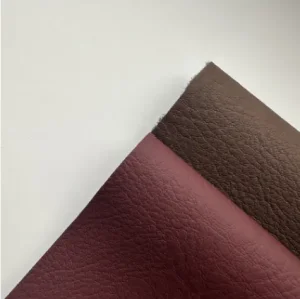
OEM RCS-Certified Traceable Recycled Synthetic Leather-9133
View Technical Specs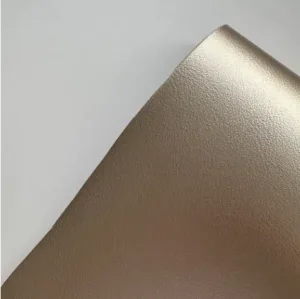
High-Quality Eco-Friendly Sustainable Synthetic Leather-9081
View Technical Specs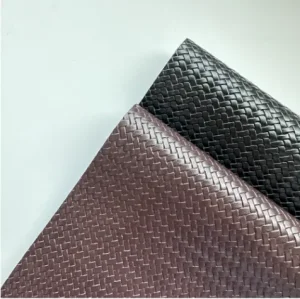
OEM Eco-Friendly Sustainable Synthetic Leather-9348
View Technical Specs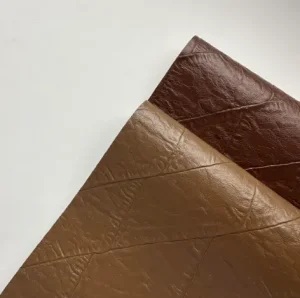
OEM Non-Toxic Vegan Eco Synthetic Leather-9266
View Technical Specs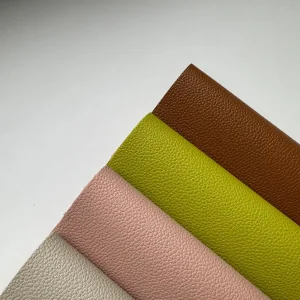
High-Quality Sustainable Eco-Friendly Faux Leather Supplier
View Technical Specs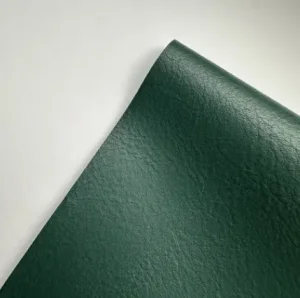
OEM Plant-Derived Bio-Based Synthetic Leather-9106
View Technical Specs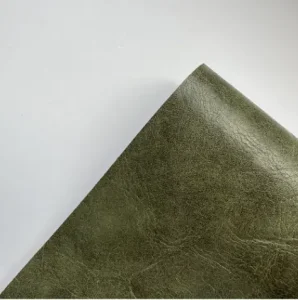
OEM Eco-Renewable Plant-Based Bio Synthetic Leather-9240
View Technical Specs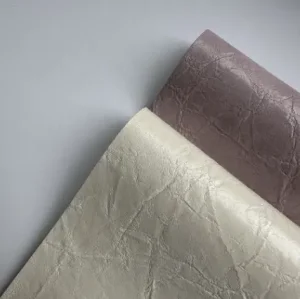
High-Quality RCS Approved Recycled-Content Leather-0212
View Technical SpecsDecarbonizing Polymer Substrates: The Engineering of Eco Leather Backing
Why the backing fabric defines structural longevity, peeling resistance, and true carbon abatement in sustainable polymeric composites.
Interfacial Adhesion Science
In traditional PU synthetic leathers, the backing substrate represents 45% to 65% of the total laminate weight. Eco leather back development replaces fossil-derived virgin polyesters with waterborne-impregnated post-consumer rPET, circular microfiber, and bio-cellulose knits. This ensures molecular-level mechanical locking with solvent-free PU polyurethane skins, eliminating peeling and delamination even under intense dynamic flex stresses exceeding 150,000 Bally flex cycles.
Elimination of Toxic Solvents
Conventional coagulation lines rely heavily on Dimethylformamide (DMF), Dimethylacetamide (DMAC), and Toluene to coagulate resin onto substrates. Our Clean-Tech 4.0 plant utilizes solvent-free high-solid PU reactive hot-melt systems and 100% waterborne polyurethane (WPU) backings. This closed-loop process achieves zero volatile organic chemical (VOC) outgassing, full SVHC REACH alignment, and preserves tensile fiber integrity without micro-embrittlement.
Empirical Carbon Accounting
Every square meter of eco leather backing engineered with traceable GRS/RCS yarn offsets approximately 1.42 kg of CO2 equivalent compared to virgin nylon or polyester substrates. By coupling recycled filament matrices with plant-derived polyols (synthesized from non-food agricultural feedstocks such as castor beans and industrial corn), our materials enable enterprise OEMs to achieve verifiable Scope 3 greenhouse gas reductions backed by ISO 14040/44 Life Cycle Assessments.
Technical Roadmap: Eco Leather Backing Evolution (2026–2030)
Bridging polymer chemistry, circular biomaterials, and automated textile engineering to solve legacy physical and environmental bottlenecks.
Phase 1: High-Purity rPET & Circular Non-Wovens
Optimizing sea-island microfiber and spunlace backings made from 100% mechanical and chemical recycled PET bottles. Advanced ultra-sonic needle-punching achieves high tensile split-tear strength (>3.5 N/mm) and a soft, supple drape identical to natural split cowhide, resolving the stiff mechanical drape typical of early-generation faux leather backings.
Phase 2: Bio-Fermented Substrates & Lignin Cross-Linking
Commercialization of regenerative backing fibers derived from upcycled hemp bast, bacterial nanocellulose, and post-agricultural mycelium blends. Utilizing enzymatic bio-treatment to graft bio-based functional polyols directly onto substrate fibers, creating inherent flame retardancy (UL94 V-0 / FMVSS 302) without toxic halogenated or organophosphate additives.
Phase 3: Mono-Material Polyurethane Composites
The holy grail of circularity: developing 100% thermoplastic polyurethane (TPU) systems where the top coat, skin layer, tie-coat, and knitted backing consist of an identical chemical family. At the garment or sneaker end-of-life, the composite requires zero delamination or chemical sorting; the entire product is mechanically shredded, re-extruded, and spun back into new backing yarn.
China Factory 4.0: Yingde JiangXin Clean-Tech Campus
Combining precision German automated coating lines, continuous closed-loop environmental management, and gigawatt-scale rooftop clean power.
Solar Microgrid & Thermal Regeneration
Our facility in Yinghong Industrial Park, Yingde, integrates a 4.68 MW rooftop photovoltaic array producing over 5.2 million kWh of clean solar electricity annually. Coupled with high-efficiency regenerative thermal oxidizers (RTO) and closed-circuit heat exchangers, our coating lines capture and recycle over 86% of exhaust heat back into multi-zone curing chambers, drastically lowering fossil energy per meter produced.
In-House Knitting & Coagulation Control
Unlike converters who purchase third-party grey cloth, JiangXin maintains end-to-end substrate processing: circular knitting, warp knitting, ultra-fine napping, and bio-scouring in-house. This prevents moisture inconsistency and residual sizing oil defects that cause 90% of leather surface blistering and hydrolytic degradation in tropical destination markets.
Automated AI Vision Quality Inspection
Every finished roll passes through multi-camera spectral scanning arrays that detect micro-voids, weave distortion, color delta-E variations (>0.5), and thickness deviations across 1.4-meter widths in real time. Batch records are digitally archived to provide transparent batch-level traceability for Tier-1 automotive and global luxury fashion conglomerates.
Sector-Specific Performance Standards & Technical Specs
Benchmarked against the rigorous physical test requirements of global luxury groups, OEM automotive interiors, and athletic footwear.
| Application Sector | Recommended Backing Fabric | Coating System | Tensile Strength (ISO 1421) | Hydrolysis Resistance | Key Standard Compliance |
|---|---|---|---|---|---|
| Athletic & Sneaker Uppers | 100% rPET High-Elastic Warp Knit | Waterborne Polyurethane (WPU) | ≥ 450 N / 5cm | 10+ Years (Jungle Test 70°C, 95% RH) | GRS / RCS Certified REACH SVHC Free |
| Luxury Handbags & Luggage | Recycled Post-Consumer Microfiber Non-Woven | Bio-Based Solvent-Free Polyether PU | ≥ 650 N / 5cm | 8–12 Years Anti-Hydrolysis | ASTM D6866 Biobased OEKO-TEX 100 |
| Automotive Seating & Trim | Flame-Retardant Interlock rPET Fabric | Polycarbonate Solvent-Free PU | ≥ 800 N / 5cm | 12–15 Years OEM Spec | FMVSS 302 Flame Retardant Low VOC / Fogging |
| Apparel, Jackets & Belts | Bio-Enzymatic Brushed Viscose/Cotton Blend | Ultra-Soft Water-Based PU | ≥ 320 N / 5cm | 5–7 Years Gentle Flex | Zero Phthalates (6P) RoHS Compliant |
| Consumer Electronics Cases | Anti-Static Recycled Microfiber Suede | High-Scratch Matte Bio-Polyurethane | ≥ 500 N / 5cm | Taber Wear > 5,000 Cycles | Skin-Contact Safe Anti-Fouling Oleophobic |
Global Compliance Assurance: Backing Verification & Traceability
Defensible certifications for cross-border customs clearance, ESG regulatory reporting, and brand hang-tag integrity.
Transaction Certificate (TC) Guarantee for Brand Transparency
Our export operations team provides official Transaction Certificates (TCs) generated through authorized third-party certification bodies (e.g., IDFL, Control Union) for every production run of RCS-certified recycled backing fabrics. This ensures unbroken chain-of-custody tracking from recycled PET flakes at the recycling depot to the coated artificial leather delivered at your cut-and-sew manufacturing partners.
Frequently Asked Questions: Wholesale Eco Leather Backing
Addressing engineering tradeoffs, minimum order parameters, testing protocols, and compliance verifications.
What is the physical difference between conventional PU backing and eco leather backing?
Conventional backing typically relies on virgin petrochemical-based polyester (PET) or polyamide (PA) woven fabric processed with toxic sizing chemicals and high-VOC solvent baths. Eco leather backing utilizes 100% post-consumer recycled PET (rPET), bio-regenerated cellulose, or organic cotton knits processed via zero-solvent waterborne methods. Structurally, modern eco-backings deliver equivalent or superior tensile yield and elasticity while reducing lifecycle carbon footprints by over 40%.
How is the biobased percentage in eco leather back composites verified?
Biobased content is empirically quantified using radiocarbon isotope analysis under ASTM D6866. This test distinguishes modern carbon-14 originating from renewable bio-sources (such as corn, castor, or sugarcane polyols) from fossil carbon devoid of C-14. JiangXin provides certified laboratory test reports detailing the exact bio-carbon percentage across the skin layer, intermediate foam, and backing substrate.
Does eco leather backing compromise peeling strength or high-temperature durability?
No. By optimizing plasma surface activation and hot-melt moisture-curing polyurethane (PUR) adhesives during lamination, our eco leather backing achieves peel strength exceeding 3.5–5.0 N/mm. The materials endure 10-week Jungle Hydrolysis accelerated aging tests (70°C and 95% relative humidity) without peeling, cracking, or surface tackiness, meeting demanding Tier-1 automotive and luxury footwear standards.
What are the standard Minimum Order Quantities (MOQ) and sample lead times?
For custom-engineered articles (tailored thickness from 0.5mm to 2.2mm, specific grain embossings, Pantone-matched colors, and custom backings), our standard MOQ is 500 running meters per color/spec. Rapid lab-dip and swatch yardage sampling takes 3 to 5 business days, while container-scale mass production is delivered in 12 to 18 days via our automated 16M+ meter continuous production lines.
Can the eco backing be engineered with antibacterial and flame-retardant properties?
Yes. Functional additives are incorporated directly into the yarn spinning and resin compounding stage rather than applied as a transient post-finish. We formulate eco-backings with non-migratory zinc pyrithione / silver ion antimicrobials (ISO 22196 >99.9% efficacy) and halogen-free organo-phosphorus flame retardants meeting FMVSS 302, BS 5852 Crib 5, and California TB 117 requirements without compromising hand feel or skin safety.
How does JiangXin assist brands in clearing restricted substance list (RSL) audits?
We operate an on-site testing facility equipped with GC-MS and UV-vis spectrometers to pre-screen raw chemicals. Every production batch is certified 100% free of DMFa, DMFu, DMAC, phthalates (6P/16P/24P), heavy metals, azo dyes, and short-chain chlorinated paraffins (SCCP). Full third-party test reports from SGS, TÜV, or Intertek are furnished prior to container dispatch.
Engineered Eco Leather Backing Materials: Series II
Explore custom embossed surfaces, bio-based polyols, and high-performance vegan leather engineered for precision cutting yield and long-lasting durability.
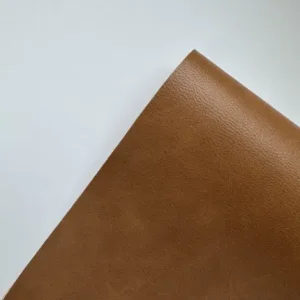
OEM Renewable Bio-Based Synthetic Leather-9020
View Technical Specs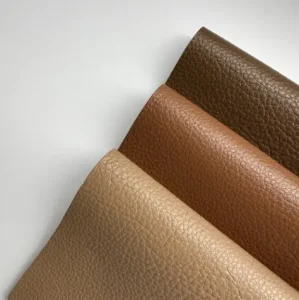
OEM Eco-Friendly Sustainable Synthetic Leather-9078
View Technical Specs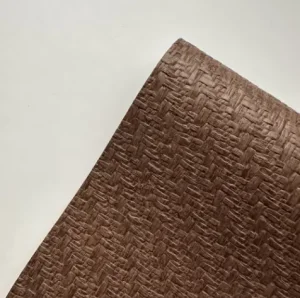
Wholesale Bio-Based Renewable Synthetic Leather-9339
View Technical Specs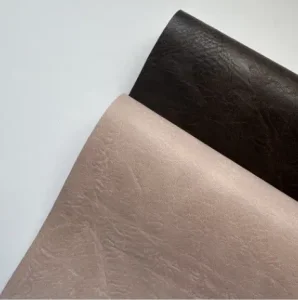
Custom RCS Recycled Base Vegan Synthetic Leather-0163
View Technical Specs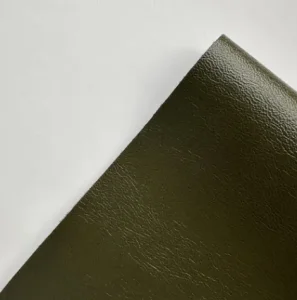
Custom Eco-Friendly Sustainable Synthetic Leather-0230
View Technical Specs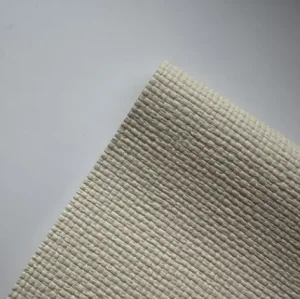
High-Quality Bio-Sourced Renewable Leather-9116
View Technical Specs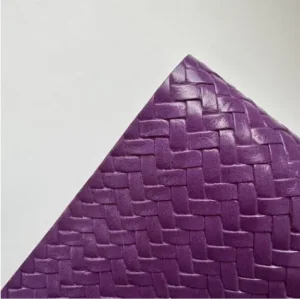
Custom Green Sustainable High-End Synthetic Leather-9344
View Technical Specs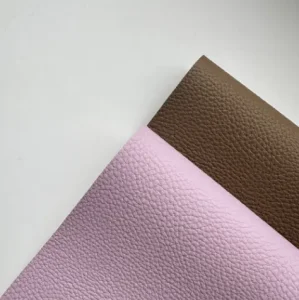
High-Quality Bio-Sourced Renewable Leather-9109
View Technical SpecsAccelerate Your Brand's Circular Materials Transition
Partner directly with Yingde City JiangXin New Material Co., Ltd. (JX.ECO). Receive tailored sample swatch cards, full compliance documentation packs, and rapid factory pricing within 24 hours.