Precision Perforated Bio-Synthetic Solutions (Part I)
OEM-grade perforated faux leather formulations engineered with high bio-carbon polyols and RCS-traceable mechanical backings.
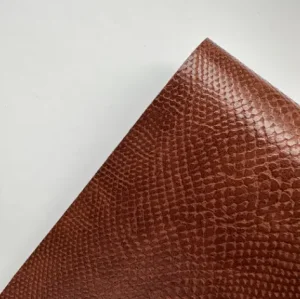
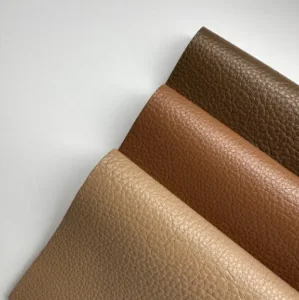
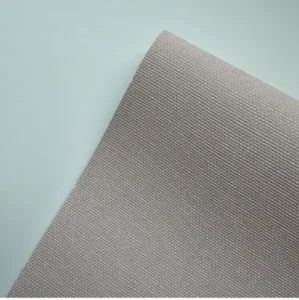

Meeting The Strict Standards of Tier-1 Industrial Specifiers
Global supply chains face increasing challenges: the demand for breathable, lightweight synthetic materials must coincide with stringent carbon border adjustments (CBAM) and volatile volatile organic compound (VOC) limits.
Automotive Climatized Seating
Modern cabin comfort relies on forced-air ventilation and heating. Our perforated faux leather integrates tailored hole densities (0.8mm to 1.5mm) that allow uniform air transmission without compromising tensile yield strength or tactile luxury in high-wear zones.
VDA 270 Odor Test CompliantErgonomic Seating & Consoles
Commercial workspace furniture specifiers require fabrics capable of enduring 150,000+ Martindale cycles while dissipating thermal buildup. Perforation geometry avoids heat traps and surface sheen breakdown across multi-shift utilization cycles.
BIFMA X5.11 Abrasion RatedAcoustics & Consumer Audio
Micro-perforations act as selective resonant acoustic attenuators. Premium wireless over-ear headphones and automotive door panels leverage our micro-pore grids to balance internal pressure waves and dissipate cutaneous moisture safely.
Acoustic NRC 0.45 AttenuationAdvanced Perforation Mechanics & Green Chemistry
JiangXin operates fully integrated dry-process, water-borne PU synthesis, and laser/mechanical hole punching lines under cleanroom conditions.
Laser Matrix Micro-Perforation
Utilizing computer-numerically controlled (CNC) CO₂ laser ablation, we deliver perforation diameters down to 0.05mm. The laser seals edges microscopically during perforation, preventing edge unraveling and matrix delamination under mechanical shear strain.
Tear Strength Retention > 92%Rotary Cold-Pin Punching
For large-scale seating programs requiring deep breathability, our rotary pin array machinery achieves punch densities up to 450,000 holes/m² with non-tearing edge geometry, retaining base textile stability on both woven and microfiber knit scrims.
High Throughput EfficiencyBio-Based & Solvent-Free Resins
We replace petroleum-derived monomers with corn-starch and castor-oil polyols, achieving up to 60% USDA-certified biobased content. Our 100% solvent-free PU lines eliminate DMF, DMAC, and toluene outgassing entirely.
Zero DMFa (<2 ppm) GuaranteedEngineering Specification & Testing Benchmark
Data verified across independent labs (SGS, TÜV Rheinland) under strict international automotive and upholstery standards.
| Testing Standard | Target Property | Perforated Bio-Based PU (JX.ECO) | Conventional PVC Perforated |
|---|---|---|---|
| ISO 4638 / ASTM E96 | Water Vapor Permeability (Breathability) | > 2,800 g/m² · 24h (Dynamic Airflow) | < 450 g/m² · 24h (Restricted Flow) |
| ISO 13937-2 | Tear Strength (Trouser Method Post-Punch) | ≥ 48 N (Interlocking Backing) | ≤ 24 N (Prone to Cross-Tear) |
| DIN 53351 / Bally Flex | Flex Resistance at -20°C | 100,000 cycles (No cracking) | Fails at < 20,000 cycles |
| VDA 278 / ISO 16000 | VOC & FOG Emissions | < 50 µg/g VOC; < 100 µg/g FOG | > 450 µg/g VOC (Plasticizer bloom) |
| ASTM D6866 | Bio-Based Carbon Footprint Share | 30% – 60% Renewable Origin | 0% (100% Fossil / Heavy Phthalates) |
Technology Roadmap: 2026–2030 Smart Substrates
Continuous R&D investment from our 4.68 MW solar-powered facility in Yingde, Guangdong ensures forward compatibility with carbon parity regulations.
Gradient Punching
Mass implementation of multi-axis laser perforations allowing dynamic pattern density shifts across individual pattern cut-pieces for personalized seating ergonomics.
Mycelium & Algae Scrims
Replacing virgin woven and microfiber PET substrates with closed-loop regenerated rPET and cultivated non-woven bio-fibers for near 100% circularity.
Conductive Perforation Matrices
Embedding conductive micro-traces along perforated pores to support concealed biometric sensors, capacitive touch controls, and smart heating systems directly in the skin.
Chemical Monomer Recycling
Developing proprietary depolymerization routes enabling end-of-life vehicle leather covers to be chemically reverted to polyurethane polyol resins without downcycling.
Compliance Architecture & Localized Supply Assurance
Eliminating supply chain delays with pre-cleared restricted substance testing, origin transparency, and customs-ready chain of custody certification.
EU REACH & 6P Phthalate Free
Fully certified under SVHC (Substances of Very High Concern) screening. Completely free of DEHP, DBP, BBP, DINP, DIDP, and DnOP, ensuring barrier-free market access in Europe and North America.
OEKO-TEX Standard 100 CertifiedRCS & GRS Chain of Custody
Textile Exchange certified tracking. Every production lot matches valid Transaction Certificates (TC), proving the post-consumer recycled origin of backing fleeces and technical base scrims.
Full Batch TraceabilityAutomotive APQP & PPAP Level 3
Equipped to provide full Production Part Approval Process documentation, including PFMEA, Control Plans, IMDS reporting, and salt-mist / hydrolysis resistance certificates.
OEM Tier-1 IntegrationEngineering & OEM Sourcing Inquiries
Direct answers from our engineering leads on tooling costs, airflow control, UV stability, and production batch minimums.
How does perforation affect the tensile and seam tear strength of faux leather?
Perforation can reduce tensile strength if hole pitch and base textiles are mismatched. We use high-tenacity circular-knit or microfiber base scrims and CNC laser perforation with automated thermal cauterization, preserving >90% of tensile and seam tear strength under ISO 13937-2 standards.
Can you manufacture custom perforation designs without expensive tooling fees?
Yes. For prototype sampling and low-volume production runs, our precision CNC laser cutting arrays process CAD DXF vectors directly without hard tooling. For massive continuous runs, our factory maintains over 85 interchangeable rotary cold/hot pin cylinders.
How does your factory prevent solvent outgassing inside closed automotive cabins?
Our clean-tech facility uses 100% solvent-free and waterborne PU chemistry. By removing volatile carriers like dimethylformamide (DMFa), our perforated skins meet the strictest VDA 270 (odor ≤ 2.5), VDA 277, and VDA 278 requirements without oily fogging residues.
What is the standard production lead time and minimum order quantity (MOQ)?
Standard catalog colors have an MOQ of 500 linear meters per reference. Custom color formulation matching, custom grain roll embossing, and specific hole matrices require an MOQ of 1,000 meters. Lab-dip swatches are delivered in 5 business days, with bulk rolls shipped in 15–20 days.
Precision Perforated Bio-Synthetic Solutions (Part II)
High-performance synthetic leather variants ready for contract slitting, perforated ventilation laminations, and fire-resistant treatment.