High-Performance Microfiber & Synthetic Solutions
Explore our core series of plant-derived, RCS-accredited recycled, and high-tensile eco-friendly synthetic leathers engineered to pass demanding international physical and chemical tests.
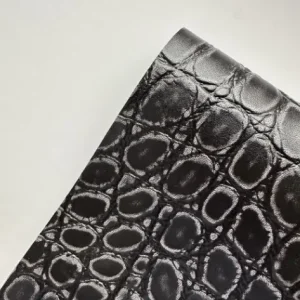
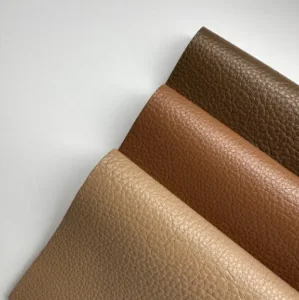
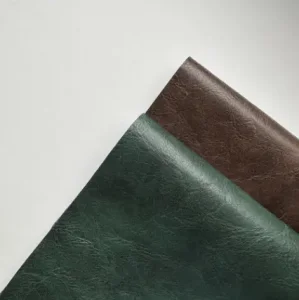
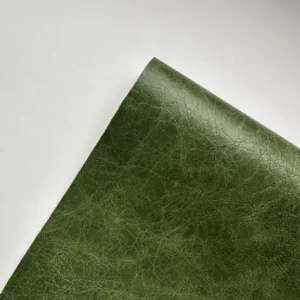
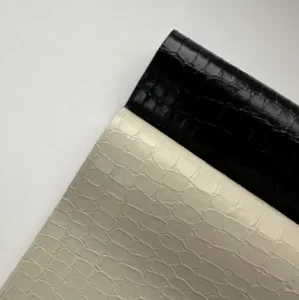
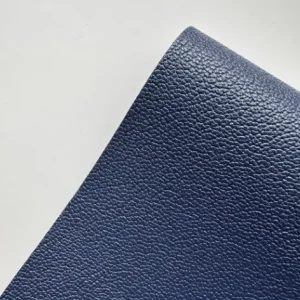
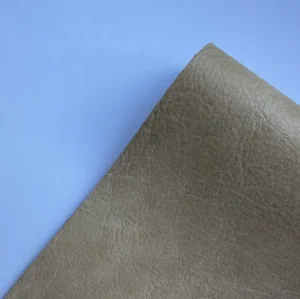
Macro Industry Solutions: Beyond Conventional PU & Animal Hides
Understanding the micro-structural transformation of sea-island synthetic composites that outperform traditional leather in tensile strength, weight distribution, and environmental efficiency.
3D Micro-Fiber Bundles
Utilizing sea-island conjugate spinning technology, our microfiber substrate replicates the collagen bundle network of bovine dermis. Nylon microfibers (0.001–0.003 denier) provide exceptional tear propagation resistance while reducing unit weight by 35% compared to natural skins.
- Isotropic tensile dispersion
- No natural hide hollow spots
- Yields above 98% cutting efficiency
Bio-Based Polyol Chemistry
By shifting monomer feedstocks to industrial corn, castor oil, and agricultural cellulose, we displace conventional petrochemical polyols. Our certified bio-based resins lower product-level carbon footprints (LCA) by up to 45% while preserving extreme hydrolytic stability.
- Up to 60% verifiable bio-carbon content
- ASTM D6866 radiocarbon certified
- Zero plasticizer migration
Solvent-Free Precision Coating
Eliminating DMF (dimethylformamide), toluene, and VOC emissions via solvent-free and waterborne PU reactive extrusion. Our 100% solid PU formulations achieve flawless grain replication with zero solvent retention inside the microscopic cellular structure.
- DMFa < 2 ppm compliance
- Zero chemical odor emission
- Accelerated aging cycle resistance
The Global Microfiber Landscape: Decarbonization & Circular Supply
Automotive OEMs, fast-moving fashion groups, and medical equipment creators are transitioning from genuine leather and PVC toward high-durability synthetic alternatives. Here is how modern microfiber transforms OEM economics.
| Evaluation Parameter | OEM Bio/Recycled Microfiber | Conventional Wet-Process PU | Genuine Bovine Leather |
|---|---|---|---|
| Usable Cutting Surface | 97% - 99% Uniform | 90% - 94% | 60% - 75% Irregular |
| Hydrolysis Resistance (Jungle Test) | 7 to 10+ Years (ISO 1419) | 2 to 4 Years | Subject to Rot & Mildew |
| VOC & Odor Rating (VDA 270) | Grade ≤ 2.0 (Virtually Odorless) | Grade 3.5 - 4.5 (Pungent DMF) | Grade 3.0 (Tanning Odor) |
| Carbon Footprint (Cradle-to-Gate) | Low (~4.2 kg CO₂e/m²) | Moderate (~8.9 kg CO₂e/m²) | Very High (~35-60 kg CO₂e/m²) |
| Batch-to-Batch Color Consistency | ΔE < 0.5 (Spectrophotometer) | ΔE < 0.8 | ΔE > 1.5 (High Variance) |
Localized Engineering Solutions Across Core Industries
Different markets expose synthetic leather to unique stress factors. We calibrate tensile backing, cross-linking density, and anti-aging topcoats precisely for every application.
Automotive Cabins
Engineered for instrument panels, seating, and headliners. Passes strict VDA 276 emissions, FMVSS 302 flame retardancy, and 200,000+ Martindale cycles under extreme cabin temperature swings.
- Low fogging DIN 75201
- Anti-creak acoustic coating
- Integrated UV protection
Performance Footwear
Delivers lightweight, dynamic rebound, cold-flex resistance down to -30°C (Bally Flex 100k cycles), and seamless RF welding capability for running shoe uppers, cleats, and safety boots.
- Hydrophobic surface pore design
- High needle pull retention
- Scratch resistant top coat
Bags & Luxury Luggage
Supple drape, rich dual-tone pull-up effects, and micro-embossed finishes tailored for designer handbags, wallets, and travel cases requiring high abrasion resistance against zippers and buckles.
- Edge-crease retention
- Clean burnishing compatibility
- Color fastness to wet crocking 4+
Upholstery & Marine
Stain-resistant fluorocarbon-free surface shields withstand chlorine, sunscreen, salt fog, and aggressive commercial hospital disinfectants without cracking or discoloration.
- CAL 133 & BS 5852 flammability
- Antibacterial ISO 22196 tested
- Easy-wipe stain barrier
Localized Support, ESG Assurance & Regulatory Compliance
Entering European, North American, or Asia-Pacific markets requires transparent chain-of-custody data. Our manufacturing processes eliminate trade compliance risks from day one.
REACH & RoHS Zero-SVHC
Full spectrum compliance with European Regulation (EC) No 1907/2006. All shipments are screened by third parties for over 230 Substances of Very High Concern, total heavy metals, and chlorinated paraffins (SCCP).
- Zero banned azo dyes or organotins
- Formaldehyde-free emissions
- Batch-wise test certificate support
RCS & GRS Traceability
Complete transaction certificate (TC) tracking via Textile Exchange standards. Post-consumer recycled PET microfiber substrate blends offer indisputable provenance for global brand sustainability reports.
- Full upstream resin chain-of-custody
- Third-party verified recycled mass balance
- Hang-tag licensing support
6P/8P Phthalate Free & OEKO-TEX
Specially developed non-toxic plasticization guarantees total freedom from DEHP, DBP, BBP, DINP, DIDP, and DnOP, exceeding CPSIA Section 108 and California Proposition 65 thresholds.
- Safe for child & medical applications
- OEKO-TEX Standard 100 Class I ready
- Non-cytotoxic skin irritation tested
Microfiber Leather 2.0: Technology Roadmap & Circularity
Our ongoing engineering investments focus on closed-loop circular recyclability, biological fungal mycelium matrices, and carbon-negative synthesis.
Depolymerizable Circular PU
Engineering chemically recyclable polyurethane layers that can be disassembled into original monomer components at end-of-life, enabling infinite recycling without material degradation.
- Thermally reversible crosslinking bonds
- Separable microfiber core technology
- Target 2026 commercial scaling
CO₂-Captured Polyols
Collaborating with catalytic pioneers to synthesize up to 30% of polyol raw stock directly from point-source captured industrial carbon dioxide emissions, transforming greenhouse gasses into durable polymer coatings.
- Reduced cradle carbon score
- Equivalent hydrolytic life to petroleum
- Pilot testing in automotive grade
Digital Tactile Twin Engineering
Integrating high-resolution optical scanning with material mechanical profiling to generate true-to-life 3D digital texture files (U3M, AxF) for instant rendering in CLO3D, Browzwear, and Unreal Engine automotive design suites.
- Zero physical swatch waste
- Instant CMF iteration for design teams
- Accelerated 8-week OEM onboarding
Frequently Asked Sourcing & Technical Questions
Direct technical answers to the most common queries raised by material selection engineers, sustainability officers, and OEM procurement managers.
What is the microscopic structural difference between Microfiber Leather and regular PU leather?
How is bio-based content determined and verified for hang-tag claims?
What minimum order quantity (MOQ) and lead times apply to custom OEM colors and grains?
Can your microfiber materials withstand automotive interior hydrolysis and UV tests?
How do you verify Recycled Claim Standard (RCS) integrity throughout the production line?
Explore More OEM Synthetic & Recycled Materials
Review additional certified references covering solvent-free polyurethane, specialized grain textures, and circular post-consumer backing fabrics ready for mass production.