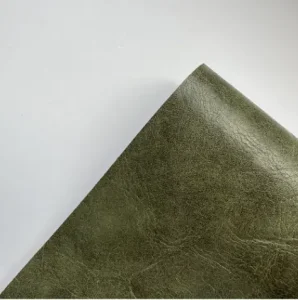
High-Performance Eco Synthetic PU Leather References
Engineered for exacting mechanical resilience, zero solvent emissions, and strict international chemical restriction standards. Select an article reference below to inspect physical specifications or initiate custom OEM batching.
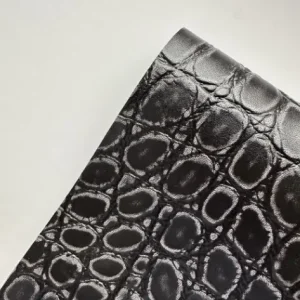
Wholesale Eco-Friendly Sustainable Synthetic Leather-9015 Factory, Factories
View Specifications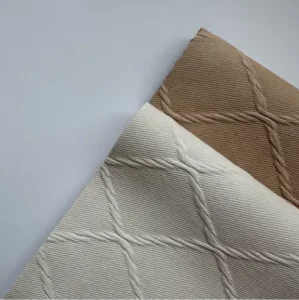
Wholesale Bio-Based Renewable Synthetic Leather -9016 Manufacturers, Factories
View Specifications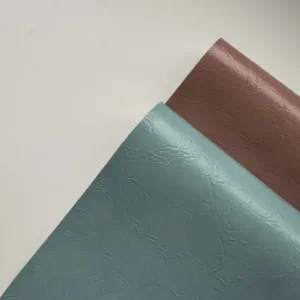
OEM Industrial-Grade Bio-Derived Renewable Synthetic Leather-0177 Suppliers, Factories
View Specifications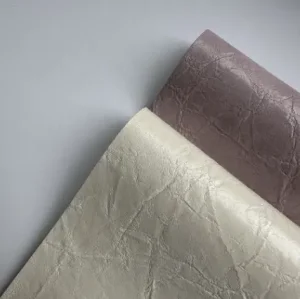
High-Quality RCS Approved Recycled-Content Synthetic Leather-0212 Suppliers, Factories
View Specifications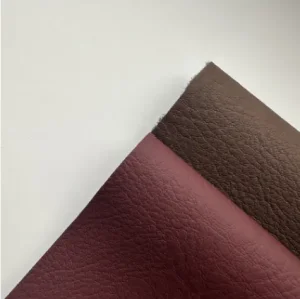
OEM RCS-Certified Traceable Recycled Synthetic Leather-9133 Manufacturer, Factory
View Specifications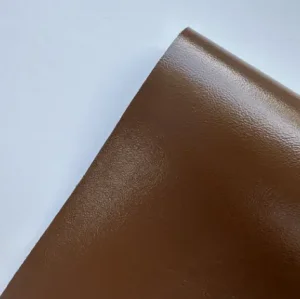
Wholesale Carbon-Reduced Eco Synthetic Leather-9113 Supplier, Factory
View Specifications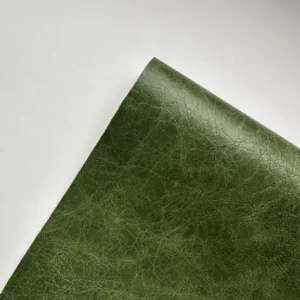
OEM Plant-Based Renewable Bio Synthetic Leather-9023 Suppliers, Factories
View Specifications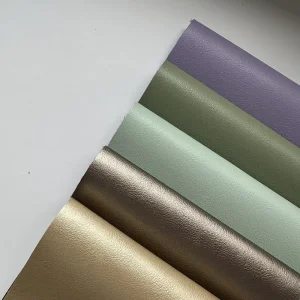
Wholesale RCS Recycled Synthetic Leather Manufacturer, Suppliers
View SpecificationsThe Decarbonization Imperative in Polymer Leather Manufacturing
Global procurement teams across North America, the European Union, and the Asia-Pacific region are navigating strict regulatory transformations. The transition from legacy fossil-derived synthetics to zero-emission, traceable circular matrices has moved from corporate public relations to an enforceable commercial mandate.
Elimination of Toxic Solvents
Traditional synthetic leather relied on dimethylformamide (DMFa), dimethylacetamide (DMAC), and toluene during polyurethane skin formation and coagulation. Modern OEM manufacturing demands 100% water-borne polyurethane (WPU) dispersions and high-solid solvent-free reactive polyurethane coating systems that completely eliminate VOC off-gassing and workplace atmospheric hazards.
- Zero DMFa/DMAC residual limits (<5 ppm verified)
- Radical reduction of thermal oven VOC treatment
- Safe skin-contact compliance under ISO 10993
Bio-Based Feedstock Transition
By replacing fossil-extracted polyether and polyester polyols with renewable agricultural byproducts—including non-food industrial corn, castor beans, agricultural stalks, and inedible vegetable oils—manufacturers synthesize polyurethane backbones with authenticated bio-based carbon isotopes. These materials offer identical tensile resilience while lowering net cradle-to-gate carbon footprints.
- Radiocarbon bio-content verification (ASTM D6866)
- USDA BioPreferred program certified thresholds
- Up to 45%–65% reduction in non-renewable energy
Traceable Closed-Loop Circularity
Modern ESG metrics penalize unverifiable green claims. The synthetic substrate industry relies on third-party chain of custody certifications such as the Recycled Claim Standard (RCS) and Global Recycled Standard (GRS). High-tensile rPET microfibers derived from certified post-consumer plastic bottles and upcycled synthetic fiber waste are integrated into backing fabrics to ensure total circular accountability.
- Complete batch-level Transaction Certificate (TC) logging
- Post-consumer waste diverted from municipal landfills
- Alignment with forthcoming EU Digital Product Passports
Polymer Generations: Performance, Eco-Footprint, and Feasibility
Enterprise procurement teams must balance chemical compliance against strict physical abrasion, tensile tear resistance, and hydrolysis cycles. The matrix below benchmarks conventional petrochemical formulations against advanced clean-tech PU systems.
| Material Classification | Polymer Backbone & Solvents | Carbon Sourcing | Hydrolysis Longevity | VOC & Fogging Profile | Primary Compliance Targets |
|---|---|---|---|---|---|
| Legacy 1st Gen: PVC Leather | Polyvinyl Chloride / Ortho-Phthalate plasticizers | 100% Fossil / Chlorine-heavy | Moderate (3-5 Years) | High VOC; heavy plasticizer migration | High Regulatory Risk |
| Traditional 2nd Gen: Solvent PU | Polyurethane synthesized in DMFa / DMAC solvents | 100% Virgin Petrochemical | 5–7 Years (Jungle Test verified) | Moderate to High; residual solvent risk | REACH SVHC Controlled |
| Advanced 3rd Gen: Water-Based PU (WPU) | Aqueous Polyurethane Dispersions (PUD); Zero Solvent | Fossil / Recycled hybrids | 7–10 Years (Hydrolysis 10+ weeks) | Ultra-Low VOC; odor-free emission | OEKO-TEX 100 / REACH Free |
| Solvent-Free 100% Solids Reactive PU | 2-Part Reactive Prepolymer; 0% Water, 0% Solvent | Petroleum / Bio-polyol adaptable | 10+ Years (Extreme wear resistance) | Zero detectable VOCs; no shrinkage | RoHS / CA Prop 65 Clear |
| Bio-Based Clean-Tech PU (JiangXin JX.ECO) | Non-food plant polyols + solvent-free/aqueous coating | 20%–50%+ Bio-Derived Carbon | 8–12 Years (Jungle test 10+ weeks) | Near-Zero VOC; automotive-grade fogging | USDA BioPreferred / ASTM D6866 |
| RCS-Certified Recycled PU | Eco-PU top coat coupled with 100% rPET substrate | 30%–70% Recycled Post-Consumer Mass | 7–10 Years (Heavy flex endurance) | Ultra-Low VOC; GRS/RCS audited | Textile Exchange Chain of Custody |
Cross-Industry OEM Deployment Architectures
A single universal leather formulation cannot satisfy every application. JiangXin New Material tailors rheology, backing density, skin durometer, and functional top-finishes across primary commercial disciplines.
Automotive Seating & Cockpit Trims
Engineered to withstand extreme thermal fluctuations and severe solar radiation. Formulated to eliminate windshield haze while meeting the strictest cabin air standards set by global automakers.
- VDA 278 thermal desorption VOC / SVOC compliance
- Xenon-arc weathering stability >1,200 continuous hours
- DIN 75201 Gravimetric and Reflectometric fogging pass
Athletic Footwear & Premium Uppers
Designed for repeated mechanical flexing across wide temperature zones. Balances dynamic peel strength, bondability with water-based cements, and authentic natural leather grain retention.
- Bally Flexometer >150,000 cycles at 23°C (50k @ -20°C)
- High-modulus tear propagation resistance >35 N/mm
- Breathable microporous membranes up to 3000g/m²/24h
Bags, Handbags & Fashion Leather Goods
Delivers a supple, luxurious hand feel, precise cutting yields, and crisp edge-finishing behavior. Eliminates thickness variations and surface blemishes common in animal hides.
- Consistent yield rate above 98% for automated CNC cutting
- Superior burnishing and edge-painting adhesion properties
- Color transfer fastness (Martindale dry/wet rub >4-5 grade)
Contract Hospitality & Commercial Furniture
Formulated for intensive commercial traffic. Resists harsh hospital-grade disinfectant cleanings, ink penetration, and fire propagation without toxic halogenated additives.
- Flammability ratings: California TB 117-2013 and BS 5852 Crib 5
- Wyzenbeek wire screen abrasion >200,000 double rubs
- ISO 22196 antimicrobial resistance (E. coli, MRSA >99.9%)
Consumer Tech & Smart Wearables
Ultra-thin calibrated gauge profiles engineered for premium acoustic transparency, skin biocompatibility, drop impact damping, and oleophobic stain protection.
- Thickness tolerance controlled to ±0.03 mm
- Artificial sweat and cosmetic cream degradation resistant
- High-frequency dielectric RF welding capability
Regulatory Gatekeeping & Supply Chain Traceability
Entering international commercial ports requires documented technical compliance. JiangXin New Material operates an audited quality management system backed by verifiable certifications to protect enterprise brands from customs delays and greenwashing penalties.
European Union & North American Chemical Mandates
Every industrial lot manufactured in our Yingde facilities undergoes batch-indexed chemical analysis to ensure full adherence to regulated substance limits:
- EU REACH Regulation (EC 1907/2006): Zero SVHC (Substances of Very High Concern) exceeding 0.1% w/w. Total absence of restricted azo colorants, organotins, short-chain chlorinated paraffins (SCCP), and polycyclic aromatic hydrocarbons (PAHs).
- California Proposition 65 & CPSIA: Lead (<90 ppm), total cadmium (<100 ppm), and 6P/8P phthalates (DEHP, DBP, BBP, DINP, DIDP, DnOP, DNHP) confirmed below 0.1% via gas chromatography-mass spectrometry (GC-MS).
- OEKO-TEX Standard 100 Class I & II: Certifies non-toxic safety for direct contact with infant and adult skin, preventing dermatitis and allergic sensitization.
Corporate ESG, Social Auditing & Clean Operations
Environmental declarations are verified by accredited third-party facility audits, comprehensive life cycle assessments, and rigorous social accountability protocols:
- amfori BSCI Social Certification: Full transparency across workplace safety, non-discrimination, fair labor compensation, and ethical factory operations.
- Higg Index Facility Environmental Module (FEM): Standardized verification of water consumption, energy efficiency, solid waste diversion, and chemical management scoring.
- Clean-Energy Infrastructure: On-site 4.68 MW rooftop photovoltaic solar grid paired with an integrated industrial wastewater plant generates clean power and enables closed-loop process water recycling.
Material Science Roadmap: Next-Generation Milestones
Our Yingde research and development division operates on a multi-year engineering trajectory to redefine the performance boundaries of sustainable polymers. These milestones illustrate our pipeline from laboratory trials through bulk industrial production.
Solvent-Free & WPU Scaling
Full transition of industrial output away from DMFa/toluene coating lines to high-solid solvent-free reactive prepolymers and water-borne PU dispersions across all footwear and accessory articles.
High-Carbon Bio-Polyols
Industrialization of USDA BioPreferred and ASTM D6866 certified polyols derived from non-food agricultural waste, achieving up to 50% renewable carbon content without diminishing flex or hydrolysis performance.
Lignin & Carbon Capture Polymers
Synthesis of polyether polyols formulated from captured carbon emissions (CCU) and forestry lignin residues, targeting over 70% non-fossil content and carbon-negative footprint potential.
Enzymatic Depolymerization & DPP
Development of proprietary enzyme-assisted monomer recovery protocols to enable complete closed-loop circularity, integrated with encrypted Digital Product Passports (DPP) on every roll.
Frequently Answered Technical & Sourcing Questions
Direct technical explanations addressing material chemistry, order minimums, testing validation, and factory lead times to help procurement teams streamline vendor onboarding.
What are the key technical distinctions between solvent-free PU, water-based PU, and traditional solvent PU?
How is bio-based carbon content analytically proven and differentiated from greenwashing?
Can JiangXin provide batch-specific Transaction Certificates (TCs) for RCS-certified orders?
What are the standard Minimum Order Quantities (MOQs) and sampling lead times for custom formulations?
How do your polyurethane materials withstand tropical hydrolysis and wear over multi-year lifecycles?
Circular & Upcycled Sustainable Synthetic Leather Solutions
Explore our extended series of upcycled waste, bio-renewable, and plant-based PU formulations engineered for tier-1 luxury goods, commercial footwear, and contract trim manufacturing.
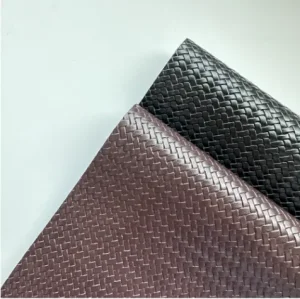
OEM Eco-Friendly Sustainable Synthetic Leather-9348 Manufacturers, Suppliers
View Specifications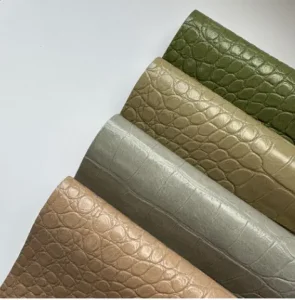
Wholesale Waste-Upcycled Recycled Synthetic Leather-9355 Manufacturers, Factories
View Specifications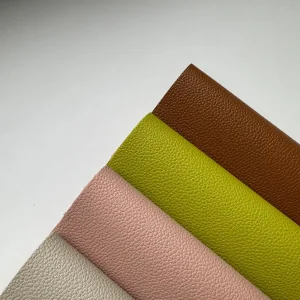
High-Quality Sustainable Eco-Friendly Faux Leather Supplier, Suppliers
View Specifications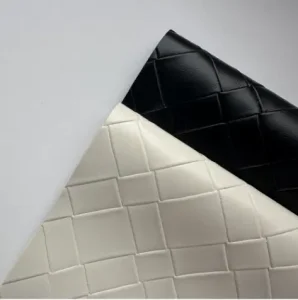
Custom Green Sustainable Man-Made Leather-9338 Manufacturers, Suppliers
View Specifications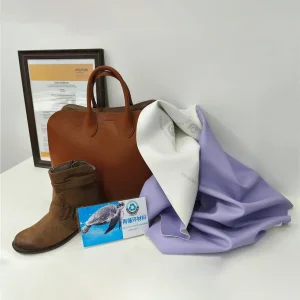
OEM RCS Certified Recycled Sustainable Synthetic Leather Supplier, Factory
View Specifications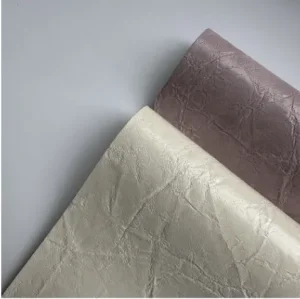
High-Quality RCS Recycled Synthetic Leather-0212 Manufacturer, Factory
View Specifications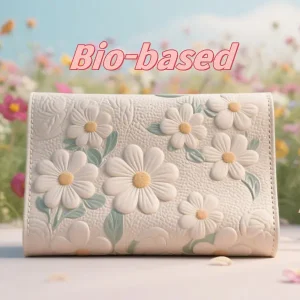
Wholesale Bio-Based Renewable Synthetic Leather Supplier, Factory
View Specifications