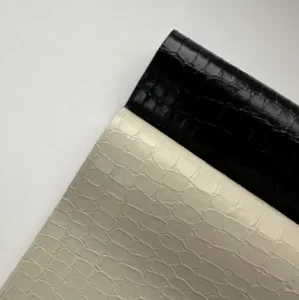
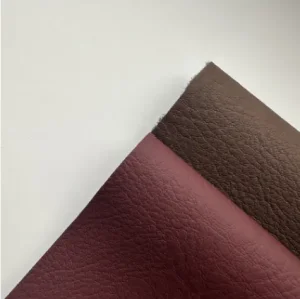
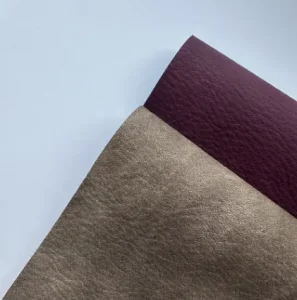
High-Performance DMF-Free Formulations
Explore initial certified articles engineered for global automotive, technical footwear, luxury accessories, and contract upholstery programs.

Macro Trends: The Global DMF Elimination Transition
Why procurement teams are retiring conventional wet-process polyurethanes in favor of verifiable DMF-free coating systems.
Aggressive REACH & Regulatory Caps
Under EU Regulation (EU) 2021/2030 amending Annex XVII to REACH, strict concentration limits on N,N-Dimethylformamide (DMFa) mandate levels below 0.001% (10 mg/kg or 10 ppm) in consumer goods. Traditional solvent-coagulation factories face immense technical hurdles clearing modern brand RSL screening without transitioning to solvent-free lines.
VOC Abatement & Interior Air Quality
Automotive OEMs and commercial aviation interior architects are imposing rigid VDA 278, VDA 270, and ISO 12219-4 standards. Eliminating volatile polar aprotic solvents (DMF, DMAC, NMP) achieves ultra-low odor ratings (≤ 2.5) and prevents plasticizer bloom or window fogging across prolonged thermal testing cycles.
Decarbonization & Circular LCA
Thermal evaporation and chemical recovery of hazardous DMF solvents require significant fossil fuels during wet phase extraction. Water-based and solvent-free PU lines eliminate wet coagulating baths entirely, cutting Scope 1 & 2 manufacturing energy by up to 42% per linear roll.
Engineering Differences: DMF-Free Chemistry Systems
A comparative structural analysis illustrating how dry solvent-free processing outperforms conventional wet coagulation.
| Evaluation Parameter | Conventional Wet-Process PU | Water-Based PU (WBPU) | 100% Solvent-Free High-Solid PU |
|---|---|---|---|
| Solvent Carriers Utilized | N,N-Dimethylformamide (DMFa), MEK, Toluene | Deionized Water (> 95% carrier phase) | Zero Liquid Solvent (100% reactive solids) |
| Residual DMF Levels | 30 – 150 ppm (requires heavy water wash) | Non-Detectable (< 2 ppm) | Zero Detected / Absolute Non-Presence |
| Hydrolysis Resistance (Jungle Test) | 3 to 5 Years equivalent (3–5 weeks test) | 5 to 7 Years equivalent | 8 to 15+ Years (ISO 1419 Tropical chamber) |
| Martindale Abrasion Cycle | 20,000 – 40,000 revs | 50,000 – 80,000 revs | 100,000 – 150,000+ revs (ISO 12947-2) |
| Cross-Section Microporous Cell | Irregular teardrop coagulation cavities | Homogeneous closed-cell foam layer | Dense crosslinked interpenetrating network |
| Carbon Reduction (kg CO₂e / lm) | Baseline benchmark standard (High) | -35% vs baseline | -48% to -55% cradle-to-gate LCA |
High-Stress Application Environments
Our OEM DMF-free polymers are engineered for demanding physical requirements across various sectors.
Automotive Cockpit & EV Seating
Engineered to satisfy stringent low-fogging criteria (DIN 75201) and low flame spread (FMVSS 302). Resistant to solar heat aging, deep leather grain embossed memory, and sweat-induced chemical degradation.
Athletic Performance Footwear
Withstands high dynamic flexing at cold temperatures (-20°C Bally flex test exceeding 100,000 cycles). Superior bond strength to bio-based and recycled knit backings without peeling.
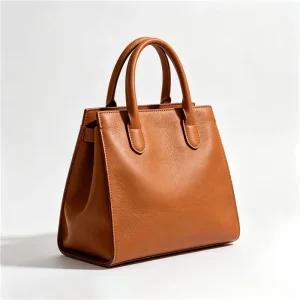
Luxury Bags & Small Leather Goods
Provides a smooth, natural temper with structural edge-skiving capabilities. Compatible with fine edge paint heat-burnishing, high-frequency embossing, and stitched decorative elements.
Contract & Medical Upholstery
Engineered with crosslinked barrier finishes resistant to hospital-grade chlorine sanitizers, quaternary ammonium cleaners, and persistent denim transfer staining.
China Direct Manufacturing: Supply Chain Resilience
Operational stability, vertical integration, and clean energy execution at Yingde City JiangXin New Material Co., Ltd. (JX.ECO).
Substrate Integration
In-house weaving, circular knitting, and non-woven microfiber carding yield predictable thickness control (±0.03mm) and stable raw material pricing.
On-Site Waste Recovery
Advanced biological and catalytic wastewater purification combined with high-efficiency thermal exchangers ensures closed-loop environmental compliance.
Rapid OEM Sampling
Dedicated pilot dry coating line allows customized color matches, grain calibrations, and base adjustments dispatched within 4 working days.
Innovation Roadmap: 2025 to 2028 Next-Gen Polymers
Continuous chemical refinement moving from petrochemical elimination to absolute circularity.
Zero-Solvent Scale
Deployment of 100% solids PU lines eliminating all trace volatile solvents. Certified REACH Annex XVII compliance across all lines.
USDA & ASTM D6866
Integration of plant-derived polyols derived from non-food agricultural waste, achieving up to 60% verifiable bio-based content.
Single-Polymer Recyclability
Development of monomaterial TPU systems where both surface finish and woven backing share polymer architecture for closed-loop remelting.
Microbial & CO₂ Polyols
Pioneering carbon-captured polyols and enzymatic biodegradability under targeted industrial composting conditions.
Local Support, Audits & Traceability Infrastructure
Reliable chain-of-custody tracking from raw pellet formulation to container dispatch.
Transaction Certifications
Every delivery run can be certified through official Textile Exchange RCS/GRS Transaction Certificates (TCs), ensuring verifiable proof of recycled resin ratios for brand ESG audits.
Comprehensive Export Documentation
Pre-cleared regulatory paperwork covering RoHS, REACH SVHC, CA Prop 65, 6P Phthalates, and OEKO-TEX Standard 100 test reports delivered per production batch.
Factory Direct Technical Support
Direct communication with material development chemists and engineers for technical adjustments, processing recommendations, and die-cutting optimization.
Frequently Asked OEM Questions
Essential guidance on chemical specs, minimum order volumes, and production timelines.
How do you verify your synthetic leather is 100% DMF-free?
We test our materials using gas chromatography-mass spectrometry (GC-MS) following DIN EN 17131:2019 standards. Production occurs on dedicated solvent-free lines, ensuring zero trace contamination below quantifiable detection thresholds (< 2 ppm).
Can you provide custom surface textures and grain matching?
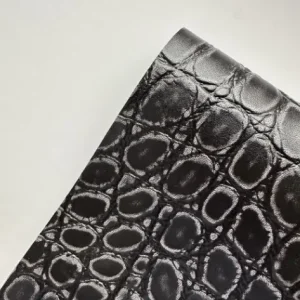
Yes. Our in-house release paper library includes over 800 textured finishes, including natural hair cell, fine nappa, toothpick patterns, and pebble grains. We also support laser-engraved custom embossing rolls matched to customer physical swatches.
What are your standard OEM MOQs and lead times?
Standard production runs require a minimum of 500 meters per color/thickness specification. Lab dip swatches are dispatched in 3–5 working days, with full-scale production completed within 12–18 business days.
How does your DMF-free PU perform in high-humidity environments?
Our solvent-free PU lines use high-solid aliphatic polycarbonate polyols that provide exceptional hydrolysis resistance, easily passing 5-to-10-week jungle chamber tests (equivalent to 7–12 years of tropical humidity exposure).
Can you engineer materials to meet strict flame-retardant standards?
Yes. We integrate non-halogenated organophosphorus flame retardants directly into the resin matrix, complying with FMVSS 302, BS 5852 Crib 5, and California TB 117-2013 standards without heavy metals.
What backing fabrics are compatible with your DMF-free systems?
We work with a variety of backings, including post-consumer recycled PET (GRS/RCS certified), GOTS organic cotton, bamboo fibers, and island-sea ultra-fine microfibers tailored to specific tear-strength requirements.
High-Spec Eco-Friendly Synthetic Leather Series
Explore additional commercial formulations engineered across our bio-based, carbon-reduced, and low-VOC manufacturing runs.