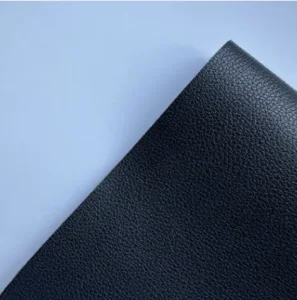
High-Performance Bio-Based Commercial Products
Industrialized bio-synthetic and cactus-derived leather alternatives ready for global supply chains, featuring verified bio-content, custom grains, and full physical compliance.
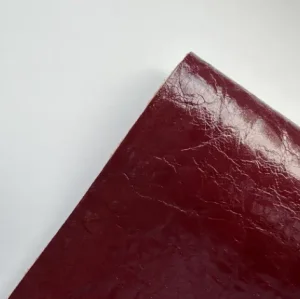
High-Quality Green Grade Sustainable Vegan Synthetic Leather-9261
Product Specifications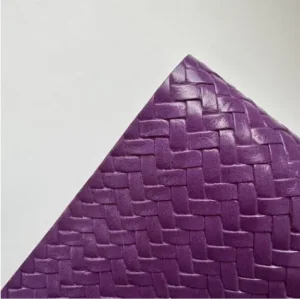
Custom Green Sustainable High-End Synthetic Leather-9344
Product Specifications
Wholesale Bio-Based Renewable Synthetic Leather
Product Specifications
OEM Plant-Derived Renewable Bio-Based Synthetic Leather-2071
Product Specifications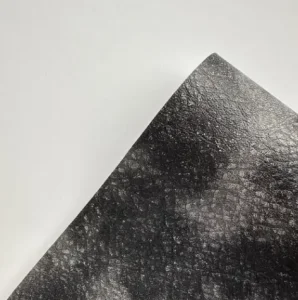
Wholesale Low-Carbon Eco Sustainable Synthetic Leather-0045
Product Specifications
Custom Sustainable Bio-Based Vegan Leather-2002
Product Specifications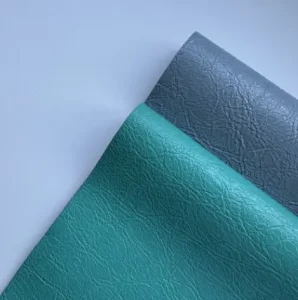
OEM RCS Recycled Synthetic Leather-9213
Product Specifications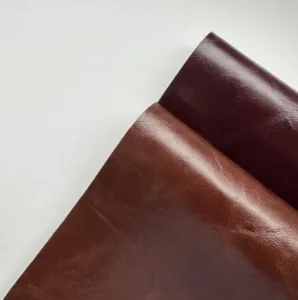
Wholesale High-Performance Eco-Engineered Synthetic Leather-0255
Product SpecificationsMacro-Industry Dynamics & Global Procurement Shifts
Evaluating how Fortune 500 automotive marques, luxury conglomerates, and global footwear groups address Scope 3 emissions via high-yielding cactus and bio-based leather alternatives.
Tier-1 Automotive ESG Mandates
Global electric vehicle (EV) OEMs are methodically phasing out bovine hide and legacy petroleum PVC to lower life-cycle assessment (LCA) scores. Desserto plant-based alternatives and modified bio-PU systems fulfill strict VDA 270 (odor), DIN 75201 (fogging), and Martindale abrasion requirements without plasticizer evaporation.
Luxury & Fashion Tech Packs
Premium footwear and leather goods brands face consumer pushback against toxic chromium tanning and greenwashing claims. Sourcing departments require accredited biogenic carbon quantification under ASTM D6866, combined with consistent roll-to-roll tensile elasticity and premium haptic draping.
Supply Chain Decarbonization
Enterprise buyers are transitioning from decentralized lab-scale startups to audited, capital-intensive manufacturing hubs. Scalable contracts require guaranteed minimum outputs exceeding 1,000,000 meters monthly, backed by automated solvent recovery, closed-loop water cycles, and complete supply traceability.
Engineering Architecture of Desserto Cactus-Polymer Alternatives
An in-depth review of bio-synthetic synthesis: how Opuntia Ficus-Indica organic matrices blend with solvent-free bio-polyols to surpass petrochemical mechanical thresholds.
| Performance / Composition Metric | Legacy Bovine Leather | Commercial Petrochemical PU | OEM Desserto Plant-Based Alternative |
|---|---|---|---|
| Biogenic Carbon Content (ASTM D6866) | 0% (Organic protein base, not plant-derived) | 0% (100% Fossil Fuel-Derived) | 30% – 68% Customizable Bio-Content |
| Volatile Organic Compounds (VOC) | High (Formaldehyde, Chromium Salts) | Variable (Residual DMF, MEK, Toluene) | Zero VOC (Solvent-Free Waterborne System) |
| Martindale Abrasion (ISO 12947-2) | 20,000 – 40,000 Cycles | 30,000 – 50,000 Cycles | > 100,000 Cycles (Dry / Wet Reinforced) |
| Hydrolysis Resistance (Jungle Test) | High susceptible to fungal decay | 3 to 5 Years Grade Failure | 7 to 10+ Years Grade (Tropical Chamber Verified) |
| Water Consumption per m² | ~16,000 Liters (Feedstock to Finished) | ~350 Liters | < 15 Liters (Rain-fed Cactus Cultivation) |
| Regulatory Compliance (EU/US) | Struggles with REACH Chrome VI limits | Phthalate and Isocyanate scrutiny | OEKO-TEX 100, REACH, RoHS, 6P Phthalate-Free |
Phase-Inverted Polymeric Core
By pairing dehydrated cactus fiber flour with aliphatic waterborne polyurethanes, our engineering team creates a microporous cross-linked cellular structure that mirrors the bundle matrix of natural collagen fibers without animal inputs.
Substrate Backing Engineering
Structural integrity depends on the backing fabric. We integrate GRS/RCS-certified post-consumer recycled PET, organic combed cotton, and woven plant-viscose to match the precise tensility and edge-paint absorption needed for automated robotic stitching lines.
Nanoscale Surface Functionalization
Our topcoats employ solvent-free reactive polyurethane dispersions (PUD) treated with ceramic matting agents and bio-stabilizers to yield high scratch resistance, flame retardancy (FMVSS 302, FAR 25.853), and UV anti-yellowing (Blue Wool Scale 4-5).
Macro-Industry Supply Chain Execution
Bridging conceptual sustainability with industrial execution through standardized manufacturing workflows tailored for global brand programs.
01. Material Formulation & RSL Mapping
Every brand possesses a proprietary Restricted Substances List (RSL) and bespoke color gamut. Our chemists formulate custom polyols matching specific PANTONE/RAL codes and grain geometries, eliminating hazardous solvents before lab swatches are cast.
02. Closed-Loop Continuous Roll Casting
Bulk production occurs on 135,733 m² automated coating lines. Operating under clean-tech certifications and clean-air protocols, our campus recovers over 95% of thermal energy while rooftop photovoltaics (4.68 MW) offset grid load.
03. Batch-Level Traceability & Certification
Every roll is barcoded with verifiable provenance data, linking the biogenic raw input batch directly to physical inspection reports, Taber abrasion data, and RCS chain-of-custody Transaction Certificates (TC).
Technology Roadmap: The Future of Desserto & Plant-Based Leather
Strategic advancements in circularity, synthetic biology, and zero-fossil polymer coatings planned across 2026–2030 industrial horizons.
Near-Term (2026–2027)
High-Solid Bio-Content Enhancement: Transitioning production lines from 40% to 75%+ biogenic carbon content under ASTM D6866 without compromising high-flex resistance down to -30°C for sub-zero alpine footwear.
Microfiber Reinforcement: Launching ultra-fine recycled post-consumer PET structural sub-layers to achieve natural skiving characteristics identical to heavy calf leather.
Medium-Term (2028–2029)
Enzymatic Circular Recyclability: Engineering bio-based polyurethane coatings integrated with latent biocatalytic enzymes, allowing industrial composting or high-purity mono-material recovery at the end of the garment life cycle.
Non-Food Cultivar Utilization: Expanding raw cactus and desert-succulent sourcing on degraded arid land without utilizing potable irrigation or agricultural arable reserves.
Long-Term (2030+)
100% Fossil-Free Carbon Closed Loop: Achieving zero petroleum feedstock utilization via captured carbon dioxide (CCU) polyols combined with 100% desert plant-based matrices.
Self-Healing Bio-Elastomers: Introducing dynamic covalent bonding polymers capable of repairing micro-abrasions and flex cracks when exposed to gentle thermal stimulus.
International Regulatory & Compliance Assurance
Enterprise sourcing teams rely on rigorous third-party auditing to safeguard against commercial liabilities and product recalls in major trade jurisdictions.
EU REACH & Chemical Safety
Full conformance to European Chemicals Agency (ECHA) candidate list of Substances of Very High Concern (SVHC). Products are independently certified free of DMFa, aromatic amines, organotin compounds, and polycyclic aromatic hydrocarbons (PAHs).
North American Regulatory Rigor
Compliant with US California Proposition 65 (safe harbor screening for lead, cadmium, and phthalates including DEHP, DBP, BBP, DINP), USDA BioPreferred radiocarbon testing protocols, and CPSIA requirements for children's goods.
ESG & Facility Responsibility
Our manufacturing complex operates under ISO 9001 (Quality), ISO 14001 (Environmental Management), ISO 45001 (Occupational Health), and amfori BSCI social responsibility frameworks, verified annually via third-party Higg Index FEM scorecards.
Engineering & Sourcing Consultation
Frequently evaluated parameters, processing techniques, and commercial criteria reviewed by corporate materials engineering teams.
What distinguishes Desserto cactus leather alternative from standard petroleum-based synthetic leathers?
How is the plant-based and biobased content verified for OEM custom lots?
Can this material run on automated high-speed cutting, skiving, and stitching equipment?
What are the Minimum Order Quantities (MOQ) and production lead times for custom OEM formulations?
How does Desserto plant-based leather hold up against automotive and contract furniture standards?
Certified Recycled & Bio-Based Formulations
Explore our certified RCS post-consumer and USDA BioPreferred synthetic materials engineered for premium commercial manufacturing.

Wholesale Eco-Conscious High-Performance Synthetic Leather-0167
Product Specifications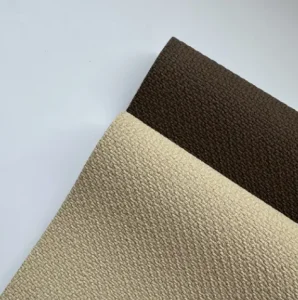
High-Quality RCS Qualified Recycled Green Synthetic Leather-9321
Product Specifications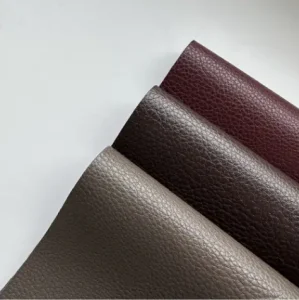
High-Quality Bio-Based Renewable Synthetic Leather-9078
Product Specifications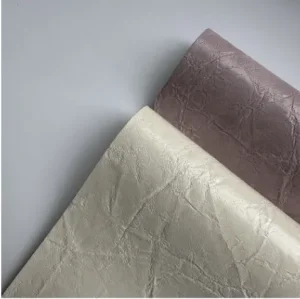
High-Quality RCS Recycled Synthetic Leather-0212
Product Specifications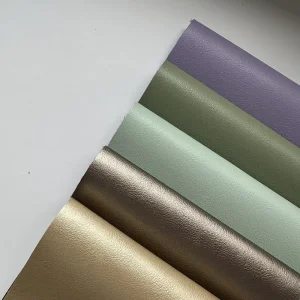
Wholesale RCS Recycled Synthetic Leather
Product Specifications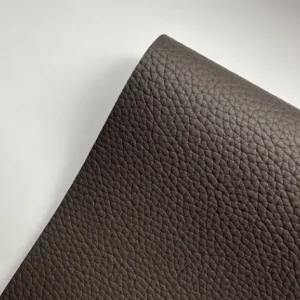
OEM Low-Impact Sustainable Synthetic Leather-9299
Product Specifications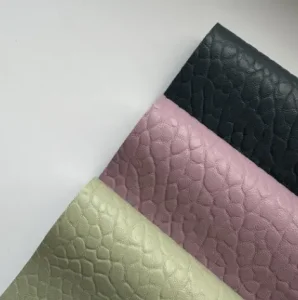
OEM RCS Certified Recycled Eco Synthetic Leather-9377
Product Specifications