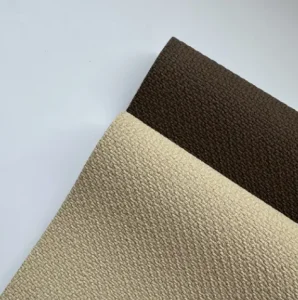
Direct OEM Material Formulations
High-tensile bio-based polyurethane membranes infused with upcycled agricultural biopolymers, tested under ISO 17025 accredited physical stress conditions.
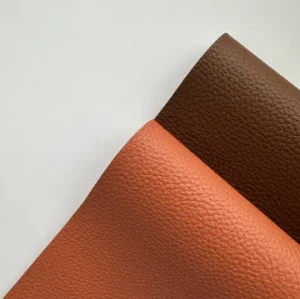
Custom Bio-Based Renewable Synthetic Leather-9109
View Technical Specs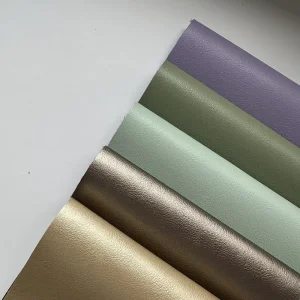
Wholesale RCS Recycled Synthetic Leather
View Technical Specs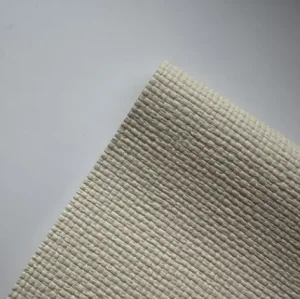
Bio-Sourced Renewable Plant-Based Leather-9116
View Technical Specs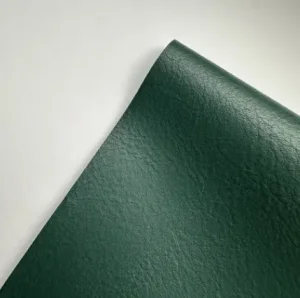
OEM Plant-Derived Bio-Based Leather-9106
View Technical Specs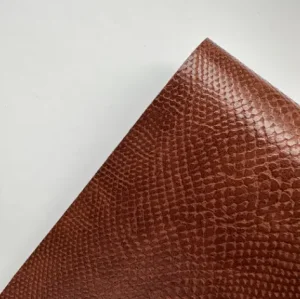
Custom RCS-Verified Recycled Leather-0041
View Technical Specs
Custom Plant-Derived Renewable Leather-9081
View Technical Specs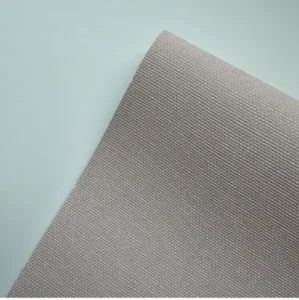
Low Carbon Impact Eco Synthetic Leather-9362
View Technical Specs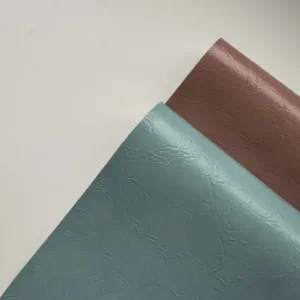
Industrial-Grade Bio-Derived Leather-0177
View Technical SpecsMacro Industry Challenges & Paradigm Shift to Agricultural Valorization
The international leather goods and artificial textiles industries are navigating an unprecedented structural transition driven by stringent carbon accountability, scope-3 decarbonization mandates, and escalating regulatory bans against non-circular fossil materials. As an elite OEM Agricultural Waste Based Leather Manufacturer, Yingde City JiangXin New Material Co., Ltd. (JX.ECO) integrates industrial biotechnology with advanced coating precision to decouple synthetic surface engineering from virgin petrochemical feedstocks.
Fossil Carbon Decoupling
Traditional synthetic leathers rely entirely on petrochemical petroleum cracking, emitting substantial upstream greenhouse gases. By substituting petro-polyols with renewable, second-generation biopolyols extracted from non-food agricultural waste, we permanently lower embedded product carbon footprints (PCF) at the molecular origin.
Zero Food-Chain Competition
Unlike first-generation bio-plastics derived from human nutrition sources such as corn starch or sugarcane, our engineering inputs stem entirely from post-harvest pomace, fibrous peels, husk residues, and industrial biomass side-streams, preserving land biodiversity and global food safety balances.
Clean Process Chemistry
Eliminating traditional DMF (Dimethylformamide), toluene, and toxic plasticizers through proprietary solvent-free hot-melt calendering and ultra-low VOC waterborne polyurethanes ensures our agricultural leather platforms protect industrial shop-floor safety and end-user dermal biocompatibility.
Global Commercial & Industrial Footprint Analysis
The commercial status of sustainable faux leather has evolved from niche boutique experimentation into massive corporate supply integration. Tier-1 multinational OEM footwear groups, electric vehicle (EV) automotive interiors, and multi-billion-dollar luxury fashion houses have established binding mandates targeting over 50% sustainable raw material consumption by 2030.
European Regulatory Shockwaves
Under the EU Green Deal, Corporate Sustainability Due Diligence Directive (CSDDD), and Digital Product Passport (DPP) framework, brands without verified, traceably audited biomass metrics face prohibitive carbon border adjustment taxes and stringent retail exclusion across Schengen territories.
Automotive EV Interior Disruption
Automotive giants have officially decoupled from animal-derived hides to curb leather tannery wastewater pollution. JX.ECO’s high-durability agricultural bio-composites meet demanding automotive cyclic Taber abrasion, cold crack resistance (-30°C), and low-fogging criteria.
Mass OEM Industrial Capacity
A key bottleneck for early-stage biomaterial startups has been lab-scale limitations. Operating a 135,733 m² solar-powered clean-tech hub with 16M+ meters annual throughput, JiangXin bridges the gap between disruptive bio-science and commercial container-scale execution.
Localized Global Support, Risk Mitigation & Compliance Architecture
Cross-border supply chain operations require rock-solid verification to shield OEM brands from reputational greenwashing liability. JX.ECO maintains third-party lab documentation, full chain-of-custody audits, and specialized field engineering liaison to assure friction-free port entry and brand onboarding.
ASTM D6866 Radiocarbon Testing
We provide definitive isotope quantitative analysis conducted via Accelerated Mass Spectrometry (AMS), empirically distinguishing contemporary biogenic carbon from non-renewable petrochemical carbon to substantiate USDA BioPreferred® hangtags.
RCS & GRS Chain of Custody
Accredited by Textile Exchange certification protocols. Every commercial production batch is issued genuine Transaction Certificates (TCs), ensuring physical mass balance traceability from secondary raw waste collectors up to shipping vessels.
Zero RSL Hazardous Chemistry
Fully cleared under EU REACH (EC 1907/2006) 240+ Substances of Very High Concern (SVHC), RoHS directives, 6P/17P phthalate exclusions, and OEKO-TEX Standard 100 Class I thresholds suited for sensitive infant and skin-contact applications.
Industrial Deployment Scenarios & OEM Product Engineering
Agricultural waste bio-leather must match or outperform premium bovine grain hides in physical flexibility, peel strength, stitch tear resistance, and finish fastness. We customize mechanical and chemical backings directly for your production lines.
Footwear Uppers & Counters
Formulated for cyclic flexing exceeding 100,000 cycles (Bally Flexometer, room temp & -10°C). Resists salt stains, moisture penetration, and dynamic toe-crease delamination in athletic sneakers and luxury formal boots.
Luxury Handbags & Luggage
Provides exquisite grain clarity, soft drape, structural fullness, and edge-paint compatibility. High colorfastness to wet and dry rubbing (Veslic >4 Grade) guarantees premium long-term visual aesthetics.
Fashion Garments & Outerwear
Engineered at ultra-lightweight gauges (0.5mm - 0.75mm) with micro-porous breathable coatings. Retains silk-like drape and supple stretch memory without hardening under sub-zero climatic exposures.
Electronics & Tech Sleeves
Non-staining surface chemistry built to resist hand sanitizers, oils, and cosmic UV degradation. Compatible with thermal debossing, precision CNC die-cutting, and ultrasonic high-frequency welding.
R&D Trajectory: Next-Generation Circular Bio-Polymer Advancements
JiangXin New Material commits a significant share of yearly operational revenues to in-house macromolecular R&D. Our engineering roadmap outlines how agricultural biomass will transition from partial additive reinforcement to 100% bio-based circular lifecycles.
30% - 50% Bio-Carbon Ratio
Industrial stabilization of agricultural waste bio-polyols across high-speed dry-transfer PU coating lines. Complete integration of recycled polyester (rPET) backing substrates under active RCS / GRS certificates.
75%+ Monomer Substitution
Scaling biological diisocyanates and non-edible plant fiber substrates (bamboo, hemp, banana husk pulp) to drive biogenic content past 75% under ASTM D6866 standard measurements.
100% Circular Compostability
Development of enzymatically triggerable bio-polyurethanes that naturally biodegrade in industrial aerobic composting environments within 180 days, completely eliminating microplastic residues.
Agricultural Waste Leather Engineering & Procurement FAQ
Clear, auditable engineering responses addressed to technical procurement heads, chemical compliance directors, and lead industrial designers.
What specific agricultural waste feedstocks are utilized in JX.ECO's synthetic leather formulations?
How does agricultural waste leather compare with conventional PU and animal hides in longevity?
Can you support custom embossings, grains, thicknesses, and substrate backings for OEM brands?
What documentation accompanies export shipments to clear EU and North American customs?
What are your minimum order quantities (MOQ) and production lead times?
Advanced Circular & Bio-Based References
Explore additional performance-tested agricultural and recycled material innovations ready for bulk sampling and custom industrial formulation.
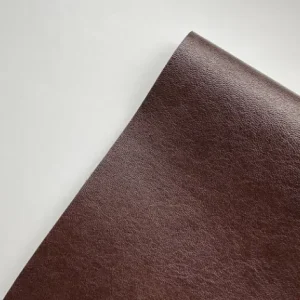
Custom RCS Verified Recycled Synthetic Leather
View Technical Specs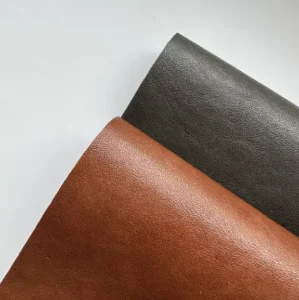
Wholesale Eco-Friendly Sustainable Leather-9309
View Technical Specs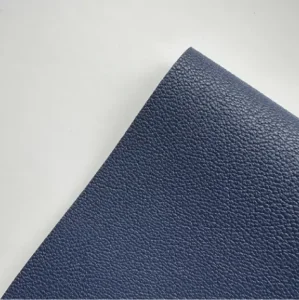
Wholesale Green Circular Synthetic Leather-9168
View Technical Specs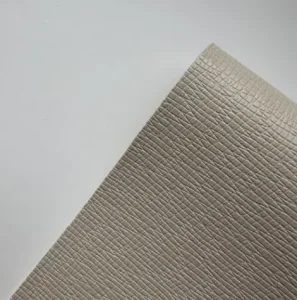
RCS-Verified Recycled Sustainable Leather-9265
View Technical Specs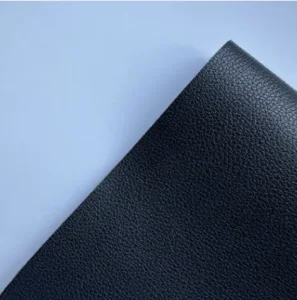
Green Low-Carbon Sustainable Leather-9077
View Technical Specs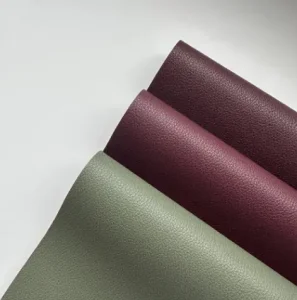
Eco Plant-Based Renewable Leather-9077
View Technical Specs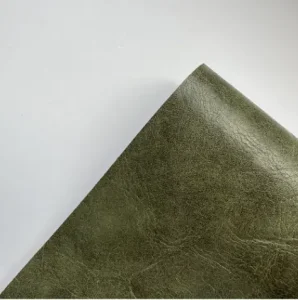
Eco-Renewable Plant-Based Bio Leather-9240
View Technical Specs