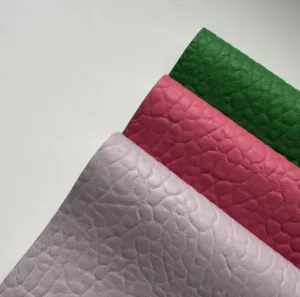
Featured Bio-Based & RCS Traceable Articles
Direct factory supply audited under strict global chain-of-custody protocols. Optimized for mechanical durability, solvent-free synthesis, and low-VOC output.
-
Custom RCS‑Verified Recycled‑Content Sustainable Synthetic Leather-9317 Manufacturers, Manufacturer
-
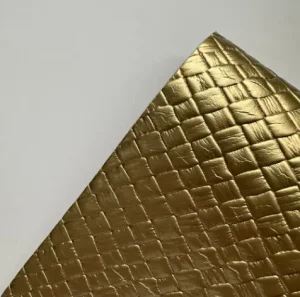
Wholesale Green Sustainable High-End Synthetic Leather-9264 Manufacturers, Manufacturer
-
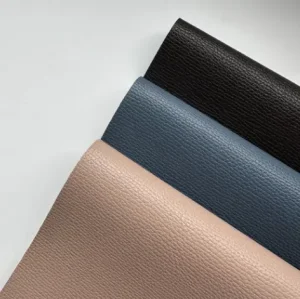
High-Quality RCS Qualified Recycled Green Synthetic Leather-2056 Manufacturers, Supplier
-
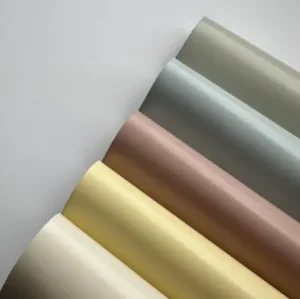
Wholesale Eco‑Friendly Sustainable Synthetic Leather-9015 Factory, Factories
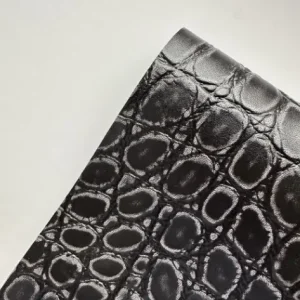
-
High-Quality Sustainable Eco-Friendly Faux Leather Supplier, Suppliers
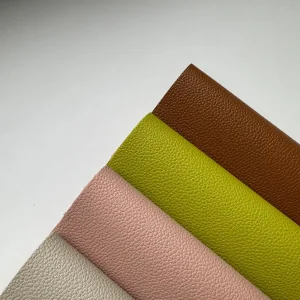
-
Custom Sustainable Bio-Based Vegan Leather-2002 Manufacturer, Factories
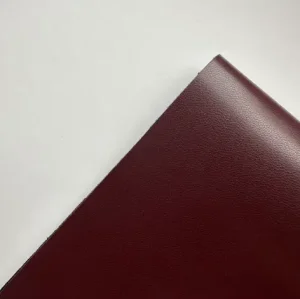
-
Wholesale Green Circular Synthetic Leather-9168 Supplier, Factory
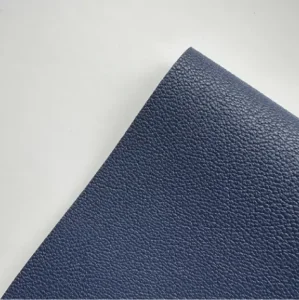
-
Custom RCS Recycled Base Vegan Synthetic Leather-0163 Manufacturer, Supplier
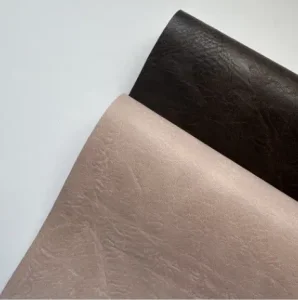
Decarbonizing Polymer Substrates: The Global Reality
Modern multinational original equipment manufacturers (OEMs) and fashion houses face strict regulatory mandates to eliminate petroleum-derived plastics and toxic solvents like Dimethylformamide (DMFa). Our comprehensive polymer roadmap bridges the gap between environmental responsibility and high-stress durability.
Bio-Based Polymer Synthesis
Agricultural feedstocks and non-food biomass are distilled into bio-polyols via advanced transesterification, effectively displacing up to 75% of fossil carbons. Verified through rigorous ASTM D6866 radiocarbon analytical standards.
Closed-Loop RCS Recycling
Utilizing post-consumer PET bottles and pre-consumer industrial polyurethane scrap to synthesize recycled base microfibers and knit supports. Full transaction certificate (TC) tracking provides complete chain-of-custody transparency.
Solvent-Free Waterborne PU
100% aqueous polyurethane dispersions (PUD) eliminate chemical solvent exposure for workers and eliminate hazardous waste streams. The resulting skin exhibits exceptional tensile flexibility, hydrolytic stability, and near-zero emission of volatile organics.
Engineered Substrates for High-Performance Sectors
Custom polymer matrices tailored to balance flex resistance, hydrolytic stability, fire retardancy, and haptic feedback across global manufacturing hubs.
Automotive Interiors
Meets strict OEM interior criteria for scratch resistance (Taber > 100k cycles), cold flex durability (-30°C), and low emissions to prevent windshield fogging and cabin chemical smell.
Performance Footwear
Formulated for rapid flexing, dynamic water resistance, and high stitch-tear strength. Compatible with high-frequency welding and automated die-cutting assembly lines.
Luxury Goods & Luggage
Delivers exceptional drape, realistic leather grain definitions, and edge-paint adhesion. Engineered with oil and stain-resistant finishes to maintain color fastness in tropical environments.
Upholstery & Aviation
Flame-retardant synthetic membranes resistant to prolonged UV radiation, hospital-grade disinfectant exposure, and abrasion for long commercial lifecycle requirements.
Audited Supply Chains for Risk Mitigation
Ensuring unhindered cross-border trade with comprehensive chemical documentation, social accountability certifications, and verifiable environmental assessments.
EU REACH & RoHS
Complete screening against Substances of Very High Concern (SVHC). Free from hazardous plasticizers, organotin compounds, AZO dyes, and restricted heavy metals (lead, cadmium, mercury, hexavalent chromium).
OEKO-TEX & 6P Phthalate Free
Certified skin-safe coatings tailored for direct apparel and footwear applications. Strict omission of DEHP, DBP, BBP, DINP, DIDP, and DnOP plasticizing agents ensures full compliance with international safety protocols.
amfori BSCI & Higg FEM
Our 135,733 m² smart manufacturing campus in Guangdong operates under transparent social audits (BSCI) and environmental tracking metrics (Higg Facility Environmental Module), powered by a dedicated 4.68 MW solar system.
The Next Generation of Biomaterials
Tracing our long-term engineering trajectory from fossil polyurethane alternatives to truly circular, non-petroleum synthetic composite structures.
Waterborne PU & Solvent Elimination
Replaced petroleum solvents (DMF, DMAC, MEK) with aqueous dispersions, reducing processing VOCs by 95% across manufacturing workshops.
Bio-Polyol Escalation (30%-70%)
Integrating commercial corn, castor, and plant feedstocks into the backbone of high-durability skin and mid-layer foams with carbon dating certification.
Ocean Bound RCS Recycled Backing
Scaling up performance microfiber substrates woven exclusively from post-consumer recycled ocean plastics and pre-consumer textile waste.
100% Biodegradable Vegan Composites
Developing bio-derived elastomer matrices engineered to break down in industrial composting facilities without leaving microplastic residues behind.
Frequently Asked Engineering & Sourcing Questions
Direct technical clarifications for chief sourcing officers, material engineers, and sustainability directors.
How is bio-based content quantitatively validated in high-end faux leather?
Bio-based percentage is empirically determined through accelerated mass spectrometry (AMS) radiocarbon testing pursuant to ASTM D6866. This process precisely measures the ratio of Carbon-14 (modern plant-derived carbon) relative to Carbon-12 (fossil/petrochemical carbon), providing unalterable data verified by ISO 17025 accredited analytical laboratories.
Can solvent-free vegan leather match traditional PU and animal leather in abrasion resistance?
Yes. By engineering dense cross-linking networks in solvent-free polyurethane dispersions, our synthetic leathers achieve superior hydrolytic stability (Jungle Test > 5-10 weeks, simulating 5-10 years of use in humid climates) and surpass 100,000 to 200,000 cycles on Martindale and Taber abrasion testers, outperforming standard PVC and lower-grade genuine split leathers.
What chain-of-custody documentation is provided for RCS-certified materials?
Every shipment manufactured using our Recycled Claim Standard (RCS) platform is backed by official Transaction Certificates (TCs) issued by accredited third-party certification bodies (e.g., IDFL or Control Union). This ensures unbroken proof of recycled content sourcing from fiber recovery down to the finished roll shipped to your contract manufacturing facilities.
How does JiangXin manage supply chain risk and bulk quality uniformity?
Production is fully centralized across our 135,733 m² single-site campus in Guangdong. Operating wet/dry processing, compounding, coating, grain embossing, and backing laminated processes under one roof eliminates intermediate transit variances. Every production batch undergoes automated spectrophotometer color matching (ΔE < 0.5) and inline roll-to-roll thickness profiling.
Specialized Synthetic Surfaces & Substrates
Browse our extended product portfolio featuring high-yield cutting efficiencies, customized embossed textures, and eco-certified circular backing formulations.
-
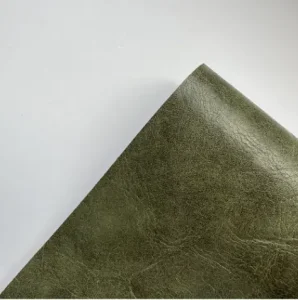
OEM Eco-Renewable Plant-Based Bio Synthetic Leather-9240 Factory, Factories
-
High-Quality Eco-Friendly Sustainable Synthetic Leather-9081 Manufacturer, Factory

-
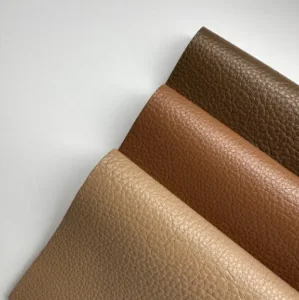
Custom RCS Recycled Synthetic Leather-9078 Manufacturer, Suppliers
-
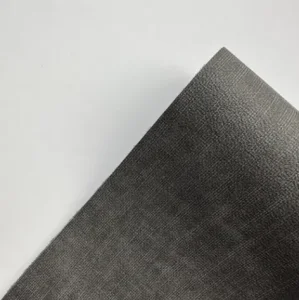
High-Quality Plant-Sourced Bio-Based Renewable Synthetic Leather-9103 Suppliers, Factories
-
Wholesale Bio-Based Renewable Synthetic Leather Supplier, Factory

-
Wholesale Eco-Conscious High-Performance Synthetic Leather-0167 Manufacturers, Factory

-
Wholesale Bio-Based Renewable Synthetic Leather-9293 Supplier, Factories
-
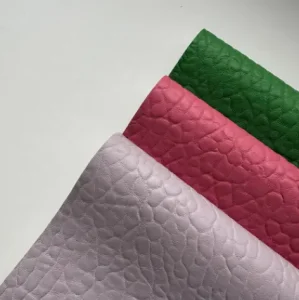
High-Quality Eco‑Friendly Sustainable Synthetic Leather-9239 Supplier, Suppliers