
Upcycled & Sustainable Materials Industry Trajectory
A data-informed analysis of how tightening European corporate sustainability mandates and carbon border regulations are reshaping synthetic leather procurement from raw hide alternatives to circular composites.
CSRD & Digital Product Passport (DPP)
Global multi-nationals face stringent traceability audits under the EU Corporate Sustainability Due Diligence Directive. Synthetic leather vendors must now guarantee batch-level transparency via RCS transaction certificates and validated LCA data.
Post-Fossil Feedstock Substitution
Moving past standard petro-chemical polyurethanes, high-performance OEM production combines recycled post-consumer rPET substrates with plant-derived renewable polyols, dropping petrochemical reliance by up to 45%.
Solvent-Free & Waterborne PU Maturation
Traditional DMF and VOC-heavy coagulation processes have become toxic liabilities. Next-generation facilities use solvent-free reactive hot-melts and high-solid waterborne coatings that consume 70% less process water.
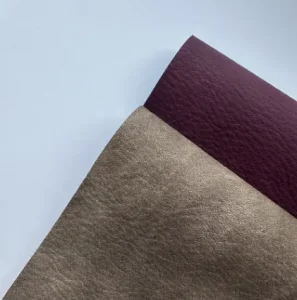
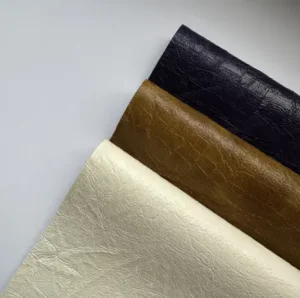
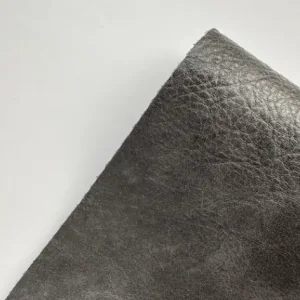
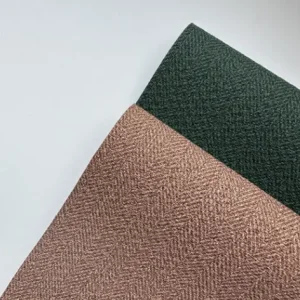
Precision Engineered Sustainable References
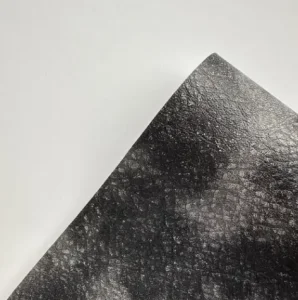
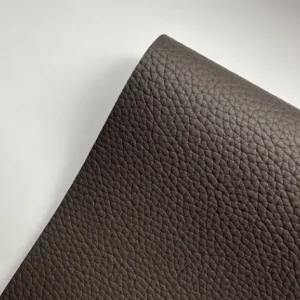
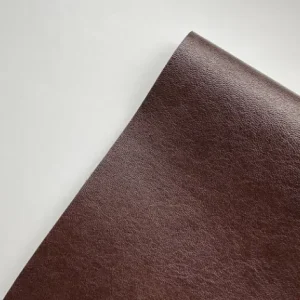
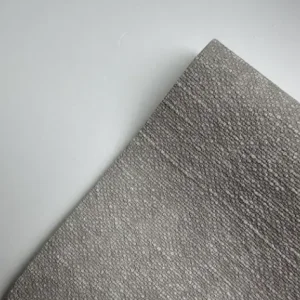
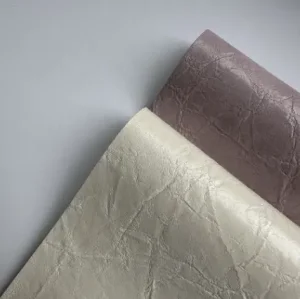
RCS-verified recycled synthetic leathers and biobased composites ready for OEM sampling and tech-pack specification.



Overcoming Commercial Upcycled Leather Hurdles
How Tier-1 footwear, luxury handbag, and automotive interior brands navigate the intersection of sustainable storytelling and mechanical resilience.
Tensile & Hydrolytic Degradation
Challenge: Recycled fibers and early bio-resins often yield low peel strength and fail 5-week jungle tests (70°C, 95% RH).
Solution: JiangXin's dual-crosslinking polyurethane chemistry ensures 7–10 year hydrolysis resistance, surpassing Bally flex standards (>100,000 cycles).
Supply Chain Greenwashing Risk
Challenge: Lack of chain-of-custody exposes brands to consumer litigation and regulatory fines under Green Claims Directives.
Solution: Complete custody tracking certified under Textile Exchange RCS (Recycled Claim Standard) paired with independent radiocarbon testing (ASTM D6866).
Batch-to-Batch Color & Grain Variance
Challenge: Inconsistent upcycled substrates cause shade drifting and uneven embossing during continuous line production.
Solution: Automated inline spectrophotometry and laser-calibrated release paper lines across our 135,733 m² campus guarantee strict Delta E < 0.8 color tolerance.
Export Verification & Standard Alignment
Built for tier-1 supply chains: all articles are certified against leading chemical safety and sustainability governance frameworks.
RCS & GRS Traceability
Chain-of-custody tracking verifying recycled content inputs from post-industrial scrap to final rolls, backed by authentic Transaction Certificates (TC).
REACH / RoHS Compliance
Zero SVHC chemicals. Strictly meets EU 1907/2006 regulations, heavy-metal restrictions, and 6P phthalate-free safety benchmarks.
USDA BioPreferred / ASTM D6866
Validated plant-derived renewable carbon fraction verified through third-party accelerator mass spectrometry isotope measurement.
amfori BSCI & Higg FEM
Audited social accountability campus backed by Higg Facility Environmental Module scorecards tracking rooftop solar usage and closed-loop wastewater processing.
Next-Generation Upcycling & Circular Roadmap
Engineering future-proof synthetic leather technologies from agricultural waste streams to true circular end-of-life depolymerization.
Phase 1: Bio-Mass Agrifiber Valorization
Integrating agricultural side-streams—such as apple pomace, sugarcane bagasse, and coffee grounds—directly into the base substrate to minimize reliance on virgin polymers without reducing tensile performance.
Phase 2: Monomateriality for Pure Recycling
Developing 100% circular Thermoplastic Polyurethane (TPU) leather constructions where skin, foam layer, and knit backing share identical polymer chemistry, enabling closed-loop mechanical recycling without layer separation.
Phase 3: Solventless Photocurable Coatings
Transitioning finishing lines to electron-beam (EB) and ultra-violet (UV) curing resins. This completely eliminates drying ovens, reducing operational thermal energy consumption across our facility by 60%.
High-Performance Upcycled Articles
Explore production-ready references with certified properties for luxury apparel, performance footwear, and luggage programs.




Frequently Asked Questions
Technical and commercial clarifications covering certifications, physical specifications, lead times, and factory capabilities.