
Featured Sustainable Synthetic Leather Solutions
Direct factory production lines for circular-engineered polymers, traceable RCS recycled compositions, and ultra-durable micro-textures.
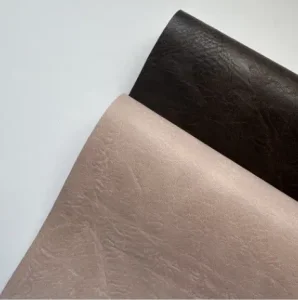
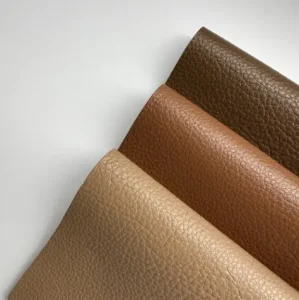
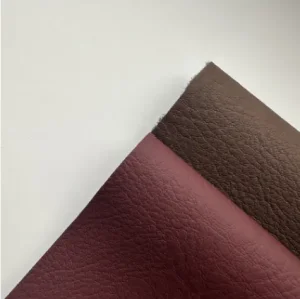
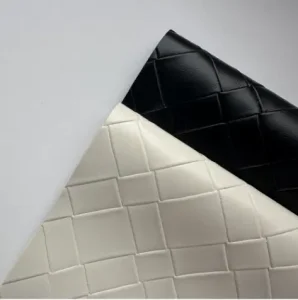

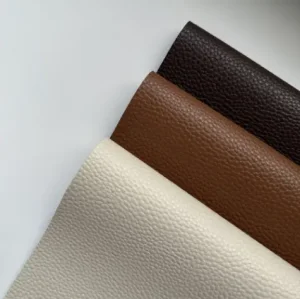
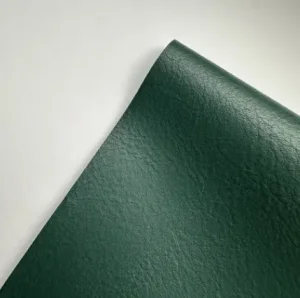
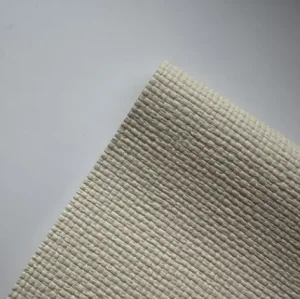
The Global Suede Synthetic Leather Industrial Landscape
Examining macro shifts from fossil-dependent polymers to ultra-microfiber matrix structures and biobased resin composites.
Sea-Island Microfiber Evolution
Modern suede synthetics have surpassed legacy PVC and coagulated polyurethane methods. Through sea-island matrix fiber engineering (0.001–0.003 denier polyamide/polyurethane consolidation), technical mills produce three-dimensional bundle architectures identical to the collagen dermis found in natural suede calfskin.
Stricter Regulatory Horizons
Global corporate procurement teams in Europe and North America must navigate tightening EU Corporate Sustainability Due Diligence Directive (CSDDD) and REACH requirements. The restriction of residual DMFa (<5 ppm threshold) and fluorinated processing aids has redefined standard purchasing specifications.
Carbon Footprint Rationalization
Comparative Life Cycle Assessments (LCA) demonstrate that premium plant-derived and RCS-recycled microfiber suedes deliver a 60–78% reduction in CO₂ equivalent emissions against bovine suede tanning processes, eliminating chromium salts and reducing wastewater chemical oxygen demand (COD).
Chinese Factory Efficiency: Scalability, Precision, & Integration
How Chinese technological infrastructure enables high-precision suede engineering, fast prototyping cycles, and end-to-end quality stability.
Vertical Value-Chain Density
From raw PET pellet upcycling and plant-based polyol synthesis to needle-punching, sea-island dissolution, buffing, and high-temperature dyeing, Chinese centers bundle total manufacturing processes within single provincial clusters, shortening sample matching from weeks to 48 hours.
Automated Inline Spectrometry
Equipped with computerized spectrophotometers and continuous thickness sensors (±0.02 mm tolerance limits), our modern lines eliminate batch-to-batch chromatic divergence. Every roll maintains uniform nap height, writing effect, and tensile performance along its entire continuous length.
Audit-Ready Documentation
Factory production incorporates live tracking of Transaction Certificates (TCs) for GRS and RCS streams, coupled with verified USDA BioPreferred radiocarbon dating reports. Sourcing agents receive uncompromised verification from port-of-entry through retail hangtags.
Engineered Application Scenarios & Physical Thresholds
Different industrial applications demand targeted physical behaviors: high Martindale abrasion resistance, thermal stability, breathability, and non-hydrolytic durability.
| Application Sector | Key Performance Metrics | Material Configuration | Global Industry Compliance |
|---|---|---|---|
| Automotive Interiors Dashboards, Steering, Seating |
Martindale: >100,000 cycles UV Stability: DIN 75202 (Grade 4-5) Fogging: <2mg (DIN 75201) |
Waterborne Polyurethane (WPU) + Recycled Microfiber Backing (0.8 - 1.2 mm) | FMVSS 302, OEM RSLs, REACH, RoHS |
| Performance Footwear Athletic uppers, Trail boots |
Bally Flex: >150,000 passes (-10°C) Vapor Permeability: >3.5 mg/cm²·h Tear Strength: >35 N/mm |
Biobased Sea-Island Microfiber Matrix (0.6 - 1.4 mm) | SATRA TM Standards, RCS Certification, ASTM D6866 |
| Luxury Bags & Small Goods Totes, Luggage, Wallets |
Rich Double-Face Writing Effect Crocking Resistance: Dry Grade 5, Wet Grade 4.5 Edge Inking Hold |
Solvent-Free Microfiber Suede with dense cross-linked nap (0.5 - 1.8 mm) | Prop 65, Phthalates 6P Free, OEKO-TEX Standard 100 |
| Contract Furniture Hospitality & Healthcare |
Flame Retardancy: BS 5852 Crib 5, CAL 133 Hydrolysis Resistance: 7-10 Year Jungle Test Anti-Bacterial: ISO 22196 |
Heavy Microfiber Suede with stain-repellent finish (1.0 - 1.6 mm) | BSCI Certified, Higg FEM Level 3 |
Footwear & Athletic Performance
Footwear demands dynamic stretch recovery, tear resistance, and sweat evaporation. Our breathable micro-porous suede prevents moisture retention inside athletic boots while matching the cut-edge aesthetic of natural split suede without edge peeling.
Automotive & Transit Environments
Vehicle passenger cabins require volatile organic compound control (low odor, VOC-free). Our waterborne suede coatings achieve strict VDA 270 olfactory grades and VDA 278 thermal desorption standards, enduring continuous sun exposure without surface embrittlement.
Fine Garments & Consumer Electronics
From feather-light 0.4 mm garment suede delivering supple drape to soft-touch tablet and laptop linings with electrostatic discharge (ESD) security, specialized finishes allow multi-sector integration without fiber migration.
Market Evolution & Corporate Procurement Strategy
Key trends transforming how material directors, designers, and supply chain heads source high-performance suede synthetics.
1. High Bio-Content Formulations
Shift from 100% petroleum polyurethane to 30%-55% corn starch, castor bean, or agricultural residue-derived polyols, drastically lowering product carbon footprints without compromising physical properties.
2. True Closed-Loop Recycling
Post-industrial and post-consumer textile upcycling. The next stage focuses on mono-material constructions (all-polyester or all-polyurethane systems) enabling complete end-of-life depolymerization.
3. Yield Stability & Efficiency
Real hides waste 25%-40% of their surface during pattern nesting due to natural flaws and neck wrinkles. Synthetic suede rolls yield 95%-98% clean material cut efficiency across automated CNC cutting tables.
4. Supply Chain De-Risking
Audited tier-one manufacturing partners must demonstrate water stewardship, on-site regenerative solar infrastructure, and certified social responsibility standards (BSCI, ISO 14001, Higg Index FEM).
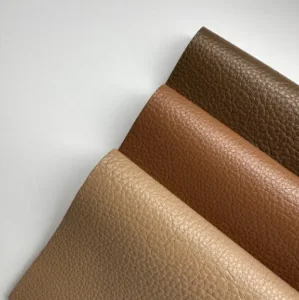
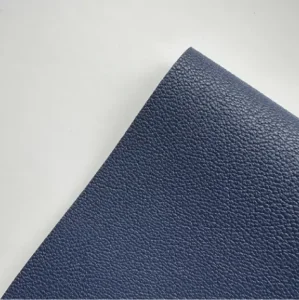
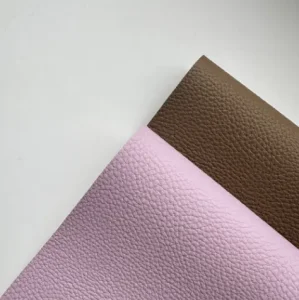
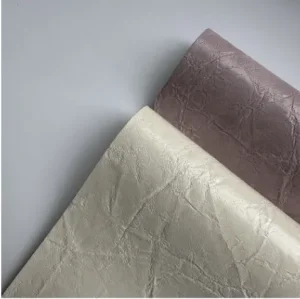
Expanded Catalog: High-Performance Synthetic References
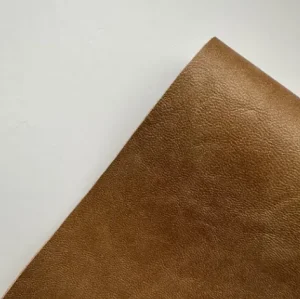
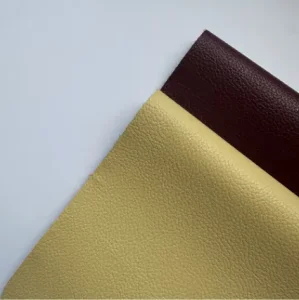
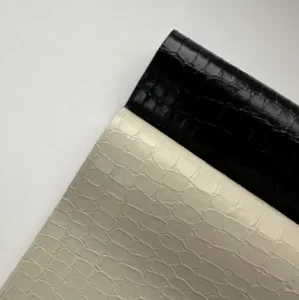
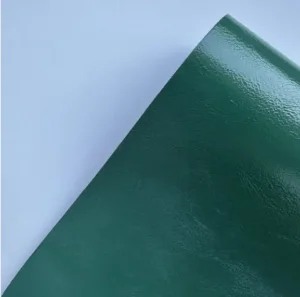
Engineered for immediate bulk sampling and OEM/ODM specification in high-grade bags, accessories, and upholstery.
Frequently Asked Sourcing & Engineering Questions
Direct technical guidance for material engineers, compliance leads, and international logistics directors.
What engineering distinctions separate Microfiber Suede Synthetic Leather from conventional PU suede?
How is biobased renewable content calculated and verified across supply orders?
Can you provide full chain-of-custody Transaction Certificates (TCs) for RCS/GRS compliance?
What specific chemical compliance safety standards are satisfied for European and North American markets?
What are your typical minimum order quantities (MOQ), custom color matching capabilities, and lead times?
Accelerate Your Material Transition
Connect with our senior technical material engineers to receive physical sample decks, complete technical TDS data sheets, and comprehensive factory compliance dossiers.
Request Technical Swatch Book & Catalog