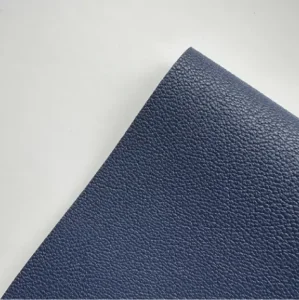
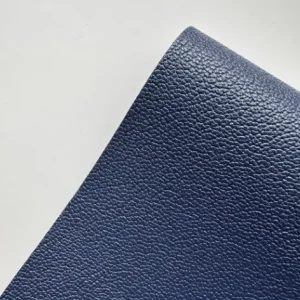
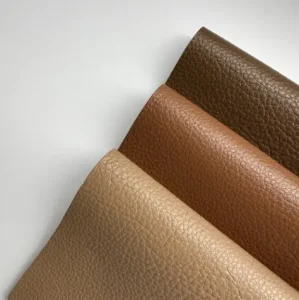
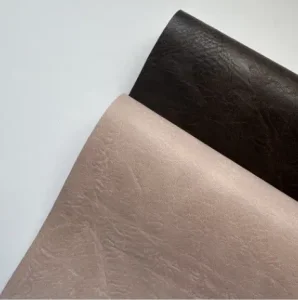
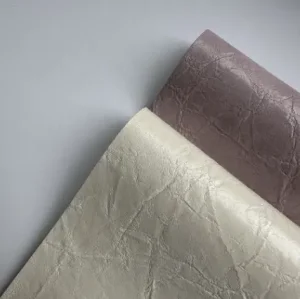
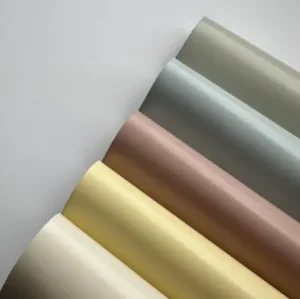
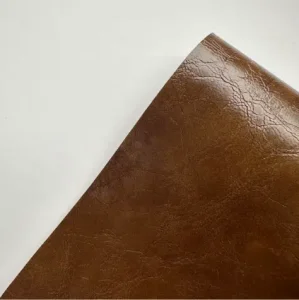
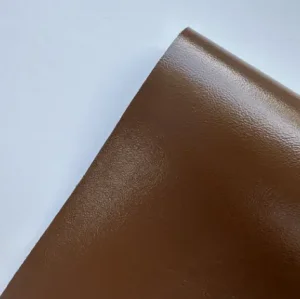
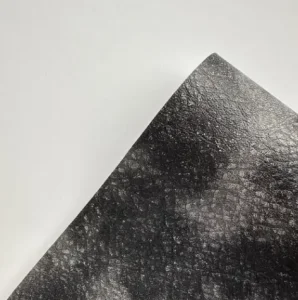
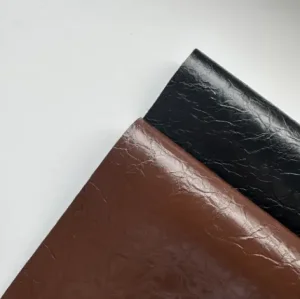
Featured RCS-Certified Recycled Plastic Leather Articles
Certified post-consumer recycled rPET formulations tailored for high tensile resilience, micro-embossed grain retention, and zero volatile organic compounds.
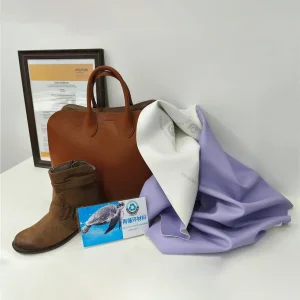
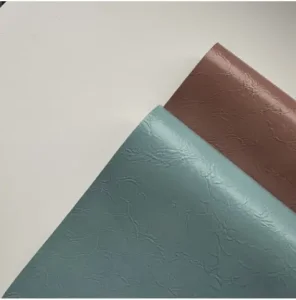
The Global Industrial Landscape of Recycled Plastic Leather
Transitioning from virgin petrochemical polymers to mechanically and chemically recycled post-consumer PET (rPET) resin systems is no longer an optional ESG initiative—it is an existential supply-chain imperative.
Regulatory Pressures & Scope 3 Mandates
The enforcement of the EU Corporate Sustainability Due Diligence Directive (CSDDD), the EU Ecodesign for Sustainable Products Regulation (ESPR), and California SB 253 has compelled Tier-1 international brand groups to scrutinize every linear meter of substrate. Traditional synthetic leather relying on virgin fossil polymers generates high embodied carbon footprints.
Recycled plastic leather replaces petro-derived polyamide and polyester matrixes with post-consumer recycled poly(ethylene terephthalate) (rPET) recovered from certified bottle-grade flake and ocean-bound plastics, reducing greenhouse emissions by up to 48% per square meter.
Solvent-Free Waterborne Polyurethane (WPU)
The historic hurdle of recycled synthetic leathers lay in solvent toxicity. Conventional production consumed millions of tons of dimethylformamide (DMFa) and toluene. Modern high-quality recycled plastic leather utilizes 100% solvent-free polyurethane systems and aqueous waterborne dispersions.
This elimination of hazardous volatile organic compounds (VOCs) ensures materials comply directly with zero discharge hazardous chemicals (ZDHC) standards while preserving structural flexibility and micro-tactile grain definitions.
Chain of Custody & Digital Passports
Global enterprise procurement cannot settle for undocumented verbal declarations. Recycled plastic leather must possess ironclad validation through the Textile Exchange Recycled Claim Standard (RCS) and Global Recycled Standard (GRS).
Every shipment engineered at JX.ECO comes backed by batch-specific Transaction Certificates (TCs) that track input resins from the mechanical flaking facility through spin-draw fleece knitting, solvent-free coagulation, and surface finishing, creating complete alignment with emerging Digital Product Passport (DPP) architectures.
China Factory Efficiency: Yingde City JiangXin New Material Co., Ltd.
Established on June 2, 2017, in Yinghong Industrial Park, Yingde City, Guangdong Province, China, JiangXin New Material (JX.ECO) operates an expansive 135,733 m² mega-manufacturing campus specifically engineered to reconcile massive industrial scale with hyper-clean, closed-loop sustainability.
China's unmatched chemical manufacturing ecosystems allow JX.ECO to integrate every layer of the value chain on a single campus. From spinning high-denier recycled polyester microfiber to compounding custom bio-polyols and operating high-speed automated dry/wet coating lines, this tight cluster eliminates intermediate transshipment delays and carbon leakage.
- Photovoltaic Clean Power: 4.68 MW rooftop photovoltaic solar system supplying clean energy to active dry-process and wet-process lines.
- Closed-Loop Effluent Control: Dedicated on-site wastewater treatment plant operating under zero-discharge environmental patents.
- Consolidated Annual Output: Over 16,000,000 meters of precision synthetic leather shipped to 300+ clients across 50+ countries.
- Modern Occupational Architecture: Floor-to-ceiling tempered glass workshops optimizing natural daylighting with advanced thermal recovery.
The Cost-to-Performance Arbitrage
Western material development often suffers from severe supply fragmentation: base microfiber fleece sourced from one continent, waterborne resins imported from another, and finishing contracted out to high-cost toll treaters. This fragmentation inflates unit costs and introduces fatal lead-time risks.
By centralizing formulation synthesis, base extrusion, foaming, embossing, and automated quality control under one roof in Guangdong, JX.ECO offers multinational corporations a 30% to 45% total-cost-of-ownership (TCO) advantage with compressed sampling turns of just 3 to 5 business days.
Localized Application Scenarios for Recycled Plastic Leather
Engineered for extreme performance across demanding commercial, automotive, fashion, and technical hardware use-cases.
Automotive & EV Seating
Electric vehicle manufacturers demand weight reduction and verifiable low-carbon cabins. Our high-tensile rPET microfiber leathers exceed stringent automotive standards: DIN 75201 fogging limits, FMVSS 302 flammability ratings, and Taber abrasion tests surpassing 100,000 cycles without coating crack or color rub-off.
Athletic Footwear & Cleats
Footwear uppers encounter violent multidirectional shear stress and wet flexion. JX.ECO's recycled composites offer cold-flex resistance exceeding 150,000 Bally flex cycles at -20°C, outstanding stitch-tear retention, and dynamic waterproof breathability ideal for high-mileage running shoes.
Luxury Goods & Handbags
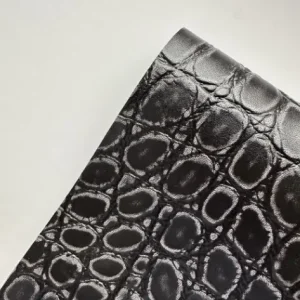
Replicating the supple fullness, drape, and burnished edge-finishing of calfskin without animal cruelty. Utilizing specialized toothpick grains and dimensional vacuum embossing, our materials provide uncompromised edge-creasing performance and compatibility with solvent-free edge paints.
Consumer Tech Enclosures
Smart wearables, laptop sleeves, and mobile cases require extreme hydrolytic stability and skin biocompatibility. Formulated to withstand a 10-year Jungle Test (70°C, 95% RH), resisting perspiration acids, sebum oils, and continuous UV yellowing.
Emerging Trends in Recycled Leather Science
Next-generation synthetic leather blends circular feedstocks with biobased chemistry, reactive extrusion, and closed-loop recyclability.
Bio-Circular Hybrid Systems
The state of the art no longer separates biobased leathers from recycled plastic substrates. High-tier formulations unite an RCS-certified 100% rPET fleece base with a surface layer formulated from plant-derived agricultural waste polyols (corn, castor, sugarcane).
This hybrid architecture, validated by ASTM D6866 radiocarbon testing, drives fossil carbon content down to record lows while achieving hand-feel metrics indistinguishable from full-grain nappa.
Chemical Depolymerization Recyclability
Historically, composite materials with differing chemical layers could not be recycled at end-of-life. Novel development emphasizes "Mono-Material Design," utilizing rPET fleece backings bound with easily separable or depolymerizable polyurethane adhesive bridges.
This allows spent articles to enter chemical glycolysis or methanolysis recycling streams, converting cutting scrap and discarded products back into pristine BHET monomers for an infinite closed loop.
Solventless Reactive Hot-Melt Coagulation
Thermal efficiency is accelerating with reactive polyurethane hot-melt (PUR) technologies. By applying 100% solids prepolymers that crosslink via ambient atmospheric moisture, processing eliminates thermal drying tunnels entirely.
This innovation reduces electricity and thermal heating consumption by over 60%, drastically compressing Scope 1 and Scope 2 plant emissions across high-volume production runs.
Global Procurement Criteria & RSL Compliance Matrix
Enterprise material buyers evaluate suppliers across three uncompromising axes: chemical purity, mechanical durability, and auditability.
Restricted Substance List (RSL)
Recycled feedstocks carry inherent contamination risks if source streams are poorly regulated. JX.ECO operates strict screening protocols ensuring full compliance with:
- EU REACH & SVHC: Tested clean of all Substances of Very High Concern.
- Zero Ortho-Phthalates (6P/16P): Strict exclusion of toxic plasticizers.
- DMFa Under 5 ppm: Far exceeding European Union thresholds.
Mechanical Performance Baselines
Sustainability cannot excuse material failure. Sourcing tech packs mandate minimum mechanical values across all standard production batches:
- Martindale Abrasion: EN ISO 12947-2 > 50,000 to 100,000 cycles.
- Tensile & Seam Tear: ISO 1421 tensile > 350 N; tear > 35 N.
- Peel Adhesion: Dry peel > 3.0 kg/3cm; Wet peel > 2.5 kg/3cm.
Factory Environmental Auditing
Enterprise procurement groups mandate full social and facility environmental transparency before onboarding new production facilities:
- Higg Index FEM / FSLM: High-scoring verified facility assessments.
- amfori BSCI Audited: Ethical labor practices, safety, and governance.
- ISO 9001 / 14001 / 45001: Certified environmental management systems.
Recycled Plastic Leather: Technical & Sourcing FAQ
Definitive answers compiled by our chemical engineers and global compliance directors to assist enterprise sourcing teams.
Conventional synthetic leather relies entirely on virgin petrochemical precursors derived from refined crude oil and natural gas, often processed with harsh volatile solvents like DMFa. In contrast, recycled plastic leather replaces virgin polymers with certified post-consumer or post-industrial rPET recycled polyester and recycled polyurethane matrices. Coupled with waterborne and solvent-free processing, this delivers a significantly lower carbon footprint with zero heavy-metal plasticizers.
Both standards are governed by the Textile Exchange and verify the chain of custody of recycled materials. The Recycled Claim Standard (RCS) focuses specifically on verifying the exact percentage of recycled content throughout each processing stage. The Global Recycled Standard (GRS) requires a minimum of 20% recycled content and adds strict institutional criteria governing environmental wastewater treatment, social labor conditions, and chemical restrictions.
Not when manufactured correctly. At JX.ECO, recycled PET flakes undergo solid-state polycondensation (SSP) to restore molecular weight and intrinsic viscosity prior to microfiber extrusion. When married to high-performance polycarbonate or polyether polyurethane coatings, the resulting composite delivers hydrolysis resistance spanning 7 to 10+ years (Jungle Test) and peel strengths exceeding 3.0 kg/3cm.
Verification is maintained through audited batch documentation and third-party inspection bodies (e.g., IDFL, Control Union). Every delivery of recycled raw polymer arrives with upstream transaction paperwork. Following bulk coating, our facility issues an official Transaction Certificate (TC) tying the customer's purchase order directly to the certified recycled resin lot.
Yes. We maintain over 3,000 embossing roller patterns including toothpick grain, pebble grain, saffiano, nappa, and exotic textures. Our laboratory utilizes computerized spectrophotometers to achieve color-matching tolerances below Delta E 0.5 against physical Pantone swatches, master color chips, or digital lab values within 3 to 5 business days.
For customized bespoke color and grain formulations, our standard production MOQ is typically 500 to 1,000 linear meters per color. For standard running catalog articles, lower sampling quantities can be accommodated. Standard bulk container orders ship within 12 to 18 calendar days from lab dip approval, backed by our 16-million-meter annual capacity.
Traceable Low-Carbon & Circular Leather References
Full-chain audited articles optimized for high cutting yield, seamless bonding, and premium tactile luxury.