Direct Factory Technical Selections
High-Performance Synthetic Shoe Materials
Engineered to withstand the demanding mechanical stress of lasting machines, vulcanization, and flex testing while adhering strictly to global OEM chemical restriction protocols.
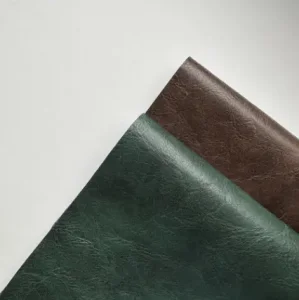
High-Quality Sustainable Recycled Synthetic Leather with Official RCS Certification-9240 Supplier, Suppliers
View Specifications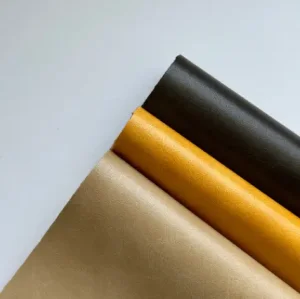
Custom Eco-Friendly Sustainable Synthetic Leather-0251 Suppliers, Factories
View Specifications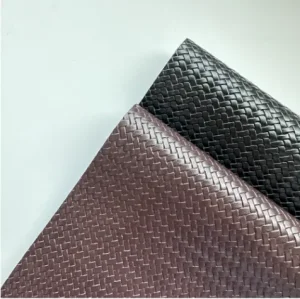
OEM Eco-Friendly Sustainable Synthetic Leather-9348 Manufacturers, Suppliers
View Specifications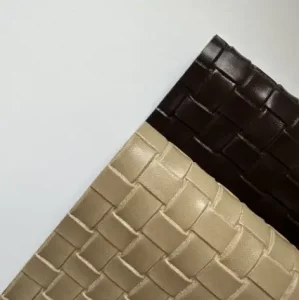
OEM RCS Certified Recycled Sustainable Synthetic Leather-9363 Suppliers, Factory
View Specifications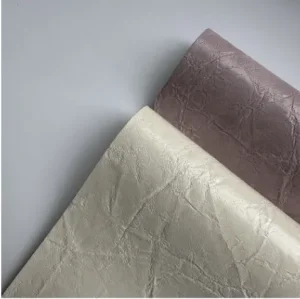
High-Quality RCS Recycled Synthetic Leather-0212 Manufacturer, Factory
View Specifications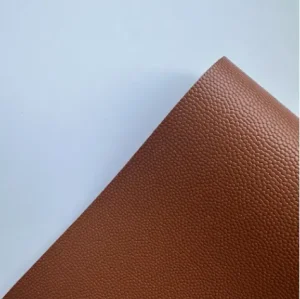
Wholesale Sustainable Eco-Conscious Synthetic Leather-9142 Manufacturer, Supplier
View Specifications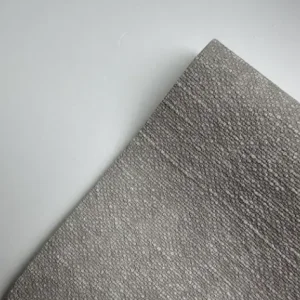
High-Quality Plant‑Derived Bio‑Based Synthetic Leather-9020 Manufacturer, Supplier
View Specifications
Industrial Landscape Analysis
The Global Footwear Paradigm: Why PU Leather Dominates Modern Manufacturing
In the contemporary $380+ billion footwear manufacturing ecosystem, Polyurethane (PU) synthetic leather has transitioned from a substitute material into a premier high-tech engineering canvas. International athletic brands, luxury dress shoe labels, and safety gear manufacturers consistently demand synthetic substrates that outperform genuine animal hide across abrasion endurance, weight reduction, and circular sustainability metrics.
16M+
Meters Annual Production
135,733m²
Solar-Powered Facility
100%
DMF-Free & Water-Based Tech
50+
Global Export Markets
Structural Homogeneity & Cutting Yield
Traditional leather hides suffer from inconsistent density, directional tensile variation, natural scarring, and flank wastage, yielding an average of only 60%–70% usable material during automated punch cutting. Engineered PU shoe leather rolls provide 98.5% usable surface consistency with uniform thickness caliper, eliminating scrap and significantly accelerating automated CNC and digital blade cutting line throughput.
Zero Scars
Continuous Roll Feed
Isotropic Tensile Strength
Molecular Hydrolysis & Flex Resistance
Footwear uppers encounter relentless dynamic stress, sweat immersion, and humidity changes. Our precision-formulated polycarbonate and polyether PU matrices withstand Bally Flexometer tests exceeding 100,000 to 200,000 cycles at room temperature, while continuing to resist micro-cracking during cold flex testing at -20°C. Advanced crosslinking resins guarantee 7 to 10 years of jungle test hydrolysis resistance.
Bally Flex >150k
ASTM D2099 Grade
Anti-Jungle Test 10 Yrs
Chemical Restriction & Non-Toxic Chemistry
With global supply chains transitioning away from N-Methyl-2-pyrrolidone (NMP), Dimethylformamide (DMFa), and chlorinated plasticizers, our direct manufacturing utilizes modern solvent-free polyurethane and waterborne dispersions. Footwear materials comply seamlessly with strict ZDHC Level 3, EU REACH Annex XVII, and California Proposition 65 restricted chemical lists.
DMFa Free <10ppm
OEKO-TEX 100 Class I
Zero Phthalates
Precision Engineering Scale
The Chinese Factory Advantage: Ecosystem Agility & Vertical Integration
How Yingde City JiangXin New Material Co., Ltd. (JX.ECO) integrates resin synthesis, non-woven base engineering, digital precision embossing, and automated roll inspection inside a 135,733 m² mega-facility.
Full In-House Chemical Synthesis & Substrate Co-Development
Unlike secondary converters who merely purchase stock base fabrics and coat them with generic resins, JiangXin exercises end-to-end control across the value chain. Located in Yinghong Industrial Park, Yingde, Guangdong, our clean-tech campus formulates specialized biobased polyols, custom waterborne PU binders, and microfiber needle-punched backings simultaneously. This deep vertical synergy allows shoe designers to tailor exact stress-strain elongation, edge-tear strength, and split-tear parameters directly into the base yarn architecture.
By producing our own base non-wovens and high-density circular knit interlocks, we ensure unmatched delamination peel strength (>3.5 kg/3cm), preventing layer separation during harsh shoe toe-lasting, heat-forming, and sole injection processes.
4.68 MW Clean Energy Automation & Rapid Sampling Turnaround
Modern international footwear procurement operates on strict ESG compliance. JiangXin’s solar-powered manufacturing campus houses a 4.68 MW rooftop photovoltaic array, generating continuous green electricity for continuous dry and wet coating lines, cutting total carbon dioxide equivalent per linear meter significantly below traditional fossil-driven synthetic factories.
Equipped with computerized color spectrophotometers, laser-etched texture rollers, and an internal metallurgical mold facility, our rapid prototyping laboratory fulfills bespoke shoe material swatch matching within 72 hours. We transition seamlessly from digital tech packs to 10-meter pilot trials, followed by scalable bulk execution delivering over 16 million linear meters annually across 50+ countries worldwide.
Target Market Engineering
Engineered PU Solutions Across Diverse Footwear Categories
A dress oxford, an ultra-marathon trail runner, and an industrial safety steel-toe boot each impose vastly different strain vectors upon their outer skins. Explore our category-specific performance formulations.
Athletic & Marathon Running Footwear
High-energy kinetic recovery requires featherweight upper materials that bend dynamically without delaminating. Our microfiber-based PU materials feature microporous breathe-holes and solvent-free skin coatings with tensile recovery above 95%, ensuring zero toe-creasing and high moisture vapor transmission (MVTR > 1200 g/m²/24h).
Luxury Dress Shoes & Polished Formals
Engineered with rich full-grain calfskin aesthetic textures, dual-tone burnishing capability, and natural hand-feel drape. Our toothpick pattern and aniline-effect PU formulations withstand hot lasting ironing, retaining crisp stitch definition without grain cracking or thermal blistering across high-temperature toe boxes.
Industrial Work & Safety Tactical Boots
Reinforced with high-molecular polycarbonate resins, these industrial grade substrates pass rigorous ASTM F2413 and EN ISO 20345 benchmarks. Formulated for superior chemical splash shielding, flame-retardant EN 13634 compliance, and Taber abrasion endurance exceeding 5,000 cycles with H-18 abrasive wheels.
Orthopedic & Comfort Casual Footwear
Engineered with high-damping elastic microcellular backings that cradle foot contours while delivering long-term hypoallergenic safety. Integrated with antibacterial, zinc-pyrithione or silver-ion anti-fungal treatments (ISO 22196 tested) that prevent odor accumulation and mold formation throughout humid environments.
Technological Frontiers
Emerging Trends Reshaping Polyurethane Footwear Synthetics
The global footwear sector is undergoing an aggressive green transition driven by the EU Ecodesign Directive, Extended Producer Responsibility (EPR), and progressive corporate decarbonization commitments.
ASTM D6866 Certified Biobased Polyols
By replacing petrochemical fossil monomers with polyols extracted from non-food agricultural feedstocks, industrial corn waste, and castor plant lipids, our biobased synthetic leather reaches verifiable bio-content concentrations from 30% up to 75%. Verified via carbon-14 radiocarbon measurement under ASTM D6866, this technology empowers major shoe OEMs to advertise verified USDA BioPreferred hangtags with clear competitive authority.
Textile Exchange RCS & GRS Traceability
Post-consumer PET plastic bottles and recycled post-industrial microfibers are upcycled into superior knitted and non-woven backing substrates. Certified under the Recycled Claim Standard (RCS) and Global Recycled Standard (GRS), each production roll tracks input origin throughout our closed-loop facility. Our Transaction Certificates (TC) allow multi-national footwear brands to substantiate audited recycled content disclosures without risk of greenwashing penalties.
100% Solvent-Free & Waterborne PU Technology
Traditional wet-coagulation processes relied heavily on Dimethylformamide (DMF), which poses occupational and environmental risks. JX.ECO’s high-solids solvent-free casting system reacts liquid polyols and isocyanates directly upon the substrate web without solvent volatilization. Combined with pure water-based topcoat lacquers, this yields ultra-low VOC emissions, zero odor, and high breathability suitable for delicate infant and skin-contact footwear.
Lab Benchmarks & Testing Validation
Engineering Specifications: Chemical, Physical & Environmental Metrics
Comprehensive technical specification comparison between traditional solvent synthetic leather, genuine cowhide, and JiangXin advanced eco-friendly footwear PU.
| Performance Characteristic | Test Methodology | JiangXin Eco Footwear PU | Traditional Solvent PU | Natural Animal Leather |
|---|---|---|---|---|
| Bally Flexometer Resistance (Dry) | ISO 5402-1 / SATRA TM55 | > 150,000 Cycles (Zero Cracks) | 50,000 – 80,000 Cycles | 100,000 Cycles (Variable) |
| Cold-Crack Flexibility (-20°C) | ASTM D1052 / SATRA TM60 | > 50,000 Cycles No Grain Rupture | 10,000 – 20,000 Cycles | Dependent on Wax Polish |
| Hydrolysis Resistance (Jungle Test) | 70°C, 95% RH Relative Humidity | 7 to 10 Weeks (Equivalent to 8+ Yrs) | 2 to 3 Weeks | Prone to Rot / Hardening |
| DMFa Solvent Residue | EN 17131 / GC-MS | ND (Non-Detectable <1 ppm) | 300 – 1000 ppm | Not Applicable |
| Surface Taber Abrasion | ASTM D3884 (CS-10 Wheel, 1000g) | > 4,000 Revolutions No Breakthrough | 1,200 – 1,800 Revolutions | 2,000 Revolutions (Finish Loss) |
| Cutting Yield Efficiency | Automated CNC Nesting Analysis | 98.2% – 99.5% Usable Pattern | 90% – 95% (Edge Defects) | 60% – 72% (Flank/Scar Loss) |
| Layer Delamination Peel Strength | ISO 2411 / SATRA TM401 | > 3.5 kg / 3cm | 2.0 – 2.5 kg / 3cm | Natural Fiber Integrity |
Vendor Qualification & RSL Clearance
Overcoming International Sourcing Bottlenecks: A Guide for Footwear Buyers
Direct supply chain insights to help footwear brands eliminate port customs rejections, production delays, and laboratory batch inconsistencies.
Pre-Bulk RSL Chemistry Screening
One of the primary causes of container detention at destination customs (such as Hamburg, Long Beach, or Rotterdam) is unintentional contamination by Restricted Substances like short-chain chlorinated paraffins (SCCPs), organotin compounds, or banned azo dyes. At JiangXin, every production lot is matched to the buyer’s proprietary Brand RSL (Restricted Substance List) beforehand, supported with batch-specific third-party test verification by SGS, Intertek, or TÜV Rheinland.
Color Metamerism & Delta-E Consistency
Footwear uppers cut across several rolls must exhibit flawless chromatic uniformity under diverse light chambers (D65 daylight, TL84 store lighting, and incandescent A). Our factory utilizes automated continuous in-line spectrophotometric sensors across every master roll, maintaining strict Delta-E tolerances (ΔE < 0.6). This guarantees zero tone mismatching when left and right shoes meet in assembly packaging boxes.
Custom High-Volume Backing Engineering
Shoe assembly techniques dictate precise backing selection. Injection-molded PU soles demand brushed knit backings that facilitate glue adhesion and molten resin anchoring. In contrast, seamless thermo-welded sneaker uppers require ultra-smooth recycled microfibers that bond with TPU films under heat activation without fabric print-through. We engineer all backing fabrics internally to align with your footwear assembly line.
Technical & Sourcing FAQ
Frequently Asked Questions by Footwear Procurement Directors
Direct technical answers addressing material selection, bonding mechanics, certifications, and high-volume container logistics.
How does bio-based PU leather perform mechanically compared to standard petrochemical PU for high-stress footwear?
Bio-based polyurethane synthetic leather matches or even surpasses petroleum-derived equivalents in tensile elongation, tearing strength, and flexural fatigue. By carefully controlling the functionality of plant-derived polyols (such as castor oil-derived polyols with precise triol and diol distribution), we synthesize polymer networks with remarkable molecular elastomeric memory. In laboratory evaluations conducted according to SATRA TM55 (Bally Flex testing), our bio-based footwear materials regularly exceed 150,000 flex cycles at 20°C and 50,000 cycles at -20°C without micro-cracking or grain delamination.
Can your PU shoe materials endure high-temperature vulcanization and automated lasting without burning or peeling?
Yes. Traditional cheap PVC or low-molecular PU degrades, softens excessively, or blisters when exposed to the 120°C–140°C thermal ovens used in vulcanized sneaker manufacturing or lasting machine toe-wipers. JiangXin formulates specialized heat-stabilized polyurethane formulations with high crosslink density and heat-resistant backing substrates (high-tenacity microfibers or heat-set twill polyester knits). Our materials withstand toe-lasting pinch clamps with peel strengths maintained above 3.5 kg/3cm and show zero surface gloss distortion after downstream drying tunnels.
What documentation is supplied to verify Recycled Claim Standard (RCS) or Global Recycled Standard (GRS) claims?
For every certified production run, we initiate an official chain-of-custody Transaction Certificate (TC) via accredited certification bodies (such as Control Union or IDFL). The certificate details the exact proportion of traceable post-consumer or post-industrial recycled polyester in the backing material or recycled PU content in the film. This official certificate links directly to your purchase order and customs declaration invoice, supplying the legal documentation required for customs validation and brand consumer hangtags.
How do you prevent the notorious "hydrolysis breakdown" where shoe soles and uppers crumble after several years?
Hydrolysis breakdown happens when moisture breaks the ester ester linkages in conventional polyester-polyurethane resins over time. To combat this, JiangXin formulates our premium shoe uppers using aliphatic polycaprolactone, polyether, or polycarbonate-grade polyols. These molecular chains resist water molecule insertion into the polymer backbone. In accelerated jungle test conditions (70°C, 95% relative humidity), our footwear substrates endure 7 to 10 weeks of exposure with zero tackiness, cracking, or surface crumbling—equating to over 8 years of dependable real-world shelf and wear longevity in humid tropical markets.
What is the standard production lead time, Minimum Order Quantity (MOQ), and custom color sampling turnaround?
For custom lab dip color and grain matching, we dispatch physical swatches or 5-meter sample rolls within 3 to 5 business days upon receiving your Pantone reference or master physical swatch. Our baseline commercial MOQ for custom production runs is 500 linear meters per color/thickness, while standard stock articles feature lower volume entry. Bulk container manufacturing (FCL 20GP or 40HQ) is typically fulfilled within 12 to 18 business days from our Yingde, Guangdong factory, positioned near major international ocean export terminals (Shenzhen, Guangzhou, and Hong Kong).
Can you customize breathability, waterproofing, and antibacterial properties into the same footwear roll?
Absolutely. Through our multi-layer wet coagulation and transfer-coating lines, we can incorporate a microscopic breathable membrane layer that repels liquid water droplets under hydrostatic heads > 10,000 mm while allowing water vapor molecules to escape (MVTR > 1,500 g/m²/24h). Simultaneously, active non-migratory antibacterial and anti-mildew compounds can be embedded into the skin lacquer formulation, achieving 99.9% reduction against Staphylococcus aureus and Escherichia coli under ISO 22196 testing.
Advanced Shoe Material References
Bio-Based, Plant-Origin & Upcycled Footwear Leather Roll Catalog
Review additional engineered references featuring specialized grain finishes, verified recycled inputs, and plant-derived formulas available for global volume procurement.
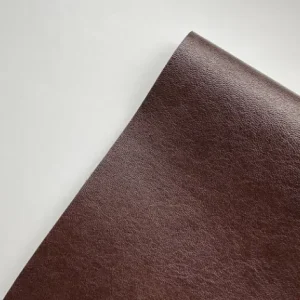
Custom RCS Verified Recycled Synthetic Leather Suppliers, Factories
View Specifications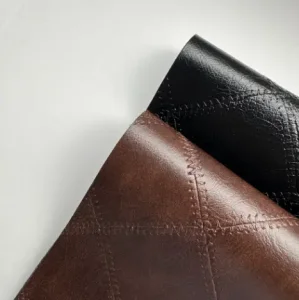
Wholesale Industrial‑Grade Bio‑Derived Renewable Synthetic Leather-9279 Manufacturer, Suppliers
View Specifications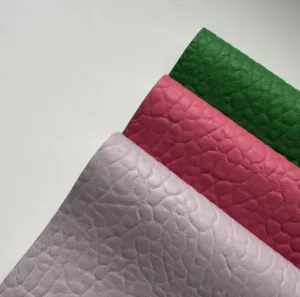
High-Quality Eco‑Friendly Sustainable Synthetic Leather-9239 Supplier, Suppliers
View Specifications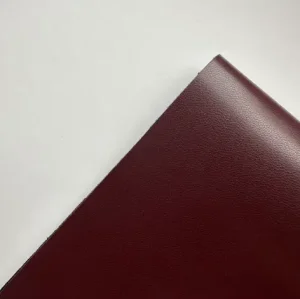
Custom Sustainable Bio-Based Vegan Leather-2002 Manufacturer, Factories
View Specifications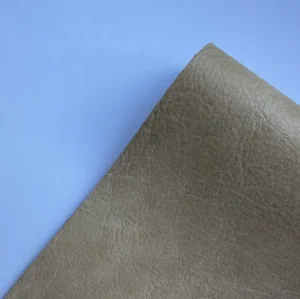
Wholesale Plant‑Origin Renewable Bio‑Based Synthetic Leather-9271 Manufacturer, Suppliers
View Specifications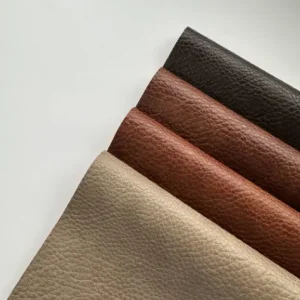
Custom RCS Recycled Synthetic Leather -9088 Manufacturers, Factory
View Specifications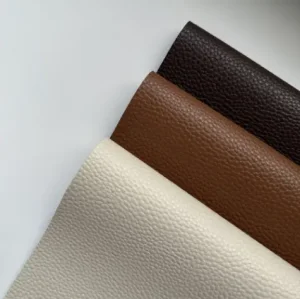
High-Quality Sustainably Upcycled Recycled Synthetic Leather-9027 Suppliers, Factories
View Specifications