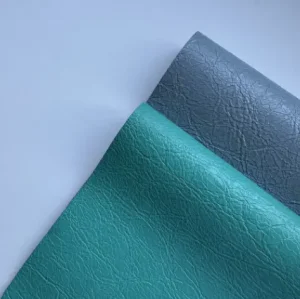
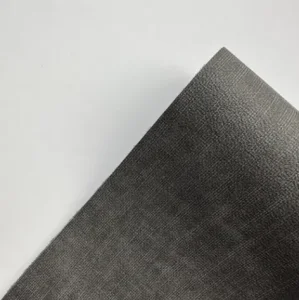
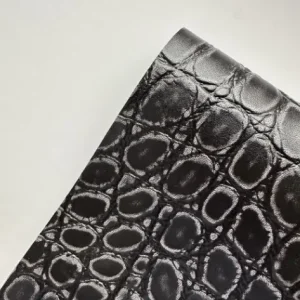
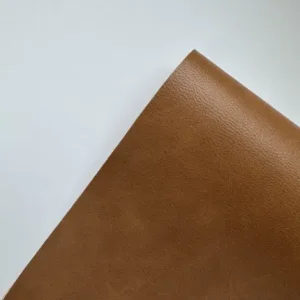
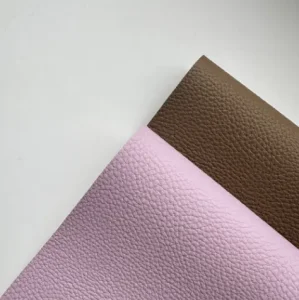
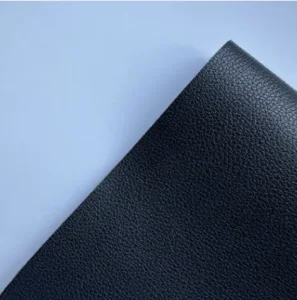
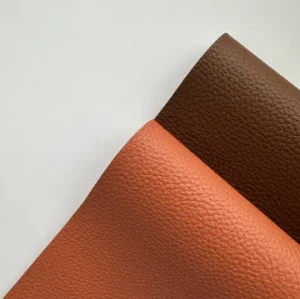
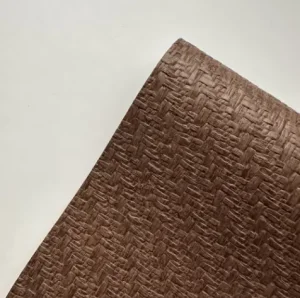
Advanced Bio-Derived & Recycled Leather Formulations
Direct factory-line inventory engineered under certified chain-of-custody protocols. Each reference article supports custom grain depth, low VOC plasticizers, and high tensile mechanical thresholds.
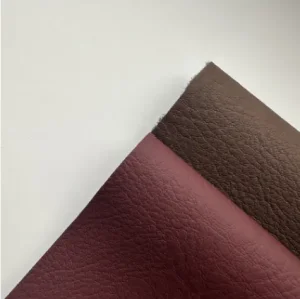

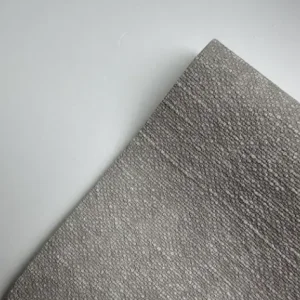
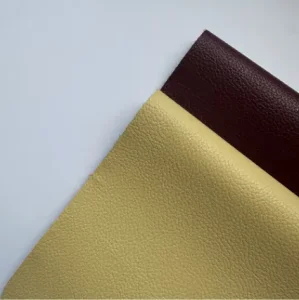
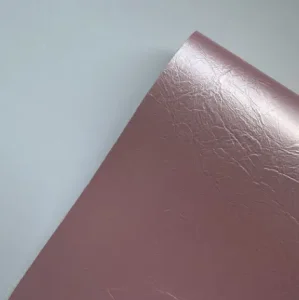
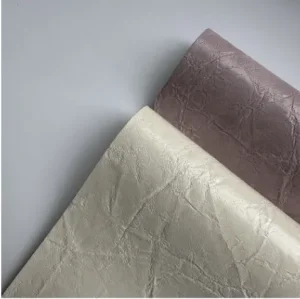
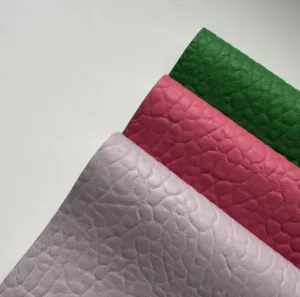
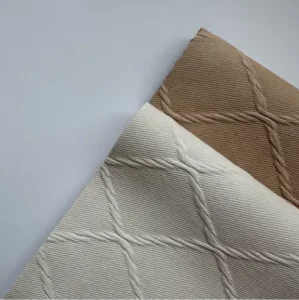
The Operational Advantage of Chinese Clean-Tech Leather Manufacturing
Rooted in Yingde, Guangdong, Yingde City JiangXin New Material Co., Ltd. (JX.ECO) integrates smart chemistry, direct photovoltaic energy integration, and circular supply resilience to deliver global scale with minimized footprint.
Full In-House Upstream Synthesis
Unlike secondary conversion converters, Chinese clean-tech infrastructure allows polymer synthesis, solvent-free dispersion compounding, base knitted textile backing weaving, and surface texturing inside one contiguous facility. This end-to-end integration eliminates transport intermediary emissions while maintaining rigorous batch-to-batch color stability.
Zero-VOC & Solvent-Free Polyurethane
By migrating beyond traditional Dimethylformamide (DMFa) and toluene formulations, our dry-process water-based lines mitigate toxic volatile organic compound vaporization. Controlled thermal curing preserves operator workplace safety and ensures finished rolls comfortably clear strict EU threshold standards without lingering odors.
Cost Efficiency through Renewables
Operating a dedicated 4.68 MW rooftop solar array enables the offset of up to 40% of thermal continuous casting electricity. Coupled with closed-loop heat exchanger recyclers, our Guangdong plant provides international Tier-1 enterprises with low carbon per square meter metrics at defensible, scale-advantaged pricing structures.
Emerging Shifts in the Sustainable Artificial Leather Industry
As planetary boundaries converge with stricter ESG legislative mandates, the synthetic textile domain is transitioning from passive fossil replacements toward active biological and circular inputs.
1. Plant-Based Feedstock Transition
Global demand is prioritizing corn starch, castor oil, and agricultural residue-derived polyols over petrochemical resins. Certified via ASTM D6866 radiocarbon testing, contemporary biobased synthetic surfaces now consistently deliver 30% to 65% renewable carbon without relinquishing flexibility, soft tactile touch, or peeling resistance.
2. Digitized Chain-of-Custody (RCS / GRS)
Traceability has shifted from a brand marketing asset into an audit imperative. Using Textile Exchange Recycled Claim Standard (RCS) protocols, post-consumer polyester backings and post-industrial resin residues are tracked across each conversion checkpoint, offering verifiable Transaction Certificates (TCs) for global consumer protection compliance.
3. Monomaterial Design for True Circularity
Historically, composite PU leathers compounded recycling dilemmas because crosslinked coatings could not be easily separated from polyester substrates. Leading innovations now prioritize compatible thermoplastic polyurethane (TPU) and recycled PET matrices, enabling post-lifecycle mechanical regrind and secondary closed-loop reprocessing.
4. Elimination of Perfluorinated Substances (PFAS)
Regulatory sunsets across the US and Europe are phasing out traditional short-chain and long-chain fluoro-surfactants used for water and stain repellency. High-performance clean chemistry leverages customized silicone hybrid crosslinkers to achieve high-frequency hydrolysis protection and 100,000+ Martindale cycles fluorochemical-free.
Specialized Engineering for Diversified Market Sectors
Material failure profiles diverge significantly across industries. We calibrate grain structures, resin molecular weights, and backcloth tensile thresholds to match explicit real-world mechanical stress vectors.
Next-Gen Automotive & Mobility Cabins
Engineered to satisfy stringent VOC fogging parameters and low odor requirements inside EV passenger cabins. Our UV-stabilized, flame-retardant bio-coatings endure intense greenhouse heat exposure, passing Taber abrasion tests (CS-10 wheel, 1,000g load) without premature micro-cracking or grain loss.
Athletic Performance Footwear Uppers
Footwear uppers demand extreme flexural recovery under cold conditions. Utilizing specialized solvent-free water-based polyurethane dispersion (PUD), our formulations withstand over 150,000 cycles in Bally flex testing at -20°C, providing superior stitch-tear durability and breathability for lifestyle and athletic trainers.
Luxury Handbags & Consumer Accessories
Luxury silhouettes demand rich tactile drape, defined edge-creasing performance, and seamless split compatibility. Our toothpick-embossed, nappa-finish, and woven grain patterns mimic top-grain calfskin hand-feel, completely free from banned ortho-phthalate plasticizers.
Macro ESG Solutions for International Brands
Navigating cross-border customs scrutiny and consumer anti-greenwashing directives demands transparent, auditable proof at every layer of the product dossier.
EU Corporate Sustainability Compliance
With the Corporate Sustainability Due Diligence Directive (CSDDD) and Digital Product Passport (DPP) initiatives approaching implementation, our documentation packages map Scope 1, 2, and partial Scope 3 carbon metrics per square meter, enabling effortless LCA inputs for retail brands.
Global Restricted Substance Management
Every bulk lot conforms to EU REACH SVHC lists, RoHS heavy metal parameters, and California Proposition 65 requirements. Independent third-party chemical laboratory test records are maintained for all pigments, surface resins, and backing stabilizers to eliminate product recall liability.
Audited Ethical Labor & Workplace Safety
Our Yingde campus operates under audited amfori BSCI and ISO standard frameworks. Clear glass production architecture, rigorous occupational safety standards, and advanced automated air scrubbers ensure fair working conditions and verifiable ethical supply chain credentials.
Fulfilling Enterprise Global Sourcing Expectations
International brands face constant tradeoffs between sustainability aspirations, cost targets, and factory delivery reliability. We simplify development cycles through structured technical protocols.
Agile Prototyping & Lab Swatch Matching
Our specialized sampling lab generates Pantone-matched shades, distinct emboss rolls, and custom thickness profiles (0.6mm to 2.2mm) within 5 to 7 business days, shortening technical review timeframes for seasonal line drops.
High Cutting Yield & Roll Consistency
Unlike natural hides prone to irregular shapes, scars, and grain variances that cap usable yields near 65-75%, our synthetic rolls guarantee edge-to-edge uniformity with 98%+ usable cutting surface across 54-inch continuous widths.
Custom Mechanical Property Customization
Whether adjusting tensile tear strength for heavy luggage, incorporating anti-static coatings for technical equipment, or increasing hydrolysis thresholds to jungle-grade standards, backings can be customized across brushed tricot, woven recycled poly, and microfibers.
Container Consolidation & Export Logistics
Conveniently located in Guangdong's Pearl River industrial belt, our logistics hub connects quickly with major maritime shipping ports in Shenzhen and Guangzhou, enabling bonded container staging and streamlined customs release.
Frequently Asked Technical & Commercial Questions
Actionable answers prepared by our chemical formulation specialists and compliance officers to accelerate sourcing and technical review.
What core material platforms does JiangXin New Material manufacture?
How is biobased carbon content measured and officially validated?
Can your factory provide RCS Transaction Certificates (TCs) for brand orders?
What international export compliance and chemical screening thresholds do you support?
What is your campus production capacity and lead time structure?
What physical and functional performance options can be tailored?
Specialty Low-Carbon Leather Series
Explore our extended line of plant-derived, renewable bio-based, and green sustainable PU textures designed for precision cutting and high-yield manufacturing.