
High-Performance Elastic & Bio-Circular Synthetic Leather References
Explore engineering-grade synthetic leather articles engineered with dynamic flex modulus, superior tactile memory, and independently certified environmental baselines for footwear, apparel, and structural goods.
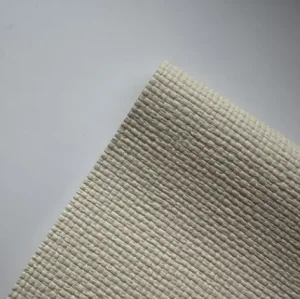
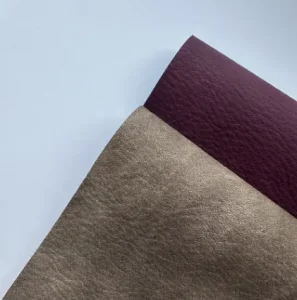
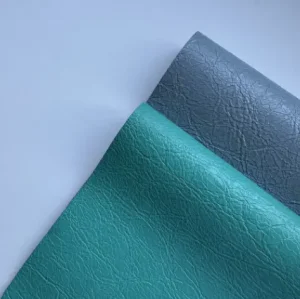
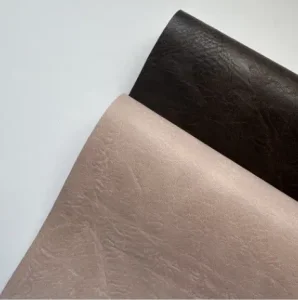
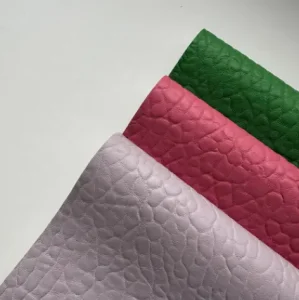
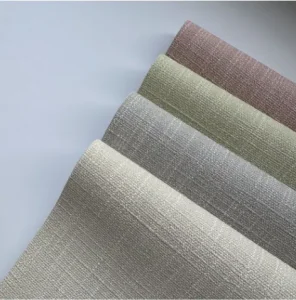
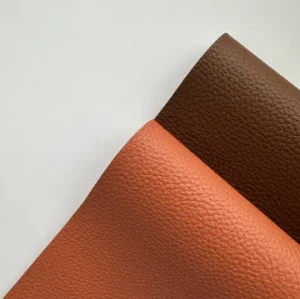
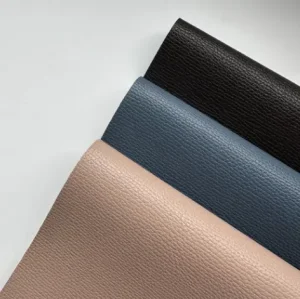
Engineering Stretch Mechanics: The Molecular Hierarchy of Faux Leather
Demystifying viscoelastic recovery, anisotropic tension properties, and solvent-free aliphatic skin matrices.
True stretch artificial leather functions as a complex tri-layer composite: the topcoat (microporous, high-durability aliphatic polyurethane resin), the intermediate adhesion tie-layer (crosslinked aqueous dispersion), and the structural substrate (spandex-interlooped knit, recycled polyester elastane, or circular nylon jersey). When mechanical stress is applied to our 4-way stretch faux leather fabric, the elongation energy is absorbed not through irreversible plastic deformation of the polymer chains, but through the micro-coiling behavior of the elastomeric substrate combined with the high rebound resilience of the solvent-free PU skin. This guarantees instantaneous elastic recovery rates exceeding 95% even after 100,000 continuous elongation-relaxation cycles.
2-Way vs. 4-Way Kinetic Kinematics
We engineer two distinct dimensional elongation profiles tailored to end-use biomechanics and structural load distributions:
- 2-Way Elasticity: 15%–35% weft stretch engineered for high-tension upholstery, form-fitting boots, and contoured seating.
- 4-Way Omnidirectional: 40%–80% biaxial stretch accommodating ergonomic bodily flexures in technical outerwear and seamless gloves.
- Zero Orange-Peel Distortion: Grain integrity remains razor-sharp during maximum localized elongation.
Solvent-Free & Waterborne Coatings
Eliminating N,N-Dimethylformamide (DMFa), toluene, and toxic plasticizers through clean aqueous polyaddition systems:
- 100% Solid-State Formulation: Zero volatile organic compound (VOC) emissions throughout line curing.
- Anti-Hydrolysis Longevity: Polycarbonate-modified backbones delivering 7–10 year Jungle Test resistance (ASTM D3690).
- Supple Hand Feel: Low Tg (-35°C glass transition temperature) prevents cold-cracking in alpine environments.
Engineered Substrate Fusion
The substrate architecture defines seam retention, dimensional stability, and peeling resistance:
- RCS-Certified Recycled Backing: Up to 100% post-consumer rPET interlaced with high-tenacity elastane.
- Interlock Circular Knits: Optimized looped yarn geometry prevents edge fraying during high-speed laser cutting.
- Peel Strength Exceeding 4.5 kg/3cm: Waterborne polyurethane penetration anchors chemically to the fiber core.
China Factory 4.0: Autonomous Precision, Capacity & Sustainability Dominance
Inside JiangXin New Material's 135,733 m² mega-facility in Yingde, Guangdong—pioneering the carbon-neutral synthetic leather revolution.
Vertically Integrated Closed-Loop Manufacturing Ecosystem
Established on June 2, 2017, in the Yinghong Industrial Park, Yingde City, Guangdong, JiangXin New Material (JX.ECO) was constructed from the ground up to embody China Factory 4.0 modern industrial standards. Unlike fragmented processors who outsource base knitting, wet dipping, surface lacquering, or grain embossing, JX.ECO maintains 100% in-house vertical control over every thermodynamic and chemical stage.
Our clean-tech infrastructure utilizes floor-to-ceiling tempered glass architectural bays designed for daylight harvesting, comprehensive occupational safety, and rapid ventilation. Production lines are governed by in-line automated optical inspection (AOI) sensors that scan every square centimeter of elastic faux leather fabric for micro-pinholes, grain irregularity, color shift (ΔE < 0.3), and coating thickness deviation in real time.
Furthermore, our 4.68 MW rooftop photovoltaic solar system feeds clean renewable energy directly into our high-efficiency infrared drying tunnels. Coupled with a state-of-the-art closed-loop heat recovery system and an on-site multi-stage wastewater treatment facility, JX.ECO reduces embodied carbon emissions per linear meter by over 38% compared to traditional petrochemical leather mills.
Supply Chain Resilience Protocols
- Direct Upstream Chemical Polymerization: Bulk storage and precision metering of custom bio-polyols and waterborne PU dispersions protect against global chemical feedstock spikes.
- Dual-Line Rapid Swatch Prototyping: Dedicated pilot development lines produce 5-yard trial sampling swatches with customized grain and stretch specs in under 7 business days.
- Digital Traceability & ERP ERP-II Sync: Roll-level RFID tracking guarantees complete pedigree documentation from certified resin barrel to freight forwarder pallet.
- Zero-Delay Export Routing: Prime location in Guangdong Province affords instantaneous road-and-barge transit to major maritime hubs including Guangzhou, Shenzhen, and Hong Kong.
Macro Industry Solutions: Engineering Precision for Global Applications
From aerospace and high-speed automotive interiors to aerodynamic activewear and high-durability footwear uppers.
Performance Footwear & Stretch Boots
Footwear manufacturing presents the harshest physical demands on faux leather. Materials must endure high-temperature lasting, flex-line crease fatigue, and multi-directional strain across the vamp.
- Bally Flex Endurance: Withstands >100,000 cycles at room temperature and >30,000 cycles at -20°C without micro-cracking.
- Deep Contouring Recovery: Hugs complex shoe lasts without pleating, edge thinning, or delamination.
- Abrasion Resistance: Taber H-18 / 1000g wheel test passes 1,500 revolutions with zero polyurethane layer breach.
Technical Outerwear & Skin-Contact Apparel
Garments demand soft drape, moisture vapor permeability, low noise generation during movement, and full skin safety certification under rigorous human-ecological standards.
- Air & Vapor Permeability: Microporous polyurethane structures yield >1500 g/m²/24h breathability (JIS L1099 B1).
- OEKO-TEX Class I / Baby Safe: Undetectable free formaldehyde, organotin compounds, and carcinogenic aromatic amines.
- Featherweight Calipers: Ultra-thin 0.55mm–0.75mm gauges with four-way stretch for anatomical freedom of motion.
Automotive Seating & Ergonomic Furniture
Next-gen EV interiors demand elastic stretch faux leather to achieve tight concave wrapping around seat bolsters, steering wheels, and armrests without sagging over vehicle lifetime.
- Low Fogging & Low VOC: DIN 75201 Method B compliance eliminates oily dashboard vapor film formation.
- Flame Retardancy: Engineered to meet FMVSS 302 and BS 5852 Crib 5 without chlorinated flame retardants.
- UV Xenon Arc Resistance: ISO 105-B06 rating 5 after 500 hours of continuous high-irradiance exposure.
Luxury Handbags, Luggage & Tech Accessories
Premium bags require structural stretch for expanding gussets, drop-tested corner impact zones, and deep-embossed three-dimensional grain textures.
- Stitch Tear Resistance: Exceeds 80 N (ISO 13936-1), completely preventing stitch pull-through under tension.
- Anti-Squeak & Dry Touch: Specialty matte lacquer topcoats eliminate sticky hand-contact feel and friction noises.
- Toothpick & Micro-Pebble Grains: Ultra-precise silicone roller transfer ensures flawless geometric grain uniformity.
Localized Support & Regulatory Compliance Assurance
Defensible, laboratory-audited certifications that clear customs, satisfy NGO scrutiny, and empower brand marketing teams.
| Standard / Regulation | Auditing Authority / Methodology | Performance & Chemical Thresholds | Procurement Advantage & Commercial Scope |
|---|---|---|---|
| USDA BioPreferred Program | ASTM D6866 Radiocarbon Isotope Analysis | Verifiable Bio-based Carbon Content from 25% to over 65% | Legitimizes renewable plant-polyol claims; USDA hangtag authorization for US retail markets. |
| Recycled Claim Standard (RCS) | Textile Exchange Chain of Custody Audit | Transaction Certificates (TCs) covering post-consumer rPET backings | Complete supply chain traceability from reclaimed polymer bottle to finished roll. |
| EU REACH & RoHS Directives | SGS / TÜV Rheinland Full Spectrum Screen | Zero SVHCs exceeding 0.1% w/w; 100% Free of 6P Phthalates and Heavy Metals | Unconditional market clearance for European Union territory; no restricted substance barriers. |
| OEKO-TEX Standard 100 | Centexbel / Hohenstein Textile Laboratories | Meets Annex 4 / Class I (Skin-contact products for babies and children) | Guarantees zero bio-accumulative substances, fluorinated compounds (PFAS/PFOA free), and azo dyes. |
| Higg Index (FEM / FSLM) | Sustainable Apparel Coalition (SAC) | Verified tier scores on water stewardship, carbon footprint, and energy efficiency | Immediate qualification on Tier-1 enterprise vendor scorecards (Nike, Inditex, LVMH standards). |
| amfori BSCI & ISO 9001 / 14001 | Independent Multi-National Quality Registrars | Comprehensive social ethical compliance, fair wages, ISO certified environmental control | Audited ethical labor protocols protecting corporate governance and public sustainability mandates. |
Every batch of elastic faux leather fabric leaving our Yingde facility is accompanied by an individualized Certificate of Analysis (COA) specifying gauge variance, elongation modulus at 100% strain, tearing resistance, and lot-specific lot-to-lot color delta records. Brands seeking localized supply integration benefit from our bilingual technical sales representatives fluent in international Incoterms (FOB, CIF, DDP, DAP) and dedicated regional warehouse buffers across Southeast Asia, North America, and Europe.
Global Enterprise Sourcing Architecture: Technical Specification Roadmap
A comprehensive step-by-step engineering checklist for Materials Developers, R&D Directors, and Sourcing Managers.
1. Physical Metric Qualification
Never procure elastic synthetic leather without determining precise mechanical indices across warp and weft directions:
- Elastic Tensile Modulus: Target elongation percentage under 50 N load (ASTM D5034).
- Permanent Set Index: Residual distortion after 30 minutes recovery from 30% elongation (Target: <3%).
- Thickness Uniformity: Digital micrometer tolerance restricted to ±0.03 mm across full 54-inch width.
2. Environmental & Chemical Vetting
Align material formulations directly with your brand's corporate Restricted Substance List (RSL):
- Carrier Solvent Mandate: Demand waterborne PU or 100% solvent-free hot-melt extrusion systems.
- Zero DMFa Threshold: Headspace gas chromatography must verify DMFa < 5 mg/kg (AFIRM standard).
- Circular Raw Material Ratio: Explicit certification of pre-consumer vs. post-consumer recycled backing resin.
3. Production Yield & Factory Scalability
Audit manufacturing capabilities to guarantee seamless mass scalability from pilot lab to seasonal delivery:
- Usable Cutting Width: Standardized 137 cm (54 in) to 142 cm (56 in) continuous trimmed salvage.
- Roll Continuity & Splice Limits: Maximum 1 seam per 50-meter roll; average defect density < 2 per 100 meters.
- Bulk Dye Lot Consistency: Instrumental spectrophotometer tolerance within ΔE ≤ 0.5 under D65 daylight.
Technology Roadmap & Future Outlook: The Next Frontier of Elastic Bio-Leather
Pioneering carbon-negative synthetic matrices, circular elastomeric depolymerization, and digital traceability passports.
Phase 1: Bio-Synthetics & Industrial Carbon Capture (2026–2028)
The current paradigm of replacing 30%–50% of petrochemical polyols with non-edible corn, castor bean, and agricultural straw is merely the transitional phase. JX.ECO's Advanced Materials Laboratory is actively piloting direct CO2-sequestered polyols (utilizing enzymatic gaseous fermentation) to create polyurethane skins with a net-negative carbon balance prior to factory lamination. Concurrently, natural rubber elastane co-polymers are being engineered to replace synthetic polyether-polyurea spandex cores, achieving an aggregate bio-content exceeding 78% without compromising 4-way stretch longevity.
- Target Metric: 75%+ ASTM D6866 bio-carbon content by Q4 2027.
- Performance Goal: Jungle Test resistance > 10 years at 85°C and 90% relative humidity.
Phase 2: Monomateriality & Depolymerizable Circularity (2028–2032)
The holy grail of sustainable stretch synthetic leather is true closed-loop recyclability. Traditional PU-coated fabrics present severe recycling bottlenecks because separating elastomeric coatings from woven/knitted textile backings is chemically energy-intensive. JX.ECO's future roadmap focuses on monomaterial thermoplastic polyurethane (TPU) stretch systems where both skin, adhesive, and circular knitted backing share identical molecular chemistries. At end-of-life, discarded footwear and apparel can be mechanically pelleted or chemically depolymerized back into virgin-grade resin with zero downcycling.
- Digital Product Passport (DPP): QR/NFC encrypted micro-threads embedded along the selvage.
- Closed-Loop Circularity: Infinite mechanical recyclability with 0% post-consumer landfill impact.
Frequently Asked Questions: Technical & Sourcing Deep Dive
Authoritative insights prepared by JX.ECO's senior polymer research engineers and international logistics directors.
What causes elastic faux leather to delaminate, and how does JX.ECO prevent this failure mode?
How does biobased synthetic leather compare to traditional petroleum-derived PU in stretch recovery and longevity?
Can JX.ECO stretch faux leather withstand thermal heat-setting and vacuum-forming processes in footwear and automotive lines?
What documentation is required to clear EU REACH regulations when importing stretch synthetic leather into Europe?
What are the minimum order quantities (MOQ), lab-dip lead times, and mass production timelines for custom elastic articles?
How does the Recycled Claim Standard (RCS) chain-of-custody process work during order fulfillment?
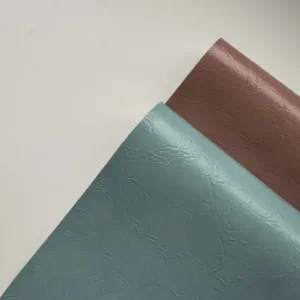
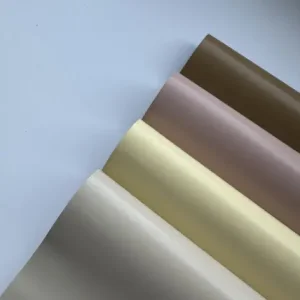
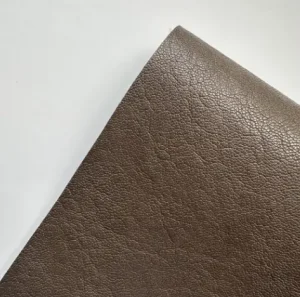
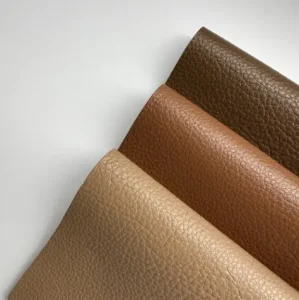
Industrial-Grade, Eco-Conscious & Functional Leather References
Complementary low-impact, plant-based, and customized technical synthetic leather references engineered for high-volume enterprise production.
Initiate Your Custom Stretch Synthetic Leather Tech Pack
Connect directly with JX.ECO's material application engineering division. Receive full 2026 physical swatch binders, comprehensive ASTM / ISO laboratory performance sheets, and custom quotation frameworks within 24 hours.