
Featured Sustainable Leather & Technical Suede Swatches
Precision-manufactured across automated continuous foaming lines. Standardized for thickness tolerance within ±0.03mm, non-yellowing matrix stability, and verifiable circular chemical provenance.
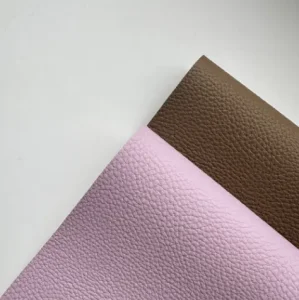
High-Quality Bio-Sourced Renewable Plant-Based Synthetic Leather-9109 Manufacturer, Factories
View Technical Specs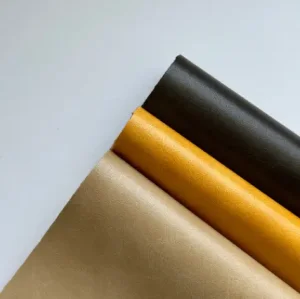
Custom Eco-Friendly Sustainable Synthetic Leather-0251 Suppliers, Factories
View Technical Specs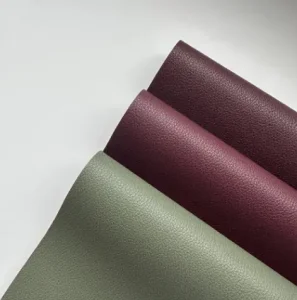
OEM Eco Plant-Based Renewable Synthetic Leather-9077 Manufacturers, Manufacturer
View Technical Specs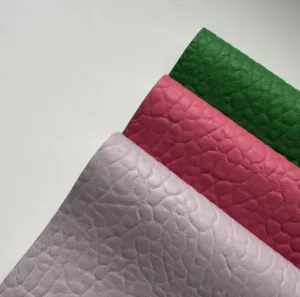
High-Quality Eco‑Friendly Sustainable Synthetic Leather-9239 Supplier, Suppliers
View Technical Specs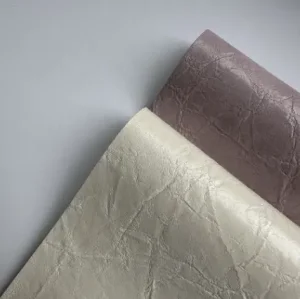
High-Quality RCS Approved Recycled‑Content Synthetic Leather-0212 Suppliers, Factories
View Technical Specs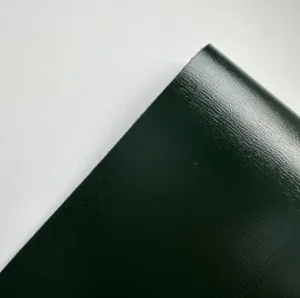
Wholesale RCS-Certified Traceable Recycled Synthetic Leather-0101 Suppliers, Factories
View Technical Specs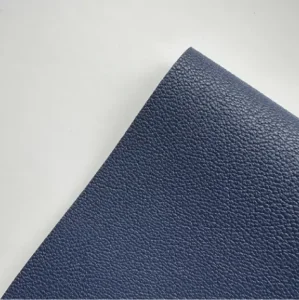
Wholesale Green Circular Synthetic Leather-9168 Supplier, Factory
View Technical Specs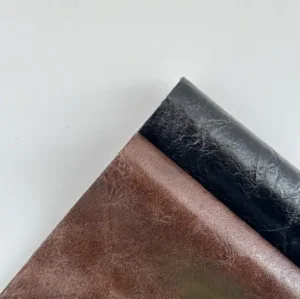
Wholesale Eco-Friendly Sustainable Synthetic Leather-0212 Manufacturer, Suppliers
View Technical SpecsThe Paradigm Shift in Faux Leather & Synthetic Suede Synthesis
Moving beyond legacy petrochemical PVC and solvent-borne Dimethylformamide (DMF) coagulations. A comprehensive breakdown of modern high-performance polymer matrix engineering.
Bio-Based Polyurethane (Plant-Derived Polyols)
Synthetic leather has historically relied upon petrochemical ethylene glycol and adipic acid polyesters. Modern clean-tech facilities utilize bio-derived succinic acid, 1,3-propanediol (Bio-PDO), and sebacic acid synthesized from castor oil, industrial non-food corn, and starch feedstocks. This reduces Scope 3 cradle-to-gate carbon emissions by 40% to 65% while maintaining ASTM D6866 bio-carbon content between 30% and 75% without compromising mechanical tensile strength.
Microfiber Synthetic Suede (Island-in-the-Sea Matrix)
Unlike conventional suede split leather that suffers from irregular tensile distribution and natural grain defects, synthetic microfiber suede utilizes bicomponent composite spinning technologies. Ultra-fine polyamid (PA) or post-consumer recycled polyethylene terephthalate (rPET) fibers are drawn down to 0.01-0.05 denier. The microscopic fibril bundling recreates the exact 3D collagenous structural bundle of calfskin leather, offering luxurious nap, exceptional shear strength, and complete directional isotropy.
Zero-VOC Solvent-Free & Waterborne Systems
Eliminating chemical volatile organic compound emissions is mandatory under evolving global chemical covenants. Our dry-process solvent-free polyurethane and aqueous dispersion systems do not use Dimethylacetamide (DMAc), Toluene, or DMF. Crosslinking occurs via reaction injection molding (RIM) of reactive two-component polyurethane pre-polymers, yielding zero toxic off-gassing, total compliance with California Prop 65, and ultra-low condensation values for automotive windshield fogging.
Technological Roadmap & Future Outlook (2025–2035)
Strategic convergence of polymer science, molecular recycling, and digital traceability across the global faux leather and synthetic suede manufacturing landscape.
Phase 1: Bio-Carbon Maximization
Targeting 80%+ ASTM D6866 bio-carbon matrices by incorporating non-food agricultural waste residues (lignin, sugar bagasse, mycelium-derived polyols). Achieving complete substitution of aliphatic isocyanates without diminishing UV colorfastness or Martindale rub resistance.
Phase 2: Closed-Loop Microfiber Suede
Commercializing 100% GRS-certified post-consumer rPET substrates merged with chemically recyclable thermoplastic polyurethane (TPU) bonding agents. Creating mono-material composite leathers capable of thermal depolymerization at product end-of-life.
Phase 3: Digital Product Passports (DPP)
Integrating encrypted micro-thread identifiers and blockchain-verified QR tracing for the upcoming EU Ecodesign for Sustainable Products Regulation (ESPR). Providing batch-specific verified Product Environmental Footprints (PEF) and Scope 1-3 LCA data.
Phase 4: Self-Healing Aliphatic Surfaces
Deploying micro-encapsulated reversible Diels-Alder covalent network finishes. Micro-scratches on high-gloss or matte leatherette surfaces spontaneously heal upon exposure to thermal radiant stimulus, tripling operational product longevity in car interiors and furniture.
Macro-Industry Engineering Solutions & Mechanical Performance
Engineered to exceed the physical stress environments of tier-1 manufacturing, ensuring zero premature delamination, extreme thermal stability, and strict brand RSL clearance.
Automotive & E-Mobility Interiors
Customized for EV steering wheels, seating cushions, dashboards, and pillars. Engineered to pass FMVSS 302 flame retardancy, DIN 75201 gravimetric fogging (<2mg), 1,000-hour Xenon Arc weatherometer exposure (SAE J2412 Delta E < 1.0), and 100,000 cycles Taber abrasion resistance.
Performance Footwear & Athletic Uppers
Formulated for soccer boots, technical trail runners, and luxury sneakers. Endures 150,000+ flex cycles on Bally Flexometers at room temperature and over 50,000 flexes at -20°C sub-zero conditions without micro-cracking. Hydrolysis resilience certified up to 10 weeks in 70°C/95% RH jungle test chambers.
Luxury Bags & Leather Goods
Designed to deliver an exact calfskin hand-feel, structural temper, and edge-paint absorption compatibility. High dimensional stability prevents corner sagging in structured totes. Resistant to alcohol-based cosmetic spills, skin oils, and deep grain scratch deformation.
Contract Hospitality & Aviation Seating
High-traffic contract seating requiring ASTM E84 Class A flame spread indices, IMO FTP Code certification for maritime interiors, and BS 5852 Crib 5 fire compliance. Features permanent anti-graffiti and stain-release topcoats cleanable with 1:10 hospital-grade bleach solutions.
China Factory 4.0: Yingde Campus Scale & Supply Chain Resilience
Inside Yingde City JiangXin New Material Co., Ltd. (JX.ECO): 135,733 m² of purpose-built sustainable clean-tech infrastructure in Guangdong Province, operating since 2017.
Decarbonized Photovoltaic Campus
JiangXin’s production campus is crowned with an integrated 4.68 MW rooftop photovoltaic solar farm, supplying substantial clean electrical energy directly to our precision coating lines. Coupled with proprietary thermal heat exchangers that capture and re-inject 85% of dry-process oven heat, each square meter produced incurs a substantially lower carbon footprint than traditional leatherette tanneries.
Fully Integrated In-House Chemistry
By synthesizing bio-polyols, compounding polyurethane resins, formulating surface topcoats, and running base-fabric knit laminations entirely on-site, JX.ECO maintains absolute quality control across all layers. Color shade matching is monitored through online spectrophotometers maintaining tight chromatic tolerances within Delta E < 0.5 across production lots.
16,000,000+ Meter Annual Scale
With multiple multi-head dry lines, wet-process lines, automated surface gravure printers, and high-temperature embossing calenders, our annual output exceeds 16 million meters. This scale insulates international OEM buyers against production bottlenecks, supply shortages, and raw material price volatility, supporting clients across 50+ countries.
Comprehensive Engineering Matrix: Material Benchmarking
Objective comparative laboratory data demonstrating the mechanical, regulatory, and ecological advantages of advanced faux leather and suede compared to traditional substrates.
| Evaluation Parameter | Microfiber Synthetic Suede | Biobased Eco PU Leather | Traditional Solvent PU | Animal Bovine Leather |
|---|---|---|---|---|
| Base Composition | Sea-Island rPET / Polyamide + PU | Bio-PDO Polyol + Recycled Backing | Petro-Polyol + DMF Solvent | Chromium-Tanned Animal Hide |
| ASTM D6866 Bio-Content | 20% - 40% (Optional) | 30% - 75% Certified | 0% (Petroleum fossil base) | 100% Biological Animal Base |
| Cutting Yield Efficiency | 100% Continuous Uniform Roll | 100% Continuous Uniform Roll | 100% Continuous Uniform Roll | 60% - 75% (Flaws, scars, shape loss) |
| Bally Flex Life (Cold Temp) | > 100,000 cycles (-20°C) | > 50,000 cycles (-20°C) | < 20,000 cycles (Microcracks) | Variable (Dependent on fatliquor) |
| Hydrolysis Resistance | 5 - 10 Years Tropical Jungle Test | 5 - 8 Years (High-Grade Polycarbonate) | 2 - 3 Years (Prone to flaking) | Susceptible to mold & rot |
| Weight Reduction vs Leather | 35% - 45% Lighter | 20% - 30% Lighter | 20% - 25% Lighter | Baseline Reference (Heavy) |
| VOC & Odor Rating | Grade 1.0 (Virtually Odorless) | Grade 1.0 - 1.5 (Zero DMF/Toluene) | Grade 3.5 - 4.5 (Solvent residual) | Natural animal hide odor / Amines |
| Carbon Footprint (Cradle-Gate) | Low (~4.2 kg CO₂e / m²) | Ultra-Low (~2.8 kg CO₂e / m²) | High (~9.6 kg CO₂e / m²) | Very High (>45 kg CO₂e / m²) |
Regulatory Governance: International Compliance & Audit Assurance
Export-ready documentation and audited supply chain custody guaranteeing smooth customs clearance and flawless brand onboarding across North America, the EU, and APAC.
EU REACH & RoHS Compliance
Fully compliant with the European Chemicals Agency (ECHA) SVHC Candidate List. All articles are independently tested via SGS and TÜV Rheinland to verify non-detectable levels of regulated alkylphenols, DMFa, organic tin compounds, polycyclic aromatic hydrocarbons (PAH), and azo dyes. Cleared for immediate distribution throughout the European Union single market.
Textile Exchange RCS & GRS Chain of Custody
Operating under strict Recycled Claim Standard (RCS) and Global Recycled Standard (GRS) traceability procedures. Every transaction certificate (TC) links the specific recycled polyester backing or sea-island matrix back to certified post-consumer bottle flakes or pre-consumer textile waste, protecting brand partners from greenwashing claims.
OEKO-TEX Standard 100 & amfori BSCI
Certified safe for direct skin contact under OEKO-TEX Standard 100 Class I (suitable even for infants and childrenswear). Furthermore, our Yingde campus upholds transparent human rights and ethical operating standards verified through regular third-party amfori BSCI social compliance audits and comprehensive Higg Facility Environmental Module (FEM) scorecards.
Global Enterprise Procurement Framework: OEM / ODM Engineering
Standardized onboarding pathways designed to streamline material development cycles, rapid color lab dipping, and roll-to-roll consistency for international volume purchasing.
1. Tech Pack Specification
Buyers define operational thickness (0.5mm – 2.2mm), backing substrate (interlock, woven, microfiber, brushed fleece), finish (matte, high-gloss, pebble, nubuck nap), and end-use test protocols (Taber cycles, hydrolysis weeks, flammability).
2. 72-Hour Rapid Sampling
Utilizing computerized pigment dispense systems and laboratory trial coaters, custom A4 swatches and yardage color strikes are formulated against Pantone references or master physical standards within 3–5 business days.
3. Pilot Trial Approval
Before mass batch production, 50-meter pre-production trial rolls are laminated and run through brand assembly equipment to verify sewability, mold release, bonding peel strength, and edge skiving performance.
4. Strict Bulk QA & Export
Each production master roll undergoes 4-point visual inspection for pinholes, inclusion flaws, and grain consistency. Moisture-proof tube wrapping, serialized batch traceability barcodes, and export documentation accompany every sea container.
Bio-Based, Circular & High-Performance Leather Series
Explore our extended industrial catalog. Every synthetic leather reference can be custom engineered for bespoke embossing patterns, surface grains, physical thicknesses, and localized regulatory compliance.
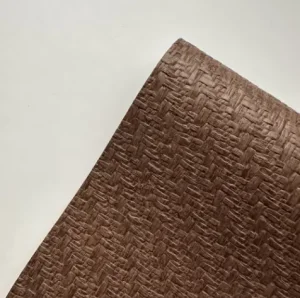
Wholesale Bio‑Based Renewable Synthetic Leather-9339 Manufacturers, Supplier
View Technical Specs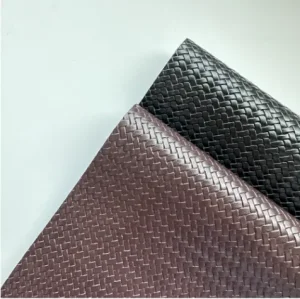
OEM Eco-Friendly Sustainable Synthetic Leather-9348 Manufacturers, Suppliers
View Technical Specs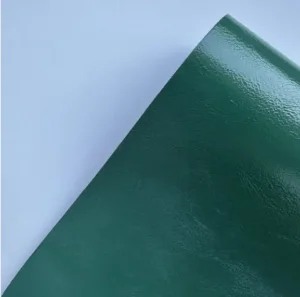
High-Quality Low‑Impact Green Sustainable Synthetic Leather-9333 Manufacturers, Factories
View Technical Specs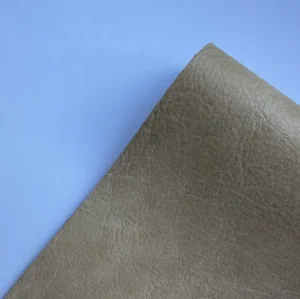
Wholesale Plant‑Origin Renewable Bio‑Based Synthetic Leather-9271 Manufacturer, Suppliers
View Technical Specs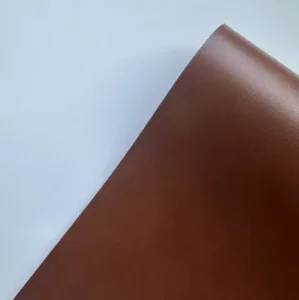
High-Quality RCS Certified Recycled Sustainable Synthetic Leather-0138 Manufacturers, Factories
View Technical Specs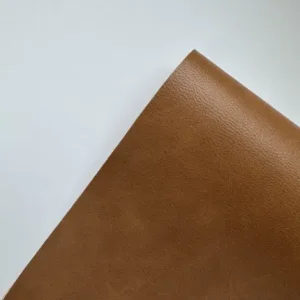
OEM Renewable Bio-Based Synthetic Leather-9020 Manufacturer, Factory
View Technical Specs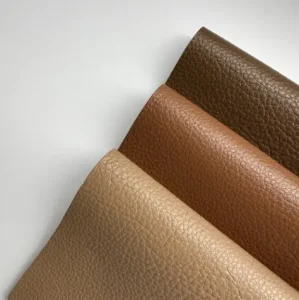
OEM Eco‑Friendly Sustainable Synthetic Leather-9078 Supplier, Suppliers
View Technical Specs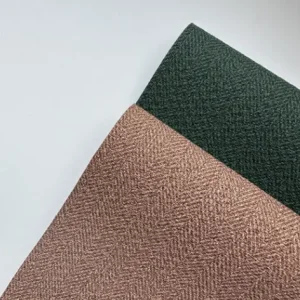
High-Quality Eco-Certified Sustainable Synthetic Leather-9323 Manufacturers, Factory
View Technical SpecsTechnical & Sourcing Inquiries (Frequently Asked Questions)
Authoritative insights straight from our materials engineering lab, covering polymer degradation kinetics, testing protocols, and chain-of-custody audits.
How does biobased faux leather differ from traditional petroleum-based PU?
Traditional PU utilizes polyether or polyester polyols derived exclusively from fossil crude oil cracking. In contrast, biobased PU incorporates biological polyols synthesized from renewable non-food agricultural starches, castor oil derivatives, or agricultural residues. Validated under ASTM D6866 radiocarbon testing, this biological carbon substitution reduces cradle-to-gate carbon footprints by up to 65% while maintaining identical tensile strength, flex-fatigue life, and colorfastness.
What prevents synthetic suede from shedding fibers or pilling during high-wear use?
High durability in synthetic suede originates in the fiber extrusion process. We employ sea-island bicomponent spinning, drawing conjugated filaments down to micro-diameters of 0.01 to 0.05 denier. After non-woven 3D needle punching, the sea-component polymer is chemically dissolved, and a micro-porous polyurethane matrix is coagulated within the bundle. This 3D mechanical interlock anchors every microscopic fibril, preventing nap shedding, fiber pull-out, or pilling under high-friction cycles.
What is the standard lead time for bespoke color matching and mass production runs?
Lab dip color strike-offs against standard Pantone references or physical color swatches are dispatched within 72 to 120 hours. Following pilot sample approval and technical parameter sign-off, volume manufacturing runs (3,000 to 20,000 meters) are typically produced, inspected, packed, and ready for container loading at our factory within 12 to 18 business days.
Can JiangXin provide official Transaction Certificates (TC) for RCS-certified shipments?
Yes. Because our facility operates under a certified Recycled Claim Standard (RCS) chain of custody, every bulk purchase incorporating recycled post-consumer rPET substrates can be accompanied by an official Transaction Certificate issued directly through our accredited certification body, providing incontrovertible legal verification for brand sustainability disclosures.
What testing ensures faux leather will not crack or peel after years of storage?
Polymer degradation is predominantly driven by hydrolytic cleavage of urethane bonds under warm, humid conditions. We prevent premature peeling by formulating with polycarbonate polyols or aliphatic polyurethanes rather than cheap polyether grades. Materials are routinely subjected to the accelerated Jungle Test (70°C at 95% relative humidity) for 5 to 10 consecutive weeks—equating to over 5–10 years of real-world ambient resilience without loss of surface elasticity.
Which physical properties can be tailored for high-specification automotive OEM projects?
We configure total weight (350 gsm to 1200 gsm), substrate backing (circular knit, double-sided brushed tricot, or spunlace nonwoven), surface gloss level (down to 1.5 gloss units for ultra-matte finishes), chemical stain release properties, anti-squeak coatings, low VOC emissions (< 50 ug/g), and compliance with automotive flame retardancy standards such as FMVSS 302 and ISO 3795.