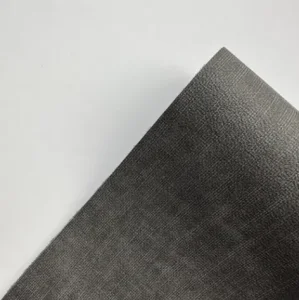
High-Spec Bio-Based & Recycled PU Production References
Engineered from USDA-certified plant derivatives and post-consumer recycled polymers. Select an OEM article to inspect lab specifications, substrate compositions, and tensile certifications.
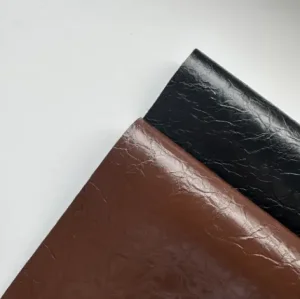
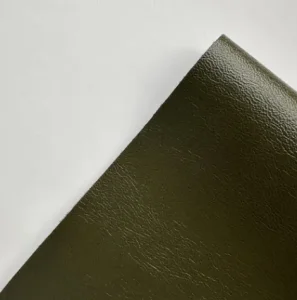
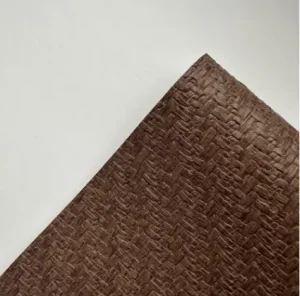
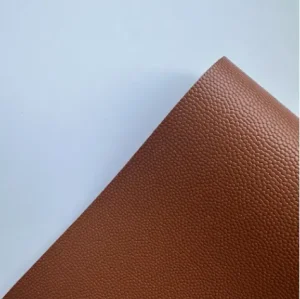

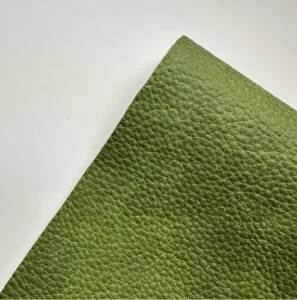
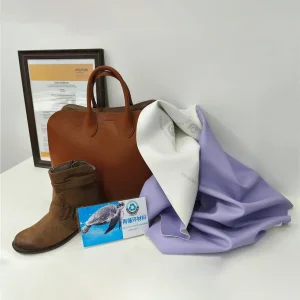
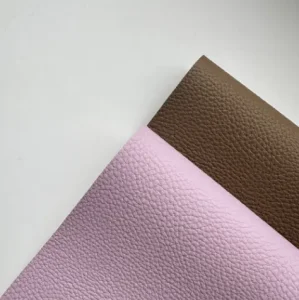
Industrial Synthesis Paradigm: The global polymeric textile matrix is transitioning away from fossil carbon reliance. Modern eco leather supply chains merge non-food crop bio-based polyols, closed-loop chemical reclamation, and certified post-consumer PET backings, cutting cradle-to-gate Scope 1-3 greenhouse gas emissions by up to 58.4% compared with petrochemical PVC and wet-process DMF PU.
Macro Trends Transforming the Ecological Synthetic Leather Industry
A convergence of tightening worldwide environmental regulations, carbon border taxes, and consumer vigilance is rendering obsolete traditional synthetic leathers made with chlorinated polymers and harmful organic solvents.
De-Fossilization of Polyurethane
Global brands in footwear, high-end automotive interiors, and luxury fashion are mandating a progressive phaseout of virgin petrochemical resins. The industry is adopting renewable biomass feedstocks—such as industrial corn starch, castor bean oil, and agricultural by-products—synthesized into bio-based succinic acid and polyether/polyester polyols.
- ASTM D6866 Radiocarbon Bio-Carbon Index: 25% to 75%
- Direct drop-in compatibility with legacy heat-transfer equipment
Zero-VOC & Waterborne Coatings
The regulatory clampdown on volatile organic solvents—specifically Dimethylformamide (DMFa < 5 ppm thresholds), Toluene, and Methyl Ethyl Ketone (MEK)—has elevated 100% waterborne polyurethane (WPU) and solvent-free PU reactive hot-melt systems from niche status to universal baseline.
- EU REACH Annex XVII Regulation Compliance
- Virtually zero airborne toxicity on production workshop lines
Traceable Chain of Custody (RCS / GRS)
Greenwashing scrutiny requires immutable verification. Buyers no longer accept unsubstantiated eco-claims. Third-party chain-of-custody documentation tracing recycled post-consumer PET bottles into microfiber base fleece has become an indispensable purchasing gateway.
- Textile Exchange Transaction Certificate (TC) per batch
- Molecular tracer integration for batch forensic validation
What Global Brands Demand from Tier-1 Eco Leather Suppliers
Modern OEM purchasing committees evaluate synthetic leather vendors across a matrix balancing chemical hygiene, physical endurance, cutting yield, and audited environmental traceability.
Mechanical Resilience Under Stress
Eco-friendly formulation must never sacrifice operational durability. Premium grades are engineered to match or exceed natural calfskin in dynamic flex testing, high-cycle Martindale abrasion, and hydrolysis exposure.
- Bally Flexometer: > 100,000 cycles at 23°C; > 30,000 cycles at -10°C sub-zero conditions
- Martindale Abrasion: > 50,000 dry rubs under 12 kPa pressure (ISO 12947-2)
- Jungle Test (Hydrolysis): 7 to 10 weeks at 70°C and 95% relative humidity without peeling
Color Uniformity & Cutting Efficiency
Traditional leather hides suffer from edge irregularity, flank marks, and natural scars, leading to a 25%–40% material cutting loss. Engineered synthetic rolls guarantee 98% usable surface yield with absolute shade consistency across continuous 500-meter production bolts.
- Color Tolerance: Delta E (ΔE) < 0.8 across roll length and cross-grain profile
- Width Consistency: 137cm to 142cm precision automated edge trimming
- Automated Die-Cutting: Optimized for computerized multi-ply CNC cutting tables
Harmonized Restricted Substance Lists
Zero tolerance for cross-contamination. Sourcing managers enforce chemical screening compliant with the AfIRM Group RSL and ZDHC Manufacturing Restricted Substances List (MRSL) Level 3 parameters.
- Phthalate Ortho-Ester Free: DEHP, DBP, BBP, DINP, DIDP, DnOP < 50 ppm total
- Heavy Metals: Total extractable lead, cadmium, mercury & hexavalent chromium < detection limit
- Alkylphenol Ethoxylates: APEO, NPEO, OPEO < 10 ppm
Integrated Clean-Tech Engineering Architecture
A holistic manufacturing philosophy harmonizes polymer synthesis, composite mechanical backing, micro-texturing, and surface finishing into an uncompromised closed ecological cycle.
| Material Engineering Track | Resin Matrix System | Substrate Core | Bio/Recycled Ratio | Target Applications | Eco Footprint Reduction |
|---|---|---|---|---|---|
| Bio-Based Polyol Series | 100% Waterborne Polyurethane (WPU) synthesized via plant-derived vegetable polyols | Recycled RPET woven, spunlace, or post-consumer micro-fiber | 30% to 75% Bio-Carbon content (ASTM D6866) | Athletic shoe uppers, luxury footwear, premium luggage, designer leather goods | Cradle-to-gate CO₂ equivalent reduced by up to 45% |
| RCS Certified Circular Series | Solvent-free PU resin reactive mass with micro-porous breathe-structure | Certified GRS/RCS 100% recycled polyester fleece backing | 40% to 80% Certified Recycled Content | High-volume fashion apparel, outerwear, smartphone cases, automotive trim | Diverts 18 plastic bottles (500ml) per linear meter of finished leather |
| Solvent-Free Eco PU Line | 100% Solid solvent-free two-component PU thermosetting system | Tencel, organic cotton, or hemp natural cellular fiber matrices | Zero petrochemical solvents; 100% VOC-free | Automotive upholstery, marine seating, contract hospitality furnishings | Zero factory VOC emissions; eliminated thermal incineration requirements |
| Custom Functional Performance | Modified fluorocarbon-free aliphatic polyurethane topcoat | High-tenacity Kevlar/polyester hybrid interlock backings | Customized per customer specification | Tactical gear, protective motorcycle wear, hospital sanitizable upholstery | Extended lifecycle reduces landfill replacement turnover cycles |
Global Regulatory Assurance & Regional Compliance Frameworks
Our facilities and formulations operate under strict international oversight, equipping brand legal, sustainability, and customs clearance teams with verifiable third-party documentation.
Technology Roadmap: The Next Frontier in Bio-Synthetic Leather (2026–2030)
As circular chemistry matures, continuous R&D is breaking trade-offs between biological sourcing, extreme mechanical resilience, and end-of-life biodegradability.
Phase 1: Captured-CO₂ Polyols
Commercializing polyols produced by sequestering point-source industrial carbon emissions. Replacing petroleum feedstocks with captured CO₂ turns emissions into stable polyether polyols, directly reducing atmospheric carbon overhead.
- Reduces petroleum oil consumption by up to 20% in the PU synthesis process
- Fully certified lifecycle carbon balance (ISO 14040/44)
Phase 2: Mycelium & Bacterial Cellulose Hybrids
Merging fungal mycelium root networks and bacterial fermentation pellicles with flexible waterborne polyurethane coatings. This hybrid structure delivers genuine natural leather fibrous feel alongside industrial tensile performance.
- True collagen-mimetic microfiber cross-section
- Enhanced breathability: water vapor permeability > 3.5 mg/cm²·h
Phase 3: Enzyme-Degradable Polyurethanes
Developing hydrolytically stable polyurethane chains that stay resilient in everyday use, yet break down into non-toxic oligomers and natural minerals within industrial composting conditions via targeted enzymatic catalysts.
- Eliminates microplastic persistence in marine and terrestrial ecosystems
- Designed for closed-loop, circular textile-to-textile recycling
Frequently Asked Questions: Technical & Sourcing FAQ
Definitive technical answers covering laboratory qualification protocols, certification integrity, backing textiles, minimum order policies, and lead times.
What is the technical difference between PVC leather, traditional PU, and high-performance ecological PU leather?
Polyvinyl Chloride (PVC) leather depends heavily on phthalate plasticizers (often 30-40% of formula mass) to gain suppleness, which off-gas and turn brittle over time, while releasing dioxins if incinerated. Traditional PU leather relies on solvent-based chemistry dissolved in Dimethylformamide (DMFa), creating airborne VOC and wastewater handling burdens. By contrast, high-performance ecological PU leather uses either 100% waterborne polyurethane dispersions (WPU) or solvent-free reactive polyurethane hot-melts. It replaces petroleum-based polyols with bio-based alternatives and bonds to recycled polyester (RPET) backings, generating negligible VOCs, avoiding harmful plasticizers, and achieving superior flex and hydrolysis performance.
How is bio-based content empirically verified and certified for retail hangtags?
Bio-based content claims cannot rely on simple mass-balance declarations; they require empirical validation through ASTM D6866 radiocarbon (Carbon-14) analysis. Because living plants continuously absorb atmospheric C-14, their derived polyols exhibit a distinct radioactive signature, whereas fossil-derived petroleum carbon contains zero detectable C-14. Accredited labs (such as Beta Analytic) measure the C-14/C-12 ratio via Accelerator Mass Spectrometry (AMS) to determine the exact percentage of modern bio-based carbon. Once verified, brands can apply for the USDA Certified Biobased Product label, providing unquestioned on-shelf credibility without greenwashing risks.
Can you provide batch-level RCS / GRS Transaction Certificates (TCs) for customs clearance?
Yes. Our manufacturing facilities are fully audited by Textile Exchange-accredited third-party registrars. When purchasing our RCS-certified recycled synthetic leather articles, an official Transaction Certificate (TC) is issued for that specific invoice and consignment. This certificate documents the chain of custody from the certified post-consumer bottle flake recycler straight through yarn spinning, backing textile knitting, polyurethane composite laminating, and container dispatch, ensuring frictionless customs clearance and supply-chain auditing.
How does ecological leather handle high humidity and prevent hydrolysis delamination?
Hydrolysis occurs when moisture breaks the ester or urethane linkages in the polymer backbone under ambient warmth. While low-grade polyester-based PU can break down in tropical humidity in under 12 to 18 months, our ecological leather formulations use pure polycarbonate (PC) and polyether polyol building blocks, or specialized bio-based polyols with inherent hydrolytic stability. In rigorous accelerated jungle tests (70°C ± 2°C at 95% relative humidity), our high-spec automotive and footwear grades comfortably withstand 7 to 10 straight weeks without peeling, tackiness, or tensile breakdown—translating to 8 to 10 years of dependable real-world service life.
What options exist for substrate backings, and how do they alter elasticity and hand feel?
The backing fabric supplies 60% of the mechanical tensile strength and shapes the tactile drape of the finished roll. We engineer several dedicated backing styles: (1) Recycled Microfiber (RPET): simulates natural leather collagen matrix, providing high tensile strength, circular stretch, and authentic moldability for structured footwear and bags; (2) Knitted/Interlock Fleece (RPET): offers elastic recovery, ideal for tight-corner upholstery and footwear vamp wrapping; (3) Woven Organic Canvas / Tencel: provides structural dimensional stability for belts, luxury straps, and stiff leather goods; (4) Non-Woven Spunlace: balances lightweight cost-efficiency with smooth surface laydown for apparel and accessories.
What are your standard Minimum Order Quantities (MOQ), lab-dip turnarounds, and bulk lead times?
For custom formulation developments (tailored thickness between 0.5mm and 2.2mm, bespoke color Pantone matching, and custom grain roll embossing), our typical MOQ is 500 meters per color. Standard catalog references keep flexible sample yardage on hand for pilot sampling. Lab-dip swatches and hand-feel cuttings are delivered within 3 to 5 business days. Following sample sign-off, bulk production runs of 10,000 meters are completed and packed in export-grade shrink wrapping within 14 to 20 business days, backed by door-to-port logistics support to key shipping hubs across Europe, the Americas, and Southeast Asia.
High-Spec Bio-Based & Recycled PU Production References
Engineered from USDA-certified plant derivatives and post-consumer recycled polymers. Select an OEM article to inspect lab specifications, substrate compositions, and tensile certifications.
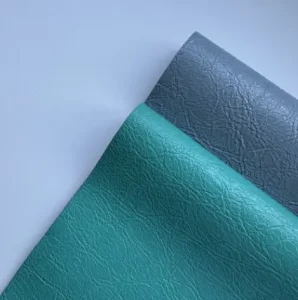
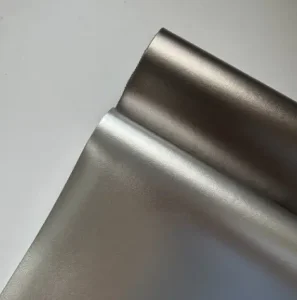
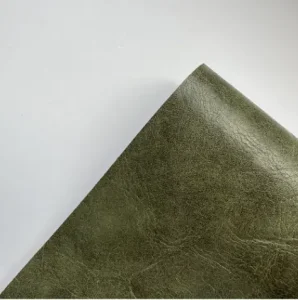
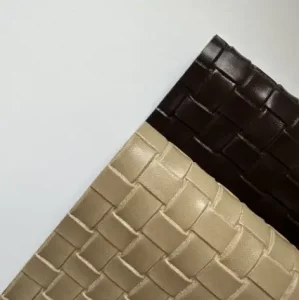
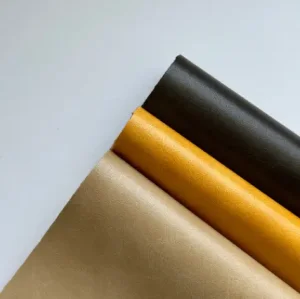
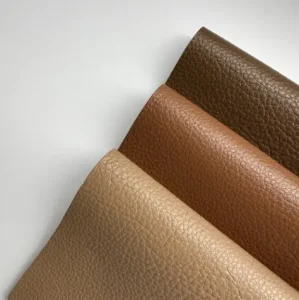
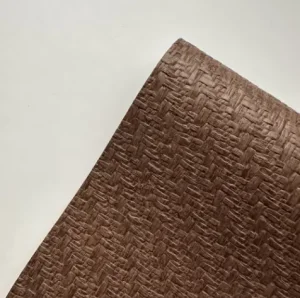
Wholesale Bio‑Based Renewable Synthetic Leather-9339 Manufacturers, Supplier