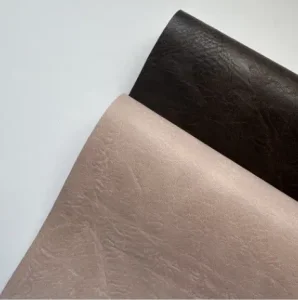
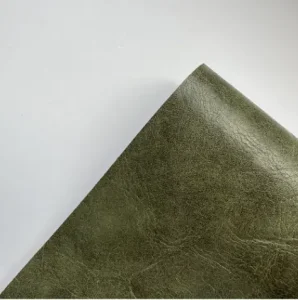
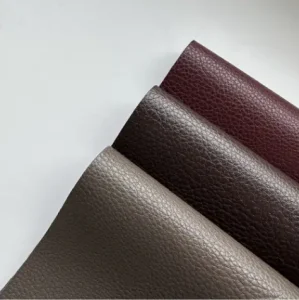
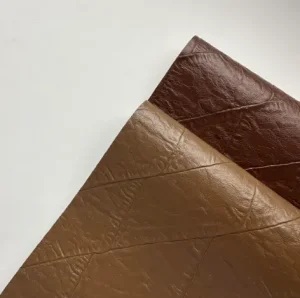
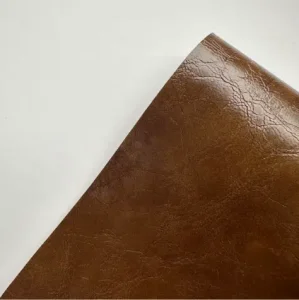
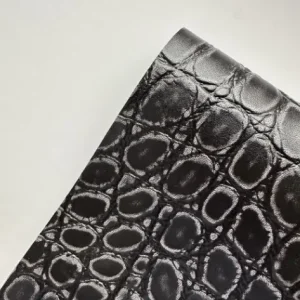
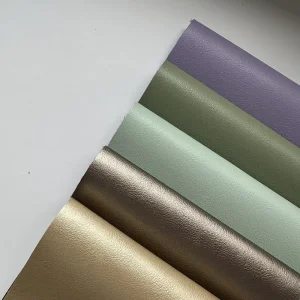
Biobased & Recycled Featured References
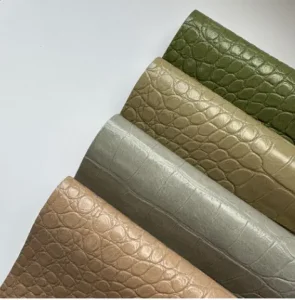
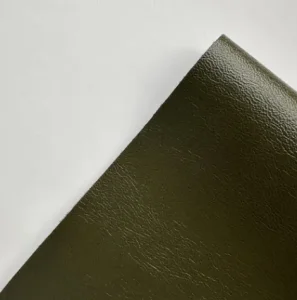
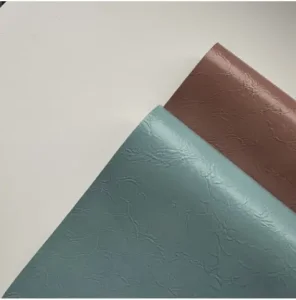
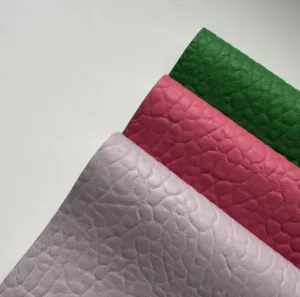
Explore standard production lines certified for low VOC emission, ASTM D6866 bio-carbon density, and premium haptic texture.
Global Landscape & Supply Chain Decarbonization
A transition from petroleum feedstock dependency toward non-toxic, closed-loop biopolymer manufacturing architecture.
Supply Chain Decoupling
Global consumer product brands face severe Scope 3 carbon mandates under the EU Corporate Sustainability Due Diligence Directive (CSDDD). Petrochemical PU and toxic tanning operations must be replaced by traceable plant-polyol chemistry.
- ASTM D6866 Verifiable biocarbon tracking
- Scope 3 Up to 48% embodied footprint reduction
Green Chemical Engineering
Traditional synthetic leather relies heavily on Dimethylformamide (DMF) or solvent-based curing. Modern clean-room manufacturing implements 100% waterborne and solvent-free PU matrices without toxic leaching.
- REACH/RoHS Zero SVHC compliance threshold
- Solvent-Free Clean VOC emission control
Tier-1 Production Capacity
Scaling bio-based alternatives requires dedicated high-throughput infrastructure capable of maintaining consistent roll-to-roll yield, uniform molecular crosslinking, and stable tensile resilience.
- 16M+ m/yr Continuous line output capacity
- Solar Campus 4.68 MW rooftop photovoltaic array
Global Certification & Regulatory Alignment
Full chain-of-custody documentation and restricted substances testing ready for immediate commercial onboarding.
Traceable RCS & GRS Audits
Recycled Claim Standard (RCS) verification tracks post-consumer PET fabric substrates from bottle scrap to raw base textile, providing certified transaction records.
- Textile Exchange Certified Custody
- Zero blend contamination assurance
USDA BioPreferred Verification
Biobased formulations replace petroleum fractions with renewable plant polyols. Verified through third-party radiocarbon dating according to ASTM D6866 standards.
- 20% to 75% adjustable bio-carbon level
- Standardized carbon isotopic signature
Zero-Hazard Restricted Substances
Comprehensive laboratory screening ensures seamless access into European, North American, and Asia-Pacific retail corridors without customs impoundment risks.
- EU REACH & RoHS SVHC pass
- OEKO-TEX Class I & 6P Phthalate Free
Application Scenarios & Physical Thresholds
Engineered for exacting industrial requirements across footwear uppers, luxury leathergoods, and technical apparel.
Athletic Footwear & Boots
High-flex cycles and dynamic toe-box stresses require superior peel strength and cold-crack resilience down to sub-zero temperatures.
- Bally Flex: >100,000 cycles without fissure
- Cold crack resistance down to -20°C
- High-frequency welding & hot-melt adhesion
Luxury Handbags & Luggage
Balancing supple grain drape with edge-paint retention, scratch resilience, and anti-crocking colorfastness against dry/wet friction.
- Taber Abrasion (CS-10 wheel, 1kg): >2,000 revs
- Crocking Colorfastness: Grade 4.5+
- Fine emboss fidelity: Toothpick & milled grain
Apparel & Outerwear
Lightweight soft-touch handfeel combined with vapor-permeable microporous coatings to ensure all-weather breathability and wind blocking.
- Hydrostatic Head: >5,000 mm H2O
- Moisture Vapor Transmission: >3,000 g/m²/24hr
- Dry-clean and gentle wash durable matrix
Technology Roadmap & Next-Gen Horizons
A systematic progression path advancing material circularity toward true industrial compostability and mycelium hybrids.
Solvent-Free Waterborne PU
Total elimination of DMF/DMAc hazardous volatile compounds. Closed-circuit wastewater recycling installed inside clean industrial halls.
USDA Biobased Polyols
Substituting petro-derived caprolactone polyols with agricultural feedstocks (corn starch, castor oil, biomass waste) reaching 30-70% biocarbon content.
Industrial Composting (PLA/PBS)
Integration of polyester backs woven from polylactic acid (PLA) and polybutylene succinate (PBS) enabling ISO 14855 / ASTM D5338 aerobic disintegration.
Mycelium & Bacterial Cellulose
Biomaterial synthesis utilizing fungal hyphae network scaffolds combined with bio-curing resins to create zero-petroleum composite luxury leathergoods.
Sourcing & Compliance Inquiries
Technical clarity addressing key engineering questions asked by sourcing executives and compliance officers.
Q1: How does "biodegradable leather" differ from "bio-based synthetic leather"?
Bio-based synthetic leather replaces fossil petroleum feedstocks with plant-derived polyols (certified via ASTM D6866 radiocarbon dating), but may not completely disintegrate in ambient soil. Biodegradable leather incorporates tailored aliphatic-aromatic polyesters or PHA/PLA chemistries designed to break down under specific microbiological composting environments.
Q2: Can your synthetic leather pass standard Brand Restricted Substance Lists (RSL)?
Yes. Our materials are completely DMF, DMFa, BPA, organotin, and 6P phthalate-free. Formulations comply with REACH SVHC (Regulation EC 1907/2006), RoHS heavy metal limits, California Proposition 65, and OEKO-TEX Standard 100 Class I for baby skin contact.
Q3: What chain-of-custody documentation is provided for recycled polyester orders?
For RCS-certified goods, every bulk commercial lot is accompanied by a Transaction Certificate (TC) issued by accredited third-party auditing bodies, validating the volume of recycled feedstock consumed throughout our Guangdong factory facility.
Q4: How does bio-content affect tensile strength, hydrolysis, and wear lifespan?
By utilizing synthesized vegetable polyols with dense hydroxyl functionalities, our cross-linked polyurethane skin matches standard petroleum-based PU in jungle tests (hydrolysis resistance >5 to 10 years) and exceeds 100,000 Bally flex cycles.
High-Spec Custom Sustainable Substrates
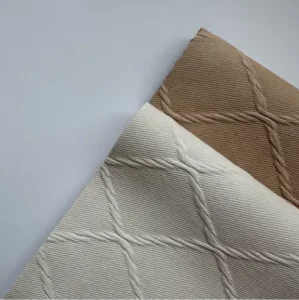
Engineered for brand developers requiring specialized surface embossings, grain patterns, and backing fabrics.