Engineered Material Portfolio
High-Performance Repurposed & Biobased Substrates
Explore traceable RCS-certified recycled composite leathers and plant-derived polymer solutions engineered directly at our JiangXin smart manufacturing campus.
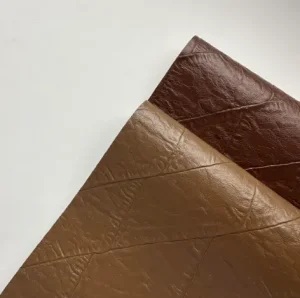
OEM Non-Toxic Vegan Eco Synthetic Leather-9266
View Specifications ›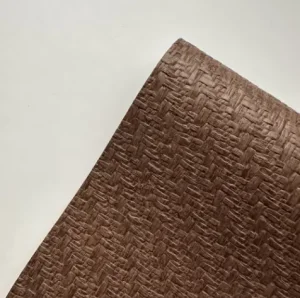
Wholesale Bio‑Based Renewable Synthetic Leather-9339
View Specifications ›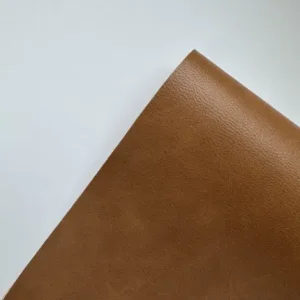
OEM Renewable Bio-Based Synthetic Leather-9020
View Specifications ›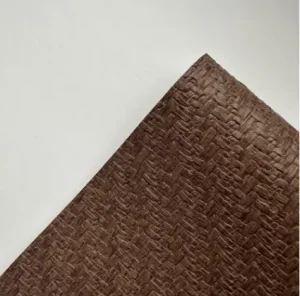
High-Quality Plant‑Origin Renewable Bio‑Based Synthetic Leather-9339
View Specifications ›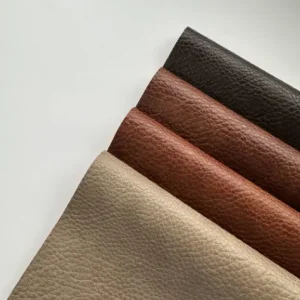
Custom RCS Recycled Synthetic Leather -9088
View Specifications ›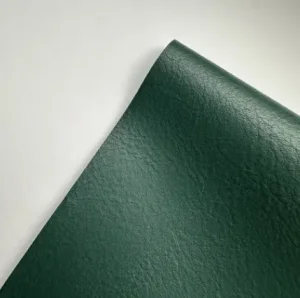
OEM Plant-Derived Bio-Based Synthetic Leather-9106
View Specifications ›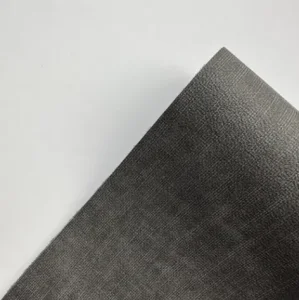
High-Quality Plant-Sourced Bio-Based Synthetic Leather-9103
View Specifications ›
Technical White Paper & Industry Analysis
Engineering Repurposed Leather for the Global Circular Economy
A rigorous examination of post-industrial recovery, bio-polyol integration, and how Tier-1 OEM manufacturing addresses evolving ESG metrics.
16M+
Meters Annual Output
135,733
m² Eco-Campus (Yingde)
4.68 MW
Rooftop Solar Grid
50+
Export Destination Markets
Traceable Closed-Loop Recycling
Unlike conventional bonded scraps, precision repurposed leather utilizes post-industrial microfibers and genuine leather fiber waste crosslinked with solvent-free waterborne polyurethanes (WPU). Every square meter conforms to the Recycled Claim Standard (RCS) chain-of-custody, giving automotive interiors and luxury brands provable input sourcing.
- Elimination of hazardous residual DMF and plasticizers
- Homogeneous tensile strength without biological grain defects
- Predictable cutting yield exceeding 95% across automated CNC lines
Bio-Based Polyol Formulations
By substituting petroleum-derived polyols with certified agricultural derivatives (industrial non-food corn, castor, and plant feedstocks), our proprietary chemical architecture reduces fossil fuel dependence at the molecular tier. Biobased carbon shares are verified via ASTM D6866 radiocarbon methodology.
- Full qualification for the USDA BioPreferred Program
- Superior hydrolysis resistance up to 7–10 years jungle test
- Ultra-low VOC emissions ideal for sealed cabin environments
Clean-Tech Manufacturing Paradigm
Yingde City JiangXin New Material Co., Ltd. operates a high-efficiency facility equipped with regenerative thermal oxidizers (RTO), closed-loop hot air recovery, and continuous water reclamation. Industrial micro-pollutants are eliminated before release, ensuring uninterrupted production compliant with global ESG audits.
- 4.68 MW rooftop photovoltaic solar grid lowering Scope 2 footprint
- ISO 9001, ISO 14001, and Higg Index verified operations
- Amfori BSCI certified ethical human-centric working standards
Global Regulatory Assurance
Localized Support, Zero-Risk Export & Compliance Frameworks
How JiangXin bridges Asian high-capacity compounding with European, North American, and Japanese legal standards to protect international brand equity.
EU REACH & SVHC Cleared
Formulations are systematically screened against over 230 Substances of Very High Concern under European Chemicals Agency (ECHA) directives. Free from restricted phthalates, NPEOs, and organotin compounds.
OEKO-TEX Standard 100
Meets rigorous skin-contact safety requirements for both Class I (baby and infant wearables) and Class II products, certifying the absolute absence of formaldehyde, nickel, and aromatic amines.
Customs & RSL Readiness
Shipments include complete testing documentation, mill test certificates (MTC), Harmonized Tariff Schedule (HS) classification, and pre-cleared restricted substance list (RSL) audit dossiers.
Regional Technical Assistance
Dedicated technical liaisons coordinate sample physicals, customized color-matching (Delta E < 0.5), and grain development within 72 hours, seamlessly aligning with your design cycle.
Macro Scale & Cluster Efficiency
Why Tier-1 Brands Anchor Their Repurposed Leather Programs in Guangdong
Combining the world's most concentrated chemical and textile supply chains with clean-tech capital investment.
Fully Integrated Vertical Ecology
Our Yingde facility combines bio-polyol synthesis, recycled backing-fabric weaving (recycled rPET / regenerated cotton), dry and wet coagulation lines, precision release-paper embossing, and protective surface lacquering under a single roof. This vertical synthesis removes third-party markups and slashes delivery lead times to 12–15 business days.
Cost Parity Against Virgin Polymers
By using efficient bulk compounding, continuous automated casting lines, and clean energy self-generation via our 4.68 MW rooftop solar installation, JiangXin overcomes the high cost traditionally associated with sustainable materials. Brands can transition from virgin PU/PVC to circular repurposed leather without budget increases.
Rapid Prototype & Laboratory Agility
Our dedicated engineering center is equipped with computer spectrophotometers, Bally flexometers, Martindale abrasion testers, and Taber equipment. Custom embossing rolls and bio-ratios can be adjusted, sampled, lab-tested, and dispatched internationally within 5 business days, expediting seasonal go-to-market schedules.
Strategic Sourcing Insights
Shifting Procurement Landscapes: Macro Industry Trends
Key drivers behind procurement shifts as global brands align material sourcing with corporate ESG targets.
1. Extended Producer Responsibility (EPR)
With incoming European Corporate Sustainability Due Diligence Directives (CSDDD), luxury groups, automotive makers, and apparel conglomerates are audited on Scope 3 upstream emissions. Repurposed and biobased leather provides an immediate, verifiable drop in carbon footprint compared to animal tanning and solvent-intensive PVC.
2. Digital Product Passports (DPP)
Traceability demands are eliminating unverified supplier claims. Modern enterprise procurement teams require granular batch tracking. JiangXin provides material passports detailing bio-carbon percentage, post-consumer recycled polymer sources, and water conservation metrics per production lot.
3. Transition to Solvent-Free Polyurethanes
Traditional synthetic manufacturing relied heavily on Dimethylformamide (DMFa). Strict European worker safety mandates and Japanese emission limits are driving the global phase-out of DMFa. Our solvent-free and water-based lines deliver identical haptic richness without volatile organic emissions.
Target Application Domains
Localized Engineering Use Cases & Performance Matrices
Formulated to meet demanding physical and chemical stress profiles across high-wear industries.
Automotive Cockpit & EV Seating
Engineered for high-frequency abrasion, UV radiation, and broad temperature fluctuations. Formulated to eliminate windshield fogging compounds while achieving German OEM flame retardancy and cold crack thresholds at -30°C.
- Taber abrasion resistance > 100,000 cycles
- ISO 105-B02 Xenon arc UV color fastness ≥ Grade 4.5
- Ultra-low odor rating (VDA 270 Grade ≤ 2.5)
Luxury Handbags & Luggage
Delivers a supple, natural hand-feel with structural dimensional stability. Supports precise skiving, edge-painting, and thermal debossing with crisp edge definition, matching traditional European calfskin handling on production benches.
- Bally flex resistance > 150,000 cycles without micro-fissuring
- Exceptional seam strength and hardware pull-out resistance
- Stitched and quilted finishes with distinct tactile depth
Athletic Footwear & Technical Apparel
Hydrophobic surface membranes resist moisture ingress while dynamic micro-porous matrix structures facilitate vapor management. Superior resilience against repeated dynamic flexing along high-stress ball-of-foot break lines.
- Dynamic flexing at low temperatures without delamination
- Hydrostatic water pressure resistance > 10,000 mm H2O
- Anti-fouling and oleophobic surface treatments
Procurement & Technical FAQ
Answers to Common Questions from OEM Sourcing Directors
Comprehensive responses detailing validation, Minimum Order Quantities (MOQ), and regulatory alignment.
How does repurposed synthetic leather differ from bonded leather?
Traditional bonded leather uses pulverized hide waste held together by formaldehyde or latex resins, which can become brittle and delaminate under flex stress. Our modern repurposed leather combines post-industrial microfibers with solvent-free waterborne polyurethanes (WPU) or bio-polyols. This creates a flexible, long-chain molecular matrix that avoids micro-fissuring and eliminates hazardous emissions.
How is bio-based content verified for customer-facing hangtags?
Bio-based content is measured using ASTM D6866 radiocarbon (C14) testing. This analytical standard isolates carbon derived from modern renewable biomass versus fossil hydrocarbons. Our bio-series substrates feature certified bio-carbon shares ranging from 30% to over 75%, qualifying for USDA BioPreferred certifications and defensible product carbon claims.
Can JiangXin provide official Transaction Certificates (TCs) for RCS orders?
Yes. Operating under our audited Recycled Claim Standard (RCS) chain of custody, our quality control team issues official Transaction Certificates (TCs) on a per-order basis. TCs trace feedstock origin directly to certified mechanical recycling sources, satisfying corporate ESG audits and customs authorities.
What are your standard Minimum Order Quantities (MOQs) and sampling lead times?
For established catalog articles with standard backing materials, our MOQ is 300 to 500 running meters per colorway. Fully customized colors (Pantone/physical master match) or specialized embossings require an MOQ of 1,000 meters. Digital lab sample strike-offs are typically prepared within 3 to 5 business days, with bulk production delivered in 12 to 15 days.
How does your material handle high-humidity or tropical climates?
Standard solvent-based PU can deteriorate in warm, humid conditions due to moisture hydrolysis. Our water-based and bio-formulated polyurethane chains resist hydrolysis for 5, 7, or 10+ years in standard jungle room tests (70°C at 95% relative humidity), ensuring consistent durability in coastal and equatorial markets.
Can you formulate materials to match custom Restricted Substance Lists (RSLs)?
Yes. Share your brand's specific RSL criteria before sampling begins. Our on-site R&D chemists configure resin formulations, pigments, surface lacquers, and backing adhesives to ensure compliance with California Proposition 65, EU REACH, OEKO-TEX Standard 100, and brand-specific RSL limits.
Extended Reference Catalog
High-Durability Eco-Friendly Faux Leather Series
Explore specialized low-odor, recycled-composite, and sustainable man-made leathers engineered for OEM manufacturing.
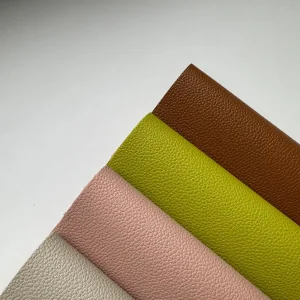
High-Quality Sustainable Eco-Friendly Faux Leather
View Specifications ›
Custom Plant-Derived Bio-Based Synthetic Leather-9081
View Specifications ›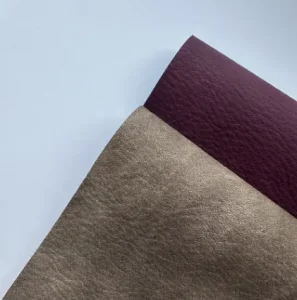
OEM Low Odor Bio-Based Vegan Leather-9237
View Specifications ›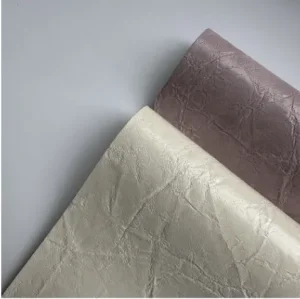
High-Quality RCS Recycled Synthetic Leather-0212
View Specifications ›
OEM Plant-Derived Bio-Based Synthetic Leather-2071
View Specifications ›
High-Quality Eco-Friendly Synthetic Leather-9081
View Specifications ›
Wholesale Eco-Friendly Sustainable Synthetic Leather-9309
View Specifications ›