
Engineered Eco-Polyurethane Solutions
Explore standard, customized, and bio-synthesized artificial PU leather fabrics manufactured to stringent global technical packs.


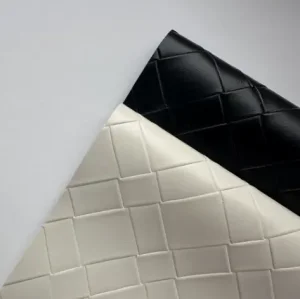
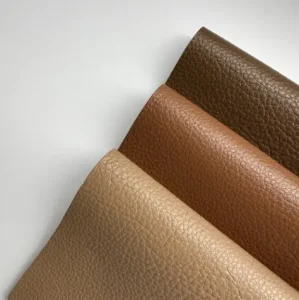
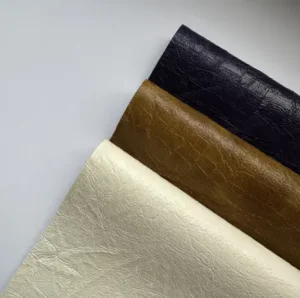
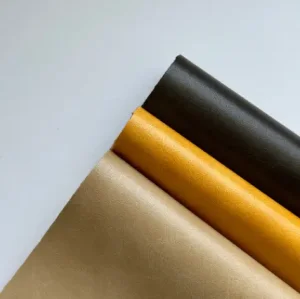
Global Market Evolution: The Paradigm Shift in Custom PU Leather Fabric
In the wake of international ESG imperatives, corporate zero-carbon mandates, and tightening European/North American safety standards, custom PU leather manufacturing is undergoing an aggressive transformation.
Bio-Based Feedstock Transition
Global original design manufacturers (ODMs) and luxury brands are shifting away from 100% petroleum-derived polyurethane resins. Next-gen polyols derived from non-food agricultural biomass (corn starch, castor seed oils, and agricultural byproducts) decrease Cradle-to-Gate lifecycle global warming potential (GWP) by 40% to 65%.
Zero-Solvent & Waterborne Chemistries
Eliminating volatile organic compounds (VOCs) such as Dimethylformamide (DMFa), Toluene, and Methyl Ethyl Ketone (MEK) is imperative. State-of-the-art solvent-free reactive hot-melt coating technologies provide superior mechanical adhesion with near-zero workplace toxic exposure.
Chain-of-Custody Traceability
Modern supply chain procurement demands forensic accountability. Buyers require documented proof via Recycled Claim Standard (RCS), Global Recycled Standard (GRS), and USDA BioPreferred authentications to protect against greenwashing scrutiny and ensure compliance with the EU Corporate Sustainability Due Diligence Directive (CSDDD).
Enterprise-Scale Industrial Solutions for B2B Supply Chains
Custom PU leather fabrics engineered specifically to resolve sector-specific functional failure points.
Automotive Seating & Cockpits
Tough microclimate resilience requiring ultra-low fogging (DIN 75201), extreme UV color fastness (Xenon Arc ISO 105-B06), and strict VOC thresholds (VDA 278). Backings engineered using high-denier recycled polyester microfiber fleece for enhanced elongation and seam-burst strength.
Luxury Handbags & Footwear
Engineered drape, supple hand feel, and fine-grain micro-embossing (including Toothpick, Togo, Nappa, and bespoke laser textures). Hydrolysis-resistant finish protects against human sebum, perspiration, and deep flex cracking (exceeding 100,000 Bally Flex cycles at -10°C).
Hospitality & Architectural Surfaces
Engineered for high-traffic contract upholstery. Enhanced with non-halogenated flame-retardant (FR) additives meeting CAL 133, BS 5852 Crib 5, and IMO FTP Code Part 8. Surface barrier layers repel clinical-grade disinfectants, alcohol rubs, and persistent food stains.
| Performance Vector | Conventional Wet-Process PU | Standard PVC Leather | Advanced Solvent-Free / Bio-PU (JX.ECO) |
|---|---|---|---|
| VOC & DMFa Content | Moderate to High (>30 ppm) | High Plasticizer Migration / Odor | Zero Detection / Clean Room Certified (<1 ppm) |
| Hydrolysis Resistance (Jungle Test) | 3 - 5 Years Average | Delaminates / Brittle with age | 7 - 10+ Years (Polycarbonate/Ether hybrids) |
| Carbon Footprint Lifecycle | High petroleum reliance | High environmental footprint | Up to 60% bio-based or certified recycled content |
| Cold Crack Resistance | Fails at -15°C | Cracks below 0°C | Rated down to -30°C to -40°C dynamic flex |
Enterprise Regulatory Compliance & Global Sourcing Assurance
Minimizing technical barriers to global trade through third-party certified chemical verification and accredited process governance.
Restricted Substances (RSL)
Formulations tested free of restricted organotin compounds, AZO colorants, short-chain chlorinated paraffins (SCCP), PFOS/PFOA, and heavy metals. Fully compliant with EU REACH SVHC and California Proposition 65 thresholds.
Phthalate-Free Standard
Manufactured without ortho-phthalates. Formulated with inert citrate and bio-derived ester plasticizers meeting 16 CFR Part 1307, CPSIA, and Toy Safety Directive standards for sensitive consumer skin-contact surfaces.
ASTM D6866 Radiocarbon Testing
Every bio-based batch undergoes isotopic carbon verification to validate actual plant-derived carbon content against standard petroleum matrixes, allowing OEM clients to earn legitimate USDA BioPreferred hangtag claims.
Social & Facility Governance
Production infrastructure verified via amfori BSCI social compliance auditing and ISO 9001 / ISO 14001 / ISO 45001 management protocols, guaranteeing fair labor, documented chemical hygiene, and zero undocumented subcontracting.
Material Science Roadmap: Toward Fully Circular Monomaterials
How our R&D center is systematically executing forward-looking polymer engineering through 2028.
Phase 1: High-Yield Circular Monomaterial (PU + rPET)
Eliminating multi-material separation friction at end-of-life. By marrying recycled thermoplastic polyurethane (rTPU) skins with 100% post-consumer recycled PET woven backings, we eliminate chemical splitting steps during mechanical textile recycling.
Phase 2: Carbon-Capture Synthesized Polymers (CCU)
Integrating carbon-capture derived polyols into functional polyurethane dispersion (PUD) lines. By sourcing raw feedstocks synthesized from sequestered industrial smokestack emissions, we reduce net atmospheric emissions per square meter manufactured.
Phase 3: Digital Product Passports (DPP)
Integrating cryptographic roll-level serialization. Utilizing molecular ink markers and digital tracking tokens to log raw resin chemistry, exact plant energy origin (including solar share from our 4.68 MW array), and recycling guidelines for brand auditing.
Specialty Eco-Engineered Leather Variants
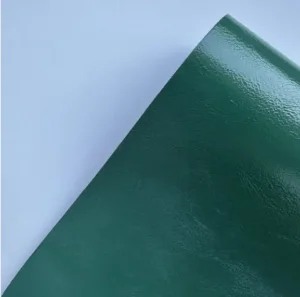
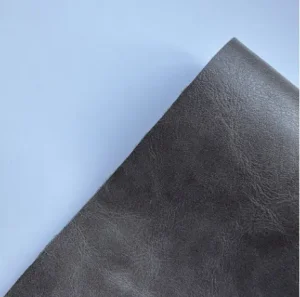
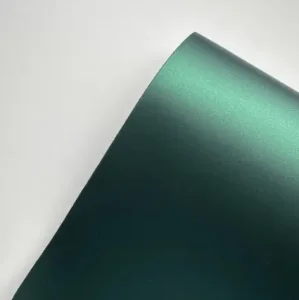
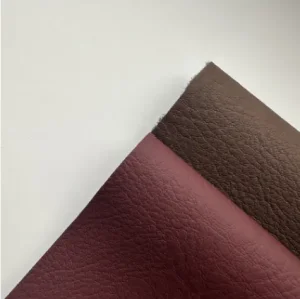
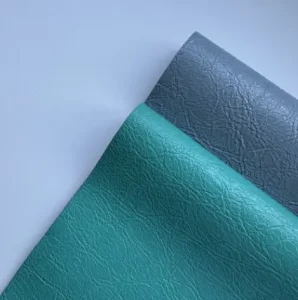
High-tensile, plant-sourced, and traceable recycled synthetic materials for industrial volume contracts.

Frequently Answered Technical Questions for Procurement Engineers
Authoritative technical guidance compiled directly from our laboratory polymer scientists and supply chain dispatch directors.