
Engineered Eco Leather References
Explore high-volume OEM/ODM sustainable synthetic leathers, formulated for low VOC emissions, mechanical excellence, and closed-loop recyclability.
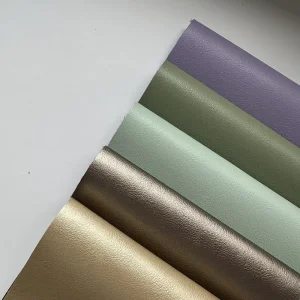

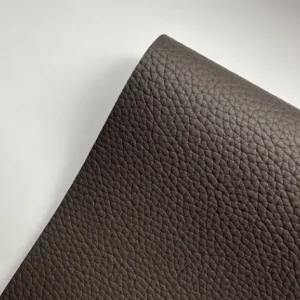
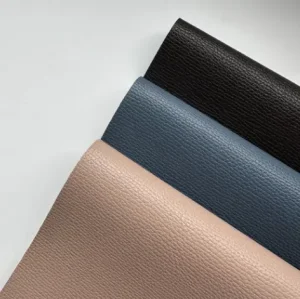
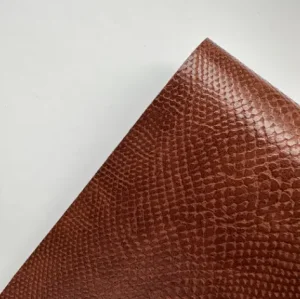
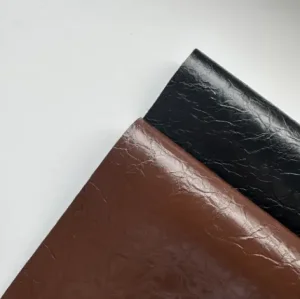
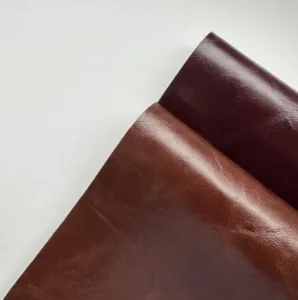
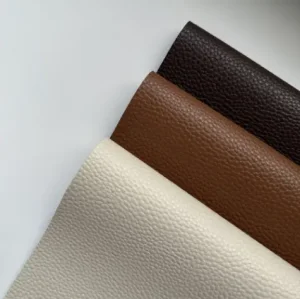
What Does "Eco Leather" Actually Mean in Industrial Procurement?
Moving beyond marketing rhetoric to clarify chemical composition, lifecycle analysis (LCA), and international testing criteria for global supply chains.
1. Bio-Based Sourcing (ASTM D6866)
Unlike conventional fossil-derived petroleum polymers, authentic biobased leather substitutes petroleum polyols with non-edible agricultural feedstocks, industrial corn starches, or agricultural processing byproducts. Verified through radiocarbon dating under ASTM D6866 and USDA BioPreferred standards, this formulation directly reduces virgin petrochemical dependency by up to 30%-60%.
2. Post-Consumer Circularity (RCS / GRS)
Eco-leather incorporates certified recycled inputs into both the topcoat polymer and structural carrier backings. Utilizing Recycled Claim Standard (RCS) chain-of-custody protocols, polyester fiber backings are derived from mechanical and chemical recycling of post-consumer PET bottles and discarded synthetic fibers, significantly cutting end-of-life landfill mass.
3. Zero-Solvent Green Chemistry
Conventional synthetic manufacturing relies heavily on Dimethylformamide (DMFa), toluene, and methyl ethyl ketone (MEK). Modern eco-leather factories apply 100% solvent-free hot-melt polyurethane coating or waterborne PU systems, eliminating volatile organic compounds (VOCs), ensuring compliance with EU REACH SVHC and ZDHC Roadmap to Zero standards.
China Factory Scalability: The JiangXin (JX.ECO) Moat
Why Tier-1 footwear and luxury lifestyle brands centralize sustainable artificial leather procurement in high-tech Guangdong industrial zones.
Full-Stack Upstream Integration
From base substrate knitting (recycled microfibers, bio-sourced spunlace) to in-house proprietary polyol polyaddition reactions, JiangXin controls every transformation stage, eliminating subcontractor markups and material inconsistency.
16M+ Meters High-Throughput Capacity
With an integrated production footprint of 135,733 m² in Yingde, Guangdong, continuous industrial coating lines eliminate supply bottlenecks, delivering uniform batch-to-batch colorimetric delta-E and precise surface grain fidelity.
Integrated ESG & Clean Energy
Operating a dedicated 4.68 MW rooftop photovoltaic solar system and advanced zero-discharge wastewater recycling plants. Procuring materials from a low-carbon facility reduces Tier 3 Scope emissions across your global ESG disclosures.
Frictionless Audit Documentation
Rapid deployment of Transaction Certificates (TC), OEKO-TEX Eco Passport clearances, Higg FEM assessments, and amfori BSCI audit dossiers directly shortens vendor validation cycles from months to days.



Material Engineering & Lifecycle Assessment (LCA) Comparison
Quantitative analysis evaluating traditional bovine hide, standard petroleum PVC/PU, and advanced sustainable PU leathers.
| Performance / Ecological Metric | Animal Bovine Leather | Standard Petrochemical PU | JiangXin Bio-Based Eco PU | JiangXin RCS Recycled PU |
|---|---|---|---|---|
| Feedstock Origin | Livestock / Tannery Hide | 100% Virgin Fossil Crude | Plant-Sourced Polyols (Renewable) | Post-Consumer PET / Upcycled Fiber |
| Carbon Footprint (kg CO₂ eq/m²) | ~110.0 (High Methane Output) | ~15.8 (Petrochemical baseline) | ~5.2 (67% Reduction) | ~6.4 (59% Reduction) |
| Water Consumption (L/m²) | > 1,500 L (Tanning & Washing) | ~120 L | < 15 L (Closed-Loop) | < 20 L (Recycled Substrate) |
| Hazardous Solvents (DMFa / Toluene) | Chromium VI, Formaldehyde | Significant (Wet Coagulation) | 0% Non-Detectable | 0% Non-Detectable |
| Abrasion Endurance (Martindale) | 40,000 - 80,000 Revs | 30,000 - 50,000 Revs | 100,000+ Revs (EN ISO 12947) | 100,000+ Revs (EN ISO 12947) |
| Hydrolysis Resistance (Jungle Test) | Prone to fungal rot | 3 - 5 Years | 8 - 10 Years Grade A | 7 - 10 Years Grade A |
| Global Traceability Certification | LWG (Leather Working Group) | None | USDA Biobased, ASTM D6866 | Textile Exchange RCS / GRS TC |
Customized Applications Across Demanding Market Sectors
Formulated to meet strict physical, environmental, and thermal requirements across consumer and commercial markets.
Performance Athletic & Lifestyle Footwear
Engineered for high-flex dynamic fatigue resistance (Bally flex testing > 200,000 cycles at -10°C). Our biobased and RCS synthetic leathers deliver structural recovery for athletic vamps, supportive eyestays, and abrasion-resistant heel counters, providing high cutting yields over traditional leather hides.
Luxury Handbags & Designer Accessories
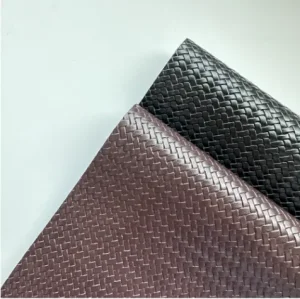
Delivering high drape, warm hand-feel, and uniform grain retention. Finishes accommodate diverse aesthetic requirements—from micro-linear toothpick embossing to smooth nappa grains. Backed by low-odor formulations meeting stringent international VOC limits for luxury goods.
Contract Commercial & Automotive Seating
Tuned to withstand intensive daily use: stain-shield coatings (anti-dye transfer against denim), non-halogenated flame retardancy (BS5852 Crib 5, CAL TB 117-2013, FMVSS 302), and resistance to medical-grade quaternary ammonium disinfectant cleaning.
Enterprise Sourcing: From Lab Formulation to Mass Production
An auditable, stage-gated supply pipeline designed for multinational buying teams and compliance managers.
Technical Brief
Define product substrate, thickness targets (0.5mm – 2.2mm), bio/recycled percentages, grain aesthetics, and regional RSL restricted chemical lists.
Lab Formulation
Custom resin compounding, pigment masterbatch alignment, and automated lab pilot dipping with rapid physical hand-swatch dispatch.
Compliance Validation
Third-party analytical testing covering REACH SVHC, RoHS, phthalates (6P/16P), biobased ASTM D6866 percentage, and Martindale cycles.
Continuous Coating
Locking mass-production parameters on our multi-head precision lines in Yingde, supported by on-site automated visual defect inspection.
QA & Chain Custody
Comprehensive roll-by-roll inspection, issuance of official Textile Exchange Transaction Certificates (TC), and streamlined sea-freight export clearance.
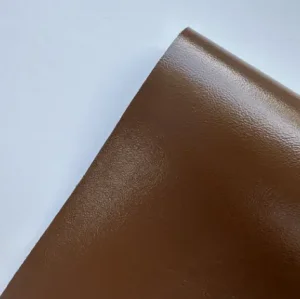
Expanded Low-Impact Technical Catalog
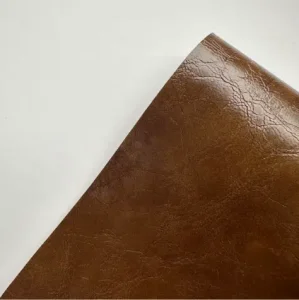
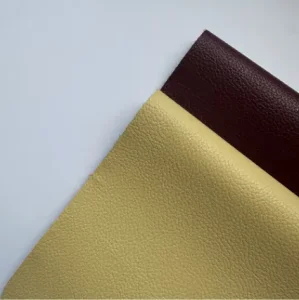
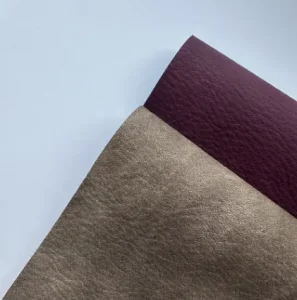
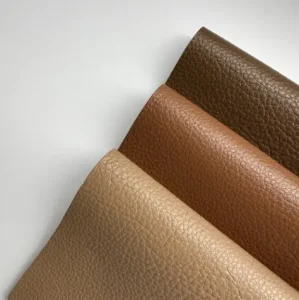
Specialized eco-polyurethane rolls designed for high tensile strength, anti-fouling performance, and sustainable design requirements.


Frequently Asked Questions on Eco Leather Sourcing
Clear, technical answers addressing standard questions raised by enterprise material developers, lab engineers, and sourcing directors.
What is the technical meaning of "Eco Leather" across global regulations?
In industrial manufacturing, "Eco Leather" refers to artificial leather engineered to significantly reduce environmental impact across its lifecycle. This is achieved by using renewable bio-based polyols (ASTM D6866), post-consumer recycled substrates (RCS/GRS certified), and zero-VOC waterborne or solvent-free polyurethane resin systems that fully comply with EU REACH, RoHS, and OEKO-TEX standards.
How does JiangXin verify bio-based and recycled claims for brand hangtags?
Bio-based content is measured using radiocarbon dating under ASTM D6866, determining the percentage of renewable modern carbon vs. fossil-based carbon. For circular materials, we operate under the Textile Exchange Recycled Claim Standard (RCS), delivering official Transaction Certificates (TC) that document custody from input scrap to the finished roll.
Can sustainable eco leather match the mechanical durability of real leather?
Yes. By engineering cross-linked polyurethane molecular chains and dense microfiber structural matrix carriers, our eco-leather delivers Martindale abrasion resistance exceeding 100,000 cycles, jungle hydrolysis resistance of 7–10 years, and dynamic Bally flex resilience over 200,000 cycles without surface cracking.
What are the standard MOQs and prototyping lead times for custom tech packs?
Custom lab-dips, tailored grain emboss rollers, and color masterbatch matching typically take 3 to 7 business days. Production minimums (MOQs) generally start at 500 to 1,000 linear meters per custom reference, backed by our 16-million-meter annual capacity to reliably scale up to full-container bulk orders.