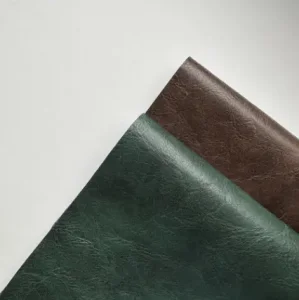
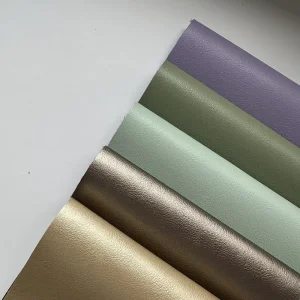
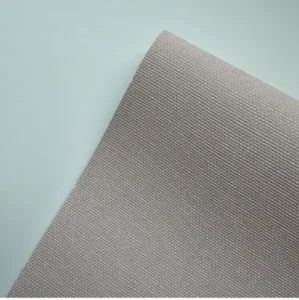
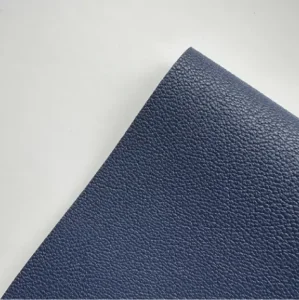
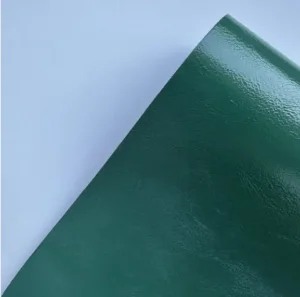
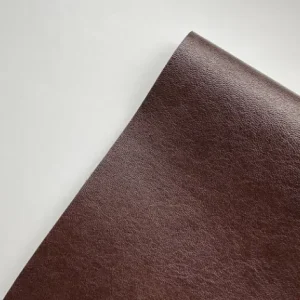
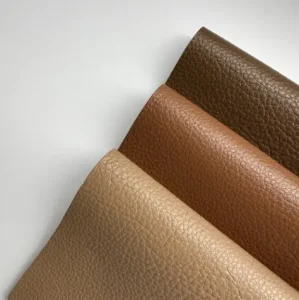
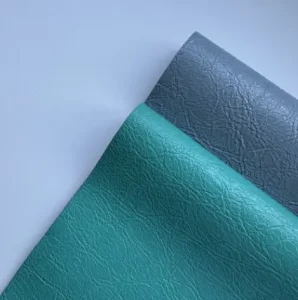
Featured Sustainable Substrates & Formulations
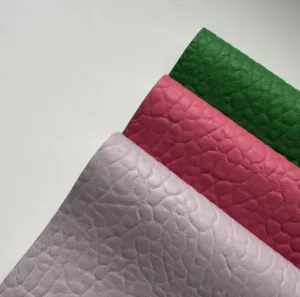
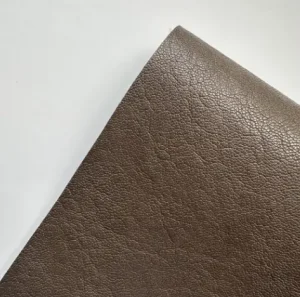
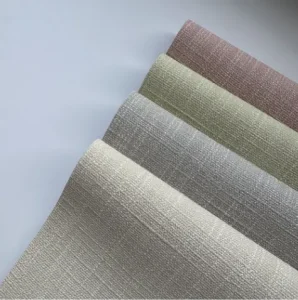
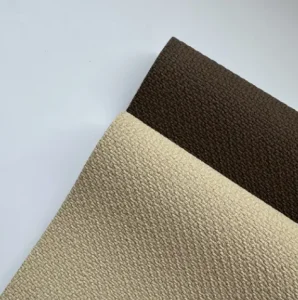
Engineered low-impact synthetic leather selections compliant with global REACH, RoHS, and RCS verification protocols.
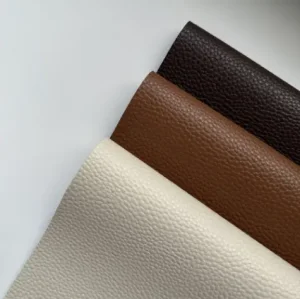
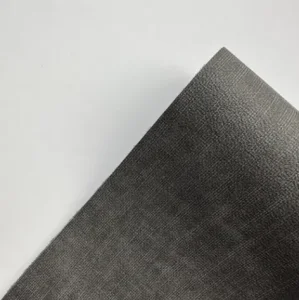
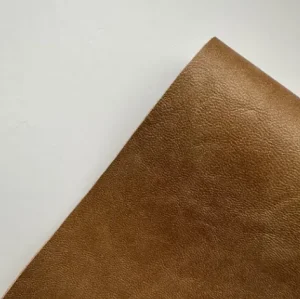
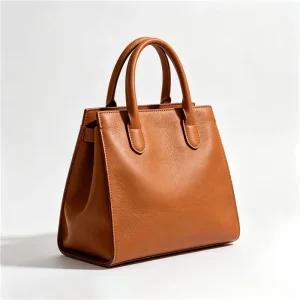
Industry Evolution: The Next Generation of Vegan Leather
Transitioning from petroleum-heavy polyvinyl chloride (PVC) to bio-engineered polyurethane, solvent-free dispersion, and circular molecular chemistry.
The De-fossilization of Polymer Coatings
The global leather goods sector is undergoing a profound structural pivot. Historically, "vegan leather" was merely an umbrella marketing term for petroleum-derived plastics such as Polyvinyl Chloride (PVC) and traditional solvent-based Polyurethane (PU). While cruelty-free, conventional alternatives left severe environmental footprints via hazardous dimethylformamide (DMFa) solvent emissions, high carbon footprints, and microplastic persistency. As highlighted by the Higg Materials Sustainability Index (Higg MSI), the transition toward non-toxic, bio-derived, and post-consumer recycled substrates has ceased to be an optional brand niche—it is now an imperative commercial baseline.
Modern engineering at JiangXin (JX.ECO) replaces non-renewable fossil inputs with renewable agricultural residue and biobased polyols derived from non-food starch and plant oils. Validated through rigorous ASTM D6866 radiocarbon testing, our biobased synthetic matrices decouple luxury aesthetics from fossil depletion, curbing upstream cradle-to-gate greenhouse gas emissions by up to 48% compared with conventional synthetic alternatives.
Enterprise Procurement Demands & Material Compliance
How multinational brands mitigate Scope 3 upstream risk and fulfill Corporate Sustainability Due Diligence Directives (CSDDD).
Traceable Chain of Custody
Global procurement requires empirical verification over simple vendor self-declarations. Every batch of our recycled PU complies with Textile Exchange Recycled Claim Standard (RCS), backed by verifiable Transaction Certificates (TC).
- Third-party verified post-consumer rPET substrates
- Immutable batch-level lot tracing
- Anti-counterfeiting verification readiness
Zero-Hazard Chemical Formulations
Strict elimination of VOCs, volatile solvents, and reproductive toxins. Fully aligned with EU REACH SVHC lists, RoHS standards, and Zero Discharge of Hazardous Chemicals (ZDHC) Roadmap MRSL levels.
- 100% Water-borne & Solvent-Free PU technology
- Zero Dimethylformamide (DMFa < 5 ppm or undetectable)
- Compliant with 6P/16P Phthalate Restrictions
Industrial Durability Specs
Cruelty-free sourcing cannot sacrifice physical longevity. Our formulations meet heavy-duty wear cycles, scratch tests, hydrolytic resistance, and thermal flex resilience required by luxury leathergoods makers.
- Martindale Abrasion > 100,000 cycles
- Bally Flex testing: 100,000 cycles at -10°C
- Jungle Test hydrolysis resistance up to 7-10 years
China Factory 4.0: Scalability, Precision & Clean Energy
Combining vertically integrated chemical synthesis with localized supply ecosystems to de-risk tier-2 dependencies for global brands.
Vertically Integrated Synthesis
Unlike secondary converters who outsource fabric lamination, JiangXin conducts resin compounding, textile backing knitting, surface transfer embossing, and aqueous top-coating within a consolidated 135,733 m² footprint in Yingde, Guangdong.
This closed loop prevents shade deviations, eradicates transit bottlenecks, and reduces order turnaround times by 35% compared to fragmented subcontracting models.
AI-Assisted Spectral Color Control
Lab-to-line variations represent the highest cost driver in commercial apparel and automotive interiors. We apply spectrophotometric inline calibration systems to scan coating thickness, grain depth, and Delta-E color variation in real time.
Delta-E tolerance is locked under < 0.5 across 10,000+ meter runs, guaranteeing uncompromised consistency between approval swatches and industrial mass yields.
Decarbonized Infrastructure
Achieving Scope 1 and Scope 2 emission reductions on behalf of brand buyers: our campus integrates a massive 4.68 MW rooftop photovoltaic solar plant alongside closed-loop heat recovery thermal exchangers.
On-site biochemical wastewater purification plants exceed strict national emissions standards, recycling process water directly back into cooling stages.
Localized Application Scenarios & End-Use Customization
Calibrating tensile strength, drape elongation, breathability, and grain mechanics to targeted product typologies.
Performance Footwear Uppers
Athletic shoes and high-end formal footwear require high dynamic fatigue tolerance and moisture vapor permeability. Our micro-porous waterborne formulations replicate natural leather porosity while optimizing weight.
- Vamp flexing resistance > 150,000 cycles at room temp
- Cold crack resistance down to -25°C
- Bonding peel strength > 3.5 kg/3cm
Luxury Handbags & Small Leather Goods
Structured accessories require precise temper, tight edge-paint compatibility, and rich tactile grain resilience. We provide both smooth calfskin and customized deep textures without grain collapse.
- Flawless edge-coating oil adhesion
- Anti-migration barrier coatings (prevents color transfer)
- Scratch & abrasion resistance (Taber CS-10 / 1000g)
Garments, Belts & Watch Straps
Soft touch, gentle stretch recovery, and skin-neutral hypoallergenic formulations are essential for wearable apparel and wrist straps subjected to continuous thermal exposure and sebum oils.
- OEKO-TEX Standard 100 Class I certified safety
- Sweat and oil sebum resistance (ISO 105-E04)
- Exceptional stitch tear strength (> 30 N)
Frequently Asked Sourcing & Compliance Questions
In-depth responses from our materials engineering and international trade compliance teams.
What sets biobased synthetic leather apart from conventional solvent-based PU?
How does JiangXin verify biobased and recycled content claims for international auditors?
Can custom finishes meet specific luxury brand hand-feel (drape, temper, and grain)?
What are your manufacturing minimum order quantities (MOQ) and sample lead times?
Does your vegan leather pass strict international Restricted Substance Lists (RSL)?
Specialty Recycled & Low-Carbon Synthetic Leather Lines
Engineered to empower circular fashion collections, high-durability accessories, and sustainable product ecosystems.