
Featured RCS-Certified Synthetic Leather Series
Engineered to comply with stringent Scope 3 reduction goals and ISO 14021 recycled content definitions. Readily configured for direct containerized logistics to Balboa, Manzanillo, and Colon Free Zone (ZLC).
-
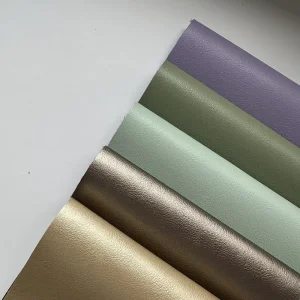 RCS 100 / Blended
View Technical Specs
Wholesale RCS Recycled Synthetic Leather (Maritime & Footwear Spec)
Post-consumer rPET substrate backing with micro-porous solvent-free PU surface skin. Optimized for high-humidity resistance in Panamanian maritime conditions.
-
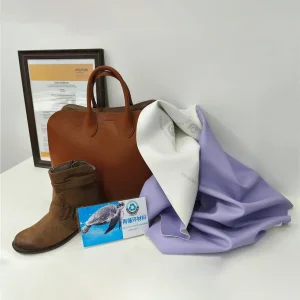 DMF-Free / Waterborne
View Technical Specs
OEM RCS Certified Recycled Sustainable Synthetic Leather for Bags & Luggage
Fully compliant with EU REACH SVHC and US CA Prop 65. Features anti-abrasion skin engineered specifically for travel goods and regional duty-free retail distribution.
-
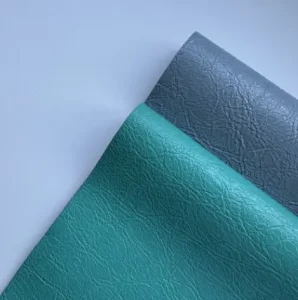 Ref 9213 / High-Tear
View Technical Specs
OEM RCS Recycled Synthetic Leather-9213 Panama Upholstery Grade
Heavy-duty recycled microfibre structure exhibiting >100,000 Martindale cycles. Suitable for tropical hotel refurbishment and high-traffic regional commercial seating.
-
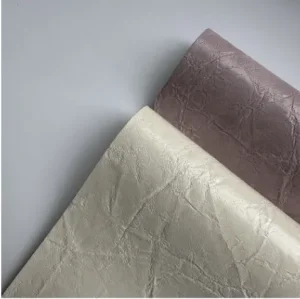 Ref 0212 / Fine Grain
View Technical Specs
High-Quality RCS Recycled Synthetic Leather-0212 Luxury Grain Edition
Supple calf-skin grain aesthetic engineered with 40%+ verified post-consumer recycled PES matrix, customized for Central American premium footwear and fashion accessories.
Industrial Macro-Environment: The Strategic Role of Panama in Circular Material Supply Chains
Analyzing the shift from linear petrochemical synthetic leathers to third-party verified RCS polymers across the Panama logistics corridor, the Colon Free Trade Zone, and multinational export programs.
The Geopolitical & Logistical Imperative of the Isthmus
Panama occupies a singular status in global logistics and hemispheric commerce. Centered around the interoceanic canal, the Colon Free Trade Zone (Zona Libre de Colón - ZLC), and the Pacific/Atlantic terminal complex (Balboa, Cristobal, Manzanillo International Terminal, and Colon Container Terminal), Panama operates as the primary redistribution switchboard for Central America, the Caribbean, and the northern Andean economies (Colombia, Ecuador, Peru). Historically, the industrial and commercial transactions through the ZLC relied heavily on traditional fossil-fuel-derived polyvinyl chloride (PVC) and standard polyurethane (PU) artificial leathers imported for regional footwear manufacturing, automotive re-trimming, luggage assembly, and hospitality interiors.
However, the global convergence of strict corporate Environmental, Social, and Governance (ESG) frameworks, combined with evolving import regulations across North America and Europe, has fundamentally restructured buyer demands in Panama. Multinationals operating distribution hubs across Latin America now mandate audited, certified circular materials. Specifically, synthetic leather products claiming recycled content must carry verifiable third-party certification under the Recycled Claim Standard (RCS) administered by Textile Exchange. Unverified generic claims ("eco-friendly", "green PU") face severe greenwashing scrutiny, operational compliance rejections, and legal penalties under international consumer protection laws.
Addressing Panama's Tropical Climatological Demands
Beyond regulatory and transactional compliance, Panama presents an exceptionally hostile physical environment for synthetic leathers. Characterized by high ambient relative humidity (>80% RH year-round), intense ultraviolet radiation, and persistent ambient salinity near port zones, standard synthetic leathers quickly suffer from premature hydrolytic degradation—the breakdown of urethane ester bonds commonly referred to as "peeling" or "flaking."
Supplying wholesale RCS-certified synthetic materials to Panama necessitates profound polymer architecture adjustments. As an integrated chemical synthesizer and precision coater, our manufacturing campus deploys customized polyether-polyol backbones and water-dispersed aliphatic polyurethane (waterborne PUD) surface cross-linkers. These specialized formulations resist 10-week hydrolysis testing (Jungle Test at 70°C, 95% RH) without microscopic structural collapse, ensuring that RCS-certified footwear, automotive seatings, and marine upholstery maintain their tactile hand, tensile strength, and flex crack resistance through years of tropical Panamanian exposure.
ZLC Bonded Warehouse Support
Streamlined logistics for direct bonded delivery into the Colon Free Trade Zone, enabling distributors to avoid double taxation and service Andean and Central American destinations with zero regulatory friction.
Transaction Certificate (TC) Guarantee
Every commercial bulk container shipped to Panama is backed by authentic, accredited Transaction Certificates (TCs) generated through Textile Exchange-authorized audit bodies (such as Control Union or Intertek).
Marine & Tropical Weatherability
Enhanced with high-grade UV stabilizers and fungicidal additives that inhibit pink stain formation, fungal spore proliferation, and saltwater crystalline degradation across Panamanian coastal applications.
Engineering RCS Traceability: From Post-Consumer Flake to Finished Roll
A comprehensive technical examination of chemical composition, chain of custody verification, and performance comparison against legacy PU and PVC substrates.
Chain of Custody (CoC) & Chemical Integrity
The Recycled Claim Standard (RCS) is an international, voluntary standard that establishes third-party verification of recycled input materials and chain of custody. Its primary objective is to align recycled claims across global markets, tracking post-consumer (e.g., discarded clear polyethylene terephthalate water bottles) or pre-consumer industrial waste streams from raw sorting through yarn spinning, weaving, matrix knitting, PU polyurethane wet/dry coagulation, and top-coat embossing.
In our 135,733 m² production campus, the RCS custody protocol operates under a rigorous segregated silo methodology:
- Raw Material Traceability: Recycled polyethylene terephthalate (rPET) staple fibers and yarns are acquired exclusively from certified recycling facilities accompanied by valid SCs (Scope Certificates) and material-specific TCs.
- Mass Balance & Segregation: In our automated wet-process knitting plant, circular rPET yarns are processed on designated high-precision circular knitting and non-woven hydro-entanglement lines. No blend contamination with virgin fossil-based polyesters occurs.
- Carrier Base Chemistry: Our backings utilize varying blends ranging from 20% to 100% certified recycled content. For high-tensile footwear applications serving Panama's athletic shoe assembly plants, we deploy 100% post-consumer rPET knitted substrate with exceptional diagonal stretch recovery.
- Solvent Elimination: Traditional synthetic leather coating consumes massive volumes of N,N-Dimethylformamide (DMF) or Dimethylacetamide (DMAC). Our advanced lines incorporate 100% solvent-free hot-melt polyurethane and waterborne PU dispersions (PUD). This eliminates hazardous volatile organic compound (VOC) off-gassing, complying directly with EU REACH Annex XVII entry 72 and Panamanian occupational safety requirements.
Comparative Engineering Matrix: Legacy vs. RCS-Certified Advanced Materials
For procurement directors, specification engineers, and supply chain heads operating out of Panama City, selecting the appropriate substrate requires evaluating technical trade-offs across durability, environmental impact, regulatory clearance, and cost. The matrix below benchmarks our engineered materials against incumbent solutions:
| Performance / Compliance Parameter | Legacy Solvent PVC (Incumbent) | Conventional Wet/Dry PU | JiangXin RCS-Certified Solvent-Free PU | JiangXin Waterborne RCS Microfibre |
|---|---|---|---|---|
| Verified Recycled Content | 0% (Virgin Petrochemical) | 0% (Virgin Petrochemical) | 20% - 70% RCS Certified | 50% - 100% RCS Certified |
| Hydrolysis Resistance (Jungle Test) | 3 - 5 Years (Plasticizer Migration) | 2 - 4 Years (Ester Cleavage) | 7 - 10+ Years (Polyether Base) | 8 - 12+ Years (Polyester/Ether Hybrids) |
| VOC Emissions & DMF Concentration | High VOCs; Phthalate plasticizers >1000 ppm | DMF residual 10 - 100 ppm | Zero DMF / <5 ppm detectable | Zero Solvents (Water-Dispersed) |
| Martindale Abrasion Resistance (ISO 12947) | 25,000 - 40,000 Cycles | 30,000 - 50,000 Cycles | >80,000 Cycles | >120,000 Cycles |
| Scope 3 Carbon Footprint (kg CO2e / m) | 5.8 - 7.2 kg | 4.5 - 5.5 kg | 1.8 - 2.6 kg (>55% Reduction) | 1.4 - 2.1 kg (>65% Reduction) |
| Audit Documentation | Self-declared mill sheet | Generic test report | Official RCS Transaction Certificate | RCS TC + Higg FEM + OEKO-TEX 100 |
Localized Solutions & Compliance Assurance for Panama & Regional Hubs
Solving customs hurdles, lead time volatility, and technical conformity for enterprise buyers channeling synthetic leathers across Central and South America.
Direct Marine Corridor: Guangdong to Panamanian Ports
Lead time consistency is paramount for export-driven manufacturers and ZLC inventory managers. Shipped from our high-capacity production campus in Guangdong, orders are consolidated and dispatched through the deep-water container ports of Shenzhen (Yantian/Shekou) or Guangzhou (Nansha). Direct trans-Pacific container vessels transit directly to the Pacific terminals of Panama (Puerto de Balboa) or through the Panama Canal locks to Atlantic terminals (Manzanillo, Cristobal), achieving reliable port-to-port maritime transits of 24 to 32 days.
To eliminate capital drag for our Panamanian clientele, we structure flexible procurement terms:
- Container-Level FOB/CIF Contracts: Full Container Loads (20GP / 40HQ) optimized for volumetric yield using automated roll winding, moisture-barrier vacuum packaging, and reinforced edge protectors that ensure rolls arrive free from pressure creasing or tropical damp contamination.
- LCL & Air Freight Prototyping: Dedicated express swatch hangers and 50-meter sample rolls dispatched via DHL/FedEx directly to Tocumen International Airport (PTY) or Panama Pacifico logistics zones within 5 to 7 business days for physical brand sign-off.
- Colon Free Zone Bonded Transshipment Documentation: Complete consular invoices, bills of lading with specific ZLC consignee designations, packing lists with net/gross metric weights, and harmonized system tariff coding (HS Code: 5903.20.00 / 3921.13.00) pre-cleared by our dedicated export documentation bureau.
Technical Conformity & Toxicological Screening
Panama's retail and industrial exports regularly interface with strict destination markets in the United States and the European Union. Consequently, our wholesale RCS-certified synthetic leathers undergo systematic third-party laboratory screening (SGS, TÜV SÜD, Intertek) to ensure total chemical compliance:
- EU REACH Regulation (EC 1907/2006): Screened against the entire Candidate List of Substances of Very High Concern (SVHC), verifying that phthalate plasticizers (DEHP, DBP, BBP, DIBP), organotin compounds, and short-chain chlorinated paraffins (SCCPs) remain below detectable thresholds.
- California Proposition 65: Verified free from listed carcinogens and reproductive toxicants, guaranteeing seamless re-export into US retail networks.
- Flame Retardancy & Smoke Density: Formulated upon request to comply with FMVSS 302 (automotive), IMO FTP Code Part 8 (marine seating), and California Technical Bulletin 117-2013 (commercial upholstery).
Technology Roadmap: Next-Generation Circularity for Panama
Pioneering bio-circular polymer synthesis, molecular chemical recycling, and Digital Product Passports (DPP) to future-proof Central American manufacturing.
The synthetic leather landscape is advancing rapidly beyond mechanical bottle recycling toward regenerative, closed-loop circular systems. For enterprises anchored in Panama's distribution hub, staying ahead of impending legislation—such as the European Union's Ecodesign for Sustainable Products Regulation (ESPR) and the mandatory implementation of Digital Product Passports—is essential for retaining tier-1 multinational vendor status.
Our research and engineering initiatives focus on three transformative technological pillars:
1. Bio-Circular Polymer Hybrid Systems
While mechanical recycling under the RCS standard diverts tons of plastic waste from landfills and oceans, our laboratory is scaling synthetic leather substrates that synthesize bio-based polyols derived from non-food agricultural waste (industrial corn stover, sugar cane residue) fused onto 100% post-consumer RCS rPET base textiles. This reduces fossil carbon reliance by up to 75%, generating a next-generation hybrid material tested in strict concordance with ASTM D6866 bio-carbon radiocarbon dating protocols.
2. Closed-Loop Monomaterial Engineering
A longstanding barrier to recycling finished artificial leather goods has been the chemical incompatibility between the polyurethane surface skin and the polyester backing fabric. When bonded together, separation at end-of-life is energy-intensive. Our developmental lines are engineering monomaterial circular constructions—utilizing recycled thermoplastic polyurethane (rTPU) top coatings cast over 100% rTPU circular knit backings. At the conclusion of product life, these goods can be ground down, re-granulated, and extruded without chemical delamination.
3. Digital Product Passport (DPP) Integration via RFID & QR Data Weaving
To provide infallible verification for containers transiting the Colon Free Zone, our custom production integrates high-density roll-edge QR matrixes and optional passive RFID yarn tracers. Scanning the roll edge immediately exposes the complete digital batch dossier: chemical inventory certifications, Scope Certificate numbers, exact recycled mass-balance percentages, verified carbon footprint metrics (LCA data), and customs-ready clearance documentation.
Frequently Asked Technical & Sourcing Questions
Direct, authoritative answers prepared by our chemical engineering specialists and international shipping directors.
What is the core difference between GRS (Global Recycled Standard) and RCS (Recycled Claim Standard)? +
How does your factory ensure synthetic leather does not peel in Panama's humid tropical climate? +
Can containers be shipped directly into the Colon Free Trade Zone (ZLC) under bonded status? +
What is the Minimum Order Quantity (MOQ) and production lead time for custom RCS materials? +
How does our brand receive and verify the official Transaction Certificate (TC)? +
Are your synthetic leathers free from DMF, phthalates, and heavy metals? +
Full Extended Catalog of RCS-Certified Synthetic Leather Solutions
Select from our certified performance grades designed for consumer footwear, luxury goods packaging, travel cases, and architectural upholstery serving Panama and the wider LATAM trading bloc.
-
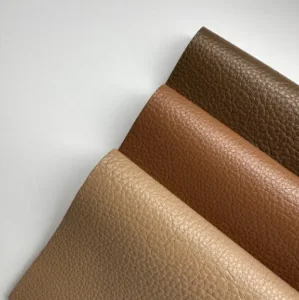 Ref 9078
View Technical Specs
Custom RCS Recycled Synthetic Leather-9078 Panama Edition
Designed with high-tensile woven rPET backing fabric, delivering exceptional stitching retention for heavy duty bags and structured lifestyle accessories.
-
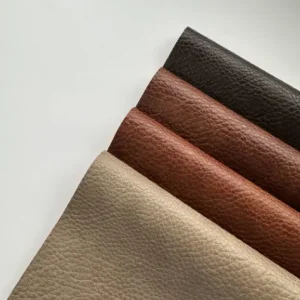 Ref 9088
View Technical Specs
Custom RCS Recycled Synthetic Leather-9088 Soft-Touch Series
Engineered with an ultra-soft tactile micro-porous polyurethane skin, engineered specifically for contemporary footwear uppers and leather goods.
-
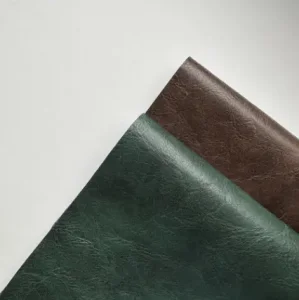 Ref 9240
View Technical Specs
High-Quality Sustainable Recycled Synthetic Leather-9240 (Official RCS)
Audited and certified post-consumer content offering dependable hydrolytic stability, engineered for regional consumer brand manufacturing programs.
-
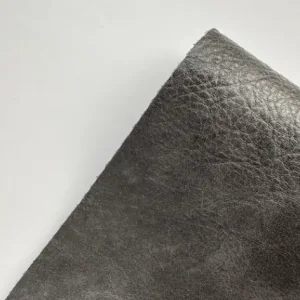 Ref 9271
View Technical Specs
OEM RCS Qualified Recycled Eco-Friendly Synthetic Leather-9271
Low-carbon solvent-free PU leather with anti-scratch and scuff-resistant surface technology, ideal for high-traffic tropical contract furniture.
-
 Ref 0138
View Technical Specs
High-Quality RCS Certified Recycled Sustainable Synthetic Leather-0138
Deep matte natural grain finish, offering genuine leather draping qualities while cutting water footprint and chemical emissions during conversion.
-
 Ref 2058
View Technical Specs
Wholesale RCS Verified Recycled Sustainable Synthetic Leather-2058
Engineered for high-volume supply with exceptional roll-to-roll color continuity, optimized for automated computer-controlled cutting tables.
-
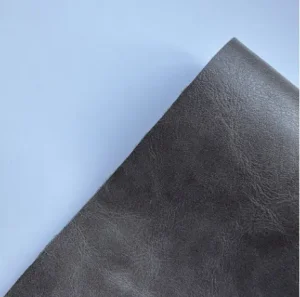 Ref 0084
View Technical Specs
OEM RCS Verified Recycled Content Synthetic Leather-0084 Tech Spec
Advanced waterborne composite surface offering superior cold-crack resistance and high puncture resistance for durable protective gear.
-
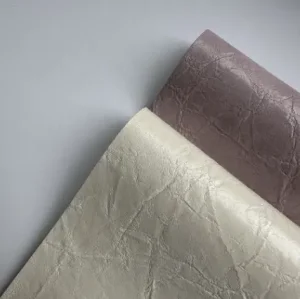 Ref 0212 Approved
View Technical Specs
High-Quality RCS Approved Recycled-Content Synthetic Leather-0212 Ultra
Heavy-gauge embossed leather substitute manufactured with audited post-consumer inputs for premium corporate leather goods and luxury packaging.
Partner Directly with an Audited Chinese Manufacturing Leader Serving Panama
Access over 16 million meters of annual production capacity, certified RCS chain of custody, competitive container pricing, and seasoned international export handling tailored for Balboa, Colon, and greater Latin America.