
Primary RCS-Certified Specifications for Seoul Industrial Programs
Pre-qualified recycled leather grades optimized for high-tensile athletic uppers, structured Dongdaemun accessories, and premium low-VOC automotive seating lines.
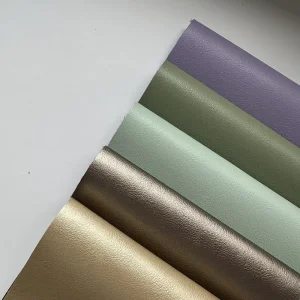
Wholesale RCS Recycled Synthetic Leather for Seoul Industrial Footwear
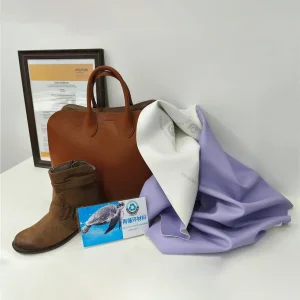
OEM RCS Certified Sustainable Synthetic Leather for Seongsu Design Studios
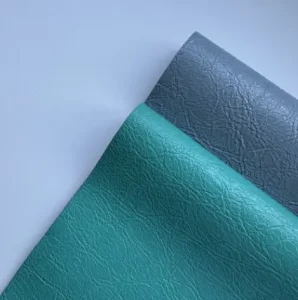
OEM RCS Recycled Synthetic Leather-9213 for Consumer Electronics & Accessories
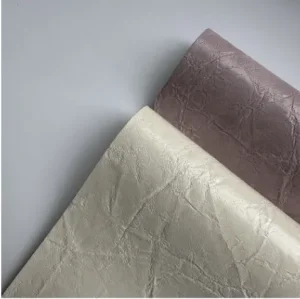
High-Quality RCS Recycled Synthetic Leather-0212 for Seoul Automotive & Transit
The Seoul Sourcing Paradigm: Navigating K-ESG Mandates & Urban Micro-Production
How the convergence of South Korea's 2030 Nationally Determined Contributions (NDC), Seongsu atelier scaling, and Dongdaemun speed-to-market demands are transforming synthetic material procurement.
Dongdaemun Fast Fashion & Seongsu Atelier Synergies
The Seoul metropolitan ecosystem presents a dual dynamic: Dongdaemun's ultra-responsive design-to-shelf production cycle of 7-14 days, coupled with Seongsu-dong's luxury-grade indie atelier movement. Sourcing managers in Gangnam and Mapo-gu can no longer tolerate 60-day mill lead times for bespoke colors and grains.
- Rapid small-batch lab strike sampling shipped via express air to Gimpo/Incheon within 72 hours.
- Customized tactile finishes mimicking Box Calf, Saffiano, and Nappa grains with authentic break characteristics.
- Direct alignment with South Korean indie labels prioritizing ethical veganism without sacrificing tactile luxury.
The K-ESG Framework & Regulatory Pressure
The South Korean Ministry of Trade, Industry and Energy (MOTIE) has formalized the K-ESG guidelines, pressing retail conglomerates such as Shinsegae, Lotte, and Hyundai Department Store to publish Scope 3 raw material footprints. Virgin petroleum-based PVC and traditional DMF-cured PU face escalating carbon border taxation and consumer boycotts.
- RCS (Recycled Claim Standard) certification guarantees unbroken, audited custody from recycled post-consumer flake to finished roll.
- Elimination of high-risk organotin, dimethylformamide (DMF), and toluene to exceed Korea KC Safety certification.
- Third-party Transaction Certificates (TCs) generated per batch to satisfy Korean corporate ESG auditing.
Logistical Proximity: The GBA to Incheon Maritime Corridor
Procuring sustainable textiles from European mills incurs debilitating 6-to-8 week transit times and exorbitant air-freight penalties. Our Yingde, Guangdong manufacturing hub operates a direct supply artery via Shekou and Nansha maritime terminals to the Ports of Incheon and Busan.
- Ocean transit transit window: 3 to 5 calendar days door-to-port.
- Full RCEP (Regional Comprehensive Economic Partnership) tariff reduction, cutting importation customs duties.
- Buffered safety stock capability for enterprise tier accounts with rolling 30-day replenishment contracts.
Vertically Integrated Clean Technology: Engineering Beyond Traditional Synthetics
Operating a 135,733 m² production campus engineered to exceed international petrochemical and environmental safety protocols.
Waterborne & 100% Solvent-Free Polyurethane Syntheses
Traditional synthetic leather relies on wet-process polyurethane dissolved in dimethylformamide (DMF) or dimethylacetamide (DMAC), solvents known to off-gas hazardous volatile organic compounds (VOCs) that irritate end-users and trigger non-compliance under EU REACH and Korea KC Directives. JiangXin New Material operates cutting-edge solvent-free and aqueous PU lines.
By polymerizing high-solid prepolymers through continuous reactive extrusion without hazardous organic solvents, we achieve zero hazardous solvent residue. The resulting composite possesses unmatched internal cohesion, resisting peel stresses exceeding 4.0 kg/3cm and eliminating the persistent chemical odor associated with lower-tier imports.
- Zero Skin Toxicity: Safe for intimate contact applications, baby goods, and apparel.
- Thermal Resilience: Retains supple pliability down to -25°C without surface cracking.
- Eco-Efficiency: Lowers carbon footprint per linear meter by up to 48% versus petroleum virgin PU.
Textile Exchange Certified Chain-of-Custody (RCS 2.0)
Recycled Claim Standard (RCS) is a third-party standard tracking recycled feedstock from raw reclamation to the final roll. At JiangXin, every roll of RCS-certified leather utilizes verified post-consumer polyethylene terephthalate (rPET) derived from mechanically sorted, washed, and shredded plastic flakes, converted into high-tenacity microfiber backings or recycled polyurethane dispersions.
Our facilities are audited annually by internationally accredited bodies (such as IDFL and Control Union). For every shipment bound for South Korean corporate accounts, we initiate and provide official Transaction Certificates (TCs) identifying exact recycled percentages (from 20% to over 60%), eliminating greenwashing vulnerabilities in global trade.
- Full Supply Integrity: Complete lot-by-lot batch traceability via digital tracking barcodes.
- Strict Mass-Balance Accounting: Unbroken verification of input materials against factory output.
- Marketing Safety: Verifiable claims ready for print on consumer hangtags, retail e-commerce, and ESG reports.
Restricted Substance Compliance Profile (Seoul Export Clearances)
PASS (Non-Detectable)
< 50 ppm (Total Limit < 1000)
PASS (Lead, Cd, Hg, Cr VI)
0.00 mg/kg (Zero Solvent Process)
Compliant for Leathergoods
Seoul Localized Application Scenarios & Tailored Performance Profiles
From high-durability transit seating to micro-precision electronics accessories, our engineered materials align with specific functional metrics demanded by Korean product development teams.
1. Seongsu-dong Atelier Footwear & Handbags
Seongsu-dong represents the epicenter of contemporary South Korean designer leathergoods. Brands operating in this corridor demand exquisite edge-painting capability, micro-embossed grain definition, and balanced draping without structural flaccidity.
- Emboss Retention: Sharp, vacuum-embossed grains that do not flatten under heat-creasing or stitch pressure.
- Edge-Coating Adhesion: Highly compatible with standard polyurethane and acrylic edge paints, resisting premature peeling.
- Weight Range: Available from 0.6mm ultra-supple apparel grade to 1.6mm structured bag weights.
2. Electric Mobility & Transit Interiors (Pangyo / Hwaseong)
South Korea's automotive innovators are aggressively substituting animal hide with certified vegan leather across EV and smart transit lines. Requirements center on extreme resistance to thermal aging, solar irradiance, and aggressive sanitizing agents.
- Hydrolysis Testing: Jungle test certified (70°C, 95% RH for 10-14 days without delamination).
- Flame Performance: Compliant with FMVSS 302 and ISO 3795 self-extinguishing flame rates.
- Anti-Soiling & Cleanability: Proprietary crosslinked topcoats repel denim dye transfer and sunscreen stains.
3. Digital Media & Consumer Tech Accessories
Seoul's world-leading tech sector (serving enterprise hardware makers in Suwon and Digital Media City) requires high-precision, low-gauge synthetic leather for magnetic protective cases, keyboard wraps, and wearable straps.
- Ultra-Thin Tolerances: Calibrated 0.5mm - 0.75mm gauges engineered for ultra-sonic welding and thermal die cutting.
- Non-Interference: Low-magnetic signature and dielectric stability for Qi-standard wireless fast charging.
- Constant Abrasion: Over 100,000 cycles on the Taber Abrader without micro-tearing or grain shine-through.
Material Performance Benchmarks: RCS Synthetic Leather vs. Industry Standard Substrates
A rigorous empirical breakdown of mechanical, chemical, and environmental characteristics across key commercial leather specifications.
| Evaluation Parameter | JiangXin RCS Solvent-Free PU | Traditional DMF Wet-PU | Standard PVC Vinyl | Genuine Chrome-Tanned Leather |
|---|---|---|---|---|
| Traceable Recycled Content | 20% - 60% rPET (RCS Audited) | 0% (Virgin Petrochemical) | 0% (Virgin Petroleum / Chlorine) | 0% (Agricultural Raw Hide) |
| VOC & Odor Rating (VDA 270) | Grade 1.5 - 2.0 (Virtually Odorless) | Grade 3.5 - 4.5 (Pungent Solvent Odor) | Grade 4.0 (Plasticizer Off-Gassing) | Grade 3.0 (Organic & Tanning Odor) |
| Hydrolysis Life (Jungle Test) | 8 to 10+ Years Equivalent | 2 to 4 Years (Hydrolytic Breakdown) | 5 to 7 Years (Plasticizer Migration) | Variable (Susceptible to Mold) |
| Martindale Abrasion (ISO 12947) | > 100,000 Cycles (No Breakdown) | 30,000 - 50,000 Cycles | 40,000 Cycles | 60,000 - 80,000 Cycles |
| Weight Uniformity & Cutting Yield | 97% - 99% Usable Yield per Roll | 90% - 94% Usable Yield | 92% - 95% Usable Yield | 60% - 75% Yield (Defect Losses) |
| Cold Crack Resistance (ISO 4646) | -25°C (No Fissures) | -10°C | 0°C (Becomes Rigid/Brittle) | -20°C |
| Carbon Reduction (vs. Virgin Baseline) | -42% to -58% CO2e | Baseline Reference | +15% Higher Embodied Energy | High Agricultural Impact |
*All laboratory testing executed under controlled ISO 17025 accredited procedures at JiangXin Analytical Testing Center in Yingde, Guangdong. Third-party testing available through SGS, Intertek, and BV.
Request Full Intertek & SGS Test Reports for Seoul AuditsFrictionless Cross-Border Procurement Architecture for South Korean Enterprises
A step-by-step structural workflow mitigating customs delays, tariff overheads, and batch color variances across the China-to-Korea sourcing corridor.
1. Rapid Prototyping & Lab-Dipping
Submit physical master cuttings or Pantone references to our technical center. We synthesize custom strike-off samples within 72 hours, using computerized Datacolor spectrophotometer matching to achieve Delta E < 0.6.
- Complimentary A4 swatches and yardage sample coupons dispatched via SF Express / DHL directly to your Seoul office.
- Custom texture engraving using over 800+ available mold rollers or customized laser-etched texture matching.
2. Bulk Production & In-Line QC
Upon tech-pack sign-off, production commences across automated coating lines with continuous computer-vision infrared surface scanners detecting pinholes, gauge variances, or particulate inclusions in real time.
- Every finished roll undergoes 100% manual inspection under standardized D65 lighting prior to packaging.
- Pre-shipment production cuttings sent to client lab or designated third party in Korea for physical validation.
3. RCEP Clearance & Door Delivery
We execute complete export documentation including Form RCEP / China-Korea FTA Certificate of Origin, reducing standard Korean customs duty from up to 8% down to 0% - 2.5% depending on HS code tariff schedules.
- Seamless customs clearance supported by our freight forwarding partners at Incheon International Airport and Incheon Seaport.
- Direct container trucking to logistics centers in Gyeonggi-do, Incheon Free Economic Zone, or Dongdaemun warehouses.
Frequently Asked Technical & Sourcing Questions
Comprehensive engineering, regulatory, and logistics answers for sourcing directors and materials specialists operating in the South Korean market.
What is the concrete difference between RCS (Recycled Claim Standard) and GRS (Global Recycled Standard) for synthetic leather destined for South Korea?
How does JiangXin assist Korean buyers with the official Transaction Certificate (TC) application?
Can your RCS recycled synthetic leather withstand the cold, dry winter climate of Seoul (-15°C to -20°C)?
What are the minimum order quantities (MOQ) and lead times for custom colors and grains serving the Seoul market?
How do preferential tariff agreements (Korea-China FTA / RCEP) apply to synthetic leather imports?
Are JiangXin materials fully certified as vegan and cruelty-free?
Comprehensive RCS-Verified Leather Reference Range for Seoul Sourcing
Explore our complete, audited catalog of specialized sustainable leathers configured for high-stress footwear, luggage, seating, and fashion lines.
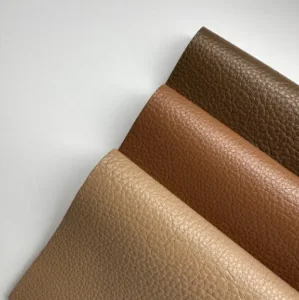
Custom RCS Recycled Synthetic Leather-9078 for Seoul Footwear
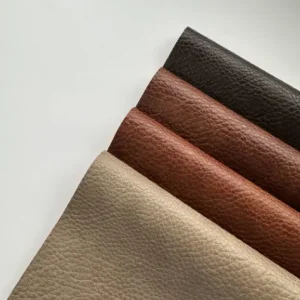
Custom RCS Recycled Synthetic Leather-9088 for Seoul Luxury Handbags
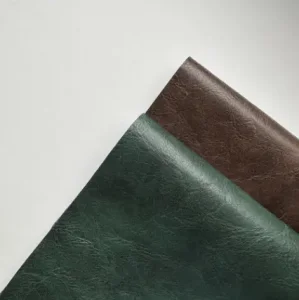
High-Quality Sustainable Recycled Leather with Official RCS Certification-9240
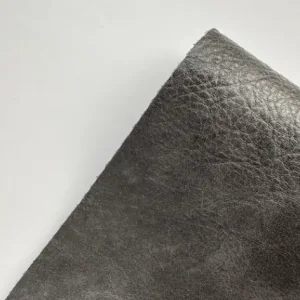
OEM RCS Qualified Recycled Eco-Friendly Leather-9271 for Seoul Outerwear
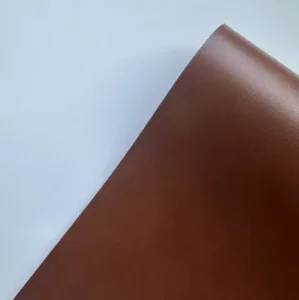
High-Quality RCS Certified Recycled Leather-0138 for Seoul Commercial Interiors
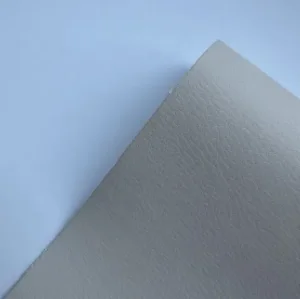
Wholesale RCS Verified Recycled Leather-2058 for High-End Travel Goods
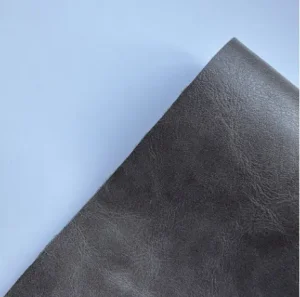
OEM RCS Verified Recycled Content Synthetic Leather-0084 for Tech Portfolios
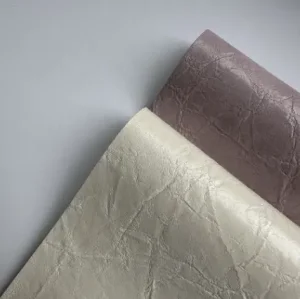
High-Quality RCS Approved Recycled-Content Synthetic Leather-0212 for Seoul Mobility
Initiate Your 2026/2027 Material Sampling Program
Request physical swatch books, RCS 2.0 transaction certificate documentation, and comprehensive chemical compliance dossiers tailored for South Korean industrial compliance teams.