
RCS Verified · Bulk Supply
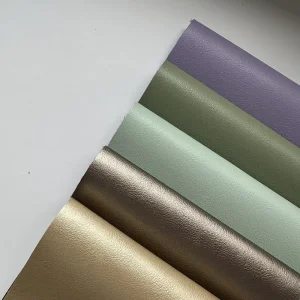
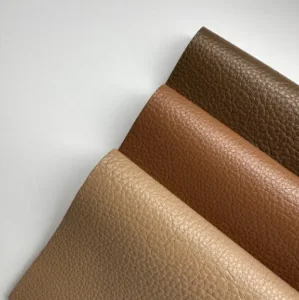
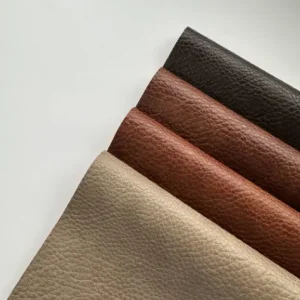
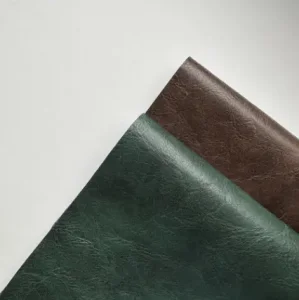
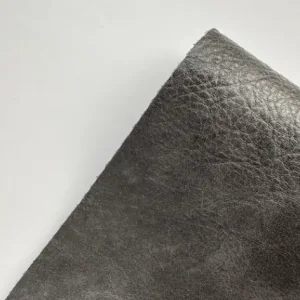
Engineered for high-volume athletic shoe upper production in Tangerang and luxury seating programs in Cikarang, these four core references feature verified recycled polyester backings and low-VOC polyurethane skins.
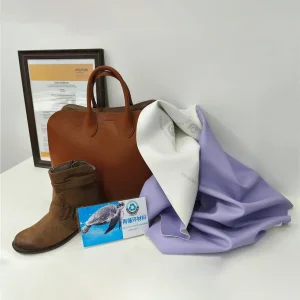
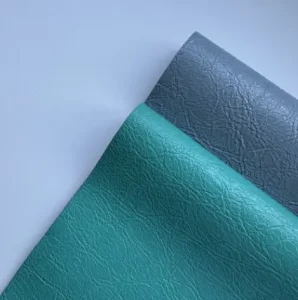
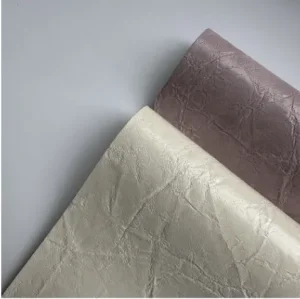
Indonesia's "Making Indonesia 4.0" master plan has positioned the Jakarta metropolitan corridor and West Java manufacturing clusters as pivotal hubs for international apparel, footwear, and automotive exports. However, tightening global carbon policies make supply chain traceability mandatory.
The manufacturing corridors encircling Jakarta—spanning Tangerang, Bekasi, Karawang, Purwakarta, and Bogor—house some of the planet’s largest Tier-1 OEM manufacturing lines for global footwear and athletic brands. Traditionally, artificial leathers utilized in these plants were heavily dependent on virgin petrochemical resins and solvent-borne Dimethylformamide (DMFa) processes.
Today, brand buyers in North America and the European Union are enforcing the EU Corporate Sustainability Due Diligence Directive (CSDDD) and the upcoming Digital Product Passport (DPP). Sourcing departments operating out of Jakarta CBD (Sudirman-Thamrin, SCBD, Kuningan) cannot rely on unverifiable eco-friendly claims. They require strict third-party chain-of-custody verification under the Textile Exchange’s Recycled Claim Standard (RCS).
Our direct manufacturing supply network bridges this critical operational gap. By utilizing post-consumer and post-industrial recycled polyester (rPET) fibers bonded with bio-based or solvent-free PU polyurethane matrices, we provide Jakarta-based factories with audited, production-ready synthetic leather rolls accompanied by authentic Scope 3 emission calculation sheets.
| Compliance Vector | Standard Synthetic Leather | Our RCS-Certified Material |
|---|---|---|
| Feedstock Origin | 100% Virgin Fossil Fuel | Up to 85% Post-Consumer rPET |
| Audit Verification | Self-Declared Supplier Sheet | Official Textile Exchange TC |
| Chemical Solvents | DMFa Residuals > 30ppm | Zero Solvent / Waterborne System |
| Hydrolysis Resistance | 2 to 3 Years in Tropical Humidity | 7 to 10 Years Tropical Chamber |
| Indonesian Customs Clearance | Standard HS Code Delays | Form E / Tanjung Priok Fast Pass |
Procuring synthetic leather for Indonesian manufacturing entails solving complex formulation, chemical regulation, and high-humidity performance parameters. We address these variables with three targeted engineering architectures.
Jakarta and West Java possess an average relative humidity of 75%–85% with ambient temperatures exceeding 32°C. Standard artificial leather rapidly undergoes polyurethane depolymerization (delamination and flaking).
Global brands auditing Indonesian contractors require infallible chain-of-custody documentation. We deliver an impenetrable paper and digital trail protecting brands against allegations of greenwashing.
Navigating customs clearance at Tanjung Priok Port (Jakarta) can generate operational bottlenecks. Our export operations are mapped directly to Indonesian customs formalities and tariff regulations.
From automated die-cutting tables in Tangerang to artisan stitching lines in Bandung, our RCS-certified synthetic materials provide isotropic tensile strength and precise edge-skiving capabilities.
Tangerang and Serang produce millions of footwear pairs monthly for US and European retail. Our RCS materials provide exceptional flex endurance (over 150,000 Bally flex cycles at 20°C and -10°C) with zero micro-cracking across high-stress toe-boxes and eyelet stays.
Automotive assembly complexes in Cikarang and Karawang require high solar UV stability, low fogging properties (DIN 75201 G/B compliant), and FMVSS 302 flammability ratings. Our RCS automotive skin provides luxury grain alignment with recycled microfibers.
Five-star hotels, high-end developments in PIK 2, and corporate head offices in SCBD demand commercial upholstery that withstands hospital-grade sanitizer alcohol wipes without hardening, crazing, or color migration.
Handbag, laptop sleeve, and small leather goods manufacturers in Bogor and East Jakarta utilize our 0.6mm–0.9mm lightweight RCS articles, benefiting from flawless embossing retention, uniform thickness tolerance (±0.03mm), and soft hand feel.
Understanding the molecular integrity and lifecycle journey behind RCS-certified synthetic leathers gives technical sourcing directors in Jakarta total clarity on product stability and carbon abatement metrics.
The manufacturing process begins with certified post-consumer PET bottles that undergo rigorous optical sorting, de-labeling, hot-washing, and extrusion into high-tenacity recycled polyester staple fibers. These fibers are mechanically needle-punched or woven into high-density substrates matching virgin filament tensile indices (>35 N/mm² tear strength).
The polyurethane topcoat is synthesized utilizing water-dispersible polyurethane (WPU) technologies or 100% solid solvent-free polymers. This eliminates the requirement for dimethylformamide (DMFa), toluene, or methyl ethyl ketone (MEK) carriers—safeguarding factory workers in downstream Indonesian assembly plants and eliminating toxic emissions during thermoforming or high-frequency welding.
Through comprehensive Lifecycle Assessments (LCA) conducted in alignment with ISO 14040/14044 protocols, switching from conventional virgin synthetic leather to our RCS recycled line slashes cradle-to-gate greenhouse gas emissions by up to 42.8% and consumes 53.1% less process water.
Advancing closed-loop material development for Southeast Asian high-volume manufacturing lines:
Discover our complete series of audited, high-performance synthetic materials optimized for footwear, accessories, furniture, and technical upholstery in Indonesia.


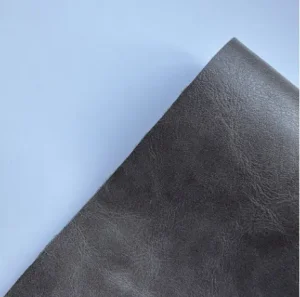
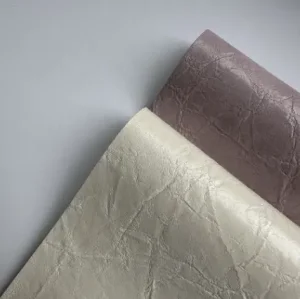
Comprehensive technical guidance concerning RCS chain-of-custody, tropical humidity stabilization, export compliance, and logistics to Jakarta manufacturing corridors.