
Featured RCS Technical Synthetics for Canadian Manufacturing
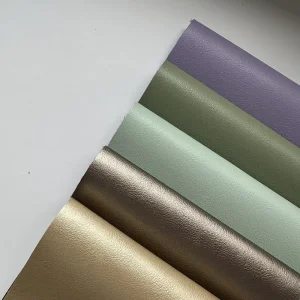
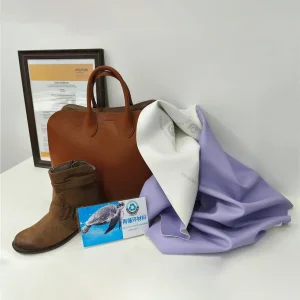
Engineered to deliver high flex-durability down to -30°C for Canadian automotive, technical outerwear, and commercial seating assemblies.
Canadian Regulatory Landscape & Industrial Demand
Strategic compliance integration for procurement executives managing federal sustainability frameworks and provincial retail standards across Canada.
Bill S-211 & Chain-of-Custody
Canada’s modern slavery legislation requires brands to document traceable supply chains. Our RCS certification ensures end-to-end Transaction Certificates (TC) verifying ethically audited inputs from post-consumer PET flake to finished roll.
Zero Plastic Waste Agenda
Aligning with Canada’s federal initiative to eliminate plastic waste by 2030, our RCS-certified fabrics convert discarded polyester into high-tensile technical leather, diverting post-consumer polymers directly into circular manufacturing cycles.
CCPSA Chemical Compliance
Our solvent-free and water-based PU formulations strictly adhere to the Canada Consumer Product Safety Act, verifying zero phthalate levels (under 1000 ppm), undetectable lead levels, and full compliance with Health Canada surface coating directives.
Localized Application Engineering for Canada
Tailored physical formulations engineered to withstand Canadian geographic, climatic, and industrial conditions.
Sub-Zero Cold-Crack Resistance
Formulated for Canadian winters across Alberta and Quebec, our specialized RCS PU structures pass cold-crack testing down to -30°C (-22°F) via ASTM D2136, preventing embrittlement in cold-weather boots and snowmobile upholstery.
Southern Ontario Automotive Corridor
Engineered for tier-1 vehicle interiors and seating systems. Meets rigorous VOC release specifications, low fogging thresholds (DIN 75201), and high UV lightfastness (SAE J2412) to endure continental summer thermal loads.
Montréal Fashion & Technical Luggage
Custom micro-textures for urban outerwear and commercial carry-ons. Optimized surface tension creates an impenetrable water-repellent barrier while maintaining a luxurious, supple hand feel for premier apparel brands.
Technical Roadmap & Performance Specifications
Quantitative benchmarks validated through international test methodologies to ensure consistency from lab swatches to mass container shipments.
| Performance Property | Standard Reference | Typical Industry Specification | Our RCS Delivery Standard |
|---|---|---|---|
| Recycled Content (Base/Face) | RCS / GRS Certification | 20% - 30% Blend | 30% to 70% Fully Traceable |
| Low-Temperature Flex Resistance | ASTM D2136 / ISO 5423 | -10°C to -15°C Failure Threshold | No Cracks at -30°C (100k Cycles) |
| Abrasion Endurance (Martindale) | ASTM D4966 / ISO 12947 | 30,000 - 50,000 Revs | > 100,000 Revs (Dry / Wet) |
| Volatile Organic Compounds (VOC) | VDA 278 / EPA 24 | < 100 µg/g Residuals | Zero Solvent / Water-Based PU System |
| Tear & Tensile Strength | ASTM D2261 / ISO 13937 | 25 N - 35 N | ≥ 45 N (Reinforced Recycled Scrim) |
Global Supply Chain Resilience & Direct Factory Advantages
Maximizing procurement margins for Canadian enterprises through integrated upstream chemistry and direct-line manufacturing efficiency.
16M+ Meters Annual Capacity
Our Yingde facility operates across 135,733 m² with multi-line dry and wet coating machinery, running 24/7 to absorb rapid surges in seasonal product demand without risking production delays.
Green Energy Grid Powered
A self-sufficient 4.68 MW rooftop photovoltaic array powers our polymer compounding and curing ovens, minimizing embedded carbon intensity (Scope 1 & Scope 2 GHG emissions) for Canadian corporate ESG scorecards.
Pacific Freight Corridor
Direct routes from Guangdong ports (Shenzhen/Guangzhou) directly to the Port of Vancouver with 14–18 days typical transit, connecting with Canadian Pacific Kansas City (CPKC) rail networks for prompt delivery across Toronto and Montreal.
Frequently Asked Questions (FAQ) for Canadian Sourcing Teams
Key technical, legal, and logistic factors for purchasing teams importing synthetic leather rolls into Canada.
How does RCS certification verify authentic recycled inputs?
The Recycled Claim Standard (RCS), administered by Textile Exchange, tracks recycled raw material from point of reclamation to final rolled good. Every production batch is issued an official Transaction Certificate (TC) validating the exact percentage of post-consumer recycled polymer present in your order.
Are your synthetic leather fabrics fully compliant with Canada's CCPSA?
Yes. Our water-based and solvent-free PU lines are tested by third-party laboratories (SGS / Intertek) to prove compliance with Canada Consumer Product Safety Act guidelines, ensuring they are free of regulated phthalates, lead, and persistent organic pollutants (POPs).
What are the custom color matching and embossing capabilities?
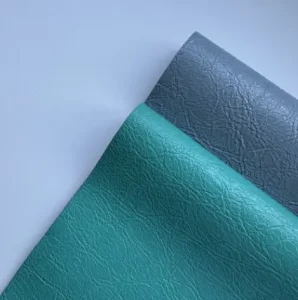
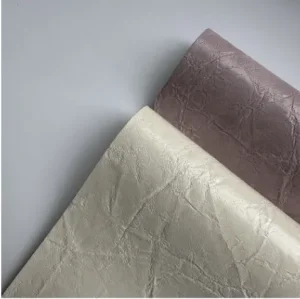
We provide Pantone matching with a delta E < 0.8 tolerance. Our tooling library features over 300 active release-paper embossing patterns, spanning nappa, pebble, cross-grain, split-leather, and geometric tech grains. Physical strike-offs are typically prepared within 3 to 5 business days.
What is the standard container transit timeframe to Eastern Canada?
Ocean freight from our Guangdong factory to the Port of Montreal or Port of Halifax averages 28 to 35 days, or 20 to 22 days via intermodal rail through Vancouver. Full export customs documentation, including Canadian CBSA commercial invoices and verified weight certificates, is coordinated for seamless clearance.
Complete Catalog of RCS-Certified Recycled Leather Materials
Select your required texture, base backing, and chemical performance matrix. Custom sample swatches shipped worldwide via priority air freight.
-
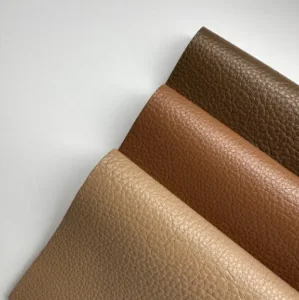
Custom RCS Recycled Synthetic Leather-9078 Manufacturer, Suppliers
-
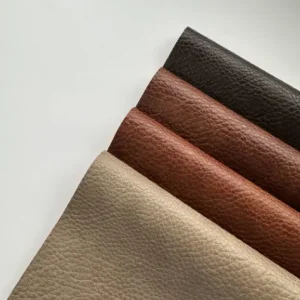
Custom RCS Recycled Synthetic Leather -9088 Manufacturers, Factory
-
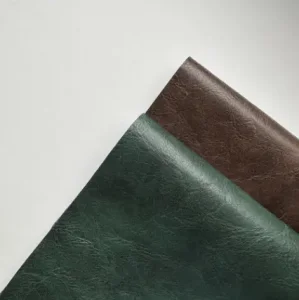
-
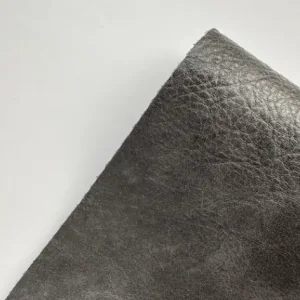
OEM RCS Qualified Recycled Eco-Friendly Synthetic Leather-9271 Supplier, Factory
-

High-Quality RCS Certified Recycled Sustainable Synthetic Leather-0138 Manufacturers, Factories
-

Wholesale RCS Verified Recycled Sustainable Synthetic Leather-2058 Factory, Factories
-
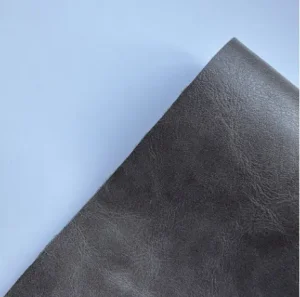
OEM RCS Verified Recycled Content Synthetic Leather-0084 Manufacturer, Factory
-
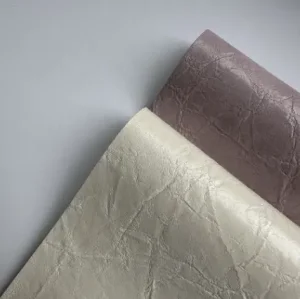
High-Quality RCS Approved Recycled‑Content Synthetic Leather-0212 Suppliers, Factories