
RCS Certified 100% CoC
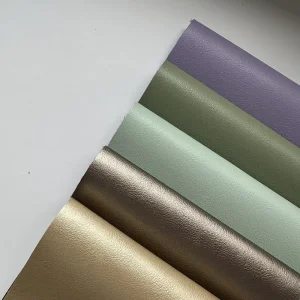
Engineered for full alignment with Swedish environmental procurement directives, CSRD transparency mandates, and Scandinavian minimalist design ergonomics.
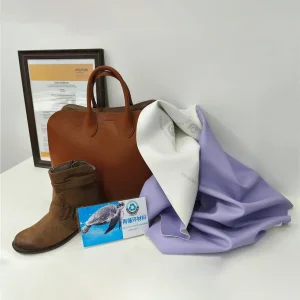
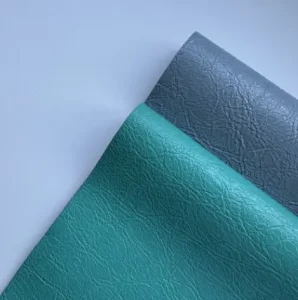
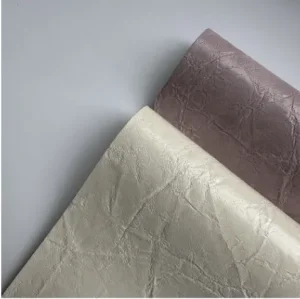
Sweden maintains Europe's most uncompromising benchmarks for circular materials. Tier-1 brands and OEMs operating within the Swedish jurisdiction face evolving statutory oversight requiring audited supply chains.
The Swedish Chemicals Agency (KEMI) exercises stringent enforcement exceeding general EU REACH Baselines. RCS-certified synthetic leathers engineered by JiangXin eliminate restricted short-chain chlorinated paraffins (SCCPs), Organotins, and restricted APEOs. Our coatings guarantee DMFa < 5 ppm, fully meeting KEMI's non-toxic cycle vision (Giftfri miljö).
Swedish contract furniture brands (such as those supplying public facilities in Stockholm, Gothenburg, and Malmö) require compliance with Möbelfakta standards. Our RCS recycled synthetic leathers fulfill Möbelfakta requirement categories: technical durability (SS-EN ISO 5470 rub tests), environmental lifecycle validation, and CSR ethical manufacturing declarations.
The EU Ecodesign for Sustainable Products Regulation (ESPR) mandates verifiable chain-of-custody data for textiles and synthetic surfaces entering Sweden. By deploying RCS (Recycled Claim Standard) batch-level Transaction Certificates (TCs), we provide Swedish buyers with audit-proof data streams ready for automated Digital Product Passport integration.
Traditional synthetic leather relies on petrochemical polyurethane skin layers and virgin polyester (PET) knit backings, generating approximately 5.8 kg CO₂e per linear meter. In Sweden's procurement ecosystem, where Scope 3 carbon auditing has become statutory under the Corporate Sustainability Reporting Directive (CSRD), switching to certified recycled polymers is an essential technical imperative.
The Recycled Claim Standard (RCS), managed by the global non-profit Textile Exchange, sets international criteria for third-party certification of recycled input and chain of custody. JiangXin integrates RCS Blended (5% to 95%) and RCS 100 (95% to 100%) input streams, utilizing recycled rPET substrates derived from post-consumer beverage bottles and chemically recycled post-industrial PU scrap.
Laboratory tested under standard Scandinavian atmosphere conditions (23°C ± 2°C, 50% ± 5% RH) following SS-EN ISO test protocols:
Combining mega-scale production resilience with sustainable energy infrastructure. JiangXin New Material delivers cost-neutral sustainability for Swedish OEM and private label contracts.
Our 135,733 m² campus features a custom-built 4.68 megawatt rooftop solar array that offsets over 4,500 metric tons of carbon annually. High-efficiency automated dry-process and solvent-free coating lines operate with a substantial renewable energy share, directly reducing the embedded product carbon footprint for Swedish corporate Scope 3 GHG disclosures.
From the precise thermal compounding of recycled polyurethane resin pellets to the weaving of rPET microfibers, release paper selection, and grain embossing, every phase occurs on-site. Eliminating outsourced sub-contractors safeguards traceability, eliminates cross-contamination risks, and accelerates lead times from lab swatch approval to Gothenburg port docking.
Operating an on-site multi-stage bio-chemical wastewater treatment facility and closed-loop VOC thermal regenerative oxidizers (RTO), JiangXin complies with both Chinese national green manufacturing awards and Higg Index Facility Environmental Module (FEM) criteria. Full amfori BSCI social audit compliance assures rigorous workplace health and labor rights.
Swedish design principles demand that aesthetic elegance (form) never compromise physical endurance (function) or environmental integrity. Explore our tailored application matrices.
Designed for high-traffic public spaces, educational facilities, and corporate headquarters requiring Möbelfakta approval.
Next-generation animal-free interior upholstery tailored for Swedish electric vehicle OEMs prioritizing low odor and anti-fogging.
Tough, abrasion-proof technical synthetic leather for Swedish trekking backpacks, winter boots, and protective outerwear.
Supple, drape-rich vegan leather for sustainable designer luxury labels, small leather goods, and lifestyle accessories.
To shield your brand from "greenwashing" penalties under the EU Green Claims Directive, verify these five mandatory compliance documents before approving bulk container orders.
A Scope Certificate only proves the factory is authorized to produce RCS goods. Every export consignment leaving JiangXin for Gothenburg or Stockholm is accompanied by an order-specific Transaction Certificate (TC) issued by an accredited certification body (e.g., Control Union, Intertek), mathematically verifying the weight of recycled content.
Under the EU Corporate Sustainability Due Diligence Directive (CSDDD), Swedish corporate buyers must substantiate Scope 3 emissions. We provide third-party verified 'Cradle-to-Gate' LCA dossiers specifying Global Warming Potential (GWP), abiotic depletion, and water consumption for all RCS PU formulations.
Traditional PU leather relies on N,N-Dimethylformamide (DMFa), classified as an SVHC on the REACH Authorisation list. Our proprietary waterborne and 100% solvent-free lines use reactive polyurethane systems tested in accredited third-party laboratories (SGS / TÜV SÜD) to ensure zero non-intentionally added substances.
Swedish public tenders (Upphandlingsmyndigheten) insist on ethical working environments throughout upstream supply chains. JiangXin maintains annual amfori BSCI audit reports (Grade A/B performance) and ISO 9001, ISO 14001, and ISO 45001 management certifications available upon signed NDA.
In-depth responses covering certification mechanics, minimum order quantities (MOQ), Nordic climate testing, and supply chain logistics.
Both standards are governed by Textile Exchange. While the Global Recycled Standard (GRS) requires a minimum 20% recycled content and mandates stringent on-site social and environmental chemical processing criteria, the Recycled Claim Standard (RCS) can certify materials starting from 5% recycled content (RCS Blended) up to 95-100% (RCS 100) strictly focusing on chain of custody. Many Swedish brands utilize RCS to certify high-performance composite synthetic leathers where specialized high-tensile backing blends are required.
We maintain an in-house analytical testing center equipped with GC-MS and UV-Vis spectrophotometry to test incoming polymers, pigments, and auxiliary agents. Every production lot is checked against the latest REACH SVHC Candidate List, RoHS, KEMI chemical registers, and Swedish Proposition 65 equivalents to ensure total absence of DMFa, PFAS, phthalates, and organotin compounds.
Yes. Virgin and substandard recycled synthetics often embrittle and crack when exposed to sub-zero Nordic conditions. JiangXin utilizes specialized low-temperature aliphatic polyurethane resins paired with flexible rPET knitted substrates. Our outdoor and footwear grades pass ISO 4646 cold crack testing down to -30°C (-22°F) over 50,000 bending cycles without visible fracturing or micro-tearing.
Lab sample color and grain matching (strike-offs) requires 3 to 5 business days. Bulk manufacturing of certified RCS synthetic leather takes approximately 12 to 18 business days. Ocean freight from Shenzhen/Guangzhou ports to the Port of Gothenburg (Göteborgs Hamn) averages 28 to 34 days, while expedited multimodal air/rail freight can reach Stockholm Arlanda within 7 to 10 days for urgent launch collections.
For custom roll formulations involving specific Pantone shades, custom embossing rollers, or specialized flame-retardant (BS 5852 Crib 5) treatments, our standard MOQ is 500 linear meters per color/thickness. For catalog running items in active production, sample lengths (30 to 50 meters) are available for prototype crafting and pre-series testing.
Upon dispatch of your shipment, our compliance department submits the Bill of Lading, commercial invoice, raw material inputs, and mass-balance calculations to our certifying body. An authentic, cryptographically verifiable Textile Exchange Transaction Certificate (TC) is issued typically within 10 to 14 days, directly crediting your company's Textile Exchange portal account.
The convergence of post-consumer recycled substrates with bio-synthesized surface polymers creates the next frontier for Scandinavian climate-positive design.
By blending USDA Certified Biobased polyols derived from non-food agricultural feedstocks with RCS-certified 100% rPET backings, JiangXin manufactures hybrid leathers achieving over 75% total non-fossil carbon content. This architecture delivers optimal circularity without sacrificing tensile or Martindale rub resistance.
As the European Union Carbon Border Adjustment Mechanism (CBAM) expands to downstream synthetic polymers, JiangXin's 4.68 MW on-site solar infrastructure and waterborne processes insulate Swedish importers from impending carbon tariff surcharges, guaranteeing long-term landed cost predictability.
Traditional synthetic leather faces end-of-life recycling bottlenecks because PU skins cannot be easily separated from PET backings. We are currently pioneering mono-material circular PU microfibers, where both surface skin and matrix backings share a chemically identical polyurethane structure, enabling true closed-loop chemical depolymerization.
Audited batch formulations ready for immediate sample swatch dispatch, physical lab validation, and bulk container export.
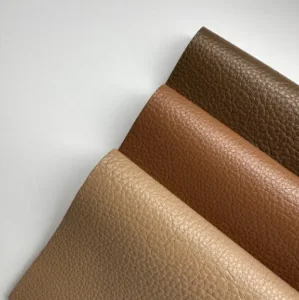
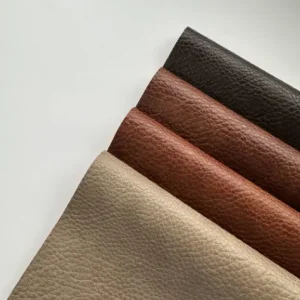
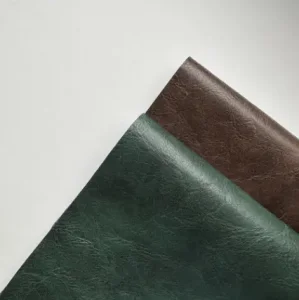
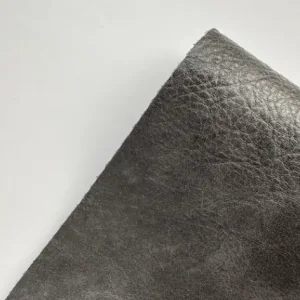
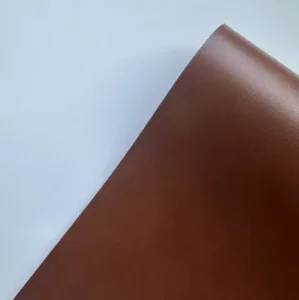
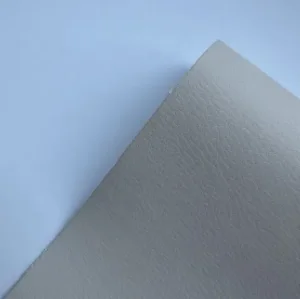
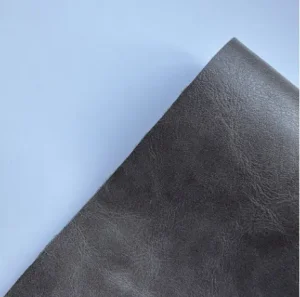
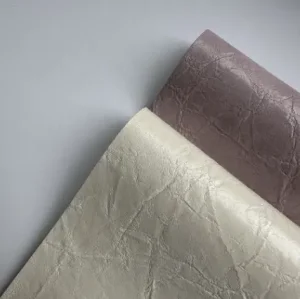
Connect directly with JiangXin's material engineers. Request our comprehensive 2026 Material Sample Swatch Box, complete with accredited RCS Scope Certificates, ISO testing reports, and custom shade cards.