
Bangkok Strategic OEM Showcase (Initial Selection)
Engineered to withstand tropical hydrolysis while guaranteeing certified post-consumer and post-industrial resin authenticity for export programs.
Bangkok Industrial Realities: Navigating Green Policy & Tropical Challenges
A granular look into how Thailand's Eastern Economic Corridor (EEC) and corporate ESG goals are transforming material selection in the Bangkok metropolitan area.
BCG Economic Model Mandates
Thailand’s National Bio-Circular-Green (BCG) Economy Framework has placed strict decarbonization benchmarks on tier-1 manufacturers in Samut Prakan, Pathum Thani, and Rayong. Exporters face heightened pressure to substitute virgin petroleum feedstocks with certified circular polymers.
- Carbon Accounting: Scope 3 emissions reductions through certified recycled PU resins.
- Export Compliance: CBAM and EU Green Claims Directive readiness for Thai OEMs.
- Chain-of-Custody: Transaction certificates guaranteeing post-consumer input integrity.
Tropical Climate Performance
Bangkok's average relative humidity exceeding 75% and ambient heat accelerate polymer hydrolysis in standard synthetic leathers. JX.ECO formulates RCS-certified materials with advanced polyether-polycarbonate backbones specifically stabilized for Southeast Asian climates.
- Hydrolysis Longevity: Passes 7-to-10-week Jungle Test without surface peeling or degradation.
- Anti-Mildew Protection: Bio-inhibiting layers conforming to ASTM G21 standards.
- UV Colorfastness: High resistance against premature fading in open-air transport conditions.
Local Application Paradigms
From luxury leathergoods manufacturing in Bangkok's design studios to EV seating assemblies supplying automotive hubs in the EEC, our recycled materials meet specialized industrial hardness, tensile, and flex requirements.
- Automotive Interiors: Flame-retardant (FMVSS 302) certified seating and steering trims.
- Premium Footwear: High Bally-flex resistance exceeding 100,000 cycles at room temp.
- Contract Upholstery: High Martindale wear cycles suited for Bangkok hospitality.
China-to-Bangkok Supply Chain Resilience: Speed, Scale, & Stability
Combining world-class clean production in Yingde, Guangdong with streamlined maritime and multimodal freight routes into Laem Chabang and Bangkok Port (Khlong Toei).
135,733 m² Clean-Tech Facility Architecture
JiangXin (JX.ECO) operates an expansive manufacturing base in Yingde, Guangdong, featuring 4.68 MW rooftop photovoltaic solar arrays and proprietary VOC recovery thermal oxidizers. Unlike secondary converters, our direct chemical formulation to dry/wet coating ensures absolute chemical batch integrity.
- Vertically Integrated: Knitted/woven recycled polyester backing production, polyurethane compounding, surface embossing, and post-finishing under one roof.
- Annual Throughput: Over 16,000,000 meters per year guarantees uncompromised lead times during seasonal order surges.
- Zero DMFa & Water-Based PU Options: Enabling tier-1 brands to fulfill strict European and North American restricted substance lists (RSL).
Optimized Multimodal Corridor to Thailand
Proximity to Greater Bay Area container hubs (Nansha, Yantian, and Shekou) translates directly into logistical speed for Bangkok converters. We eliminate the volatile supply vulnerabilities of decentralized raw material brokers.
- Ocean Freight Transit: Direct container sailings from Guangzhou/Shenzhen to Laem Chabang take just 4 to 6 days.
- Cross-Border Overland Freight: Express road transport via the Pingxiang / Mohan borders to Bangkok logistics yards within 72 hours for urgent development yardages.
- Form E Customs Exemption: ASEAN-China Free Trade Area (ACFTA) certificates provide zero or heavily preferential tariffs for eligible Thai importers.
R&D Roadmap: The Evolution of Recycled & Bio-Based Polyurethanes
A forward-looking blueprint demonstrating our chemical trajectory from mechanical rPET reinforcement to monomeric closed-loop synthetic leathers.
RCS Mechanical Substrates
Certified 100% post-consumer recycled rPET microfibers and woven backings, cutting fossil plastic use by up to 45% compared to virgin PU leather constructions.
Waterborne Bio-RCS Blends
Integration of agricultural polyols (corn, castor) into RCS-certified carriers, slashing VOC emissions to near zero while achieving ASTM D6866 biobased validation.
Solvent-Free Chemical Recycling
Deployment of depolymerized polyols recovered directly from post-industrial PU scrap, achieving genuine circular resin compounding without structural fatigue.
Mono-Material Closed Loops
Fully recyclable single-polymer thermoplastic polyurethanes (TPU) enabling automated end-of-life recycling for footwear and consumer hardware.
Global Chemical Compliance Harmonized with Thai Industrial Standards (TISI)
Safeguarding OEM brands against supply disruptions, customs delays, and environmental greenwashing liabilities.
Textile Exchange Chain of Custody
Every meter of our RCS product range carries traceable certification through accredited third-party auditing bodies (such as IDFL, Control Union). Each shipment can be paired with an official Transaction Certificate (TC) specifically referencing your Bangkok receiving entity.
- Eliminates risks under the US FTC Green Guides and EU Empowering Consumers Directive.
- Full traceability back to certified chemical recovery and spinning plants.
International Chemical Safety Clearance
Exporting from Bangkok into Europe and North America requires rigorous chemical non-toxicity verifications. Our materials are completely free of regulated harmful plasticizers and volatile toxic processing aids.
- EU REACH & RoHS: Zero SVHC above the 0.1% threshold across all chemical finishes.
- 6P Phthalate-Free: Complete exclusion of DEHP, DBP, BBP, DINP, DIDP, and DnOP.
- OEKO-TEX Standard 100 Class I & II: Skin-contact safety for garments and accessories.
TISI & ASEAN Standards Interoperability
We work directly with Thai testing bodies (including the Thailand Textile Institute - THTI) to verify that physical tensile strengths, tear propagation limits, and seam fatigue resistance surpass local requirements for industrial fabric procurement.
- Formulated for seamless automated cutting and hot-melt bonding on Thai production lines.
- Pre-calibrated elasticity profiles to prevent edge curl during mechanical lasting.
Frequently Asked Sourcing Inquiries in the Bangkok Market
Clear, technical explanations answering common operational, regulatory, and logistical procurement questions.
What distinguishes an authentic RCS certification from generic "recycled" leather claims?
How does your RCS synthetic leather handle Bangkok's tropical humidity compared to standard PU?
What is the typical shipping lead time and customs procedure from your factory to Bangkok?
Can we customize grain, color matching, and backing fabrics for our specific OEM specifications?
What are the Minimum Order Quantities (MOQ) for custom RCS certified production runs?
RCS-Certified Advanced Product Portfolio (Bangkok Supply Stream)
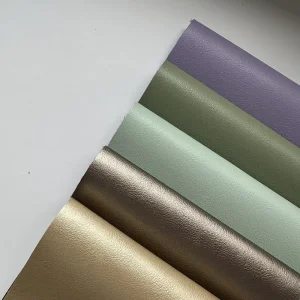
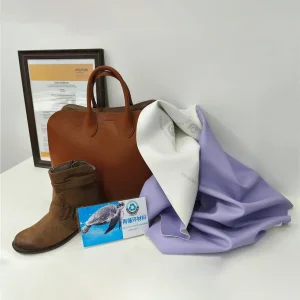
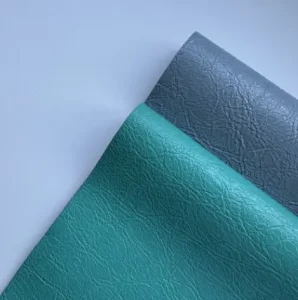
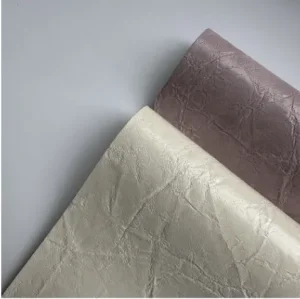
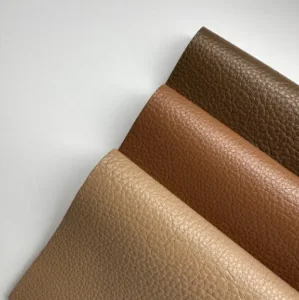
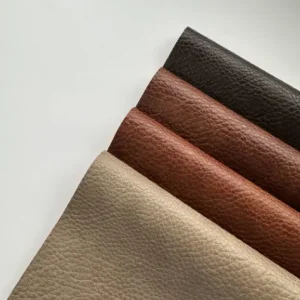
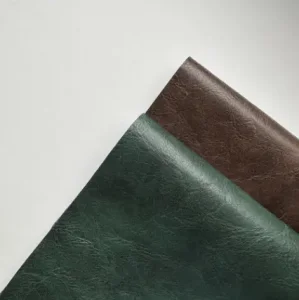
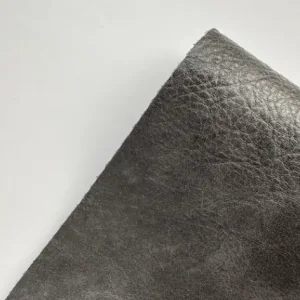
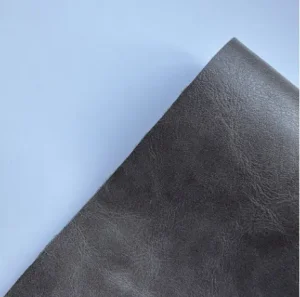
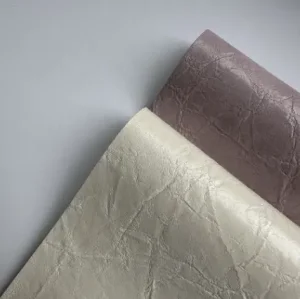
Explore our specialized recycled artificial leather references designed for high-stress applications across apparel, accessories, and modern upholstery.


Elevate Your Material Strategy in the Bangkok Market
Connect directly with our engineering and regulatory compliance department. Request our updated 2026 RCS swatch book, obtain physical lab test reports, or schedule a technical briefing for your next product line.