
RCS Certified 100
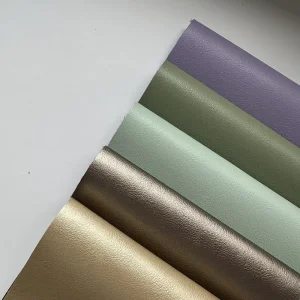
RCS Recycled Synthetic Leather (Automotive Grade)
Engineered for Slovakian seating sub-assemblies. Delivers over 100,000 Martindale cycles with high UV colorfastness.
Engineered to satisfy demanding central European mechanical metrics, these four core formulations feature verifiable post-consumer recycled (rPET) matrixes with zero solvent residue.
Engineered for Slovakian seating sub-assemblies. Delivers over 100,000 Martindale cycles with high UV colorfastness.
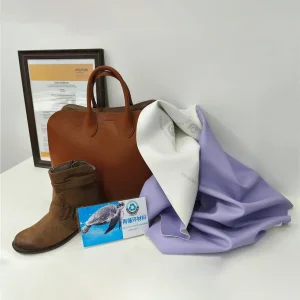
DMFa-free formulation formulated for contract furniture and transit cockpits across Trnava and Bratislava plants.
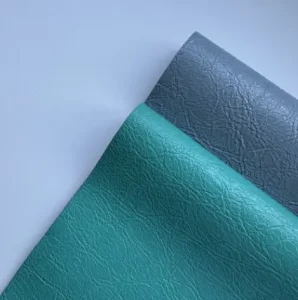
Optimized grain micro-structure providing superior tactile touch, grain definition, and deep tear resistance for armrests.
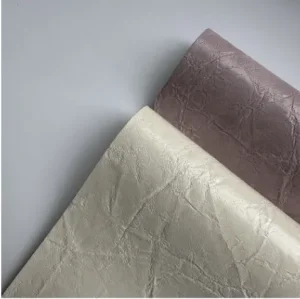
Customized for technical safety footwear and heavy-duty gear. Anti-abrasion, splash-proof, and EN ISO 20344 verified.
Strategic alignment between the European Green Deal, strict CSRD reporting, and the automotive manufacturing cluster spanning Bratislava, Trnava, Žilina, Nitra, and Košice.
The Slovak Republic forms the geographical and logistical nexus of the European mobility supply chain. With prominent assembly plants including Volkswagen Group in Bratislava, Stellantis in Trnava, Kia Motors in Žilina, Jaguar Land Rover in Nitra, and the state-of-the-art electric vehicle hub under development by Volvo Cars near Košice, the requirement for engineered interior materials is shifting towards verifiable sustainability.
Tier-1 and Tier-2 component manufacturers (specializing in seat trim, instrument panel wraps, gear shift sleeves, door cards, and console components) face strict Scope 3 decarbonization mandates from OEM corporate headquarters, requiring immediate substitution of virgin fossil PU with RCS-certified recycled polymers.
Under the EU Corporate Sustainability Reporting Directive (CSRD) and the Ecodesign for Sustainable Products Regulation (ESPR), Slovak manufacturers cannot rely on unsubstantiated green marketing. Every raw material imported into the EU Single Market must possess an unassailable digital paper trail. The Recycled Claim Standard (RCS 2.0) provided by Textile Exchange sets the benchmark for validating recycled feedstock from recycling collectors to final rolls.
Our OEM production infrastructure satisfies both environmental declarations and chemical directives including EU REACH (SVHC compliance across 240+ substances), RoHS 3, and zero-detection thresholds for banned plasticizers and heavy metals.
A comprehensive examination of polymer composition, backing substrate physics, chain-of-custody protocols, and mechanical performance parameters.
We utilize GRS and RCS certified 100% post-consumer recycled poly-ethylene terephthalate (rPET) derived from mechanically sorted, depolymerized bottles and industrial fiber remnants. Backing knit structures are tailored (circular knit, ultra-microfiber, or brushed non-woven) to match elongation and die-cutting tolerances required on Slovak automated stitching lines.
The outer functional layer employs high-solid, waterborne polyurethane (WPU) or solvent-free reactive PU systems. By eliminating conventional Dimethylformamide (DMFa) solvents during coagulation, we achieve ultra-low residual VOC profiles meeting European VDA 270 (odor assessment rating < 3.0) and VDA 278 (organic emissions < 50 µg/g).
Surface treatments integrate aqueous polycarbonate-modified polyurethane dispersion coats. This delivers chemical barrier protection against ethanol sanitizers, skin lipids, sunscreen, and mechanical abrasion while preserving flexibility in extreme sub-zero continental Slovak winter conditions (-30°C Bally flex test passing 30,000 cycles).
| Performance Parameter | JX.ECO RCS Recycled PU | Conventional Fossil PU | Automotive Grade PVC | Bovine Natural Leather |
|---|---|---|---|---|
| Post-Consumer Recycled Content | 20% – 65% Traceable rPET | 0% (Virgin Petrochemical) | 0% (Petro-Chloride Base) | 0% (Agricultural Animal Base) |
| Carbon Footprint (kg CO₂e/m²) | 2.8 – 4.2 kg (Solar Powered) | 7.5 – 9.8 kg | 9.2 – 12.4 kg | 45.0 – 110.0 kg |
| DMFa & Toxic Solvent Content | < 5 ppm (Zero Solvent Option) | 50 – 300 ppm | Contains Phthalates / Plasticizers | Chromium VI risk during tanning |
| Martindale Abrasion (ISO 12947-2) | > 100,000 Cycles | 50,000 – 80,000 Cycles | 60,000 – 90,000 Cycles | Variable / Grain dependent |
| Hydrolysis Resistance (Jungle Test) | 5 to 10 Years (70°C, 95% RH) | 2 to 5 Years | Not applicable (Prone to brittle cracking) | Prone to mildew & hardening |
| Weight Consistency & Cutting Yield | > 97% Usable Yield (Continuous Rolls) | > 95% Usable Yield | > 95% Usable Yield | 60% – 75% Yield (Flaws/Irregular Shapes) |
Operating a state-of-the-art clean-tech production campus in Yingde, Guangdong. Driving down product carbon intensity through automated line controls and continuous renewable energy generation.
Established on June 2, 2017, Yingde City JiangXin New Material Co., Ltd. (JX.ECO) was engineered from the foundation up to meet modern petrochemical and green building standards. With an annual capacity exceeding 16 million meters, the site features a 4.68 MW rooftop photovoltaic solar farm generating clean power directly into our thermal curing lines.
Exporting to more than 50 countries with over 300 long-term B2B partnerships, our logistics division maintains standardized freight pathways into Slovak industrial distribution centers across Senec, Dunajská Streda, Žilina, and Prešov.
How our RCS certified materials fit the exact technical specifications of Slovakian production facilities.
Regional Focus: Tier-1 operations surrounding Trnava, Nitra, and Bratislava.
Technical Requirements: Low fogging (DIN 75201 Method B < 2 mg), flame retardancy (FMVSS 302 burn rate < 80 mm/min), Bally flex testing at -30°C without micro-cracking, and color consistency (Delta E < 0.5 under D65 lighting).
JX.ECO Solution: Custom 1.05mm – 1.35mm RCS certified synthetic leathers with brushed microfiber backing, delivering optimal seam tensile strength and uniform moldability for high-contour headrests and instrument panels.
Regional Focus: Traditional footwear manufacturing hubs in Partizánske and Bardejov.
Technical Requirements: EN ISO 20345 tear strength (> 120 N), water vapor permeability, dynamic flex endurance (> 100,000 cycles dry), and chemical splash resistance to industrial oils and greases.
JX.ECO Solution: High-density, micro-cellular RCS recycled synthetic leather with specialized moisture-wicking and waterproof coatings engineered for safety boots and protective work gloves.
Regional Focus: Architectural and corporate interior suppliers across Bratislava and Košice.
Technical Requirements: European fire retardancy classification (EN 1021 Parts 1 & 2 Crib 5 compatibility), stain resistance against disinfectant cleaning agents, and high rub fastness.
JX.ECO Solution: 1.2mm solvent-free eco PU with inherent flame retardant crosslinkers that avoid banned halogenated or antimony-based additives.
Regional Focus: Precision electronics fabrication centers in Galanta and Nové Zámky.
Technical Requirements: Ultra-thin gauge uniformity (0.5mm – 0.7mm), crisp thermal debossing, odorless VOC properties, and high scratch resistance.
JX.ECO Solution: Ultra-fine grain RCS recycled PU leather with velvet-touch polyurethane tops, providing high-definition branding capabilities for premium acoustic equipment and mobile device cases.
Explore eight specialized grades manufactured for rigorous commercial, technical, and consumer applications across Slovakia and Central Europe.
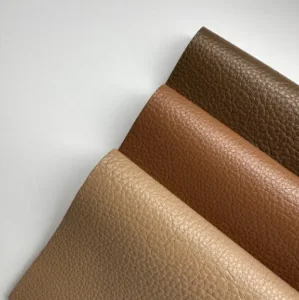
Embossed classic grain with balanced tensile modulus. Engineered for luggage, travel accessories, and heavy gear.
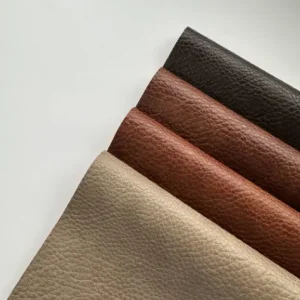
Matte tactile finish with enhanced scratch resistance. Ideal for office furniture systems and vehicle armrests.
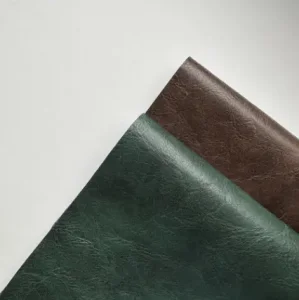
Certified recycled composition with full transaction certificates for automotive OEM auditing.
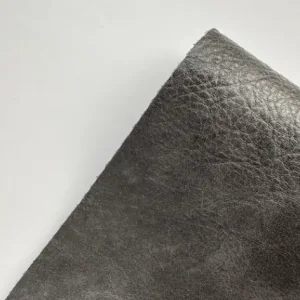
Ultra-soft hand feel with natural leather drape. Formulated for luxury garments, leather goods, and fashion footwear.
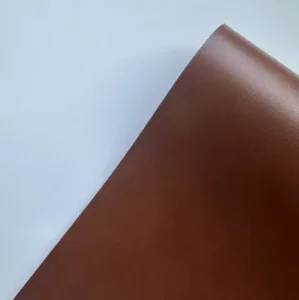
High tear-strength composite engineered for heavy transport seating, rail vehicles, and buses.
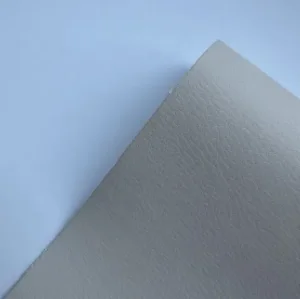
Breathable microporous structure providing continuous moisture transfer and thermal comfort in workwear.
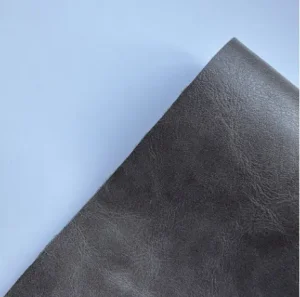
Precision micro-grain structure. Designed for technical cases, medical furniture, and fitness gear upholstery.
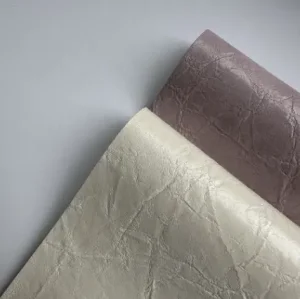
Heavy-gauge protective leather with high resistance to abrasion, punctures, and petroleum hydrocarbons.
Roll-by-roll technical verification adhering to European and international laboratory test standards before dispatch to Slovak logistics hubs.
Every automotive-designated production batch is tested in internal analytical chambers matching accreditation criteria: VDA 278 for volatile organic compounds and condensable substances, VDA 270 for interior cabin olfactory assessment, and DIN 75201 fogging characteristics.
Tested in climate simulation chambers under continuous 70°C temperature and 95% relative humidity (the standard "Jungle Test"). Our high-grade polyurethane polyols guarantee 5 to 10 years of structural integrity without polyurethane film peeling, sticky delamination, or embrittlement.
Complete compliance with the latest European Union REACH Annex XVII restrictions and SVHC list candidates. Formulations are 100% free of regulated ortho-phthalates (6P/8P free), organotin compounds, azo dyes, heavy metal catalysts (lead, cadmium, mercury), and chlorinated paraffin flame retardants.
Authoritative technical, legal, and operational guidance addressing import, audit, certification, and customization inquiries.
For every production run contracted under RCS certification, we initiate a Transaction Certificate (TC) application through our accredited third-party certification body (such as Control Union or GCL). The TC lists the exact gross and net material weight, verifying the specific post-consumer recycled poly-ethylene terephthalate (rPET) batch. The official digital TC is transferred to your customs broker and corporate compliance department to fulfill Slovak tax and EU customs verification.
For custom engineering formulations, lab-dip color matching and master physical sample swatches take 5 to 7 working days. Bulk roll production is typically completed in 15 to 20 days. Shipments via the China-Europe Railway Express (CRE) directly into rail hubs serving Slovakia take approximately 18–22 days. Multimodal ocean freight through the Adriatic port of Koper takes 28–35 days, followed by direct bonded truck delivery to your plant.
Yes. We routinely produce to strict German, Japanese, and international automotive OEM restricted substance lists. Whether your tech pack mandates compliance with VW 50180, BMW GS 93008, Stellantis, or JLR interior chemistry specifications, our technical team locks the resin, stabilizer, and pigment package during sampling to ensure zero restricted chemical exceedances.
Our standard production run MOQ is 500 to 1,000 linear meters per color and emboss pattern, depending on the base backing fabric structure. For new product development trials and pilot automotive runs in Slovakia, we accommodate smaller prototyping yardages to support your die-cutting, vacuum forming, and stitching line trials.
Both standards are governed by Textile Exchange and utilize the same chain of custody principles. RCS focuses solely on tracking and validating the percentage of recycled input content throughout the value chain. GRS adds explicit requirements regarding social conditions, environmental wastewater treatment, and chemical restrictions. As an audited enterprise, JiangXin's manufacturing campus holds certifications under both RCS and GRS standards.
Central Europe experiences severe temperature fluctuations ranging from +35°C in summer to below -20°C in winter. Conventional synthetic leathers formulated with standard plasticizers become stiff and suffer cold cracking. Our cold-resistant PU series incorporates proprietary polyether polyols and flexible crosslinking agents that pass 30,000 cold Bally flex cycles at -30°C without surface cracking.
Request comprehensive physical swatch catalogs, technical data sheets (TDS), safety data sheets (SDS), and official RCS scope certificates. Our technical engineering specialists are prepared to review your tech packs and CAD specifications today.