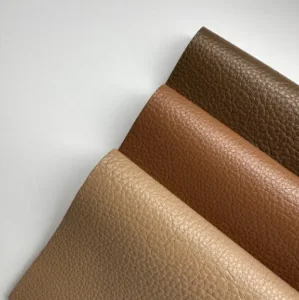
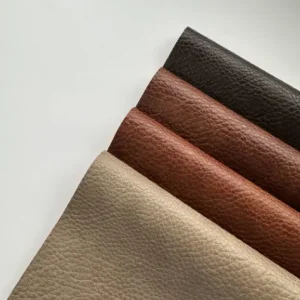
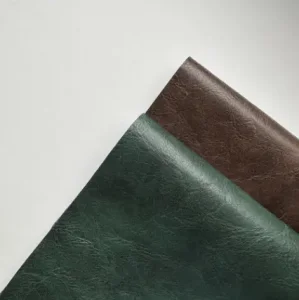
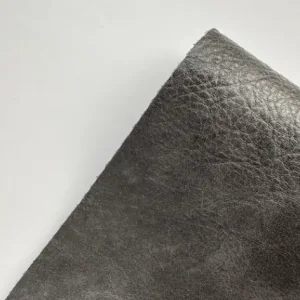
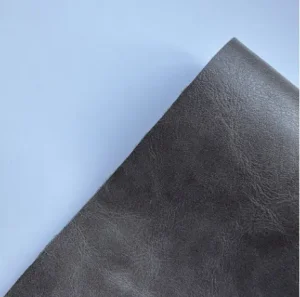
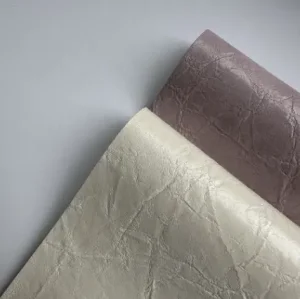
High-Spec RCS Synthetic Leather Series for Ireland
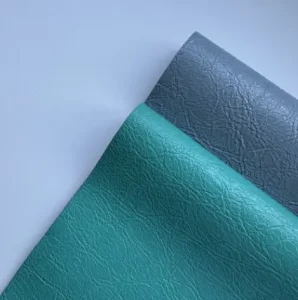
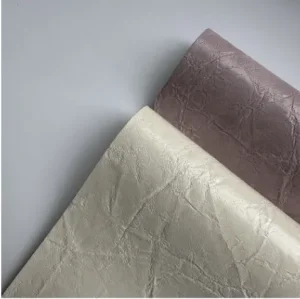
Explore our core RCS-compliant leather iterations engineered with traceable post-consumer recycled (PCR) polyesters, optimized for strict European Union eco-standards.
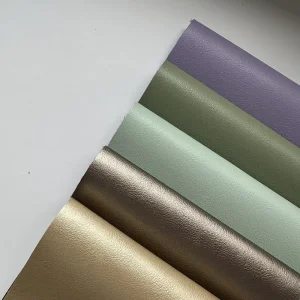
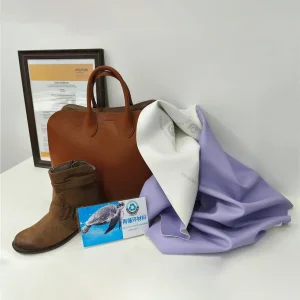
The Irish Industrial Reality: Decarbonization & Circular Sourcing Mandates
The Republic of Ireland has firmly positioned itself as one of the most environmentally progressive economies within the European Union. Anchored by the Circular Economy and Miscellaneous Provisions Act 2022, Ireland's national industrial frameworks legally mandate a systematic shift away from linear fossil-reliant extraction models toward verified secondary raw materials. For commercial enterprises operating across Dublin, Cork, Limerick, and Galway, this policy shift represents both an acute regulatory hurdle and an extraordinary brand differentiation opportunity.
Historically, the Irish leather goods, contract furniture, and technical upholstery sectors have grappled with the structural vulnerabilities of conventional petroleum-derived vinyls (PVC) and traditional solvent-based polyurethanes (PU). Traditional synthetic materials rely heavily on dimethylformamide (DMFa), phthalate plasticizers, and non-recyclable virgin virgin-fossil polyester backing cloths. Under Ireland's Climate Action Plan 2024 and the European Union’s Ecodesign for Sustainable Products Regulation (ESPR), commercial buyers face severe scrutiny concerning Scope 3 supply chain greenhouse gas emissions and chemical toxicity.
The Procurement Imperative: Under upcoming EU Digital Product Passport (DPP) guidelines, Irish brand managers cannot merely declare materials as "eco-friendly" or "vegan." Products require third-party audited Chain of Custody (CoC) verification from verified feedstocks. The Recycled Claim Standard (RCS) by Textile Exchange provides this auditable framework, confirming the precise percentage of recycled content throughout the entire supply chain.
Technical Architecture: How RCS Synthetic Leather Solves Industrial Pain Points
The manufacturing architecture of our RCS-certified synthetic leather is decoupled from the environmental hazards of legacy polyurethane synthesis. Engineered within our 135,733 m² solar-powered manufacturing campus in Guangdong, our production matrix adheres to stringent physical and chemical thresholds.
Completely replaces DMFa, DMFu, and toluene solvents with aqueous dispersion tech, mitigating airborne VOCs and providing absolute EU REACH compliance for indoor air quality.
Substrates crafted from 100% mechanically and chemically recycled rPET bottles and technical textile waste, dramatically minimizing virgin fossil depletion while maintaining tensile strength.
Every commercial shipment bound for Irish ports (Dublin Port, Port of Cork, Shannon Foynes) is backed by third-party certifier issued Transaction Certificates ensuring audit trail fidelity.
Material Performance Benchmarks: Conventional vs. RCS High-Performance PU
In demanding commercial and institutional specifications throughout the British Isles and Western Europe, sustainability must never undermine physical longevity. Inferior recycled formulations often suffer from premature hydrolysis, peel-adhesion failure, or poor cold-crack thresholds under damp climates. Below is an engineering comparison demonstrating how JiangXin (JX.ECO) materials withstand rigorous laboratory stress-testing:
| Physical Metric / Parameter | Standard Testing Protocol | Conventional PVC/PU | JiangXin High-Spec RCS PU |
|---|---|---|---|
| Hydrolysis Resistance (Jungle Test) | ISO 1419 (Tropical Chamber at 70°C, 95% RH) | 1 to 3 Years Equivalent (Delaminates) | 7 to 10+ Years Guarantee (Zero flaking) |
| Martindale Abrasion Resistance | ISO 12947-2 / ASTM D4966 | 20,000 - 40,000 Rub Cycles | 100,000 - 200,000+ Rub Cycles |
| Cold Crack Resistance | ASTM D1790 / ISO 4675 (-20°C Flex) | Cracks at 0°C to -5°C | Withstands -25°C to -30°C |
| Chemical Solvent Volatility | GC-MS Screening (EU REACH SVHC) | DMFa > 500 ppm frequently detected | Zero Detectable DMFa/Toluene (0 ppm) |
| Recycled Content Verification | Textile Exchange Chain of Custody | Unverified self-claims | RCS 100 / RCS Blended Certified |
Localized Application Scenarios in the Ireland Market
Irish manufacturing, specification, and contract fitout ecosystems demand tailored physical property variations depending on the localized context:
1. Irish Contract Hospitality & Interior Architecture
From heritage hotel restorations in County Kerry to tech-campus dining facilities in Dublin's Silicon Docks, upholstery must endure punishing footfall, disinfectant wiping, and stringent fire codes. Our RCS leathers can be treated with halogen-free flame retardants compliant with BS 5852 Crib 5 fire safety standards, meeting the exacting safety demands of Irish commercial building control authorities without releasing persistent bioaccumulative chemicals.
2. Sustainable Footwear & Accessories Brands (Dublin & Cork Design Clusters)
A flourishing cohort of ethical Irish accessory brands requires luxurious hand feel, drape, and grain definition comparable to traditional bovine calfskin, yet with verifiable vegan ethics. Our RCS collection provides consistent microfiber substrates, authentic full-grain, pebbled, and toothpick embossings, and predictable cutting yields that optimize fabric utilization by over 15% compared to natural hides.
3. Automotive Fleet Retrofits & Commercial Transit
With Ireland's aggressive electrification of public fleets and passenger transport, interior components must minimize cabin emissions. Our low-odor, zero-plasticizer RCS synthetic leathers reduce window fogging (DIN 75201) and maintain structural resilience under fluctuating coastal humidity and UV conditions.
4. Marine & Coastal Leisure Environments
Operating along Ireland’s Atlantic coastline necessitates materials impervious to saline mist, mold, and mildew. We integrate biocide-free anti-fungal barrier coatings directly into the polyurethane skin layer, resisting degradation even under sustained damp exposures in coastal marinas from Galway to Dingle.
Macro Technology Roadmap: The Next Frontier of Sustainable Polymer Synthesis
JiangXin is continually expanding the boundary of synthetic leather performance. Over the 2025–2030 developmental roadmap, our engineering labs in Guangdong are pioneering three interconnected technological pillars designed to future-proof Irish and European clients:
A. Bio-Recycled Hybrid Composites: Harmonizing RCS post-consumer recycled backing matrices with ASTM D6866 certified biobased polyols derived from non-food agricultural waste (corn starch, industrial hemp residues, and castor oil). This reduces fossil reliance on both sides of the material cross-section.
B. Molecular Monomaterial Systems: Traditional synthetic leathers combine polyurethane top layers with polyester backings, complicating end-of-life mechanical recycling. We are currently scaling single-polymer (100% rPET-based or 100% TPU-based) constructions that allow complete thermal regranulation at the product's end of life.
C. Integrated Digital Product Passport (DPP) Compatibility: Implementing batch-level QR code and near-field verification protocols tracking greenhouse gas intensity (LCA) from our factory floor directly to Irish consumer-facing tags.
Frequently Asked Questions on Sourcing RCS Leathers for Ireland
Essential regulatory, physical testing, and logistics insights for Irish production directors and design studios.
The Recycled Claim Standard (RCS) specifically tracks and verifies recycled raw materials through an unbroken Chain of Custody from input recycler to final roll, establishing exact percentages. While GRS layers additional social and environmental processing restrictions onto the standard, RCS is the primary international standard favored by brands prioritizing verified recycled raw material content claims under EU Green Claims and Anti-Greenwashing Directives.
Yes. Every single certified commercial order is issued an official Transaction Certificate (TC) generated through accredited third-party certification bodies (e.g., Control Union, Intertek). The TC correlates directly with your commercial invoice and bill of lading, providing your compliance team with indisputable documentation for customs clearance and retail claims.
All our production systems adhere strictly to European REACH Annex XVII and the candidate list of Substances of Very High Concern (SVHC). Our materials are completely free of regulated phthalates (6P/16P free), azo dyes, heavy metals (lead, cadmium, hexavalent chromium), organotins, and restricted dimethylformamide (DMFa < 5 ppm detection limit or completely 0 ppm in our waterborne series).
Absolutely. For hospitality, healthcare, and educational fitouts in Ireland and the UK, we can formulate our RCS polyurethane layers and recycled backings with non-toxic, halogen-free fire retardants that pass BS 5852: Part 2 Crib 5 testing, as well as EN 1021-1 & 2, without sacrificing soft hand feel or grain durability.
Standard production runs for customized colors, grains, and thickness range typically start at 500 to 1,000 linear meters per specification. Production turnaround averages 12 to 18 working days. Ocean freight from southern China container terminals to Dublin Port or Port of Cork takes roughly 28 to 36 days. For rapid sample development, swatches are dispatched via DHL/FedEx air express in 3 to 5 business days.
Traditional cheap PU leathers suffer from accelerated hydrolysis in moist conditions. Our specialized polyurethane chemistry is rigorously tested to survive 7 to 10+ years under standardized Jungle Test conditions (70°C at 95% relative humidity) with zero surface breakdown, delamination, or tacky degradation, making it ideally matched for the Irish climate.
Comprehensive RCS Recycled Leather Product Portfolio
Explore specialized textures, heavy-duty upholstery gauges, and luxury fashion grains engineered for custom OEM/ODM supply agreements across Ireland and worldwide.